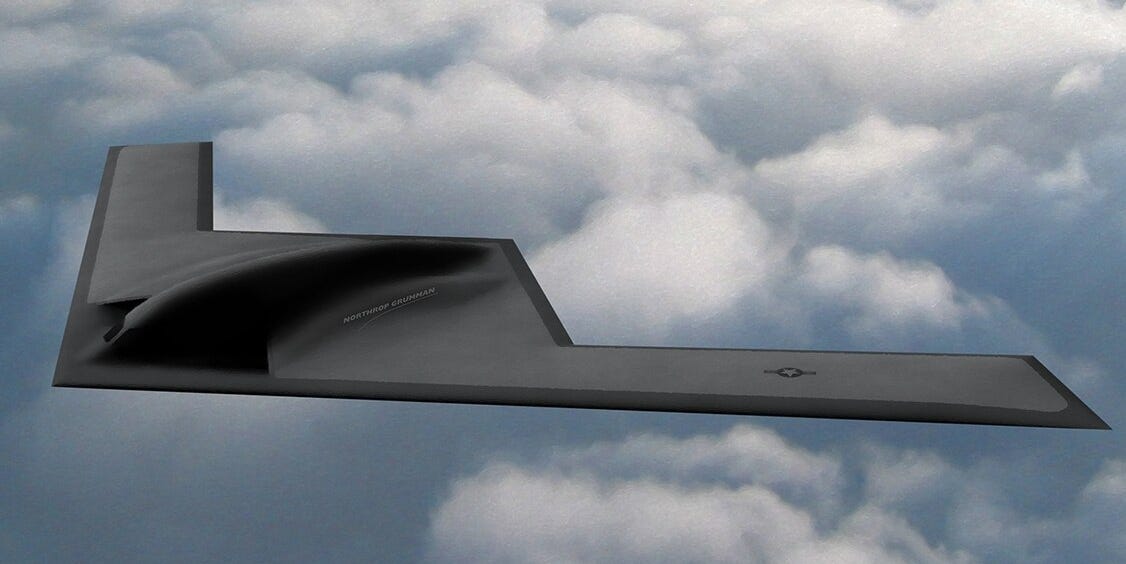

If the B-2 Spirit was the mysterious ninja of America’s bomber fleet, the B-21 Raider is the newer, sharper ninja who also brought a laptop, a digital twin, and a long-range upgrade plan. The B-21 is one of the most important U.S. military aircraft programs in decades, not because the Air Force loves dramatic unveilings, but because the bomber force is being rebuilt for an era of tighter air defenses, longer ranges, and faster tech cycles.
That matters because the B-21 Raider is not just another stealth bomber with a cool silhouette. It is meant to become the backbone of the future bomber fleet, gradually replacing the B-1 Lancer and B-2 Spirit while operating alongside the heavily modernized B-52. In plain English, the Air Force wants a bomber that can sneak farther, adapt faster, cost less to sustain than older stealth aircraft, and remain relevant for decades without needing a midlife crisis every five years.
Here is the key catch: a lot of the B-21’s most interesting numbers are still classified. That means anyone claiming exact top speed, exact range, exact payload, or exact radar signature is probably either guessing, showing off, or both. Still, enough real information is now public to explain what the bomber is, how it is being built, and why its construction timeline is such a big deal.
What the B-21 Raider Is Designed to Do
The B-21 Raider is officially described as a dual-capable, penetrating strike stealth bomber. “Dual-capable” means it is designed to carry both conventional and nuclear weapons. “Penetrating” means it is built to get through heavily defended airspace rather than hang back and hope for the best. And “stealth bomber” means its shape, materials, and systems are intended to make it hard to detect, track, and target.
The aircraft is also part of a larger long-range strike family of systems. That phrase is not empty Pentagon poetry. It means the bomber is being designed to work alongside intelligence, surveillance, reconnaissance, electronic attack, communications, and networked weapons systems. In other words, the B-21 is not just a bomb truck with a black paint job. It is a node in a much bigger combat network.
One of the most talked-about details is that the B-21 has been designed to accommodate manned or unmanned operations. That does not mean it will instantly become a robot bomber tomorrow morning, but it does show how the Air Force is thinking about flexibility from the beginning. The goal is future growth, not a frozen-in-time aircraft that peaks on day one and then spends the next 30 years trying to catch up with software updates.
B-21 Raider Specs: What Is Public, and What Is Still Secret
Publicly confirmed specs
Here is what is publicly known about the B-21 Raider. It is a nuclear-capable, long-range, stealth penetrating bomber. The Air Force says it will carry both nuclear and conventional munitions and employ a broad mix of stand-off and direct-attack weapons. It is being built under Air Force Global Strike Command and is planned in a minimum inventory of 100 aircraft.
Public cost benchmarks also exist, although they need context. The Air Force fact sheet lists an average unit procurement cost benchmark of $550 million in base-year 2010 dollars, which the service also presents as $639 million in base-year 2019 dollars and $692 million in base-year 2022 dollars. That is not the same thing as saying every aircraft will cost exactly that amount in the real world after inflation, support gear, learning curves, and production changes. Defense programs rarely behave that neatly, because reality enjoys chaos.
What the public does not know
Exact range remains undisclosed. Exact payload remains undisclosed. Exact engine details, combat radius, cruising speed, crew arrangement, and many survivability features remain undisclosed. That is not a flaw in the public record. That is the point. The B-21 is supposed to make life difficult for adversaries, and publishing a glossy brochure with all the juicy numbers would be a pretty strange way to do that.
So when people ask for “B-21 specs,” the honest answer is this: the public knows the mission class, procurement target, basing plan, development milestones, and some architectural concepts, but the most sensitive performance figures are still locked behind classification.
The Details That Make the B-21 Different
The most interesting B-21 details are not only about stealth. They are about how the aircraft is engineered, tested, upgraded, and produced. Northrop Grumman has repeatedly emphasized digital engineering, open architecture, and production-representative test aircraft. Those phrases may sound like corporate brochure wallpaper, but they matter.
Open architecture means the bomber is designed to accept upgrades more easily over time, including software changes, new sensors, networking improvements, and new weapons integrations. That is essential for an aircraft expected to serve deep into the future. If the B-21 had been built like a sealed 1990s gadget, it would age badly in a hurry.
Digital engineering also plays a major role. Northrop has described the B-21 as a digitally developed aircraft supported by a digital ecosystem and even a digital twin. The practical advantage is faster validation, lower production risk, and potentially quicker upgrades. In June 2024, the company said Combined Test Force pilots found the aircraft was flying like the simulator, which is exactly the sort of sentence engineers love and taxpayers should appreciate.
Another important detail is that the first test aircraft was built as a production-representative airplane rather than as a one-off science fair project. That means the program tried to reduce the traditional gap between prototype and production. Reuters reported that test aircraft were being produced on the same line, with the same tools, processes, and technicians intended for production aircraft. That approach can lower transition risk, improve manufacturability, and shorten the long, painful march from “it flew once” to “it is actually fielded.”
Northrop also claims the B-21 incorporates next-generation stealth features and low-observable processes that should make it easier and less costly to maintain than prior stealth systems. That is a huge point. The Air Force does not just need the bomber to be stealthy. It needs the bomber to be stealthy in a way that is sustainable, repairable, and scalable across a real fleet.
B-21 Raider Construction Timeline
2015 to 2018: Contract award and design maturity
The B-21 story begins in public terms in October 2015, when the Air Force awarded the engineering and manufacturing development contract to Northrop Grumman. That same contracting framework included options covering the first five production lots, representing 21 aircraft out of the planned fleet of 100. The program later hit another major milestone in late 2018, when the Air Force completed a critical design review. In defense acquisition terms, that is the point where the service is basically saying, “This design is mature enough to stop being an idea and start becoming a real airplane.”
2019 to 2022: Basing decisions and public debut
In 2019, the Air Force announced its preferred main operating base structure for the B-21. Ellsworth Air Force Base in South Dakota would become the first main operating base and home to the Formal Training Unit. Whiteman Air Force Base in Missouri and Dyess Air Force Base in Texas remained in the queue for later operating locations.
Then came the moment the internet had been waiting for: the public unveiling on December 2, 2022, at Northrop Grumman’s Palmdale, California, facility. The B-21’s debut marked the first public appearance of a new American bomber in more than 30 years. And yes, the aircraft looked exactly like what people expected from a next-gen stealth bomber: smooth, flying-wing, and expensive enough to make a calculator sweat.
2023 to 2024: First flight and flight-test expansion
The B-21 made its first flight on November 10, 2023, flying from Palmdale to Edwards Air Force Base. That was a major transition from rollout theater to actual test program reality. In January 2024, defense reporting tied the bomber’s low-rate initial production status to a new contract award, while flight testing continued at Edwards. Air & Space Forces later reported that the first aircraft, nicknamed “Cerberus,” launched flight testing there on January 17, 2024.
By September 2024, National Defense Magazine reported that three B-21 aircraft were in various stages of testing, showing that the program was moving beyond a single-ship headline moment and into the more serious, less glamorous phase of building confidence through repeated testing.
2025 to 2027: Deliveries, construction surge, and first fielding
In 2025, the Department of the Air Force said the program delivered aircraft on schedule. That same public messaging continued into 2026, when the Air Force announced expanded production capacity and said the B-21 remained on track for aircraft to be on the ramp at Ellsworth in 2027. That is the current public marker for operational fielding, and it is one of the biggest dates attached to the program right now.
At the same time, the production picture is clearly accelerating. The Pentagon and Northrop Grumman announced efforts in 2026 to increase manufacturing capacity, with defense reporting describing a 25 percent increase in annual production capacity. That does not magically erase the normal risks of a complex bomber program, but it does show the B-21 is moving from secretive development into a more visible fielding and force-structure phase.
Base Construction Timeline: Where the Bomber Is Going
The construction timeline matters because a bomber is not just an aircraft. It is a whole ecosystem. It needs hangars, maintenance space, low-observable restoration facilities, training buildings, secure operations spaces, weapons support infrastructure, and a logistics system that does not collapse every time someone sneezes near a supply chain spreadsheet.
Ellsworth AFB is the first main operating base and the Formal Training Unit location. In July 2022, the Air Force announced a $65 million contract for the B-21 Formal Training Unit project there and said it was the second awarded B-21 military construction project at the base. The Air Force also said that project was expected to be completed in fall 2024. Ellsworth’s broader beddown includes a mix of new military construction, renovation, and low-observable support infrastructure.
Whiteman AFB was officially selected in September 2024 as the second B-21 basing location, with Dyess AFB chosen as the third. That means the bomber’s long-term operating footprint is now publicly defined: Ellsworth first, Whiteman second, Dyess third.
Construction is also moving beyond Ellsworth. In September 2025, the Air Force said fiscal year 2026 would see extensive military construction projects launch at all three designated B-21 main operating bases. Dyess is preparing for a particularly large modernization effort. In December 2025, Air Force reporting said the base expects more than 24 construction and renovation projects over the next decade, representing a $1.6 billion investment. That is not just a runway touch-up and a fresh coat of paint. That is a long-term infrastructure transformation.
Why the B-21 Matters More Than the Headline Suggests
The B-21 is often described as a bomber replacement, but that is only part of the story. It is also a design philosophy shift. The B-52 will remain in service for years because it is a durable, adaptable missile truck. The B-2 is still uniquely capable but extremely small in number and expensive to sustain. The B-1 has brought huge conventional firepower but was never a stealth platform. The B-21 is meant to combine survivability, adaptability, affordability, and production scale in a way the earlier fleet never fully achieved in one aircraft.
That is why officials keep talking about deterrence rather than just bombing. The B-21 is supposed to complicate enemy planning long before a conflict begins. A stealth bomber that can penetrate defended airspace, carry conventional or nuclear weapons, integrate with a wider strike network, and upgrade over time is not just a weapon. It is a message.
What Still Bears Watching
Even with all the progress, several questions remain. Can the program continue scaling production without major cost growth? Can suppliers keep pace? Will the Air Force ultimately buy only 100 aircraft, or more? How quickly will weapons, software, and networking upgrades arrive after fielding begins? And can base construction stay synchronized with aircraft deliveries? On a defense program this large, one late piece can make the whole machine cough.
Still, the current public picture is stronger than it was a few years ago. The B-21 is no longer just an artist rendering and a lot of whispered adjectives. It has flown, entered sustained testing, expanded its basing plan, pushed forward construction at future operating bases, and moved closer to operational fielding.
The Human Experience Behind the B-21 Program
Talk about the B-21 often gets trapped in the language of stealth coatings, procurement charts, and congressional budget lines, but the real experience of the program is much more human. For test crews, maintainers, engineers, and base communities, the Raider is not an abstract defense white paper. It is years of preparation, training, construction noise, schedule pressure, and the quiet understanding that they are building the next chapter of America’s bomber force.
At Edwards and Palmdale, the experience has been one of transition from secrecy to disciplined visibility. When a new bomber first appears in public, the world sees dramatic photos and slick headlines. The people closest to the aircraft see something else: checklists, data review, software validation, taxi trials, maintenance procedures, range support, and the kind of relentless troubleshooting that makes glamorous aerospace history look a lot like very complicated homework. That is how a real program earns trust. Not with a curtain reveal, but with repeatable performance.
For Ellsworth, Whiteman, and Dyess, the B-21 experience is also about community change. A bomber beddown is not just an aircraft arriving at an airfield. It reshapes construction priorities, training pipelines, local contracting, housing demand, traffic patterns, and the long-term identity of a base. At Ellsworth especially, the Raider has meant new facilities, new mission demands, and a new role as the first operational home and training center for the platform. That creates pride, pressure, and a lot of project management meetings that probably deserve hazard pay.
For Air Force personnel, the Raider experience is also generational. Some service members built careers around the B-1 or B-2. Others will spend most of their professional lives with the B-21. That creates a handoff moment between old bomber culture and new bomber culture. The older fleet taught lessons about global reach, survivability, sustainment, and mission planning. The B-21 era adds digital engineering, open systems architecture, and a much heavier emphasis on building upgrade pathways from the beginning.
And for aviation followers, the B-21 experience has been oddly suspenseful. The public has had to learn the bomber through carefully controlled glimpses: a rollout, a first flight, a few official photos, some measured statements from Air Force leaders, and the occasional breadcrumb from industry or defense media. That has made the Raider feel both very real and strangely distant. It is a rare major aircraft program where the outline is visible, the momentum is obvious, and yet many of the most dramatic numbers remain hidden behind classification.
That tension is part of the B-21’s mystique, but it is also part of its seriousness. This aircraft is not being built for airshow applause. It is being built so that, if deterrence fails, the United States still has a stealthy, flexible, long-range strike option that can survive in the hardest fights of the future. For the people living the program every day, that is the experience that matters most. The B-21 is not just a new bomber. It is a national effort in engineering, infrastructure, training, and deterrence, and everyone connected to it is helping shape what American airpower looks like next.
Conclusion
The B-21 Raider is still partly hidden by design, but the broad picture is now clear. It is a next-generation stealth bomber built for penetrating missions, long-range deterrence, and continuous modernization. Publicly known specs confirm its dual nuclear-conventional role, open-architecture design, minimum planned fleet of 100 aircraft, and position at the center of the future bomber force. Public milestones show a steady march from contract award in 2015 to design review in 2018, public debut in 2022, first flight in 2023, expanded testing and production in 2024 through 2026, and a 2027 fielding target at Ellsworth.
So yes, the B-21 is a bomber. But it is also a production strategy, a construction program, a digital engineering experiment, and a long-term bet on survivable airpower. That is why the Raider matters. And that is why its timeline is being watched so closely by everyone from defense planners to aviation nerds with suspiciously strong opinions about flying-wing silhouettes.


