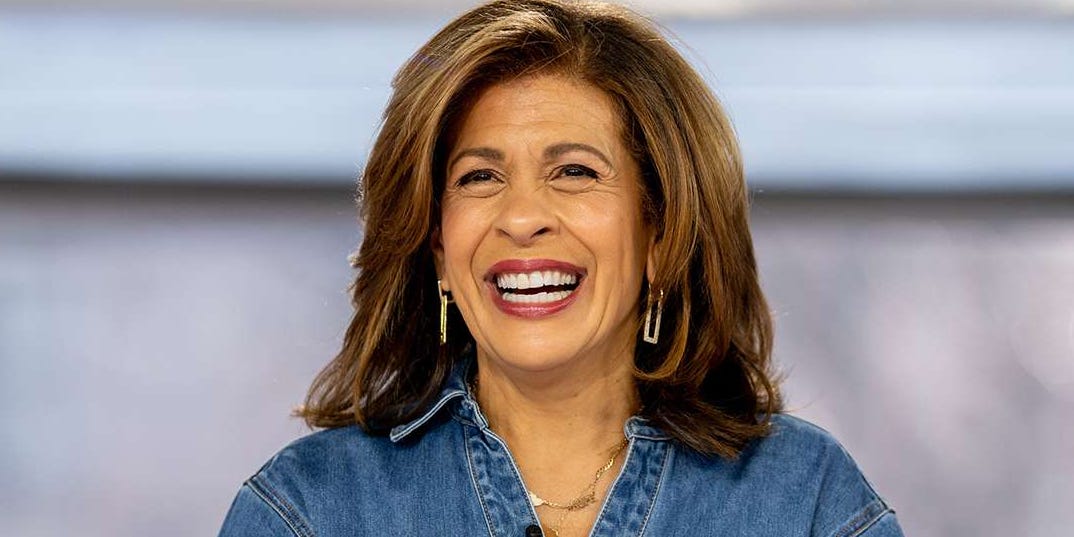

Morning television is built on routines. Coffee brews, alarms are snoozed, weather maps appear, and familiar anchors welcome viewers as though everyone has gathered around the same oversized kitchen table. That comforting rhythm changed on September 26, 2024, when Hoda Kotb announced that she would leave her daily roles on NBC’s Today.
The news immediately transformed Studio 1A into an emotional group hug with cameras. Savannah Guthrie praised Kotb’s courage, Jenna Bush Hager promised their friendship was not ending, Craig Melvin described her as the heart of the program, and other colleagues responded with a mixture of admiration, sadness and the kind of jokes people make when crying on live television seems unavoidable.
Kotb ultimately signed off as a regular Today anchor on January 10, 2025, concluding a 17-year run on the morning show and more than 25 years at NBC News. Her departure was not treated like an ordinary personnel change. It felt more like a beloved family member announcing that she was moving outbut would still visit, call and probably arrive carrying snacks.
Why Hoda Kotb Decided to Leave the “Today” Show
Kotb explained that turning 60 prompted her to examine how she wanted to spend the next decade of her life. During her announcement, she spoke about dividing her available time like a pie and realizing that her daughters, Haley and Hope, as well as her mother, deserved a larger portion.
It was not a dramatic network feud, a ratings crisis or a plot twist involving a suspiciously ambitious weather forecaster. Kotb said she loved the show and believed she was making the right choice, even though leaving was painful. The milestone birthday celebration held for her on the Today Plaza helped confirm that she was ready to begin another chapter.
A Career That Spanned Hard News and Happy-Hour Television
Kotb joined NBC News in 1998 as a Dateline correspondent. She became part of Today in 2007 and later developed one of daytime television’s most memorable partnerships with Kathie Lee Gifford during the fourth hour.
After Gifford’s departure, Kotb began hosting the hour with Jenna Bush Hager. She also made history alongside Savannah Guthrie when the pair became the first two women to serve as the show’s permanent co-anchor team. Kotb could interview national leaders in one segment, comfort a grieving family in the next and then debate snack preferences before the commercial break. That combination of journalistic seriousness and approachable warmth helped make her central to the program’s identity.
How Savannah Guthrie Responded to Hoda Kotb’s Exit
Savannah Guthrie’s reaction captured the emotional contradiction surrounding the announcement. She did not want her partner to leave, but she was also deeply proud that Kotb was willing to step away from a successful and comfortable position to pursue a different life.
Guthrie told Kotb that the tears around the studio represented love. She described her friend’s decision as brave, emphasizing that walking away while still at the top of one’s profession requires confidence and faith in the unknown.
That response mattered because Guthrie and Kotb had shared much more than an anchor desk. They had navigated breaking news, elections, celebrations, difficult interviews, personal losses and countless early mornings together. Their chemistry was not based on constantly agreeing. It came from visible trust and the sense that each woman would support the other when the teleprompter stopped scrolling and real life took over.
More Than a Television Partnership
On Kotb’s final broadcast, the depth of that relationship became even clearer. Kotb referred to Guthrie as her person and praised her for consistently showing up during painful moments. Guthrie, meanwhile, helped guide Kotb through a farewell filled with surprise guests, career highlights and enough tissues to threaten the studio’s supply budget.
Their goodbye demonstrated why viewers had connected with them. The emotion did not feel like a carefully polished television performance. It felt like two colleagues trying to honor a friendship while several cameras inconveniently documented every tear.
Jenna Bush Hager Promised the Friendship Would Continue
Jenna Bush Hager responded to the announcement with tears, affection and humor. Rather than treating Kotb’s exit as a clean break, she insisted that their relationship would continue away from the studio. She joked that she planned to appear at Kotb’s home whether invited or nota declaration that managed to sound both slightly threatening and completely adorable.
The reaction reflected the partnership viewers had watched on Today with Hoda & Jenna. Their hour depended on personal stories, spontaneous laughter and conversations that often wandered far beyond the original topic. Their closeness made Kotb’s departure especially difficult for Bush Hager, who later joked that she was moving through the classic stages of grief.
During the farewell period, Bush Hager admitted that she had studied Kotb’s behavior more closely because she knew their daily time together was ending. She cried easily, teased Kotb about possible replacements and tried to make the final weeks celebratory rather than entirely sorrowful. The result was an extended goodbye that felt affectionate without becoming unbearably heavy.
The Fourth Hour Faced Its Own New Beginning
Kotb’s departure left two separate vacancies. Craig Melvin was selected to join Guthrie during the main morning broadcast, while the fourth hour was reintroduced as Today with Jenna & Friends, initially featuring rotating guest hosts.
For Bush Hager, the change meant learning how to carry forward the warmth of the previous program without attempting to manufacture another Hoda Kotb. That distinction was important. Successful television partnerships usually grow from individual personalities; they are rarely recreated by simply placing someone new in the same chair and hoping chemistry arrives before the first commercial.
Craig Melvin Called Hoda the Heart of the Show
Craig Melvin focused on Kotb’s authenticity. He observed that some television personalities behave differently when the camera’s red light turns off, but Kotb remained the same person viewers saw each morning. In his view, her kindness was not an on-air character developed for ratings; it was simply how she treated people.
Melvin also described Kotb as the heart of Today and noted that this quality could not be replaced. Later, he celebrated the benefits her decision would bring to Haley and Hope while expressing sadness for the colleagues losing their daily connection with her.
His words became even more meaningful when NBC announced that he would succeed Kotb as Guthrie’s co-anchor. On her final day, Kotb publicly supported the selection, telling Melvin that he had earned the opportunity and predicting that he and Guthrie would be excellent together. It was a generous handoff: no awkward throne-clinging, no dramatic desk key exchange and, apparently, no demand that Melvin preserve her exact coffee order.
Al Roker’s Brief Response Carried Decades of Friendship
Al Roker did not need a lengthy speech to communicate what Kotb meant to him. He said he had never known anyone like her and plainly expressed his love.
The simplicity fit their relationship. Roker was among Kotb’s earliest friends at NBC, and Kotb recalled on her final show that he was the first colleague to visit and reassure her when she was being treated for breast cancer. Their connection had survived changing anchor lineups, personal health challenges and years of mornings that began while much of the country was still arguing with its alarm clock.
Roker’s reaction reminded viewers that television teams are also workplaces where long-term colleagues witness one another’s careers, marriages, illnesses, children and turning points. Sometimes a few sincere words carry more history than a carefully prepared farewell speech.
Carson Daly Used Humor to Lighten the Mood
Carson Daly responded in the most Carson Daly way possible: with a joke connecting Kotb’s love of music to The Voice. He playfully suggested that she consider joining the singing competition and asked whether she liked giant red chairs.
The joke provided a welcome moment of relief during an announcement surrounded by tears. Humor often plays an important role in workplace goodbyes, particularly when everyone is emotionally exhausted and one more heartfelt speech could cause an emergency order of waterproof mascara.
Kotb later praised Daly during her final broadcast, calling him an essential ingredient in the show’s success. Their exchange illustrated the range of relationships she had built at NBC: some grounded in personal support, some in daily collaboration and others in the ability to make one another laugh at precisely the right moment.
Sheinelle Jones Saw a Mother and Wellness Advocate
Sheinelle Jones acknowledged that every person on the Today couch had developed a distinct relationship with Kotb. She said the team was struggling privately with the news while also understanding Kotb’s decision as a mother.
Jones also pointed toward Kotb’s growing interest in wellness and predicted that her influence would continue beyond morning television. This response looked forward rather than concentrating only on what NBC was losing. It suggested that Kotb’s exit was not retirement in the traditional sense; it was a shift toward family, personal development and projects structured around a different schedule.
Dylan Dreyer Remembered Hoda’s Instinct to Comfort
Dylan Dreyer shared a personal story involving her son, Oliver. During a difficult moment when he could not be soothed, Kotb picked him up and comforted him. Dreyer used the memory to explain that Kotb’s appeal extended far beyond her broadcasting talent.
The anecdote offered a small but revealing example of why Kotb’s colleagues responded so strongly. Awards, interviews and ratings can summarize a career, but people often remember quieter moments: who noticed a struggling child, who checked in after a hard day and who offered reassurance without being asked.
Dreyer applauded Kotb for trusting her instincts and taking the next step. Her response reinforced the central theme repeated by the entire team: sadness about the departure could exist alongside genuine support for the decision.
Why the Co-Hosts’ Reactions Resonated With Viewers
Morning-show audiences develop unusual relationships with anchors. Viewers may never meet them, yet they see the same faces during breakfasts, snow days, presidential elections, national tragedies and ordinary Tuesdays when nothing dramatic happens except running out of milk.
Kotb’s warmth made that connection particularly strong. She spoke openly about motherhood, adoption, cancer, relationships and uncertainty, while maintaining the professionalism required to guide viewers through major news. Her colleagues’ reactions confirmed that the personality seen on television closely resembled the woman they knew backstage.
That consistency explains why the announcement felt personal to many viewers. They were not merely watching a host change jobs. They were watching the end of a familiar daily relationship and seeing her colleagues experience the same mix of gratitude and loss.
Hoda Kotb’s Final Day Became a Full “Hoda-bration”
By the time Kotb’s final regular episode aired on January 10, 2025, Today had turned the farewell into a week-long “Hoda-bration.” The final broadcast featured messages and appearances from celebrities, friends and people whose lives had intersected with Kotb’s career.
Oprah Winfrey offered encouragement about beginning a new chapter. Maria Shriver and Gayle King joined the celebration, while Olympic champion Simone Biles surprised Kotb. Kermit the Frog performed “Rainbow Connection,” a development that ensured even viewers who had remained emotionally composed were finally defeated by a singing Muppet.
Staff members formed a cheering tunnel as Kotb moved through the studio and toward the crowd outside. The anchors revisited her career highlights, wore friendship bracelets and celebrated the relationships she had formed over nearly two decades on the program.
A Farewell Without a Complete Goodbye
Kotb’s departure ended her daily anchor schedule, but she made clear that she was not severing ties with NBC or her colleagues. That distinction helped give the farewell an optimistic tone. The team was losing its everyday routine with her, not the friendships created through years of working together.
Her occasional returns and reunions after the exit reinforced the promise that she remained connected to the Today family. The door did not slam shut. It remained open, probably decorated with a motivational quotation and surrounded by several people crying happily.
Conclusion: Hoda Kotb Left With the Love of Her Team
Hoda Kotb’s Today exit demonstrated that a professional departure can be both heartbreaking and hopeful. Her co-hosts did not hide their disappointment, but none attempted to make her feel guilty for choosing a life with more time for family and new possibilities.
Savannah Guthrie celebrated her courage. Jenna Bush Hager promised lifelong friendship. Craig Melvin praised her authenticity. Al Roker expressed decades of affection. Carson Daly brought humor, while Sheinelle Jones and Dylan Dreyer highlighted Kotb’s influence as a mother, comforter and source of encouragement.
Together, their reactions explained why Kotb had become so important to the program. Her legacy was not limited to interviews, ratings or the number of hours she spent on television. It lived in the trust she built with viewers and in the personal memories her colleagues immediately reached for when asked to describe her.
Experience Perspective: What Hoda Kotb’s Exit Teaches Us About Leaving a Beloved Job
Most people will never announce a resignation while sitting on a famous television couch surrounded by cameras and several million viewers. Still, the experience at the center of Hoda Kotb’s exit is surprisingly familiar. Many professionals eventually reach a moment when a job they genuinely love no longer fits the life they want to build.
That moment can be confusing because leaving an unhealthy workplace is comparatively easy to explain. Leaving a wonderful team is harder. There may be no villain, scandal or dramatic final straw. The role may still be rewarding, the colleagues may feel like family and the paycheck may be quite persuasive. Yet a person can appreciate all of those things while recognizing that another part of life needs more attention.
Kotb’s announcement illustrated the value of acknowledging two truths at once. She could love NBC and still leave its daily schedule. Her colleagues could feel devastated and still support her. Employees often assume that a correct decision should feel entirely comfortable, but major transitions rarely arrive with such convenient emotional clarity. Relief, grief, excitement and doubt can all share the same calendar invitation.
The reaction from her co-hosts also offers a lesson in responding to a valued colleague’s resignation. The best responses did not center on how inconvenient the departure might become. Guthrie, Bush Hager and the rest of the team openly expressed what they would miss, but they also recognized Kotb’s reasons and celebrated her future. They made room for sadness without turning affection into emotional pressure.
That approach can transform an ordinary workplace exit. A thoughtful manager or colleague might share a specific memory rather than deliver a generic compliment. Dreyer’s story about Kotb comforting her son was powerful because it revealed character through a real moment. Roker’s response carried weight because it reflected decades of friendship. Meaningful farewells are rarely built from phrases such as “best wishes in your future endeavors,” the corporate equivalent of a waiting-room chair.
Kotb also modeled a generous transition. She publicly encouraged Craig Melvin and treated his promotion as something to celebrate rather than evidence that the show was moving on without her. Professionals leaving leadership roles can learn from that example. Supporting a successor protects the team, reduces uncertainty and allows the departing person’s influence to continue through a culture of confidence rather than competition.
There is also a lesson for organizations. NBC allowed the audience and staff to process the change instead of pretending that one familiar personality could be instantly exchanged for another. The farewell period honored Kotb’s contribution, while the new lineup acknowledged that the program would evolve. When a beloved employee leaves, healthy teams do not erase the past or become trapped in it. They preserve what worked and give the next chapter permission to look different.
Finally, Kotb’s experience challenges a common definition of career success. Professional culture often treats upward movement, greater visibility and longer hours as automatic victories. Stepping away from a prestigious position can appear irrational from the outside. But success at 30 may not resemble success at 60. Priorities change, families change and time begins to feel less like an unlimited resource and more like the carefully divided pie Kotb described.
The most memorable element of her departure was therefore not that she left a famous television show. It was that she chose deliberately, communicated honestly and allowed the people around her to love her through the transition. That is an experience nearly anyone can understand, whether the farewell takes place in Studio 1A or beside a sheet cake in the office conference room.
Note: This article covers Hoda Kotb’s September 2024 departure announcement, her colleagues’ responses and the transition completed with her final regular Today broadcast on January 10, 2025.


