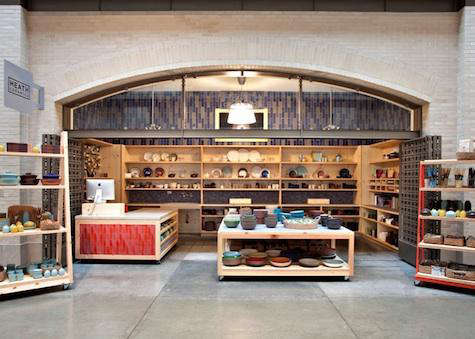

Commune Design at the SF Ferry Plaza is a small-space master class in how to make retail architecture feel effortless, useful, historic, and quietly coolwithout shouting “Look at me!” like a chair wearing sunglasses indoors.
A Tiny Showroom With a Big San Francisco Personality
Inside the landmark San Francisco Ferry Building, Heath Ceramics’ Ferry Building showroom occupies only about 500 square feet. In real estate terms, that is compact. In design terms, it is a delicious challenge. A small retail space has nowhere to hide. Every shelf, display table, material choice, and pathway has to work harder than a sourdough starter on a foggy morning.
Commune Design, the Los Angeles-based studio known for its holistic approach to interiors, architecture, product design, and branding, handled the showroom with a light but confident touch. The result is not a dramatic boutique that tries to compete with the Ferry Building’s grand architecture. Instead, it behaves more like a thoughtful guest at a dinner party: well-dressed, interesting, and smart enough not to interrupt the host.
The host, of course, is the Ferry Building itself. Opened in 1898 and positioned at the foot of Market Street, the building is one of San Francisco’s most recognizable civic landmarks. Its clock tower, long nave, historic arches, and marketplace energy create a powerful setting. Any shop inside it must respect that atmosphere while still building its own identity. Commune’s design for Heath succeeds because it understands the assignment: let the ceramics glow, let the building breathe, and let the visitor feel like discovery is part of the shopping experience.
The Setting: Why the SF Ferry Plaza Matters
The San Francisco Ferry Building is not just a pretty backdrop for vacation photos and very serious cups of coffee. It has lived several lives. It began as a transportation hub, welcoming ferry passengers and connecting the city to the Bay Area. Later, after bridge traffic and automobile culture reduced ferry use, the building became less central to everyday civic life. The Embarcadero Freeway further separated it from the waterfront, casting a literal and emotional shadow over the area.
After the 1989 Loma Prieta earthquake damaged the freeway and opened the door to waterfront renewal, San Francisco had a rare opportunity: bring the Ferry Building back as a public destination. Its early-2000s restoration reopened the historic Grand Hall, restored the dramatic long nave, and transformed the ground floor into a marketplace filled with regional food purveyors, artisans, and specialty retailers.
That context matters because Commune Design’s Heath showroom is not floating in a vacuum. It sits inside a place already rich with local food culture, Bay Area craft, and urban memory. The Ferry Plaza Farmers Market, which began in the 1990s and became deeply tied to the Ferry Building’s rebirth, helped turn the area into a weekly ritual for locals. In other words, this is not mall retail. This is civic retail. People come here to taste, touch, wander, compare, learn, and occasionally convince themselves that buying one more beautiful bowl is a form of personal growth. Honestly, it might be.
Commune Design’s Approach: Mod, Classic, and Calm
The best description of the space is simple: modern but classic. Commune Design created a low-key backdrop for Heath Ceramics’ dinnerware, tile, and home goods using materials and fixtures that feel honest rather than decorative for decoration’s sake. Simple pine shelving gives warmth. Industrial-style powder-coated metal shelving on wheels adds flexibility and a practical workshop quality. The space feels edited, not empty; crafted, not precious.
This is where Commune’s design intelligence becomes obvious. In a 500-square-foot showroom, visual clutter is the enemy. Heath’s products already carry color, texture, glaze variation, and form. If the architecture becomes too loud, the ceramics get lost. Commune avoids that trap by designing a restrained environment that behaves almost like a gallerybut a friendly one, not the kind where you whisper because a bench looks emotionally unavailable.
The design also reflects Heath’s own DNA. Founded in California in 1948 by Edith and Brian Heath, Heath Ceramics has long represented durable, modern, handmade design. Its tableware and tile are rooted in daily use, not display-case drama. Commune’s showroom respects that by presenting the products as objects for real kitchens, real tables, and real rituals. The shelves are approachable. The surfaces are tactile. The mood says, “Pick it up, imagine breakfast, and try not to fall in love with six plates at once.”
Material Honesty: The Quiet Luxury of Pine, Metal, and Clay
One of the strongest lessons from Commune Design at the SF Ferry Plaza is that luxury does not always need marble floors, brass chandeliers, or lighting so dramatic it makes a mug look like it is testifying in court. Here, luxury comes from clarity. Pine shelving, metal fixtures, ceramic surfaces, and the historic shell of the Ferry Building all speak in a shared language of usefulness.
Pine Shelving as a Warm Backdrop
Pine is humble, but in the right hands, humble becomes handsome. The pale wood softens the retail environment and gives Heath’s glazes a natural stage. Earthy greens, creamy whites, deep blues, and warm neutrals read beautifully against wood because the contrast feels organic rather than forced.
Metal Shelving for Flexibility
The industrial metal shelving adds a slightly utilitarian edge. That matters because Heath is not only a lifestyle brand; it is a maker brand. The use of metal connects the showroom to production, workshops, factories, and the physical reality of craft. The fact that some shelving is movable also suggests a living retail space, one that can adapt to new collections, seasonal displays, and the unpredictable behavior of shoppers who suddenly need “just one more serving bowl.”
Ceramics as the Main Character
Most importantly, the design does not compete with the product. Heath’s ceramics are allowed to be the main character. The architecture is the supporting cast, but it is the excellent kind: the friend who brings snacks, remembers everyone’s names, and knows when to leave the spotlight alone.
Small-Space Retail Lessons From Commune Design
For architects, designers, shop owners, and anyone trying to make a small room feel bigger than its square footage, the Heath showroom offers several practical lessons.
1. Edit Before You Decorate
The showroom proves that restraint can be more powerful than abundance. Instead of filling every inch with visual noise, Commune Design gives each object enough space to be understood. In small retail design, editing is not minimalism for its own sake. It is a sales strategy, a circulation strategy, and a mood strategy all rolled into one neat little package.
2. Use Fixtures That Feel Like Tools
The shelves and display elements feel practical, almost workshop-like. That makes sense for a ceramics company with a strong manufacturing legacy. Good retail design should not feel pasted onto a brand; it should feel grown from the brand’s habits, values, and materials.
3. Respect the Existing Architecture
The Ferry Building is already architecturally powerful. Commune’s design does not try to overwrite that. It works within the rhythm of the marketplace and lets the historic setting remain visible. This is especially important in adaptive reuse environments, where the best new interiors often feel like a conversation with the old building rather than an argument.
4. Make the Product Easy to Imagine at Home
Heath’s objects are practical: plates, bowls, mugs, tile, and home goods. The showroom arrangement helps visitors imagine these pieces outside the store. A good display does not merely say, “Look at this beautiful thing.” It says, “Here is how this beautiful thing could quietly improve your Tuesday.” That is retail magic, minus the wand.
Why Commune and Heath Make Sense Together
The partnership between Commune Design and Heath Ceramics feels natural because both are deeply interested in craft, material, process, and California modernism. Commune’s work often blends relaxed sophistication with cultural references and handmade detail. Heath’s products carry a similar balance: modern but warm, durable but beautiful, simple but never bland.
Commune has worked on multiple Heath retail locations, and the Ferry Building showroom fits into a larger design relationship rather than feeling like a one-off experiment. That continuity matters. When a design studio understands a brand over time, it can build spaces that feel less like marketing sets and more like physical chapters in a longer story.
At the SF Ferry Plaza, that story becomes especially rich. Heath is a Bay Area-born company. The Ferry Building is a San Francisco icon. Commune, though based in Los Angeles, brings a broader California design sensibility that connects north and south: casual, tactile, sun-warmed, smart, and allergic to unnecessary fuss. The showroom becomes a small but meaningful meeting point between craft, place, and commerce.
The Visitor Experience: Slow Retail in a Fast City
San Francisco can move quickly. Commuters rush through Market Street. Ferries come and go. Tourists point phones at the clock tower. Office workers hunt lunch with the focus of professional detectives. Inside that motion, the Heath showroom offers a slower experience.
You step in and the scale shifts. Instead of the grand public volume of the Ferry Building, you encounter an intimate environment. The objects invite touch. The shelves encourage browsing. Nothing feels too precious, yet everything feels considered. That balance is difficult. Too casual, and the space feels forgettable. Too polished, and it loses the soul of handmade ceramics. Commune lands neatly in the middle.
The showroom also benefits from its marketplace neighbors. Visitors may arrive after buying bread, cheese, fruit, olive oil, or coffee. By the time they reach Heath, they are already thinking about eating, hosting, cooking, and gathering. That makes the retail experience feel less transactional. A bowl is not just a bowl; it is suddenly part of a table, a breakfast, a Sunday dinner, or the fantasy version of your kitchen where the counters are always clean.
Design Analysis: What Makes the Space Work
The strength of Commune Design at the SF Ferry Plaza lies in proportion, material discipline, and brand empathy. The showroom understands both its physical limits and its emotional possibilities. It does not need a grand gesture because the grand gesture is already outside: the Ferry Building, the waterfront, the clock tower, the market, the Bay.
Inside, the design focuses on human scale. Shelving is reachable. Displays feel layered but not crowded. The material palette supports the ceramics instead of staging a wrestling match with them. The lighting, while understated, helps reveal the variations in glaze and form that make Heath products special.
There is also a subtle democratic quality to the space. It treats everyday objects with respect. A mug, plate, or tile is not presented as disposable merchandise. It is treated as part of a larger design ecosystem: made by hands, sold in a historic public building, carried home, used repeatedly, and eventually folded into personal memory. That is the quiet power of good retail architecture. It can turn a purchase into a relationship.
Experience Notes: Visiting Commune Design at the SF Ferry Plaza
A visit to the Heath Ceramics showroom at the SF Ferry Plaza is best understood as part of a larger Ferry Building experience. Start outside. Stand near the Embarcadero and look up at the clock tower. It has the kind of civic confidence modern buildings often try to fake with extra glass. Then move inside and let the long nave do its work. The building still feels like a place of arrival, even if you arrived by rideshare instead of ferry.
The marketplace is sensory without being chaotic. You smell coffee, bread, fruit, flowers, and something delicious that you cannot identify but immediately trust. That atmosphere prepares you for Heath’s showroom in a way no advertisement could. By the time you step into the shop, you are already thinking about food and gathering. You are not simply shopping for ceramics; you are imagining meals.
The compactness of the showroom makes browsing feel personal. You can circle the space slowly, noticing how one glaze changes in different light or how a stack of plates becomes almost architectural. The pine shelves keep the mood warm and grounded, while the metal fixtures add enough structure to prevent the space from drifting into preciousness. It is handsome without flexing. Very San Francisco, but with a Los Angeles design wink.
One of the pleasures of the visit is how easy it is to compare objects. A shallow bowl next to a deeper one. A matte surface beside a glossier glaze. A tile sample that suddenly makes you reconsider your backsplash, your bathroom, and possibly your entire identity. The shop encourages close looking, which is exactly what handcrafted ceramics deserve.
Another experience worth noting is the way the showroom connects to movement. The Ferry Building is about circulation: people moving to boats, markets, offices, restaurants, and the waterfront. Commune’s design does not fight that energy. Instead, it creates a pause within it. You can step out of the stream, handle something made with care, and rejoin the city a little more awake to material and detail.
If you are visiting as a design lover, pay attention to what is not there. There is no overbuilt theatrical set. No unnecessary ornament. No desperate attempt to make the small space feel like a flagship palace. The restraint is the point. The room trusts the product, the brand, and the historic location. That confidence is rare, and it is why the showroom remains memorable long after you leave.
For homeowners, the takeaway is practical: good design does not require huge square footage. A small kitchen shelf, entry nook, dining corner, or pantry can borrow the same principles. Use honest materials. Keep the palette calm. Let useful objects be visible. Edit with kindness but also with courage. If something does not serve the space, thank it for its service and send it to the donation box.
For retailers, the lesson is even sharper. A store should not merely hold products; it should translate a brand’s values into space. Commune Design translates Heath Ceramics through warmth, utility, craft, flexibility, and respect for context. That is why this small showroom feels bigger than its dimensions. It carries the identity of a maker, the memory of a landmark, and the easy pleasure of discovering beautiful things in a place already full of life.
Leaving the showroom, you may find yourself looking at the rest of the Ferry Building differently. The stalls, counters, signs, shelves, and market displays become part of a wider design conversation. That is the mark of a successful architect visit: you came to see one space, but you leave seeing the whole environment more clearly. Also, you may leave with a mug. This is not required, but emotionally, it is understandable.
Conclusion: A Small Space With Lasting Design Lessons
Commune Design at the SF Ferry Plaza shows how thoughtful architecture can elevate retail without overwhelming it. The Heath Ceramics showroom is small, but its design is generous. It respects the Ferry Building’s historic character, honors Heath’s craft tradition, and gives visitors a calm, tactile place to connect with everyday objects made beautifully.
The project works because it understands context. It knows that the Ferry Building is more than a shopping destination. It is a public landmark, a food culture hub, a waterfront symbol, and a restored piece of San Francisco history. Within that environment, Commune Design creates a space that feels quietly contemporary, materially honest, and deeply aligned with the spirit of California craft.
For designers, homeowners, and curious visitors, the lesson is simple: good design does not always announce itself with a drumroll. Sometimes it sits on a pine shelf, catches the light on a ceramic rim, and makes you think differently about the objects you use every day.
SEO Tags


