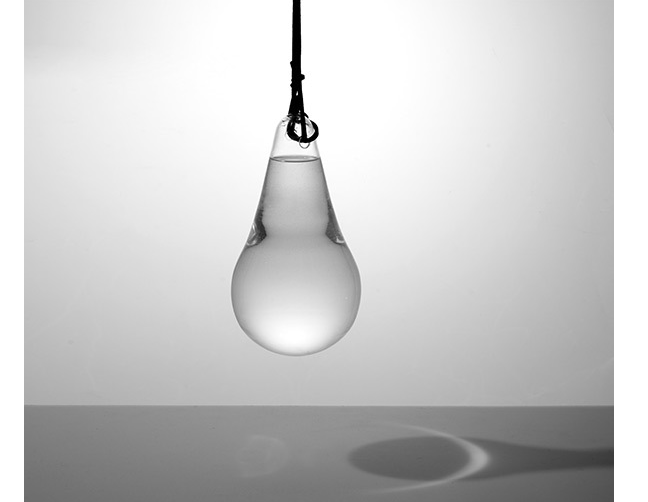

An anti-fly glass sphere looks like something a stylish wizard might hang above a patio table. In reality, it is a water-filled glass vessel designed to discourage flies by reflecting and refracting light. Inspired by the bags of water traditionally suspended around food stalls and open-air markets, the sphere turns a humble folk remedy into an attractive household object.
The idea is delightfully simple: fill the clear sphere with water, hang it where sunlight or ambient light can reach it, and let the shifting reflections create an uncomfortable visual environment for nearby flies. There are no batteries, chemical fumes, sticky ribbons, or tiny insect funerals to arrange afterward.
But does an anti-fly glass sphere actually work? The honest answer is more nuanced than the product’s name suggests. Its proposed mechanism is plausible, and many users report fewer flies in small areas, but strong scientific evidence remains limited. It is best treated as a decorative, low-risk deterrent rather than a complete fly-control system.
What Is an Anti-Fly Glass Sphere?
An anti-fly glass sphere is a transparent, refillable glass container that is partially or almost completely filled with water and suspended near a doorway, patio, market stall, dining area, or kitchen entrance. Some models are perfectly round, while others resemble a droplet, flask, or flattened globe.
Unlike a baited fly trap, the sphere is not intended to attract, capture, or kill insects. It contains no food lure or pesticide. Its purpose is to make the surrounding space visually confusing or less comfortable for flies, encouraging them to change direction before landing on food, people, or surfaces.
From Water Bags to Modern Glassware
The contemporary design is closely associated with Mexican-born designer José de la O, who drew inspiration from water-filled plastic bags commonly seen hanging around Mexican taco stands and food markets. His refined version replaced the improvised bag with handcrafted borosilicate glass and sturdy suspension hardware.
This transformation is a clever example of design preserving a familiar cultural practice while making it more durable and visually appealing. A plastic sandwich bag containing water may inspire questions from dinner guests. A sculptural glass globe containing water inspires complimentsat least until somebody asks why it is staring at the potato salad.
How Is the Glass Sphere Supposed to Repel Flies?
The leading explanation involves light refraction. When light passes from air into glass and water, its direction changes. The curved surface of a sphere can bend, magnify, invert, and scatter images from its surroundings. As the globe moves slightly in a breeze, those patterns change continuously.
Compound Eyes and Moving Light
House flies have compound eyes composed of numerous individual visual units. This arrangement gives them a broad field of view and makes them particularly responsive to motion. Their visual system is one reason a fly can launch itself from the table approximately half a second before the swatter arrives.
Supporters of the water-sphere method propose that amplified movement, flashes, and distorted reflections interfere with a fly’s visual orientation. The insect may interpret the unstable pattern as an obstacle, an unsafe area, or simply a navigational headache and fly elsewhere.
Refraction Is Real; Repellency Is Less Certain
The sphere unquestionably changes the light passing through it. That is basic optics. What has not been firmly established is whether those optical changes consistently repel flies under ordinary household conditions.
Results may depend on the fly species, brightness, position of the sun, shape of the vessel, surrounding colors, wind, competing food odors, and the number of flies already present. A sparkling globe may influence a few exploring house flies, but it is unlikely to overpower the aroma of an uncovered tray of barbecue beside an overflowing garbage can.
Does an Anti-Fly Glass Sphere Really Work?
Scientific reviews of alternative house-fly controls describe several theories about water-filled bags, including refracted light, magnified reflections, and visual disruption. However, the evidence is not sufficient to declare the method a reliably proven repellent.
Controlled demonstrations have also produced mixed or disappointing outcomes. Personal reports are similarly divided: some restaurant owners and homeowners insist that the devices reduce fly activity, while others notice no meaningful difference. Anecdotal success can be genuine, but it can also be influenced by weather, seasonal changes, sanitation, or simply where the sphere was installed.
The fairest conclusion is that an anti-fly sphere may provide localized deterrence under favorable conditions, but it should not be expected to eliminate a fly population or stop insects from breeding nearby.
What the Sphere Can and Cannot Do
| It May Help With | It Cannot Reliably Do |
|---|---|
| Discouraging occasional flies from a small, well-lit area | Eliminating eggs, larvae, or breeding sites |
| Reducing dependence on sprays around a dining space | Control a large indoor or outdoor infestation |
| Adding decorative interest to a porch or kitchen | Guarantee protection from disease-causing organisms |
| Serving as one element of an integrated plan | Replace screens, sanitation, or effective traps |
Benefits of an Anti-Fly Glass Sphere
It Uses No Insecticide
The device relies on water, glass, and available light. That makes it appealing around patios, outdoor kitchens, and dining areas where people prefer not to spray insecticides. It also produces no chemical odor and leaves no pesticide residue when used as intended.
It Does Not Kill Beneficial Insects
Sticky strips and indiscriminate outdoor traps may capture insects that were never invited to the fly dispute. A reflective sphere does not physically trap pollinators or other beneficial visitors. Its actual effects on different insect species are not well documented, but it is fundamentally a passive deterrent rather than a killing device.
It Is Reusable
A well-made glass sphere can be emptied, washed, refilled, and used through multiple seasons. Compared with disposable water bags or adhesive fly strips, it creates less routine waste.
It Looks Better Than Most Pest-Control Equipment
Fly-control products rarely win beauty contests. The glass sphere is an exception. Sunlight passing through the water creates moving highlights on nearby walls and tables, allowing the device to function as patio decor even when the local flies refuse to respect its authority.
Limitations and Safety Considerations
The most important limitation is inconsistent performance. The sphere may appear more effective in bright locations because its proposed mechanism depends on light. It may do very little in a dim hallway, shaded utility room, or windowless kitchen.
Glass also requires careful placement. A water-filled globe is heavier than it looks, so it needs a secure hook, properly rated cord, and stable mounting point. Never hang it where it could strike a person’s head, fall onto a food-preparation surface, or collide with a wall during strong wind.
Keep it beyond the reach of children and pets. Do not place ordinary glass where freezing temperatures could expand the water and damage the vessel. Even borosilicate glass, which handles temperature changes better than conventional glass, is not indestructible.
Sunlight passing through curved glass and water can sometimes concentrate heat. Avoid positioning the sphere where focused light repeatedly falls on paper, dry fabric, wood finishes, or other heat-sensitive materials. Check the surrounding surfaces at different times of day before making the installation permanent.
How to Choose the Right Glass Fly Deterrent
Look for Durable Glass
Borosilicate glass is a practical choice because it is comparatively resistant to thermal shock and is often lighter than thick decorative glass. Inspect the product for cracks, sharp seams, or a fragile neck before filling it.
Examine the Closure
A secure stopper or cap reduces spills, evaporation, and contamination. The opening should still be wide enough to make filling and cleaning manageable. A beautiful vessel that requires laboratory tweezers to clean will lose its charm surprisingly fast.
Check the Hanging Hardware
The rope, leather strap, wire, or bracket must support the combined weight of the glass and water. Choose corrosion-resistant hardware for outdoor use and inspect knots, loops, and attachment points regularly.
Favor a Clear, Curved Surface
Clear glass allows the strongest interaction between light and water. Colored or heavily frosted glass may be attractive, but it can reduce the visual effects on which the deterrent theory depends. Rounded vessels create more varied distortions than flat-sided containers.
How to Install and Maintain an Anti-Fly Sphere
- Wash the vessel: Rinse away manufacturing dust and fingerprints before the first use.
- Add clean water: Fill the sphere according to its instructions. Leaving a small air pocket can create additional reflective boundaries.
- Seal it securely: Test the stopper over a sink before hanging the sphere.
- Select a bright location: Position it near a fly entry route or gathering area where indirect or shifting light can reach it.
- Use a rated support: Install a hook suitable for the fully filled weight, not merely the empty vessel.
- Observe the area: Count or estimate fly activity before and after installation instead of relying on memory.
- Refresh the water: Replace cloudy water and clean algae or mineral deposits as soon as they appear.
White vinegar can help dissolve mineral buildup, but the sphere should be rinsed thoroughly afterward. Avoid abrasive pads that may scratch the glass. During freezing weather, empty outdoor spheres and store them safely indoors.
Where Should You Hang It?
Promising locations include a covered patio, beside an exterior doorway, near a screened porch entrance, or above the perimeter of an outdoor dining area. Keep the sphere close enough to the problem zone to be relevant without suspending glass directly over diners, hot grills, or uncovered food.
One sphere should not be expected to protect an entire yard. For a large patio, several well-spaced devices may create more reflected movement, although scientific evidence has not established an ideal number or spacing pattern.
Avoid dark corners and locations dominated by powerful food odors. If flies are entering through a damaged screen or breeding in a nearby trash container, correct those problems first. The sphere should be the decorative supporting actor, not the exhausted star carrying the entire production.
Combine the Sphere With Proven Fly-Control Methods
Public-health agencies and university pest-management programs consistently emphasize sanitation and exclusion. House flies reproduce in moist, decaying organic material, including garbage, animal waste, spoiled feed, and food residue. Removing those resources interrupts the life cycle instead of merely chasing adult flies from one table to another.
Remove Food and Breeding Sources
- Use garbage cans with tight-fitting lids.
- Empty and clean trash containers regularly.
- Pick up pet waste promptly.
- Clean spills beneath appliances and outdoor furniture.
- Keep compost properly covered and away from entrances.
- Store food in sealed containers and refrigerate leftovers.
Block Entry
Repair window screens, seal gaps around doors, and use self-closing doors where practical. Air curtains can help at frequently opened commercial entrances when correctly installed. Physical exclusion is less glamorous than a glass orb, but flies are famously unimpressed by glamour.
Use Appropriate Traps
Sticky cards, flypaper, window traps, and properly positioned ultraviolet light traps can reduce or monitor adult fly populations. In food-handling areas, traps should be placed where captured insects cannot fall onto food or preparation surfaces. Baited outdoor traps should generally be positioned away from doors so their odors do not invite flies toward the building.
Call a Professional When Necessary
Persistent numbers of blow flies, flesh flies, or house flies may indicate a hidden breeding source, such as accumulated waste, a drain problem, or a dead animal in a wall or attic. A licensed pest-management professional can identify the species and locate the source rather than treating every buzzing visitor as the same problem.
Frequently Asked Questions
Does the Water Need Pennies?
No reliable evidence shows that pennies are necessary. They may add reflections, but ordinary coins can discolor the water and leave deposits. A purpose-made glass sphere is generally intended to work with clean water alone.
Will It Repel Mosquitoes?
Do not depend on it for mosquito protection. Mosquito behavior differs from that of house flies, and proven personal protection includes appropriate repellents, protective clothing, screens, and eliminating standing water where mosquitoes breed.
Can I Make a DIY Version?
A tightly sealed clear container can reproduce the basic optical idea, but it must be lightweight and safely suspended. Avoid hanging improvised glass containers with weak string. A clear plastic vessel is safer for experimentation, although it will not have the same decorative appearance.
How Quickly Should It Work?
If the device influences fly behavior, the change should occur while the sphere is illuminated. It does not release an ingredient that builds up over time. Evaluate it over several comparable days because weather and fly activity naturally fluctuate.
Experience Notes: What Living With an Anti-Fly Glass Sphere Is Like
The following field-style experience illustrates a sensible way to evaluate an anti-fly glass sphere without confusing hope with evidence. The setting is a covered backyard patio connected to a kitchen by a sliding doora familiar summer battlefield where fruit, grilled meat, and flies all arrive with excellent timing.
Before installing the sphere, the first step is surprisingly unexciting: clean everything. The trash can is washed, the recycling is rinsed, pet waste is removed, and the patio table is wiped down. That matters because installing the globe while leaving a buffet of fly attractions nearby would be like testing an umbrella beneath a garden sprinkler.
For three afternoons, fly visits are recorded during 30-minute periods. The count does not need laboratory precision; the goal is a consistent comparison. Weather, time, food, and table position are kept as similar as practical. This baseline reveals another useful lesson: fly activity varies even when nothing changes. One afternoon may be quiet, while the next feels as if every house fly in the ZIP code received an invitation.
The sphere is then filled with clear water and hung near the sliding-door approach, about head height but safely outside the walking path. In late-afternoon sun, the glass produces shifting patches of light on the wall. The visual effect is subtle indoors and dramatically brighter outside. Even before discussing flies, the sphere earns points as decoration.
During the first trial, several flies approach the patio table, but fewer travel directly through the doorway. Is that the sphere at work? Possibly. It could also be the cleaned garbage can, a light breeze, or ordinary variation. That uncertainty is exactly why a single pleasant afternoon is not proof.
On the second day, a plate containing sliced melon is placed on the table. Flies still arrive because ripe fruit is a persuasive negotiator. They do not form an invisible no-fly circle around the globe, and one lands almost directly beneath it, apparently having skipped the product brochure. The sphere may alter approach patterns, but it does not cancel attraction to food.
A more noticeable result appears when the device is positioned where direct light reaches it. In deep shade, it behaves mostly like a hanging water ornament. Near the bright edge of the patio, reflections become stronger and more mobile, making placement seem at least as important as the sphere itself.
Maintenance is easy but not nonexistent. After several warm days, dust gathers on the outside and the water begins to show tiny suspended particles. A quick rinse restores the clarity. The mounting hook also deserves attention because the filled sphere is substantially heavier than the empty object that came out of the package.
At the end of a week, the practical verdict is neither miraculous nor dismissive. The sphere may contribute to a calmer space near a bright entrance, and it is far more attractive than dangling adhesive strips. However, the largest improvement comes from cleaning waste containers, covering food, repairing the screen, and closing the door promptly.
The best experience comes from treating the anti-fly glass sphere as functional decor with a possible deterrent benefit. If it reduces a few unwanted visitors, wonderful. If the flies remain unimpressed, the patio still gains a reusable glass accentand the household gains a clear signal that it is time to inspect sanitation, screens, drains, and other proven parts of fly management.
Conclusion
The anti-fly glass sphere is an elegant interpretation of a traditional water-bag remedy. Its curved glass and water produce genuine optical effects that could influence visually sensitive flies, but dependable repellency has not been established through strong scientific evidence.
Used safely in a bright location, the sphere offers an attractive, reusable, pesticide-free experiment for patios and entrances. Just keep expectations realistic. It may discourage occasional visitors, but it will not remove breeding material, repair a screen, seal a garbage can, or defeat a determined fly pursuing a hamburger.
Note: Treat the sphere as a supplemental deterrent, not a public-health barrier or guaranteed pest-control device. This article synthesizes information from the designer’s published materials, peer-reviewed research, the EPA, CDC publications, university extension programs, integrated pest-management manuals, and independent evaluations of water-based fly deterrents.


