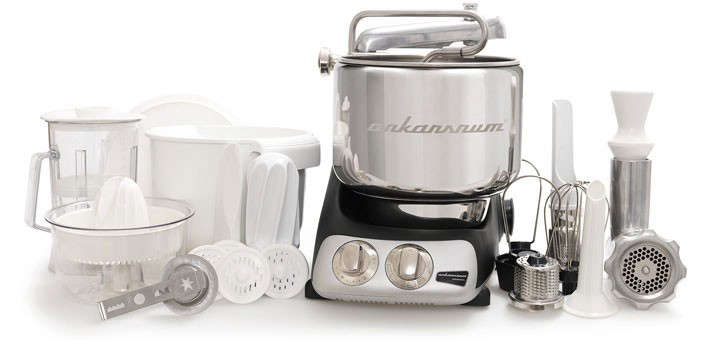

Ankarsrum Original stand mixers look as though a Swedish “Why is the enormous motor hanging above the bowl?” Instead of following the familiar tilt-head formula, Ankarsrum places the motor in the base and rotates the bowl around mostly stationary tools. The result is a stable, powerful kitchen machine that has earned a devoted following among bread bakers, sourdough enthusiasts, pizza makers, and ambitious home cooks.
The design is unusual, the accessory collection resembles a small kitchen-tool convention, and the price can cause a moment of respectful silence. Yet for people who regularly knead heavy dough, prepare large batches, or want one machine capable of performing many food-preparation jobs, the Ankarsrum Assistent Original offers a compelling combination of capacity, durability, and versatility.
What Is an Ankarsrum Original Stand Mixer?
The Ankarsrum Assistent Original is a Swedish-made stand mixer whose roots date back to 1940. Rather than using a planetary mixing system in which an attachment travels around a stationary bowl, the Ankarsrum turns its stainless steel bowl from below. A dough roller, scraper, or hook works against the moving mixture.
This arrangement is inspired more by commercial dough equipment than by the conventional household stand mixer. Because the motor sits inside the broad base, the machine has a low center of gravity. That helps it remain stable when handling stiff bagel dough, enriched brioche, whole-grain bread, or a batch of pizza dough large enough to feed a suspiciously hungry neighborhood.
f History of the Swedish Kitchen Workhorse
The original Assistent was introduced in Sweden during the 1940s. Production later moved to the community of Ankarsrum, which eventually gave the machine its modern brand name. Although the exterior styling and motor technology have evolved, the fundamental rotating-bowl concept has remained remarkably consistent.
That long manufacturing history matters because the Ankarsrum is not a novelty appliance invented during a brainstorming session involving too much cold brew. It is a mature mechanical design that has been refined over generations. Modern machines continue to be manufactured and assembled in Sweden, individually tested, and backed by a lengthy warranty on the main unit.
How the Ankarsrum Mixing System Works
The first time someone watches an Ankarsrum knead bread, the reaction is often a combination of fascination and mild confusion. The bowl spins, the roller presses the dough against its side, and the scraper guides the mixture back toward the working area. Nothing appears to be happening in the “normal” way, yet the dough gradually becomes smooth, elastic, and beautifully developed.
The Rotating Stainless Steel Bowl
The primary bowl has a 7-liter capacity and an open top. With no bulky motor head hanging above it, users can easily add ingredients, check consistency, measure dough temperature, or scrape in that last bit of flour that somehow escaped onto the counter.
The bowl can accommodate small recipes, but its greatest advantage appears during large batches. Ankarsrum states that the system can process up to approximately 5 kilograms, or about 11 pounds, of dough under suitable recipe conditions. Actual practical capacity depends on hydration, flour type, inclusions, and the density of the dough, so “maximum” should not be interpreted as a personal challenge issued by the manufacturer.
ugh Roller and Scraper
The ribbed dough roller is the Ankarsrum attachment most closely associated with bread baking. It presses and folds dough against the moving bowl in a motion that resembles gentle hand kneading. The roller arm can be positioned closer to or farther from the bowl wall, allowing the baker to control how aggressively the dough is worked.
A separate scraper remains against the side of the bowl, directing flour and wet ingredients back into the dough. Once properly adjusted, this combination can minimize the familiar stop-the-mixer, scrape-the-bowl, restart-the-mixer routine.
The roller is particularly useful for soft sandwich bread, sourdough, cinnamon-roll dough, brioche, and many moderately hydrated recipes. It can also cream butter, combine cookie dough, mix meat mixtures, and even produce remarkably smooth frosting.
The Traditional Dough Hook
The included hook provides a second approach to kneading. Many owners prefer it for very wet dough, extremely large batches, or mixtures that need stronger pulling and stretching. Choosing between the roller and hook is less about declaring one attachment the universal champion and more about learning which motion suits a particular recipe.
As a practical starting point, the roller and scraper are excellent for everyday bread dough, while the hook can be useful for high-hydration or oversized batches. Experienced owners frequently develop their own preferences after observing how different doughs behave.
What Comes With an Ankarsrum Original Mixer?
The standard package is more generous than many stand-mixer bundles. In the United States, it generally includes:
- A 7-liter stainless steel mixing bowl
- A dough roller and adjustable roller arm
- A dough hook
- A bowl scraper or dough knife
- A spatula
- A bowl cover for proofing and storage
- A 3.5-liter whisking bowl
- Balloon whisks
- Pastry or cookie beaters
- A recipe guide
The smaller whisking bowl operates differently from the stainless steel dough bowl. It remains stationary while its paired attachments rotate. This configuration is intended for whipped cream, egg whites, cake batter, meringue, cookies, buttercream, and other jobs normally assigned to a whisk or paddle.
Controls, and Warranty
The current United States version uses a 600-watt, 120-volt motor. European specifications may display a different wattage because motors, electrical systems, and rating conventions vary by market. Buyers should therefore rely on specifications for the version sold in their country rather than comparing wattage numbers without context.
Two front-mounted controls keep operation refreshingly uncomplicated. One adjusts speed, while the other works as an on-off switch and timer. The built-in timer is especially helpful for kneading: set the desired duration, continue preparing ingredients, and allow the mixer to stop automatically. It is a simple feature that feels suspiciously luxurious after years of setting flour-covered phone timers.
Ankarsrum provides a seven-year warranty on the main machine in applicable markets, while accessory coverage may be shorter. Warranty terms should always be confirmed with the authorized seller serving the buyer’s location.
Why Bread Bakers Love the Ankarsrum
Exceptional Stability
Conventional stand mixers can shake, wobble, or “walk” when kneading stiff dough. The Ankarsrum’s motor and gearing are located in its broad base, giving the machine a planted stance. Independent testers have repeatedly praised its ability to work heavy dough without performing an unscheduled countertop migration.
Gentle but Effective Gluten Development
Power alone does not make good bread. Dough needs enough mechanical development to organize gluten without being unnecessarily heated or torn. The roller’s pressing and folding action can develop strength gradually, making it especially appealing for long mixes and enriched doughs.
The open bowl also allows bakers to monitor development closely. They can observe whether the dough is clearing the bowl, becoming elastic, or passing a windowpane test instead of relying entirely on a recipe’s estimated mixing time.
Large-Batch Capacity
A seven-liter bowl provides room for multiple loaves, pizza dough for a party, or enough rolls to make Thanksgiving logistics slightly less alarming. Serious home bakers can consolidate several smaller mixing sessions into one large batch, reducing preparation and cleanup time.
Performance Beyond Bread
Although the Ankarsrum is famous for dough, independent testing has found it capable of creaming butter and sugar, whipping cream, mixing pound cake batter, beating egg whites, and preparing cookies. Serious Eats reported exceptionally fast whipped-cream performance during testing, while King Arthur Baking has highlighted its usefulness for cakes, frosting, cookies, and frozen desserts.
The Learning Curve: Different, Not Difficult
Ankarsrum Original stand mixers do require an adjustment period. Most American recipes are written for planetary mixers, where dry ingredients may be placed in the bowl first and the attachment rotates through them. With the Ankarsrum, bread recipes often work more smoothly when liquids are added first and flour is incorporated gradually.
Adding every cup of flour immediately can create a dry mass that climbs the roller, circles the bowl like a confused scarf, or refuses to combine evenly. Gradual addition allows the baker to stop when the dough reaches the correct consistency instead of blindly obeying a flour measurement that may not account for humidity, brand differences, or ingredient temperature.
The roller arm position also matters. Leaving a little space between the roller and bowl wall helps ingredients combine at the beginning. As the dough develops, the roller can be moved inward or locked at a suitable distance. A few instructional videos and two or three recipes are usually enough for the unusual controls to begin feeling logical.
This is not a machine that rewards ignoring the dough entirely. It rewards watching, adjusting, and learning. In exchange, the user gains unusually direct control over the mixing process.
Optional Ankarsrum Attachments
The Ankarsrum can be placed on its side to power several optional accessories. Depending on the package and regional availability, the attachment collection may include:
- Meat grinder and sausage-making components
- Pasta roller and pasta cutters
- Vegetable slicer and grater
- Blender
- Citrus press
- Ice cream maker
- Cookie press
- Grain or flake mill
- Additional stainless steel and whisking bowls
This ecosystem can transform the mixer from a specialized bread machine into a broader food-preparation center. However, buying every attachment immediately is rarely necessary. A smarter approach is to use the standard accessories first, identify recurring kitchen jobs, and add tools that replace equipment already taking up storage space.
The pasta attachments make sense for someone producing fresh pasta every weekend. The meat grinder may be valuable for home sausage makers. A citrus press purchased for one ambitious brunch in 2027 may spend the rest of its life contemplating its purpose in a cabinet.
Potential Drawbacks to Consider
The Premium Price
An Ankarsrum Original commonly costs around $800 in the United States, depending on color, package, promotion, and seller. Optional accessories can raise the total investment considerably. Casual bakers who make one birthday cake and two batches of holiday cookies per year may not receive enough value from its capacity and specialized engineering.
Counter and Storage Requirements
The mixer weighs roughly 29 pounds and occupies substantial counter space. Its low profile leaves the bowl accessible, but the wide base still needs a permanent or easily reached location. Anyone planning to move it from a high cabinet every Saturday morning should first conduct a respectful conversation with their lower back.
More Pieces to Organize
Two bowls, multiple whisks, a roller, a hook, a scraper, a cover, and other components provide versatility but require storage. An organized bin or drawer prevents a future mystery in which the dough knife is discovered beside the holiday napkins.
Less Familiar Operation
The controls are simple, but the mixing technique is unfamiliar. Bakers who want every recipe to work exactly as written for a conventional paddle-and-hook mixer may find the adjustment inconvenient. Those willing to observe texture and add ingredients gradually are more likely to appreciate the system.
Ankarsrum vs. a Traditional Planetary Stand Mixer
The Ankarsrum and a traditional tilt-head mixer can both prepare excellent food, but they prioritize different strengths.
| Feature | Ankarsrum Original | Traditional Planetary Mixer |
|---|---|---|
| Mixing action | Rotating bowl with roller, scraper, or hook | Rotating attachment inside a stationary bowl |
| Best-known strength | Heavy dough and large batches | Familiar all-purpose mixing |
| Bowl access | Wide and unobstructed | Partially blocked by motor head |
| Learning curve | Moderate | Low for most American recipes |
| Stability under load | Excellent | Varies by model |
| Typical buyer | Frequent bread baker or large-batch cook | General home baker |
Someone who mainly prepares cupcakes, whipped cream, and occasional cookies may prefer the familiar convenience of a conventional mixer. Someone who makes sourdough twice a week, mixes dense whole-grain loaves, or routinely doubles recipes is more likely to benefit from the Ankarsrum’s architecture.
Who Should Buy an Ankarsrum Original Stand Mixer?
The Ankarsrum is particularly well suited to:
- Frequent bread, sourdough, bagel, or pizza makers
- Home bakers who regularly double or triple recipes
- People whose current mixer struggles with stiff dough
- Cooks who value repairable, long-lasting kitchen equipment
- Users interested in grinding, pasta making, or food-processing accessories
- Bakers who prefer watching and controlling dough development
It is less compelling for occasional bakers, people with very limited storage, or users who strongly prefer the familiar workflow of a traditional paddle mixer. Price alone does not determine value; frequency of use does. A costly machine used four times each week may be a better purchase than an inexpensive appliance that spends eleven months per year wearing a decorative dust cover.
Tips for Getting Better Results
Start With Liquids
For bread dough, place water, milk, eggs, yeast, sweeteners, and other liquids in the bowl first. Add most of the flour gradually while the bowl rotates. Hold back a portion until the dough reveals whether it genuinely needs more.
Begin at a Low Speed
Low speed gives flour time to hydrate without decorating the kitchen. Increase the speed only after the ingredients have formed a cohesive mixture.
Watch the Dough, Not Just the Clock
Mixing times are estimates. Look for a smooth surface, elasticity, strength, and appropriate bowl release. Enriched dough may require longer development than lean sandwich bread.
Use the Timer Strategically
Once the dough is combining correctly, set the timer for a short interval. Check progress, adjust the roller if needed, and continue. Several controlled stages are better than one heroic 20-minute kneading marathon.
Proof in the Stainless Steel Bowl
Remove the tools, shape the dough into a rough ball, and cover the bowl with the included lid. This reduces transfers, dirty dishes, and opportunities for the dough to attach itself to an unrelated kitchen object.
The Real Ownership Experience: What Daily Use Feels Like
Living with an Ankarsrum Original is less like replacing one stand mixer with another and more like learning a slightly different style of baking. During the first few uses, the owner may repeatedly consult the manual, watch demonstrations, and wonder whether the roller is supposed to sit exactly there. That hesitation is normal. The machine provides more visible control than most planetary mixers, but it also expects the baker to use that visibility.
A typical bread session begins with liquids entering the open stainless steel bowl. The unobstructed design immediately feels practical. There is no raised motor head threatening a measuring cup, and ingredients can be poured from any convenient angle. As flour is added, the scraper draws it inward while the roller presses the forming dough against the bowl. At first, the mixture may resemble breakfast oatmeal with career uncertainty. A minute later, it becomes a shaggy mass. Gradually, it organizes itself into dough.
The experience becomes especially satisfying with large recipes. A conventional mixer may sound increasingly offended as the dough gathers around its hook. The Ankarsrum generally remains steady, and the baker can see the entire batch moving through the bowl. Instead of worrying about whether the appliance is about to walk off the counter, attention shifts to hydration, gluten development, and dough temperaturethe things that actually improve bread.
There are still moments of adjustment. Flour added too quickly may collect along the bowl or produce a stiff mixture before hydration is complete. The roller can become coated with sticky dough. Very small batches may require careful positioning. Dense cookie mixtures prepared in the whisking bowl sometimes benefit from pausing and checking that no dry pocket is hiding underneath. Ankarsrum ownership does not repeal the laws of baking.
Cleanup is generally manageable. The open stainless steel bowl is easy to reach, and the removable tools can be washed separately. Sticky bread residue is easiest to address promptly with cool water before it dries into a material suitable for residential construction. Keeping all accessories in a dedicated drawer or container makes the next baking session considerably smoother.
Over time, the machine’s unfamiliarity becomes its charm. The baker learns how much flour to reserve, where to position the roller, when to switch to the dough hook, and how different hydration levels move through the bowl. Recipes stop being rigid scripts and become starting points. That growing understanding may be one reason experienced users describe the mixer not merely as powerful, but as confidence-building.
The greatest improvement is often logistical. A baker who previously mixed two separate batches can prepare one. Pizza dough can be portioned and refrigerated for several meals. Sandwich loaves can be baked together and frozen. Holiday rolls no longer require an afternoon divided into repeated mixing cycles. The Ankarsrum does not make fermentation move faster or ovens become larger, but it removes a major production bottleneck.
For non-bread tasks, changing to the smaller bowl initially feels like assembling a different appliance. Once familiar, however, whipping cream, beating egg whites, mixing cake batter, or creaming butter becomes straightforward. The additional bowl also means bread dough can be proofing while another component is prepared, a small advantage that becomes valuable during complicated baking projects.
Attachment ownership creates another stage of the experience. A pasta roller or meat grinder can make the machine dramatically more useful, but each accessory adds cost, setup, cleaning, and storage. The happiest owners tend to purchase attachments for tasks they already perform rather than inventing new hobbies to justify a kitchen appliance. Buying a grain mill will not automatically turn Tuesday into pioneer day.
Ultimately, the Ankarsrum ownership experience rewards frequency. The more often it is used, the more intuitive the roller, scraper, speed control, and ingredient order become. For a weekly bread baker, that familiarity can transform the mixer from an expensive curiosity into the most dependable machine in the kitchen. For an occasional baker, the same features may feel unnecessary. The difference lies not in whether the Ankarsrum is capable, but in whether its owner regularly needs what it does best.
Final Verdict
Ankarsrum Original stand mixers are not inexpensive, compact, or instantly familiar. They are purposefully engineered machines with extraordinary dough capacity, a stable bottom-drive system, an open work bowl, useful timing controls, and an unusually broad accessory ecosystem.
For passionate bread bakers, the Ankarsrum can solve problems that smaller planetary mixers merely complain about. It handles heavy dough confidently, supports large batches, and makes it easier to observe gluten development as it happens. Its whisking bowl and optional accessories also prevent it from becoming a one-purpose appliance.
The learning curve should be treated as part of the purchase. Owners who spend a little time understanding ingredient order, roller placement, and dough behavior are most likely to appreciate the machine’s strengths. Once that knowledge clicks, the Ankarsrum feels less strange and more like the traditional stand mixer took an unnecessarily complicated route to the same destination.
Note: Product specifications, included accessories, colors, prices, and warranty conditions may vary by country and seller. Confirm current details with an authorized Ankarsrum retailer before purchasing. This article was developed from current manufacturer information and independent testing published by established baking, food, home, and product-review organizations.
Research synthesis:


