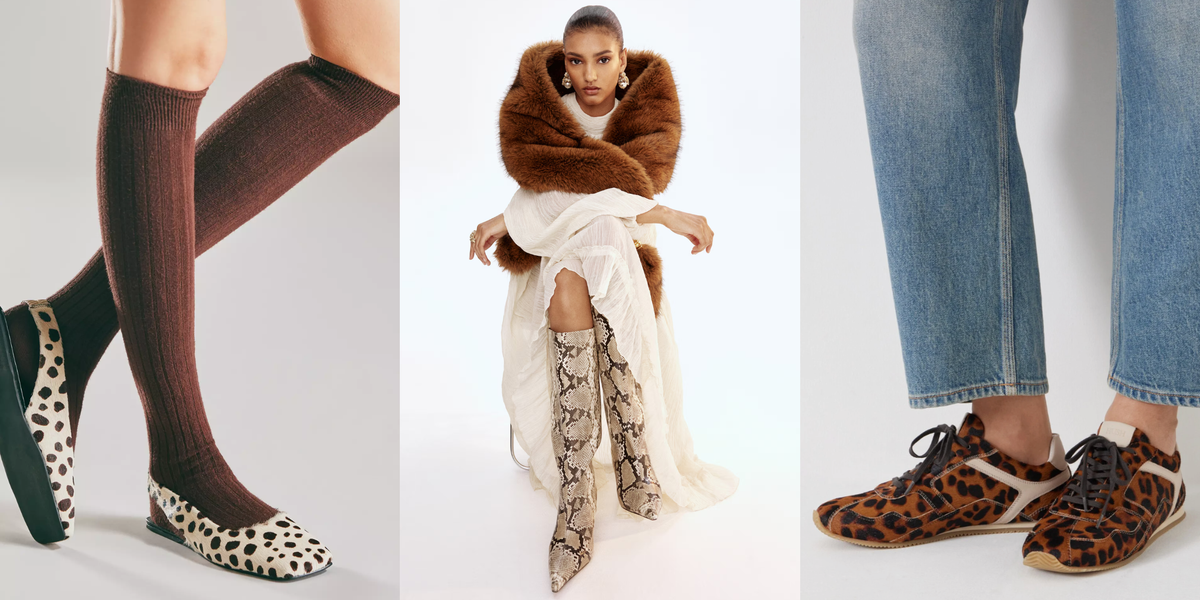
Animal print shoes are the easy trend bringing a playful touch to everyday dressing – from £30

Some fashion trends require complicated underwear, suspiciously tiny handbags, or the confidence to wear sunglasses indoors. Animal print shoes ask for far less. Slip them on with clothes you already own, and suddenly a perfectly ordinary outfit looks intentional, current, and just a little mischievous.
Leopard-print ballet flats, snakeskin slingbacks, zebra loafers, cow-print sneakers, and tiger-striped heels have all moved into the everyday footwear conversation. Fashion editors increasingly describe these patterns as wardrobe neutrals because their familiar brown, black, cream, and tan tones work with denim, tailoring, knitwear, and simple dresses. Recent runway, celebrity, and street-style coverage also shows the category expanding beyond classic leopard into cow, zebra, tiger, snake, Dalmatian, and even deer-inspired motifs.
The best part is that this trend does not have to arrive with a designer price tag. High-street animal print trainers can currently be found at around £29.99, while flats, sandals, and slingback courts appear in the £30-to-£50 range. That makes animal print shoes a relatively affordable way to refresh an outfit without replacing everything north of your ankles.
Why animal print shoes work so well
Animal print has visual energy, but shoes occupy a small enough area that the pattern rarely overwhelms an outfit. A leopard coat may announce itself from across the street. Leopard loafers are more likely to whisper, “Yes, I did think about this outfit,” which is often exactly the amount of drama required before lunch.
The naturally mixed coloring also helps. A traditional leopard pattern contains shades similar to camel, chocolate, beige, and black. Snakeskin often combines gray, cream, taupe, and charcoal. Zebra provides the same high contrast as a black-and-white accessory. These combinations connect easily with common closet colors, allowing the footwear to function almost like a textured neutral.
That versatility has been demonstrated repeatedly in recent celebrity styling. Bella Hadid has used leopard-print heels to sharpen straight-leg jeans, Zoe Saldaña has paired leopard Mary Janes with relaxed denim, and Jennifer Lawrence has worn pointed animal-print shoes beneath baggy jeans. Rihanna, Dua Lipa, and Anne Hathaway have also appeared in animal-patterned footwear ranging from tiger-striped pumps to breathable leopard Mary Janes.
The easiest animal print shoes to wear
Leopard-print ballet flats
Ballet flats are one of the least intimidating entrances into the trend. Their slim, simple shape keeps the print neat, while the flat sole works for commuting, shopping, casual offices, and lunch dates. Wear them with cropped jeans, a white button-down shirt, and a trench coat for an outfit that feels polished without looking as though you scheduled a committee meeting to assemble it.
Mary Jane versions add a strap and a slightly more playful mood. A rounded toe feels youthful, while a pointed toe looks sharper and more suitable for tailored clothes. For greater versatility, choose a leopard pattern with a tan or cream background rather than a highly saturated orange base.
Animal print loafers
Loafers are ideal for anyone who likes the concept of statement footwear but prefers structured clothing. A leopard or cow-print loafer works with ankle-length trousers, straight jeans, midi skirts, and shirt dresses. The classic silhouette prevents the pattern from feeling costume-like.
For work, combine animal print loafers with black trousers, a fine-knit sweater, and a camel blazer. On weekends, swap the trousers for loose denim and the blazer for a leather jacket. One pair of shoes, two personalities, no dramatic changing-room montage required.
Leopard and cow-print sneakers
Printed sneakers are the practical choice for long days. Some designs cover the entire upper in spots or stripes; others place the pattern only on a heel tab, side panel, or tongue. The second option is particularly useful for minimalists who want interest without turning each foot into a small safari vehicle.
Current high-street examples include faux-suede leopard trainers with gum soles, padded ankles, cushioned interiors, and flexible constructions at approximately £30. These details matter because an attractive sneaker that rubs after 12 minutes is not a bargain. It is merely a blister with excellent branding.
Snakeskin slingbacks and pumps
Snakeskin has a cooler, more refined appearance than leopard. Gray or taupe snakeskin pumps can be worn almost exactly like solid neutral shoes, but they add more depth to a black dress, navy suit, or cream trouser outfit.
A low kitten heel is usually the most wearable option for daily dressing. Slingback straps expose part of the foot, which keeps the print from looking heavy in warmer weather. For evening, a pointed snakeskin pump brings texture to a simple slip dress or wide-leg jumpsuit without competing with jewelry.
Zebra and tiger-print statement shoes
Zebra and tiger patterns are bolder because of their strong directional stripes. They look best when the rest of the outfit has clean lines. Try zebra flats with an all-black outfit, tiger heels with dark denim, or striped ankle boots with a column skirt and plain sweater.
These prints are not as quiet as a traditional brown leopard, but that is part of their charm. Sometimes an outfit does not need another sensible beige accessory. Sometimes it needs shoes that look ready to lead a small but stylish rebellion.
How to style animal print shoes for everyday outfits
Start with jeans and a plain top
The fastest formula is also the most reliable: jeans, a solid-colored top, and animal print shoes. Straight-leg, wide-leg, barrel, and cropped jeans all work, although the hem should allow at least part of the shoe to remain visible.
A white T-shirt and leopard flats create an easy daytime look. A black fitted top and snakeskin heels feel more evening-ready. Double denim paired with leopard pumps offers a fashionable contrast between relaxed fabric and dressier footwear.
Use tailoring to calm the print
Structured clothes give animal patterns a polished frame. Black trousers, charcoal suits, navy blazers, and crisp shirts make printed footwear feel deliberate rather than random. This is especially useful in offices where a full leopard dress might cause the printer to file a formal complaint.
Keep the silhouette simple and let the shoes provide the personality. A cream pantsuit with cow-print loafers can feel modern and slightly Western, while a gray suit with snakeskin slingbacks looks sleek and understated.
Pair the shoes with soft dresses
Animal print shoes can prevent floral, ruffled, or pastel dresses from feeling overly sweet. Leopard ballet flats ground a floaty midi dress, while zebra sandals add contrast to a black sundress. A low animal-print heel can also make a plain knitted dress feel suitable for dinner.
The trick is to connect one color in the pattern to the dress or an accessory. For example, repeat the black spots of leopard shoes with a black belt or handbag. The pieces do not need to match perfectly; they simply need to look as though they have exchanged contact information.
Wear one print at a time
Beginners should keep animal print below the ankle and use mostly solid colors elsewhere. This creates a clear focal point and makes the trend easier to repeat. Once that feels comfortable, experiment with a second small patterned accessory, such as a belt, scarf, or compact bag.
Matching animal print shoes and a bag can work, but exact sets may feel overly coordinated. A more modern approach is to choose related rather than identical patterns: leopard flats with a tortoiseshell hair clip, snakeskin heels with a charcoal bag, or cow-print sneakers with a brown suede belt.
Choosing the right pair from £30
Check the pattern placement
On inexpensive footwear, the quality of the print often matters more than the label. Look for spots or stripes that appear crisp rather than blurred. Examine both shoes because pattern placement may vary, especially on fabric or hair-effect uppers.
Variation is not necessarily a flaw. Slightly different markings can make the shoes look more natural. However, one shoe should not appear to be leopard while the other seems to have wandered in from an unrelated zebra department.
Prioritize comfort features
Look for padded heel collars, flexible soles, cushioned insoles, adjustable straps, and enough room across the toes. These details are particularly important in pointed flats and court shoes. Some current high-street collections combine animal prints with comfort technologies intended to improve cushioning, pressure distribution, or stability.
Try shoes later in the day, when feet may be slightly larger. Walk on both hard and carpeted surfaces if the store permits it. Check that slingbacks remain in place and that loafers do not slip excessively at the heel.
Understand the materials
Animal print describes the pattern, not necessarily the material. Options include printed canvas, faux suede, synthetic leather, embossed leather, mesh, calf hair, and vegan textiles. A £30 pair will often use synthetic materials, while real leather and hair-on finishes generally cost more.
Faux suede can provide a soft, fashionable appearance at an accessible price, but it may mark in rain. Printed leather is often more durable but requires appropriate conditioning. Mesh is breathable for summer, while canvas and textile sneakers are easygoing but may absorb stains quickly.
Calculate cost per wear
A £30 pair worn twice costs £15 per outing. The same pair worn 30 times costs £1 per outing. Before buying, identify at least three existing outfits that work with the shoes. If you cannot think of any without also purchasing new jeans, a jacket, a dress, and an entirely different social calendar, the shoes may not be the bargain they first appeared to be.
Colors that look especially good with animal print shoes
Black: The easiest partner for leopard, zebra, snake, and tiger patterns. An all-black outfit creates a clean background and lets the footwear stand out.
Denim blue: Blue jeans soften the glamour of animal print, making it feel casual and approachable.
White and cream: Light neutrals make brown leopard and cow prints look fresh, especially during spring and summer.
Chocolate and camel: These shades blend with the natural tones in many animal patterns, producing a sophisticated tonal outfit.
Red: A red sweater, handbag, or lip color adds energy to leopard shoes. Keep the rest of the outfit simple unless maximalism is the stated objective.
Pink and pale blue: Pastels create an unexpected contrast with leopard and snake patterns, making the overall look softer and more playful.
How to care for printed footwear
Apply a protector suitable for the shoe material before the first wear. Test any spray on a hidden area because some formulas may darken fabric, faux suede, or hair-effect surfaces.
Remove dry dirt with a soft brush. For synthetic leather, use a slightly damp cloth and avoid soaking the seams. Faux suede should be brushed gently in one direction after drying. Hair-on finishes require an especially light touch because aggressive rubbing can damage the texture.
Store the shoes away from direct sunlight, which may fade the pattern. Use tissue paper or shoe trees to maintain the shape, and allow damp footwear to dry naturally. A radiator may speed up the process, but it can also warp soles and stiffen uppersan impressive level of efficiency in the wrong direction.
A practical seven-day animal print shoe experiment
A useful way to decide whether animal print shoes deserve permanent closet space is to conduct a one-week styling experiment. The following sample wear diary reflects realistic commuting, work, social, and weekend situations.
Day one: the low-risk introduction
Begin with straight-leg jeans, a white T-shirt, a navy blazer, and leopard flats. The shoes make the outfit noticeably more interesting, but they do not require any other changes. The first lesson appears quickly: animal print is easiest when treated as a familiar neutral rather than a special-occasion object.
Day two: the office test
Wear the same flats with black ankle trousers and a cream sweater. In this setting, the print feels less playful and more polished. The structured trousers keep the pattern in check, while the spotted shoes prevent the outfit from looking like default corporate software.
Comfort becomes the main issue. A cushioned insole and secure heel matter more after several hours than the precise shape of the spots. This is why walking around the store before purchasing is not optional theater; it is research.
Day three: casual errands
Switch to leopard-trim sneakers with loose jeans, a sweatshirt, and a crossbody bag. A partial print is easier to wear than a fully patterned upper and works particularly well for people who usually choose plain white trainers. The outfit remains practical, but the small patterned panel adds enough personality to feel styled.
Day four: a dress experiment
Pair animal print flats with a solid black midi dress. The result is almost unfairly easy. Without the printed shoes, the dress feels safe. With them, it looks ready for lunch, a casual meeting, or an evening drink. Adding gold earrings repeats the warmth of the leopard pattern without creating an obvious matching set.
Day five: introducing color
Try dark denim, a red cardigan, and leopard loafers. The stronger color changes the mood of the shoes. Rather than being the only statement, they become part of a livelier palette. The outfit works because black and brown tones in the footwear connect with the jeans and accessories.
Day six: the evening upgrade
Use low snakeskin slingbacks with wide-leg black trousers and a satin camisole. The print appears more refined at night, especially in a narrow pointed silhouette. A low heel provides the visual effect of dressier footwear without requiring the balance skills of a circus professional.
Day seven: reviewing the results
By the end of the week, the most successful pair is likely the one that works with both denim and tailored trousers. Fully printed flats create the strongest transformation, while patterned sneakers offer the greatest comfort and easiest entry point. Heels deliver more drama but may receive fewer outings.
The experiment also reveals whether the pattern suits your actual wardrobe rather than an imaginary life involving daily fashion-week arrivals. If the shoes have worked with at least four outfits and remained comfortable, they are likely to earn a healthy cost per wear. If they have spent six days admiring the inside of their box, consider returning them while the receipt is still emotionally available.
Final verdict: a small trend with a big payoff
Animal print shoes offer an uncomplicated route into expressive dressing. They can energize basic jeans, modernize office tailoring, toughen up a romantic dress, or turn a monochrome outfit into something memorable. Leopard remains the most versatile option, but snakeskin, zebra, cow, tiger, and newer deer-inspired patterns provide plenty of room to experiment.
Starting at around £30, the trend is accessible enough to try without making a major wardrobe investment. Choose a comfortable shape, a pattern containing colors you already wear, and a material appropriate for your routine. Then use the shoes as you would a neutral paironly one with better stories.
Note: Product prices, discounts, colors, and stock availability can change. The trend examples and price ranges in this article were checked against current fashion coverage and retailer listings available on July 4, 2026.


