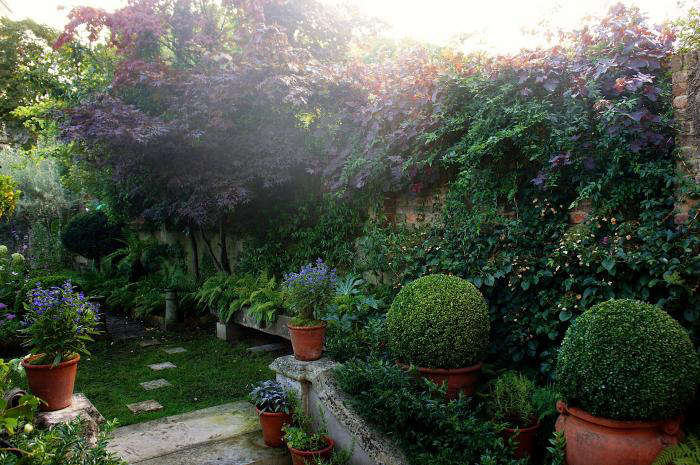

There are gardens that look finished the moment the patio is swept, and then there are gardens that look as though they have lived several fascinating lives, misplaced a key, and kept the good silver anyway. An antiques collector’s garden belongs firmly in the second camp.
In London, this style feels especially at home. Behind terraces, mews houses, and tucked-away townhouses, even a small plot can hold layers of story: a weathered stone urn, an old iron bench, a chipped birdbath, a salvaged gate, and plants with enough personality to keep the objects from turning into an outdoor museum gift shop. The goal is not to make every item match. It is to make every element feel as though it has earned its place.
This guide explores how to create an antiques collector’s garden in London with a balance of history, planting, proportion, and a little welcome eccentricity. Think less “yard sale avalanche,” more “private garden with a very good memory.”
Why an Antiques Collector’s Garden Belongs in London
London is a city of layers. Georgian brick sits beside Victorian ironwork; polished museum galleries are minutes from mossy churchyards; quiet garden squares appear between busy streets like secrets the city forgot to lock away. That makes London garden design a natural stage for collected objects.
Historic gardens offer an important lesson: ornaments are not merely decorations. They can guide the eye, mark an entrance, frame a view, offer a pause beside a path, or give a planted area a center of gravity. A stone finial at the end of a gravel walk says, “Look this way.” An old chair under a clipped hedge says, “Sit down before you become emotionally attached to the compost.”
The best antique garden ornaments also soften the neatness of an urban garden. London plots can be narrow, enclosed, and visually close to neighboring buildings. A weathered object adds depth, texture, and a sense of time, making a modest courtyard feel less like an exterior room with a recycling bin and more like a small landscape with its own mythology.
Start With a Story, Not a Shopping List
A collector’s garden becomes convincing when it has a point of view. Before buying anything, choose a loose narrative. It does not need to be rigid; gardens are allowed plot twists. But a framework prevents a space from becoming a committee meeting of unrelated objects.
Choose a Design Direction
A Georgian-inspired London garden might use limestone urns, clipped evergreen shapes, pale gravel, restrained flowering plants, and one or two classical-looking busts. A Victorian garden style can support cast-iron furniture, terracotta pots, ferny planting, botanical labels, and a touch more theatricality.
An Arts and Crafts direction may favor handmade tiles, old stone troughs, cottage-garden flowers, and objects with visible workmanship. Another option is the “found in London” approach: a vintage wire chair, reclaimed brick edging, a faded enamel sign, a galvanized watering can, and a repurposed architectural fragment.
The trick is to choose pieces that share a mood rather than an identical birthday. A garden does not need a matching set. In fact, matching sets are often where the fun goes to take a nap.
Map the Garden Like a Tiny Estate
Even a small London garden benefits from a simple layout. Divide it into three or four scenes rather than displaying every antique at once. This creates rhythm and gives each item room to breathe.
The entrance scene might include a reclaimed gate, a pair of planted urns, and a path made from brick, gravel, or worn stone. The seating scene could use an antique garden bench beneath a climbing rose or trained pear tree. A focal scene at the far end might hold a statue, birdbath, vintage trough planted with herbs, or weathered mirror placed carefully against a wall to reflect foliage rather than the neighbor’s bins.
Use sightlines deliberately. In a long, narrow garden, a focal point at the far end can make the space feel more generous. In a square courtyard, one strong central piece, such as a stone urn or low fountain, can anchor the composition.
Do not fill every empty patch. Empty space is not a failure of collecting; it is the velvet rope that lets the important objects look important.
Choosing Antiques That Can Live Outdoors
Garden antiques need more than charm. They need stamina. Rain, frost, heat, damp, climbing plants, and the occasional determined pigeon are not gentle roommates.
Stone, Terracotta, and Architectural Fragments
Stone and terracotta are classic choices, but inspect them closely. Look for deep cracks, unstable repairs, crumbling edges, and signs that a piece may trap water. A cracked urn can still be beautiful, especially as a planted object, but it should not be expected to behave like a brand-new watertight planter.
Place delicate pieces where drainage is good and water will not freeze inside them during cold weather. A carved stone fragment can be especially effective when partially surrounded by low planting. It should look discovered, not stranded.
Cast Iron, Lead, and Bronze
Cast iron is wonderfully London: sturdy, architectural, and slightly moody. Antique garden benches, plant stands, railings, and gates can age gracefully, but rust requires attention. Surface rust may add character; flaky corrosion that weakens joints is another matter.
Lead statuary and ornaments can be historically significant and visually magical, but they are soft and vulnerable. Handle them carefully, place them on secure bases, and seek professional advice if a piece shows structural problems. Bronze develops a natural surface over time, and aggressive cleaning can remove the very character a collector paid to acquire. In the antiques world, “shiny” is not automatically a compliment.
Wooden Furniture and Salvaged Pieces
Old wood can be lovely outdoors when it is sound, protected, and allowed to drain. It can also become a sponge with ambitions. Check joints, feet, and hidden undersides. Use discreet pads to keep furniture from sitting directly in persistent moisture, and avoid placing fragile wood in the wettest, shadiest part of the garden.
The Art of Display: One Hero, Several Supporting Actors
The fastest way to lose the soul of a collector’s garden is to treat every object as a star. Instead, choose one hero item per zone and build a supporting cast around it.
A tall antique urn may be the hero. Around it, use lower planting, a quiet paving material, and perhaps one small companion object such as a worn stone fragment. A vintage metal chair can become the hero when framed by airy grasses or soft, billowing flowers. An old trough may lead a kitchen-garden corner when planted with thyme, chives, and trailing nasturtiums.
Scale matters. Tiny treasures disappear in a large bed; giant statuary can make a small patio feel as though it is being supervised by an emperor. Before buying, mark the object’s footprint with cardboard or painter’s tape. Stand back. View it from indoors. Walk around it. This may feel dramatic, but it is less dramatic than discovering that the “perfect” urn blocks the back door.
Grouping often works well in odd numbers, but that does not mean every corner needs three objects. A pair of matching urns can be elegant at an entrance. A single object can be deeply effective in a quiet planting bed. Let symmetry be a choice, not a reflex.
Planting Around Vintage Garden Decor
Plants should make antiques feel discovered rather than staged. The most successful planting has contrast: soft against hard, loose against formal, bright against dark, and fresh growth against weathered surfaces.
For a classic London garden mood, combine evergreen structure with seasonal softness. Yew, holly, clipped shrubs, and other evergreen forms can provide shape, while roses, salvias, geraniums, foxgloves, astrantias, ferns, and grasses add movement.
In shadier plots, hellebores, epimediums, hydrangeas, ivy, and ferns can create a woodland feeling around stone or iron objects. A classical urn suits restrained foliage or a spill of pale flowers. A battered zinc tub looks at home with herbs, sedums, or cheerful annuals.
A rusty gate can become a vertical garden for climbers, but do not allow vigorous plants to swallow fragile metalwork whole. Romance is lovely; structural damage is less poetic.
Care, Conservation, and Common Sense
An antiques collector’s garden is not a set-it-and-forget-it arrangement. It is a living collection exposed to weather, soil, insects, wind, and human enthusiasm. Regular observation is the least glamorous habit and the most useful one.
Check stone for movement, cracking, and water pooling. Check metal for loose joints and active corrosion. Check wooden pieces for softness, rot, and wobbly legs. Keep climbing plants and soil away from vulnerable surfaces where moisture can linger.
Clean gently. A soft brush and plain water are often safer than harsh chemicals or pressure washing. When an object seems valuable, rare, structurally unstable, or unusually old, consult a qualified conservator before attempting repairs.
Security deserves a plan as well. Small antique pieces can walk away with astonishing confidence. Secure valuable items discreetly, photograph them for records, and keep purchase details and condition notes. A collector’s garden should feel welcoming, not fortified, but it does not need to offer a free grab-and-go exhibit.
Creating the Look on a Sensible Budget
You do not need a grand budget to create a garden with age and character. Start with one authentic antique or salvage piece, then use materials with honest texture: reclaimed brick, aged terracotta, gravel, timber, clay pots, and simple metal supports.
Avoid fake aging as the main event. A new item with a distressed finish may be useful, but a garden gains more credibility from real materials, patient weathering, and thoughtful composition. Spend first on structure, drainage, paths, and a few memorable objects. Add smaller finds slowly.
The best collections grow over time, much like a good garden and an excellent collection of stories.
A 500-Word London Experience: Seeing a Collector’s Garden With Fresh Eyes
The most useful way to understand an antiques collector’s garden in London is to stop thinking like a shopper for an afternoon and start thinking like an editor. You are not hunting for “stuff.” You are learning to notice relationships: how a gate changes a view, how a bench gives a wall a purpose, and how a mossy pot becomes more interesting when surrounded by fresh green leaves.
Begin in a formal public garden or square, preferably early in the day when the light is still deciding what it wants to be. Notice what happens at the entrance. Is there a change in paving? Are there paired containers, clipped shrubs, railings, or a path that slows you down? These small acts of choreography are useful in a private garden, too. An antique does not have to be enormous to create a sense of arrival.
Next, look for the difference between an object placed in a garden and an object belonging to a garden. A statue belonging to a garden is usually framed by planting, given enough empty space, and positioned where it can be discovered gradually. It does not scream from the center of the lawn like a contestant on a reality show. Take mental notes on what is behind the object, what is in front of it, and what you see when you approach from different angles.
Then study surfaces. London gardens are full of useful lessons in patina: soot-darkened brick, painted iron, aged stone, old timber, gravel, wet leaves, and leaves that have somehow made peace with a stone step for twenty years. This is not a demand for neglect. It is a reminder that materials become richer when they are allowed to be real.
In your own garden, do not polish every trace of age away. Preserve what is stable, repair what is failing, and let time do some of the decorating for free. A garden can be cared for without looking as though it has been wrapped in plastic for a royal inspection.
A visit to a museum garden, historic house garden, or well-kept neighborhood square can also sharpen your eye for scale. Notice how large objects are often balanced by broad planting beds or open paving, while smaller objects sit closer to paths and seats. This is the secret behind many satisfying garden scenes: proportions are doing quiet work while everyone compliments the roses.
Finish the day by writing down three things you genuinely noticed, not three things you think you are supposed to want. Perhaps it was a low stone basin, a pair of iron chairs, the way a climbing plant crossed a wall, or an old urn that looked better because it was slightly crooked. Those observations are more valuable than a shopping list. They reveal your taste.
Back home, choose one corner of your outdoor space. Remove what distracts from it. Add one object with history or texture. Plant around it with patience. Then leave room for the next discovery. A collector’s garden is never truly finished, which is fortunate: London weather, like a good antique dealer, always gives you something else to consider.
Conclusion: Let the Garden Collect Its Own Stories
An antiques collector’s garden in London is less about owning old things than creating a conversation between objects, plants, architecture, and time. The most memorable spaces are edited, not crowded. They pair a few meaningful antique garden ornaments with generous planting, sensible conservation choices, and enough breathing room for each piece to be noticed.
Build slowly. Choose objects that can cope with outdoor life. Let paths, hedges, walls, and views do as much work as the antiques themselves. Above all, resist the urge to make everything perfect. A garden with a little wear, a little mystery, and a bench that looks as though it has heard several excellent secrets is usually the one people remember.
SEO Metadata