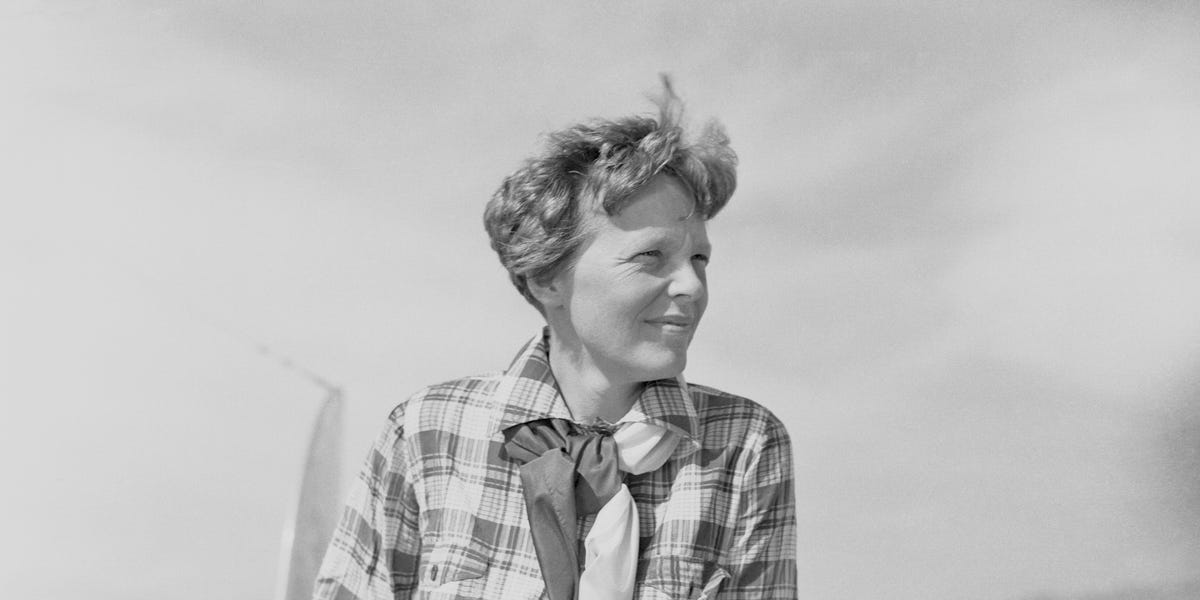

Amelia Earhart vanished in 1937, but the mystery surrounding her final flight has never exactly respected closing time. One of the most intriguing clues is a partial human skeleton discovered three years later on a remote Pacific atoll. A 2018 forensic anthropology study argued that the lost bones were more consistent with Earhart than with almost anyone in a large reference sample. That sounds like a solved caseuntil the missing evidence, competing analyses, and stubborn Pacific Ocean enter the room.
Accuracy note: The island’s modern name is Nikumaroro, although the requested headline spells it “Nikumamoro.” Nikumaroro, formerly Gardner Island, is part of the Republic of Kiribati.
Why the Nikumaroro Bones Matter
On July 2, 1937, Earhart and navigator Fred Noonan left Lae, New Guinea, in a Lockheed Electra 10-E. Their destination was Howland Island, a tiny, low-lying target roughly 2,500 miles away. The U.S. Coast Guard cutter Itasca waited nearby to help with radio navigation, but the aircraft and ship never established reliable two-way communication.
Earhart reported that she could not see Howland and that fuel was running low. Her final confirmed transmission placed the Electra somewhere along a navigational line running northwest to southeast. A massive Navy and Coast Guard search found no verified wreckage, survivors, or debris. The conventional explanation remains simple and grim: the Electra exhausted its fuel, crashed into the ocean, and sank near Howland.
The Nikumaroro hypothesis offers another ending. Supporters argue that Earhart and Noonan may have followed their navigational line southeast and reached the reef surrounding Gardner Island, now Nikumaroro. They could have landed on the exposed reef at low tide, transmitted for a limited period while the aircraft remained operable, and later become castaways after rising water or surf carried the plane into deeper water.
The 1940 Discovery on Nikumaroro Island
In 1940, British colonial officer Gerald Gallagher investigated the discovery of a human skull on the island. A more extensive search produced part of a skeletonreported as 13 bonesnear evidence of a small fire. Items associated with the site included part of a shoe, a bottle, and a wooden box thought to have held a sextant. Because Earhart had disappeared in the region only three years earlier, officials briefly considered whether the remains could be hers.
The bones were sent to Fiji and examined by physicians. Dr. D. W. Hoodless, principal of the Central Medical School, recorded measurements of the skull and several long bones. He concluded that the remains belonged to a short, stocky male, probably European or of mixed ancestry. That assessment pushed the Earhart idea aside, and the bones later disappeared from the documented record.
That loss is the central frustration of the entire case. Modern researchers are not working with a skull, teeth, DNA, trauma patterns, or microscopic evidence. They are working with a small set of measurements written down more than eight decades ago. It is forensic anthropology performed through a historical keyhole.
What the 2018 Study Found
University of Tennessee anthropologist Richard L. Jantz revisited the case in a 2018 paper published in Forensic Anthropology. His study challenged Hoodless’s conclusion and argued that skeletal sex estimation in 1941 lacked the standards, databases, and statistical tools available to modern forensic specialists.
Reassessing the Original Male Identification
Jantz did not claim that every early physician was guessing wildly at a pile of bones. His narrower argument was that Hoodless’s methods, particularly the method used to estimate sex, were not dependable enough to treat “male” as settled fact. A partial skeleton can be difficult to classify even under good conditions, and the surviving notes preserve only four skull measurements and three long-bone measurements.
That matters because human variation is messy. Tall women, slight men, robust women, and narrow-framed men do not politely organize themselves into separate museum drawers. Earhart herself was relatively tall and lean for a woman born in the late nineteenth century. A researcher using older expectations about body shape could potentially misclassify such remains.
Comparing the Measurements With Earhart
Because Earhart’s skeleton was unavailable for the comparisonan inconvenience of almost cosmic proportionsJantz estimated her body proportions from photographs, documented height and weight, license records, and surviving clothing. He then compared those estimates with the historical Nikumaroro measurements using modern statistical techniques, including Mahalanobis distance, a method for judging similarity across several measurements at once.
The result generated the headline: Earhart was more similar to the Nikumaroro bones than 99 percent of individuals in a large reference sample. Jantz concluded that the remains were likely hers, or belonged to someone unusually similar to her in body size and limb proportions.
This was not a DNA match, a dental identification, or a name tag helpfully attached to a femur. It was a probability-based comparison built from limited secondary data. Even so, it significantly strengthened the argument that the original male classification should not automatically disqualify Earhart.
Why Scientists Still Debate the Bones
The 2018 analysis did not arrive in an empty hangar. In 2015, archaeologists Pamela Cross and Richard Wright had published a detailed review defending the original examination. They argued that the first-hand investigators were experienced, that later researchers were evaluating incomplete records by proxy, and that the available evidence more likely described a robust male.
That disagreement is not a side note; it is the scientific heart of the story. One position emphasizes the value of modern statistical methods and the weaknesses of early skeletal sex estimation. The other emphasizes the value of direct physical examination and the danger of extracting too much certainty from sparse, possibly inconsistent measurements.
The Original Bones Are Missing
Nothing would improve this debate faster than finding the original remains. DNA could be compared with maternal-line relatives. Teeth might be checked against dental records. Bone chemistry could offer clues about diet and geographic history. Pathology could be compared with known medical information. Unfortunately, searches of likely repositories in Fiji and elsewhere have not produced a verified set of Gallagher’s bones.
The Measurements May Contain Unknown Error
Jantz’s calculations assume that Hoodless measured the bones accurately and in ways compatible with modern reference data. If an anatomical landmark was selected differently, a bone was incomplete, or a handwritten figure was wrong, the statistical result could shift. Sophisticated software cannot travel back to 1941 and ask the ruler what happened.
A 99 Percent Similarity Is Not a 99 Percent Identification
The most commonly repeated number is easy to misunderstand. Saying Earhart was more similar than 99 percent of people in a reference sample does not mean there is a 99 percent probability that the bones were hers. It means her estimated dimensions were unusually close to the recorded bone measurements compared with people in that database. Identity also depends on context: who could have reached the island, who else lived or traveled there, and whether the associated artifacts truly belong to the same event.
How the Bones Fit the Nikumaroro Castaway Theory
The bones are only one part of a larger circumstantial case. Researchers connected with The International Group for Historic Aircraft Recovery, commonly known as TIGHAR, have spent decades examining archival records, radio reports, photographs, artifacts, and archaeological sites linked to Nikumaroro.
At the so-called Seven Site, investigators documented evidence of fires, food remains, bottles, cosmetic containers, and other material that they believe could reflect the presence of a Western castaway. Forensic dogs alerted to the scent of historical human decomposition in the area during a 2017 expedition, although excavations did not uncover identifiable human bones.
Other objects have attracted attention, including shoe fragments, a sextant box, and pieces of aluminum. Some researchers have proposed links to Earhart, Noonan, or the Electra. None has been universally accepted as a unique match. Nikumaroro was visited by shipwreck survivors, colonial settlers, laborers, Coast Guard personnel, and later expeditions, giving the island a complicated archaeological history. On a site like that, an old bottle is evidence of human activitynot automatically Amelia’s shopping receipt.
The Aircraft Problem
The castaway theory must also explain why Navy aircraft searching Gardner Island about a week after the disappearance did not spot Earhart, Noonan, or the Electra. Supporters suggest the plane may have been obscured, submerged, or swept from the reef before the aerial search. Skeptics argue that this sequence requires several favorable assumptions and still lacks confirmed wreckage.
Deep-sea searches around Nikumaroro have not located a verified Electra. Searches near Howland have also failed to settle the issue. A widely discussed sonar target reported near Howland in 2024 renewed excitement, but it was not confirmed as Earhart’s aircraft. The Pacific continues to respond to expensive technology with the maritime equivalent of a shrug.
What Evidence Could Finally Solve the Amelia Earhart Mystery?
A conclusive identification would require evidence with a secure chain of custody and features unique enough to exclude reasonable alternatives. The best possibilities include:
- Recovering the original Nikumaroro bones and obtaining usable DNA or dental evidence.
- Finding additional remains at the 1940 site with ancient DNA that can be compared with Earhart’s relatives.
- Locating identifiable Electra wreckage carrying serial numbers, distinctive modifications, or components documented on Earhart’s aircraft.
- Discovering an artifact with secure context that can be linked specifically to Earhart or Noonan rather than to general twentieth-century activity.
- Reconstructing the final flight with better archival data that strongly favors either a Nikumaroro landing or an ocean crash near Howland.
Until then, the 2018 study should be treated as an important argument, not a final verdict. It demonstrates that the bones cannot be dismissed merely because a 1941 examiner labeled them male. It does not demonstrate, beyond reasonable scientific dispute, that Amelia Earhart died on Nikumaroro.
Why the Story Still Captivates Us
Earhart’s disappearance combines technological ambition, human vulnerability, incomplete communication, and a landscape vast enough to hide almost anything. She was not merely a missing celebrity. She was a record-setting pilot, writer, advocate for women in aviation, and public symbol of possibility. The mystery endures partly because her achievements made the unfinished final chapter feel especially abrupt.
There is also a lesson in how evidence changes over time. A conclusion written in 1941 can be challenged by a database created decades later. A forgotten colonial file can become central evidence. A photograph can be measured, remeasured, and debated. Yet new tools do not magically turn fragments into certainty. Sometimes they reveal that an old answer was too confident without providing a complete replacement.
The Experience of Investigating the Nikumaroro Bones
Following the Amelia Earhart bones story is less like watching a detective dramatically reveal the culprit and more like assembling a puzzle while several pieces are missing, two may belong to another box, and a coconut crab appears to have opinions. The experience is valuable precisely because it forces readers to separate an exciting possibility from a demonstrated fact.
A good place to begin is with the primary timeline. Earhart and Noonan disappeared on July 2, 1937. The bones were found in 1940. Hoodless examined them in Fiji and recorded measurements. Those remains later vanished. Modern analyses therefore depend on notes rather than direct inspection. Once that sequence is clear, sensational headlines become easier to evaluate.
The next experience is archival. Reading radio logs, government correspondence, expedition reports, and old medical notes can feel surprisingly intimate. Small phrases carry enormous weight because there are so few surviving data points. A line about fuel, a set of numbers on a sextant box, or a physician’s choice of measurement can redirect an entire theory. It becomes obvious why historians care about provenance: without knowing where a record came from and how it was created, even a dramatic clue can wobble like a folding card table.
The forensic side offers another lesson. Statistical similarity is powerful, but it must be interpreted in the right frame. Readers can ask practical questions: What population was used for comparison? How were Earhart’s dimensions estimated? How much uncertainty comes from photographs? Were the old bone measurements compatible with modern definitions? Those questions do not “debunk” the study. They show how science becomes stronger through testing, criticism, and replication.
Imagining fieldwork on Nikumaroro adds a physical dimension to the story. The atoll is remote, hot, densely vegetated in places, surrounded by reef, and affected by storms, tides, wildlife, and decades of human disturbance. Search teams must transport equipment across enormous distances, work within environmental protections, document every find, and resist the temptation to treat each unfamiliar object as the answer. Archaeology rewards patience and punishes wishful labeling.
The most useful personal takeaway is a habit of calibrated language. “The bones were Amelia Earhart’s” goes beyond the evidence. “The bones could not have been hers” also goes too far. A more responsible conclusion is that the 2018 study found a notable statistical resemblance and weakened confidence in the original male identification, while the loss of the remains prevents definitive testing.
That may feel less satisfying than a solved mystery, but it is a better experience of history. It leaves room for wonder without renting the attic to conspiracy theories. It respects both the researchers doing difficult work and the unknown person whose bones were found. Most importantly, it keeps Earhart’s life from being swallowed by the mystery of her death. The bones may eventually tell us where her journey ended; her documented achievements already tell us why the world still cares.
Conclusion
The claim that Amelia Earhart’s bones were found on Nikumaroro Island is scientifically plausible, historically fascinating, and still unproven. Richard Jantz’s 2018 study showed that Earhart’s estimated body proportions closely matched the surviving measurements and that the 1941 male identification deserves skepticism. Critics reasonably counter that measurements made from lost remains cannot replace a first-hand reexamination.
For now, the Nikumaroro bones remain one of the strongest and most disputed clues in the Earhart case. They may represent a famous aviator who survived her final flight only to die as a castaway. They may belong to someone else entirely. Science has reopened the file, but it has not stamped it “case closed.”


