
Your hands are the overachievers of your body. They text, type, grip coffee mugs, open stubborn snack bags, wave dramatically when you see someone across the street, and occasionally rescue your phone from the edge of a table like tiny action heroes. Yet most people do not think about hand and finger exercises until stiffness, soreness, weakness, or a cranky thumb starts interrupting everyday life.
The good news: a simple hand exercise routine can help support flexibility, range of motion, grip strength, finger coordination, and comfort. These movements are often recommended in hand therapy, arthritis care, occupational therapy, and general mobility programs because they train the small joints, tendons, and muscles that make your hands so useful. You do not need a gym membership, a fancy machine, or a personal trainer named Chad yelling “one more rep!” from across the room. Most of these exercises can be done at a desk, on the couch, or during a quick break from typing.
Before you begin, remember the golden rule of hand exercises: gentle beats heroic. These movements should feel like light stretching or mild effort, not a battle against your knuckles. If you have a recent injury, severe swelling, numbness, tingling, a diagnosed hand condition, or pain that keeps getting worse, check with a healthcare professional or hand therapist before starting. Stop any exercise that causes sharp pain. Your hands are useful; do not turn them into a science experiment.
Why Hand and Finger Exercises Matter
Hands are built from a complicated team of bones, joints, tendons, ligaments, nerves, and muscles. When they move well, daily life feels effortless. When they get stiff, even simple tasks can become oddly dramatic. Buttoning a shirt, opening a jar, holding a pen, playing an instrument, gardening, cooking, gaming, or using a phone can suddenly feel like your fingers are running outdated software.
Hand and finger exercises may help maintain joint flexibility, improve circulation, reduce stiffness, support grip and pinch strength, and keep the fingers moving through their natural range. They are especially useful for people who use their hands repeatedly throughout the day, such as office workers, artists, mechanics, musicians, hairstylists, cooks, students, gamers, crafters, and anyone who has ever lost a wrestling match with a pickle jar.
Before You Start: A Simple Safety Checklist
Warm up first
Cold, stiff hands do not love sudden activity. Try soaking your hands in warm water, taking a warm shower, or rubbing your palms together for 30 to 60 seconds before exercising. Warmth can make movement feel smoother, especially in the morning or after long periods of typing.
Move slowly
Hand exercises are not speed drills. Slow movement gives your joints and tendons time to glide comfortably. Think “smooth piano player,” not “raccoon trapped in a keyboard.”
Use a light effort
A mild stretch is fine. Pain is not the goal. If your fingers, wrist, or thumb become more painful during exercise, reduce the intensity or stop.
Stay consistent
Most people get better results from a short daily routine than from one intense session per week. Five to ten minutes can be enough to make hand mobility part of your normal routine.
10 Ways to Exercise Hands & Fingers
1. Gentle Fist Stretch
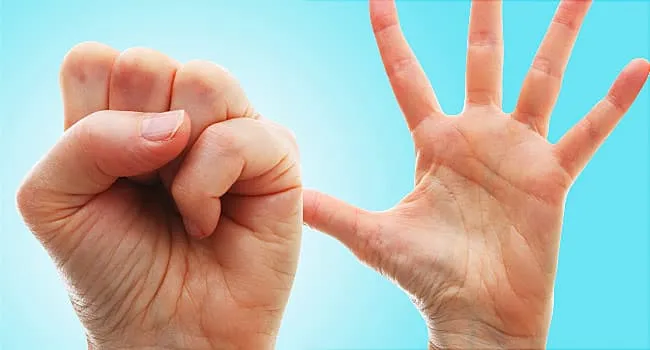
The gentle fist stretch is one of the easiest hand exercises for stiffness. Hold your hand upright with your fingers straight and close together. Slowly bend your fingers into a loose fist, placing your thumb around the outside of your fingers. Do not squeeze. Hold for two to five seconds, then open your hand and stretch your fingers straight again.
Repeat 10 times on each hand. This movement helps your fingers move through flexion and extension, which are the bending and straightening patterns used all day. It is useful before typing, writing, cooking, crafting, or any task that requires repeated finger movement.
2. Finger Lifts
Place one hand flat on a table, palm down. Keep your wrist relaxed. Lift your thumb gently off the table, hold for two seconds, then lower it. Repeat with each finger one at a time. Try not to lift the entire hand or lean your wrist sideways.
Do five rounds on each hand. Finger lifts can support individual finger control, coordination, and range of motion. This exercise looks small, but it can feel surprisingly challenging, especially for the ring finger, which often acts like it signed a contract with the middle finger and refuses to move alone.
3. Thumb-to-Finger Touches
Hold your hand upright with your fingers relaxed. Touch the tip of your thumb to the tip of your index finger to form an “O” shape. Hold for three to five seconds, then open your hand. Repeat with the middle finger, ring finger, and little finger.
Perform five rounds on each hand. This exercise is excellent for pinch control and thumb mobility. It mimics everyday motions like picking up coins, holding a pencil, buttoning clothes, using utensils, and grabbing tiny objects from the floor while wondering why they are always the same color as the carpet.
4. Finger Spread and Close
Place your hand flat on a table or hold it in the air with your palm facing down. Spread your fingers apart as wide as comfortable, then bring them back together. Keep the movement smooth and controlled.
Repeat 10 to 15 times on each hand. Finger spreading helps activate the small muscles between the fingers. These muscles support hand stability, dexterity, and coordination. This is a helpful exercise for people who type, play musical instruments, draw, knit, crochet, or do any activity requiring precise finger placement.
5. Tabletop Bend
Start with your fingers straight. Bend only the large knuckles at the base of your fingers so your fingers form a tabletop shape. Your fingertips should point forward, and your fingers should remain straight from the middle joints to the tips. Hold for three seconds, then return to a straight hand.
Repeat five to 10 times on each hand. This movement trains the base knuckles and helps maintain finger mobility. It is a useful addition to a hand exercise routine because it isolates a motion that many people do not practice intentionally.
6. Hook Fist
Hold your hand upright with your fingers straight. Bend the middle and end joints of your fingers while keeping the large knuckles straight. Your fingers should look like hooks. Hold for three seconds, then straighten them again.
Repeat five to 10 times per hand. The hook fist is often used in tendon-gliding routines because it encourages the tendons in the fingers to move smoothly. It can be especially helpful for people who feel stiff after long periods of gripping, typing, or using tools.
7. Full Tendon Glide Sequence
A tendon glide is like a polite traffic pattern for your fingers. Start with your hand upright and fingers straight. Move into a tabletop position. Return to straight. Next, make a hook fist. Return to straight. Then make a gentle full fist. Return to straight again.
Repeat the full sequence five times on each hand. This exercise moves the fingers through several positions and may help reduce stiffness while improving coordination. Keep the pace slow. The goal is smooth motion, not finger gymnastics for an imaginary audience.
8. Wrist Flexor and Extensor Stretch
Your fingers and hands do not work alone. Many muscles that control hand and finger movement begin in the forearm and cross the wrist. To stretch the wrist extensors, hold one arm out in front of you with the palm facing down. Gently bend your wrist so your fingers point toward the floor. Use the other hand to apply light pressure until you feel a comfortable stretch along the top of the forearm. Hold for 15 to 30 seconds.
To stretch the wrist flexors, extend your arm with the palm facing up. Gently pull the fingers back toward your body until you feel a stretch along the underside of the forearm. Hold for 15 to 30 seconds. Repeat on both sides. These stretches are useful during work breaks, especially if you spend hours typing, using a mouse, gaming, writing, or gripping tools.
9. Soft Ball Squeeze
Use a soft foam ball, therapy putty, rolled towel, or sponge. Hold it in your palm and squeeze gently. Hold for three to five seconds, then release. Repeat 10 times on each hand.
This exercise can support grip strength, but it is not right for every situation. If you have inflamed joints, an arthritis flare, severe hand pain, or a condition that worsens with gripping, skip this move until a healthcare professional says it is appropriate. Grip training should feel controlled, not aggressive. Your goal is hand strength, not proving dominance over a helpless sponge.
10. Finger Walking
Place your hand flat on a table with your palm down. Move your thumb slightly away from your fingers. Starting with the index finger, “walk” each finger one at a time toward the thumb. Try to keep your palm in contact with the table and move each finger with control.
Repeat five times on each hand. Finger walking improves coordination, lateral finger movement, and control. It is particularly useful for tasks that require fine motor skills, such as sewing, drawing, playing guitar, using a computer trackpad, or picking up small items.
A Simple 7-Minute Hand Exercise Routine
If you want an easy routine, try this sequence once daily or every other day:
- Warm your hands for 30 to 60 seconds.
- Gentle fist stretch: 10 repetitions per hand.
- Finger lifts: 5 repetitions per finger.
- Thumb-to-finger touches: 5 rounds per hand.
- Finger spread and close: 10 repetitions per hand.
- Tendon glide sequence: 5 rounds per hand.
- Wrist stretches: 15 to 30 seconds each direction.
This routine is short enough to fit into a lunch break, study break, work break, or evening wind-down. The key is regular practice. Think of it like brushing your teeth, except your fingers do not need mint flavor to cooperate.
Who Can Benefit From Hand and Finger Exercises?
Many people can benefit from hand mobility exercises. Office workers may use them to reduce stiffness from typing and mouse use. Students may find them helpful after writing or using devices for long periods. Musicians can use gentle movements to warm up before playing. Crafters, artists, and DIY fans may use them to balance repetitive hand activity. Older adults may use them to help maintain independence with daily tasks.
People with arthritis, carpal tunnel symptoms, tendon irritation, post-injury stiffness, or chronic hand weakness should be more cautious. In those cases, exercises should be matched to the condition and guided by a doctor, occupational therapist, or certified hand therapist. The right movement can help; the wrong intensity can irritate symptoms.
Common Mistakes to Avoid
Doing too much too soon
Hands contain small structures that can become irritated. Start with fewer repetitions and build gradually. More is not always better. Sometimes more is just more annoyed knuckles.
Exercising through pain
Mild stretching is acceptable. Sharp pain, burning, numbness, or increasing swelling is not. Stop and rest if symptoms worsen.
Ignoring the wrist and forearm
Finger movement depends heavily on the wrist and forearm. Add wrist stretches and posture breaks to support overall hand comfort.
Only exercising when pain appears
Hand exercises work best as maintenance, not just emergency repair. A few minutes a day can help keep your hands ready for the tasks you ask them to perform.
When to Seek Professional Help
See a healthcare professional if you have severe pain, sudden weakness, numbness, tingling, visible deformity, swelling with redness or warmth, trouble moving a finger, locking or catching, symptoms after an injury, or pain that does not improve with rest. These signs may need medical evaluation. A hand therapist can assess grip strength, range of motion, coordination, sensation, and daily function, then create a personalized program.
of Practical Experience: What Hand Exercises Feel Like in Real Life
In real life, hand and finger exercises are not glamorous. Nobody finishes a set of finger lifts and gets dramatic movie lighting. But the benefits often show up in ordinary moments, which is exactly where hand function matters most. You notice it when your fingers feel less stiff while typing a morning email. You notice it when opening a water bottle does not require a full-body negotiation. You notice it when your thumb stops complaining after a long scroll session through recipes, messages, or “just one more” video.
One practical experience many people share is that warm-up matters more than expected. Doing hand exercises with cold fingers can feel awkward, like trying to fold cardboard. But after warm water, a shower, or even a minute of rubbing the palms together, the same movements often feel smoother. This is especially true in the morning, when hands can feel puffy or stiff from sleep. A gentle fist stretch and thumb-to-finger touches can become a low-effort way to wake the hands before the day starts.
Another real-world lesson is that consistency beats intensity. A person may try to squeeze a ball with heroic effort for one day, then stop because the hand feels sore. A better approach is usually lighter and more boring: a few controlled repetitions, repeated regularly. Boring is underrated. Boring is how teeth get brushed, plants get watered, and fingers stay useful.
Desk workers often discover that hand exercises work best when paired with breaks. A two-minute routine between typing sessions can refresh the hands and wrists. Finger spreads, wrist stretches, and tendon glides can be done without leaving the chair. The routine may look a little odd if someone walks by, but that is a small price to pay for hands that feel less like rusty hinges.
People who cook or do household chores may benefit from using exercises before and after demanding tasks. For example, before chopping vegetables, opening jars, carrying grocery bags, or scrubbing pans, a warm-up can prepare the fingers. Afterward, gentle stretching can reduce that tight, overworked feeling. The same idea applies to gardening, crafting, painting, sewing, woodworking, and playing instruments. Hands like variety. They do not love gripping one object for an hour while the rest of the body pretends everything is fine.
It is also common to learn that some exercises are not right for every hand. Ball squeezes may help one person build grip strength but irritate another person’s sore joints. Thumb stretches may feel great for someone with mild stiffness but uncomfortable for someone with active thumb pain. That is why the best routine is flexible. The goal is not to complete every exercise at any cost. The goal is to build a routine your hands can tolerate and benefit from.
Finally, hand exercises can create a better connection with your body. You start noticing which fingers move easily, which ones resist, whether one hand is stronger, and how daily habits affect stiffness. That awareness can help you adjust your workspace, take breaks sooner, use larger grips, avoid unnecessary strain, and ask for help when symptoms are not normal. In other words, hand exercises are not just tiny workouts. They are a practical reminder that your hands do a lot for you, and they deserve a little maintenance before they file a formal complaint.
Conclusion
Hand and finger exercises are simple, low-cost, and easy to fit into daily life. They can support flexibility, range of motion, grip strength, coordination, and comfort when performed gently and consistently. Start with basic movements such as gentle fists, finger lifts, thumb touches, finger spreads, tendon glides, wrist stretches, and finger walking. Keep the routine pain-free, warm up first, and avoid forcing stiff or irritated joints.
Your hands do not need a complicated training plan. They need regular movement, smart breaks, and a little respect for all the work they do. Treat them well, and they will be more likely to keep helping you type, cook, create, carry, grip, wave, high-five, and open snacks with dignity.


