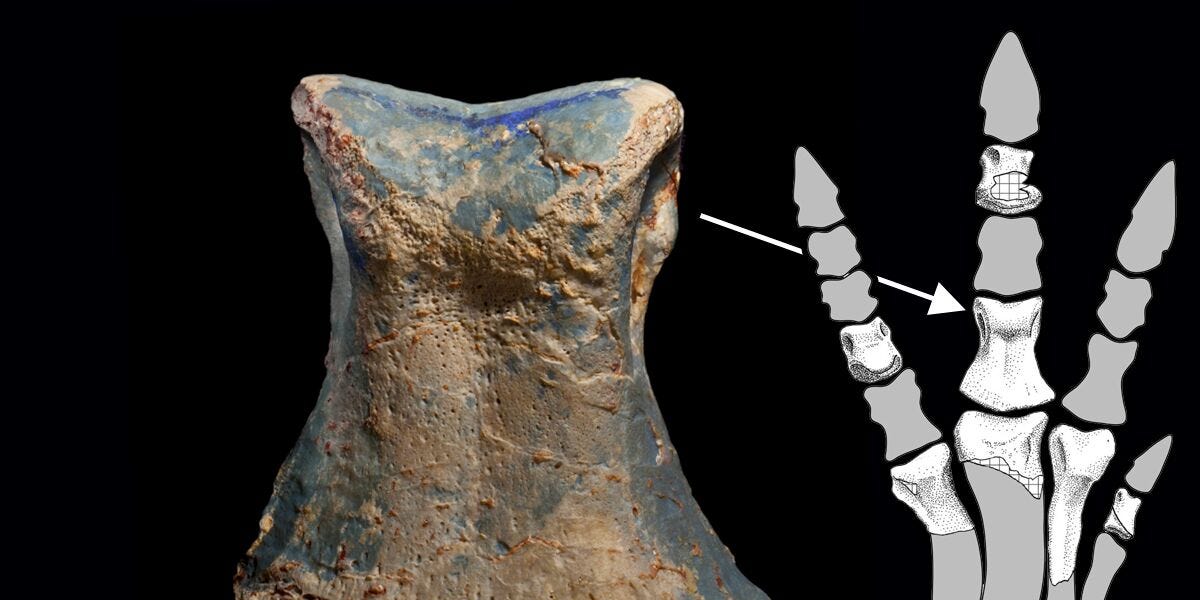

Most people go opal mining hoping to find a flash of blue, green, or fiery red hidden inside a stubborn chunk of rock. Bob Foster, an opal miner working near Lightning Ridge in New South Wales, Australia, found something even stranger: dinosaur bones so beautiful they looked as if nature had hired a jeweler. What began as a miner’s ordinary search for opal became one of the most remarkable fossil stories in modern paleontologya discovery that introduced the world to a new species of dinosaur called Fostoria dhimbangunmal.
The headline almost sounds like a movie pitch: “Opal miner unearths new species of dinosaur.” Add a dusty Australian outback town, glittering fossils, a decades-long scientific mystery, and a dinosaur herd preserved in gemstone, and you have the sort of story that makes both paleontologists and rock collectors sit up a little straighter. The only thing missing is a dinosaur wearing a tiny miner’s helmet, and honestly, the internet is probably working on that.
But behind the sparkle is serious science. The opalized dinosaur fossils from Lightning Ridge reveal rare clues about Australia’s mid-Cretaceous world, when lush floodplains, rivers, lakes, and forests covered areas that are now dry and rugged. They also show why miners, museums, researchers, and local communities all play a role in protecting fossils that might otherwise be broken apart, sold, or simply overlooked.
The Discovery: When an Opal Mine Became a Dinosaur Site
In the 1980s, Bob Foster was mining for opal at the Sheepyard opal field near Lightning Ridge, a region famous for producing some of the world’s most vivid black opal. While breaking through rock, Foster noticed a strange object that did not look like ordinary opal. At first, he reportedly thought one piece looked like a horse hoof. That guess was understandableminers are experts at reading stone, but fossil bones can be sneaky little impostors.
Instead of smashing the rock to free the opal, Foster paused. That moment of curiosity mattered. The object turned out not to be a hoof at all, but part of a dinosaur vertebra. Over time, more bones emerged from the underground mine. Scientists later recognized the fossils as belonging to a previously unknown dinosaur species, now named Fostoria dhimbangunmal.
The name honors Robert Foster, whose careful attention saved the fossils from destruction. The species name, dhimbangunmal, means “sheep yard” in local Indigenous languages, recognizing the Sheepyard locality where the bones were found. The naming choice ties the discovery not only to a person, but also to place, landscape, and cultural memory.
Meet Fostoria dhimbangunmal, the Opalized Dinosaur
Fostoria dhimbangunmal was a plant-eating dinosaur that lived around 100 million years ago during the mid-Cretaceous period. It belonged to a group known as iguanodontian ornithopodsherbivorous dinosaurs related to better-known animals such as Iguanodon and Australia’s Muttaburrasaurus. In plain English, this was not a sharp-toothed movie monster. It was more likely the Cretaceous version of a big, sturdy browser, built for eating vegetation and minding its own prehistoric business until geology gave it a gemstone makeover.
Researchers identified bones from at least four individuals, making the find especially important. Australia has produced many fascinating dinosaur fossils, but complete or near-complete dinosaur skeletons are rare. Opalized dinosaur material is even rarer. Many opal fossils consist of a single tooth, shell, or fragment. The Fostoria remains, however, include dozens of bones and represent one of the most complete opalized dinosaur skeletons known.
The fossils include parts from across the body, including skull material. That matters because skull bones often provide key anatomical details for identifying species and understanding evolutionary relationships. In this case, the fossils helped scientists describe a new dinosaur, compare it with relatives, and better understand the diversity of plant-eating dinosaurs in ancient Australia.
Why Are the Bones Made of Opal?
Opalized fossils form when silica-rich water seeps into buried remains. Over long periods, the silica can replace bone, shell, or wood, eventually hardening into opal. The result is a fossil that preserves biological structure while also showing the iridescent shimmer of gemstone. It is as if the Earth looked at an ordinary fossil and said, “Nice, but what if we added jewelry?”
Lightning Ridge is one of the best places on Earth for this unusual process. The region’s geology allowed opal to form in cavities and cracks underground, including spaces left by ancient organic material. Because of that, miners searching for gemstones sometimes uncover fossils of plants, shells, reptiles, mammals, and dinosaurs. Some are scientifically priceless even when they are not gem-quality opal.
This creates a tricky tension. A miner may find a fossil while looking for saleable stone. The fossil might contain opal, but its greatest value may be scientific rather than commercial. If the object is cut, polished, broken, or sold without documentation, important information about its age, location, and anatomy can be lost forever. The Fostoria story is a reminder that a single careful decision underground can preserve a whole chapter of prehistory.
Lightning Ridge: Australia’s Glittering Fossil Time Capsule
Lightning Ridge is famous for opal, but to paleontologists it is also a window into the Cretaceous. Around 100 million years ago, the area looked nothing like the dusty mining country visitors see today. It was part of a wet, green environment shaped by rivers, lakes, floodplains, and nearby inland seas. Plant-eating dinosaurs would have found plenty to chew on, while crocodile-like reptiles, turtles, fish, invertebrates, and other animals shared the ecosystem.
That ancient setting explains why the area has produced such a wide variety of fossils. Lightning Ridge has yielded opalized remains of dinosaurs, marine reptiles, freshwater animals, plants, and early mammals. Each discovery helps researchers reconstruct a world that no longer exists. Think of it as a prehistoric group chat, except every message is written in bone, shell, tooth enamel, and silica.
The discovery of Fostoria dhimbangunmal is especially valuable because it provides evidence of multiple dinosaurs from the same deposit. That raises questions about behavior, environment, and death. Were these animals part of a herd? Did they die together during a flood or drought? Were their bones collected by water and buried in the same place? Paleontology rarely gives instant answers, but good fossils allow better questionsand better questions are where real science begins.
Why This New Dinosaur Species Matters
It Expands Australia’s Dinosaur Record
Australia’s dinosaur fossil record is patchy compared with places such as western North America, China, or Argentina. Many Australian dinosaur species are known from fragmentary remains. That makes every well-preserved discovery important. Fostoria dhimbangunmal adds another named dinosaur to the continent’s fossil record and helps fill gaps in what scientists know about southern hemisphere dinosaur evolution.
It Shows That Opal Miners Can Be Scientific Heroes
Many important fossils are found not by professional paleontologists, but by farmers, construction workers, hikers, quarry workers, and miners. Foster’s discovery shows how local knowledge and scientific research can work together. The miner recognized that the object was unusual, preserved it, and eventually the material reached experts who could study it properly. In fossil terms, that is a happy ending with extra sparkle.
It Preserves a Rare Dinosaur Bonebed
The presence of bones from at least four individuals makes the find more than a one-dinosaur story. A bonebed can reveal information about populations, growth stages, and ancient environments. Even when bones are incomplete, their association with one another can help scientists understand whether animals lived together, died together, or were transported into the same deposit after death.
It Proves Museum Collections Still Have Surprises
The fossils were discovered decades before they were formally described as a new species. That delay may sound surprising, but it is common in paleontology. Museums and collections around the world hold specimens that have not yet been fully studied. Sometimes a fossil waits years for the right expert, technology, funding, or research question. Dinosaurs may be extinct, but apparently their paperwork can still be very much alive.
The Long Road From Mine to Scientific Name
A fossil does not become a new species the moment someone finds it. Scientists must prepare the material, compare it with known animals, study its anatomy, and publish their findings in a peer-reviewed scientific journal. For Fostoria dhimbangunmal, that process took decades. The bones were found in the 1980s, but the species was formally described in 2019.
That long timeline reflects both the difficulty and care involved. Opalized fossils can be fragile, valuable, and difficult to prepare. Researchers must avoid damaging the specimen while revealing enough anatomical detail to study it. Modern imaging methods, including CT scanning, can help scientists examine internal structures without cutting into the fossil. For rare opalized dinosaur bones, non-destructive methods are especially useful.
The formal naming of Fostoria also shows why fossil context matters. A beautiful bone is exciting, but a beautiful bone with reliable location data, geological context, and associated material is far more useful. Paleontologists need to know where a fossil came from, what rock layer held it, and what other fossils were nearby. Without that information, even the prettiest fossil can become a scientific puzzle with half the pieces missing.
What Did Fostoria Look Like?
Based on its classification as an iguanodontian ornithopod, Fostoria dhimbangunmal was a herbivorous dinosaur with a body plan suited for moving on two legs, though some relatives could also use all fours depending on posture and activity. It likely had strong hind limbs, a balancing tail, and teeth adapted for processing plants. It was not the largest dinosaur in Australia’s Cretaceous world, but it was far from tiny.
Imagine a plant-eating dinosaur built like a practical outback vehicle: sturdy, mobile, and designed to handle rough conditions. It would not win a beauty contest against a peacock, but once its bones turned into opal, it definitely won the fossil fashion award. Few dinosaurs can claim to have become both a scientific specimen and a geological gemstone.
Opal Fossils and the Problem of Preservation
Opalized fossils are spectacular, but their beauty can put them at risk. A fossil that sparkles may attract collectors, jewelers, and buyers who are more interested in appearance than scientific information. Once a fossil is cut into decorative pieces, its anatomy and context may be permanently lost. That is why collaboration between miners and museums is so important.
Organizations such as the Australian Opal Centre have worked to preserve opalized fossils and educate the public about their importance. These efforts help ensure that unusual specimens are not dismissed as odd rocks or treated only as gemstones. When miners know what to look for and whom to contact, discoveries can move from mine shafts to research collections instead of vanishing into private drawers.
What the Discovery Teaches Us About Ancient Australia
The Fostoria fossils offer a glimpse of Australia during a time when the continent was still connected to broader southern landmasses and hosted ecosystems very different from those of today. Plant-eating dinosaurs roamed river systems and floodplains. The climate, vegetation, and geography created habitats where iguanodontians and other animals could thrive.
Because Australia’s dinosaur record is incomplete, each new species helps refine the bigger picture. Researchers can compare Fostoria with dinosaurs from other parts of Gondwana and examine how dinosaur groups spread, adapted, or became isolated. Even small anatomical details can shift scientific understanding. In paleontology, one bone can be a footnoteor it can rewrite a paragraph.
Why the Story Captures the Public Imagination
Part of the appeal is simple: dinosaurs are already cool, and opals are already beautiful. Put them together and you get a fossil that seems almost fictional. Most fossils are brown, gray, or black. Opalized fossils can gleam with flashes of color. That makes them visually unforgettable and easy for the public to connect with.
The human story is just as compelling. A miner notices something odd. A fossil survives because someone chooses curiosity over routine. Scientists later reveal that the object belongs to a new dinosaur species. The discovery links labor, luck, patience, local heritage, and academic research. It is a reminder that science is not only done in laboratories. Sometimes it begins underground with dust on your boots and a weird-looking rock in your hand.
Experience Section: What This Discovery Feels Like From the Human Side
Stories like “opal miner unearths new species of dinosaur” resonate because they feel personal. You do not need a PhD to understand the thrill of spotting something unusual. Anyone who has picked up a strange shell at the beach, found an old coin in a drawer, or turned over a rock just because it looked interesting knows that tiny spark of discovery. Most of the time, the object is ordinary. Occasionally, it is not. That possibility keeps curiosity alive.
For an opal miner, the experience must be even more intense. Mining is repetitive, physical, dusty work. You search through stone hoping for color. Your eyes become trained to notice flashes, seams, textures, and shapes. Then one day the rock does not behave like a rock. It has form. It suggests bone. It interrupts the routine. At that moment, the miner has to make a choice: break it, ignore it, sell it, or save it.
The Fostoria discovery shows the value of slowing down. Foster’s decision not to destroy the strange specimen preserved information that scientists could use decades later. That is a powerful lesson far beyond paleontology. Many important discoveries begin as interruptions. They are the things that do not fit the pattern, the details that make someone pause and say, “Wait a second, what is this?”
There is also a lesson for museums and researchers. The fossils did not become famous overnight. They waited. They moved through collections, study, preparation, and publication. In a culture obsessed with instant results, the story is refreshingly patient. A dinosaur that lived 100 million years ago can wait another few decades to be named properly. Science, unlike social media, does not always need to sprint.
For readers, the experience is a reminder to respect ordinary places. Lightning Ridge is not a polished laboratory or a Hollywood jungle. It is a working mining town with rough ground, hard labor, and people trying to make a living. Yet beneath that landscape lay a dinosaur herd preserved in opal. The extraordinary was hidden inside the everyday. That is the kind of idea that makes the world feel bigger.
If you ever visit a museum display of opalized fossils, take a moment to look past the color. The shine is beautiful, but the real magic is time. You are seeing chemistry, biology, geology, and human curiosity stacked together. A living animal became a buried skeleton. The skeleton became a mineralized fossil. The fossil became opal. A miner found it. Scientists studied it. Now it tells a story.
And yes, it is perfectly acceptable to think, “That dinosaur got a better glow-up than most celebrities.” Because it did.
Conclusion: A Gemstone Dinosaur With a Serious Scientific Legacy
The discovery of Fostoria dhimbangunmal proves that paleontology still has plenty of surprises waiting underground. An opal miner searching for gemstones helped reveal a new species of dinosaur, a rare opalized skeleton, and a valuable glimpse into Australia’s Cretaceous past. The story is dazzling, but its importance goes deeper than sparkle. It shows why fossils must be preserved, why local discoveries matter, and why curiosity can change science.
In the end, the best part of the story is not just that an opal miner found a dinosaur. It is that he noticed something unusual and gave it a chance to speak. Millions of years after Fostoria walked through ancient floodplains, its opal bones are still doing what great fossils do best: making the past feel alive again.