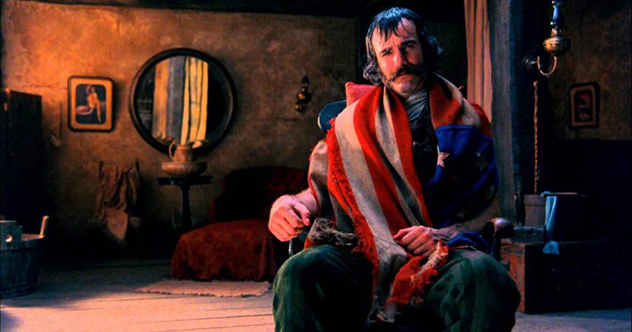

There is something irresistible about period films set in the 1800s. Maybe it is the candlelight. Maybe it is the waistcoats. Maybe it is the thrilling possibility that a single meaningful glance across a drawing room could cause three families, two fortunes, and one emotionally repressed gentleman to collapse into chaos. Whatever the reason, the 19th century remains one of cinema’s richest playgrounds.
The 1800s gave filmmakers everything: grand romances, revolutions, social rules sharp enough to cut glass, industrial change, frontier expansion, war, abolition, gothic mansions, family dramas, and dresses that required their own zip code. For viewers, the best 19th-century period dramas do more than dress actors in bonnets and boots. They use the past to explore timeless questions about love, class, freedom, identity, ambition, and what happens when someone says, “I am not here to be sensible,” then immediately makes a life-changing decision in a field.
This list of the top 10 period films set in the 1800s blends literary adaptations, historical dramas, romantic epics, and character-driven masterpieces. Some are elegant and witty. Some are emotionally devastating. Some will make you want to reread classic novels. Others may make you grateful you live in an era with antibiotics, text messages, and pants that do not require a valet.
Why Period Films Set In The 1800s Still Fascinate Audiences
The 19th century was a century of contradiction. It was refined and brutal, romantic and restrictive, progressive and deeply unjust. That makes it perfect for cinema. A director can place one character in a ballroom and another in a courtroom, a battlefield, a plantation, a windswept moor, or a New England attic, and still be exploring the same central question: how much freedom can a person claim in a world determined to define them?
Great period films set in the 1800s are not museum displays. They are living stories. They let audiences feel the pressure of reputation, the terror of poverty, the ache of forbidden love, and the courage required to challenge systems that look permanent. The costumes and production design may pull us in, but the emotional stakes keep us watching.
Top 10 Period Films Set In The 1800s
1. Pride & Prejudice (2005)
Setting: Early 19th-century England
Joe Wright’s Pride & Prejudice is one of the most beloved period films set in the 1800s because it understands that Jane Austen is not just about manners. She is about tension. Every conversation between Elizabeth Bennet and Mr. Darcy feels like verbal fencing performed by two people who would rather perish than admit they are impressed.
The film follows Elizabeth, a sharp, independent young woman, as she navigates family pressure, class expectations, romantic misunderstandings, and one very damp marriage proposal. Keira Knightley gives Elizabeth a lively intelligence, while Matthew Macfadyen’s Darcy is awkward, proud, and quietly melting from the inside like a candle in a waistcoat.
What makes this adaptation stand out is its earthy energy. The Bennet household feels crowded, noisy, and alive. The dresses are lovely, but the hems get muddy. The camera moves through fields, kitchens, ballrooms, and bedrooms with a freshness that makes Regency England feel less like a painting and more like a home where someone has misplaced a ribbon and a sister is definitely crying upstairs.
For viewers searching for the best 1800s romance films, Pride & Prejudice remains essential. It is witty, gorgeous, emotionally satisfying, and proof that a hand flex can do more dramatic work than an entire speech.
2. Little Women (2019)
Setting: 1860s Massachusetts and beyond
Greta Gerwig’s Little Women gives Louisa May Alcott’s classic novel a warm, modern heartbeat without stripping away its 19th-century soul. Set largely around the American Civil War era, the film follows the March sistersJo, Meg, Beth, and Amyas they grow from imaginative girls into women facing love, loss, money, ambition, and the terrifying business of choosing a future.
One reason this film feels so alive is its structure. Instead of telling the story in a straight line, Gerwig moves between childhood and adulthood, letting memory color the present. Golden scenes of sisterly chaos contrast with cooler, quieter adult moments, making the passage of time feel personal rather than decorative.
Saoirse Ronan’s Jo is restless, funny, stubborn, and deeply relatable to anyone who has ever wanted independence and approval at the same time. Florence Pugh gives Amy unexpected depth, transforming a character often dismissed as spoiled into someone practical, artistic, and painfully aware of how limited women’s choices were in the 1800s.
As a period drama, Little Women is a triumph because it treats domestic life as epic. A burned manuscript, a schoolroom humiliation, a sister’s illness, or a conversation about marriage can carry the weight of battle. It reminds us that history is not only made in parliaments and wars. Sometimes it is made in attics, kitchens, letters, and dreams.
3. Jane Eyre (2011)
Setting: 19th-century England
Cary Joji Fukunaga’s Jane Eyre is the kind of gothic period drama that seems to arrive wrapped in fog. Based on Charlotte Brontë’s 1847 novel, the film follows Jane, an orphaned girl who grows into a governess and falls in love with the brooding Edward Rochester, only to discover that Thornfield Hall has more secrets than a locked attic at midnight.
Mia Wasikowska’s Jane is quiet but never weak. She brings a steeliness to the role that makes Jane’s moral independence feel as dramatic as any sword fight. Michael Fassbender’s Rochester is intense, wounded, and occasionally so moody that one suspects the weather is simply following his emotional schedule.
The film works because it balances romance with self-respect. Jane wants love, but not at the cost of her conscience. That makes the story feel surprisingly contemporary. In a century when women’s economic and social options were limited, Jane’s insistence on spiritual equality feels radical.
Visually, Jane Eyre is one of the most atmospheric 19th-century period films. The moors are bleak, the interiors are shadowed, and the costumes are restrained rather than showy. Everything seems designed to reflect Jane’s inner world: controlled, observant, lonely, and quietly blazing.
4. The Age of Innocence (1993)
Setting: 1870s New York high society
Martin Scorsese may be best known for crime stories, but The Age of Innocence proves he can make a dinner invitation feel as dangerous as a back-alley deal. Adapted from Edith Wharton’s novel, the film is set in the rigid world of 1870s New York society, where everyone smiles beautifully while quietly enforcing rules that could suffocate a person.
Daniel Day-Lewis plays Newland Archer, a wealthy lawyer engaged to the proper May Welland, played by Winona Ryder. His carefully arranged life is disrupted by Countess Ellen Olenska, played by Michelle Pfeiffer, a woman whose independence makes her both fascinating and socially threatening.
The brilliance of the film lies in its restraint. No one needs to shout. A glance across an opera box can do the damage. A flower arrangement can carry emotional meaning. A polite conversation can be a full-scale social ambush wearing gloves.
Among period films set in the 1800s, The Age of Innocence is one of the sharpest examinations of class and conformity. Its world is beautiful, but beauty becomes part of the trap. Scorsese shows that repression can be cinematic when every room is full of people pretending not to notice the heartbreak sitting beside them.
5. The Piano (1993)
Setting: 1850s New Zealand
Jane Campion’s The Piano is a haunting period film that moves far from the drawing rooms of England and into the muddy, isolated landscapes of colonial New Zealand. The story follows Ada McGrath, a Scottish woman who does not speak, arriving with her young daughter and her piano for an arranged marriage.
Holly Hunter gives a remarkable performance as Ada, communicating through sign language, expression, music, and willpower. Her piano is not a hobby or a decorative symbol. It is her voice, her memory, her emotional territory, and possibly the only object in the world that fully belongs to her.
The film explores desire, power, communication, and colonial tension with unusual intensity. It is not a cozy period drama. It is strange, sensual, sometimes uncomfortable, and deeply original. Anna Paquin, in her film debut, brings astonishing presence as Ada’s daughter Flora, a child who understands too much and not enough at once.
The Piano deserves a place among the best period films of the 1800s because it expands what a historical drama can look and feel like. Instead of polished parlors, it gives us wet forests, rough settlements, cultural friction, and a woman fighting to be heard without speaking a word.
6. 12 Years a Slave (2013)
Setting: 1840s to 1850s United States
Steve McQueen’s 12 Years a Slave is one of the most important historical dramas set in the 1800s. Based on the memoir of Solomon Northup, the film tells the story of a free Black man from New York who is kidnapped in 1841 and sold into slavery in the American South.
Chiwetel Ejiofor’s performance as Northup is devastating in its restraint. He captures not only terror and grief, but intelligence, dignity, and the exhausting discipline of survival. The film refuses to soften the cruelty of slavery, yet it also refuses to reduce Northup to suffering alone. He remains a thinker, musician, husband, father, and witness.
As a period film, 12 Years a Slave is essential because it confronts the 19th century without nostalgia. The production design is historically detailed, but the film’s power comes from its moral clarity. It shows that beautiful landscapes and elegant clothing can exist beside monstrous injustice.
This is not casual comfort viewing, nor should it be. It is a necessary film for understanding how cinema can engage with American history honestly. Among 1800s historical films, it stands as a landmark: painful, humane, and unforgettable.
7. Lincoln (2012)
Setting: 1865 Washington, D.C.
Steven Spielberg’s Lincoln turns legislative process into gripping drama, which sounds impossible until Daniel Day-Lewis walks into the room wearing a shawl and somehow makes political patience feel heroic. Set during the final months of the American Civil War, the film focuses on Abraham Lincoln’s effort to secure passage of the Thirteenth Amendment.
Rather than covering Lincoln’s entire life, the film narrows its focus. That choice gives the story urgency. The war is nearing its end, but the future of slavery in the United States depends on votes, compromises, strategy, timing, and moral conviction.
Day-Lewis avoids turning Lincoln into a marble statue. His Lincoln is weary, funny, shrewd, gentle, and politically brilliant. Sally Field brings emotional force as Mary Todd Lincoln, while Tommy Lee Jones gives the film a sharp edge as Thaddeus Stevens.
Lincoln is one of the best 19th-century American period dramas because it understands that democracy is messy. Progress does not arrive with a choir and a perfect speech. Sometimes it arrives through arguments, paperwork, exhausted leaders, and people who know history is waiting outside the chamber door tapping its foot.
8. Amistad (1997)
Setting: 1839 and the early 1840s
Another Steven Spielberg historical drama, Amistad dramatizes the events surrounding the 1839 revolt aboard the Spanish ship La Amistad and the legal battle that followed in the United States. The film features Djimon Hounsou as Cinqué, alongside Morgan Freeman, Anthony Hopkins, and Matthew McConaughey.
As a period film set in the 1800s, Amistad blends courtroom drama with maritime history and abolitionist politics. Its central conflict is not only legal but moral: who has the right to define another human being as property?
Hounsou’s performance gives the film its emotional center. His presence communicates fear, outrage, leadership, and grief, even when language barriers shape the story. Hopkins, as John Quincy Adams, brings theatrical gravity to the courtroom scenes, reminding viewers that some speeches in period dramas arrive wearing powdered dignity and carrying a thunderstorm.
Amistad is not perfect, but it remains a powerful introduction to a significant 19th-century legal and human rights struggle. It belongs on this list because it shows the 1800s as a battleground of law, empire, commerce, and conscience.
9. The Count of Monte Cristo (2002)
Setting: Beginning in 1815 France
If some period dramas are delicate cups of tea, The Count of Monte Cristo is a goblet thrown dramatically against a stone wall. Based on Alexandre Dumas’s classic novel, the 2002 adaptation follows Edmond Dantès, a young sailor falsely imprisoned after betrayal by people he trusted.
Jim Caviezel plays Edmond, whose transformation from innocent sailor to mysterious avenger gives the film its swashbuckling engine. Guy Pearce, as Fernand Mondego, delivers the sort of villainy that makes viewers want to shout at the screen in a socially unacceptable manner.
Set against the political backdrop of post-Napoleonic France, the film is less concerned with literary purity than cinematic momentum. It has prison escapes, hidden treasure, swordplay, disguises, revenge, romance, and enough dramatic irony to power a small lighthouse.
For audiences who want 1800s period films with adventure, The Count of Monte Cristo is a very satisfying choice. It may streamline Dumas’s sprawling novel, but it captures the core pleasure of the story: the fantasy of returning from ruin with better clothes, sharper manners, and a very detailed plan.
10. Far from the Madding Crowd (2015)
Setting: 1870s rural England
Thomas Vinterberg’s Far from the Madding Crowd, adapted from Thomas Hardy’s novel, gives us one of the most visually beautiful period films set in the 1800s. Carey Mulligan stars as Bathsheba Everdene, an independent woman who inherits a farm and must navigate love, labor, pride, and social expectation.
Bathsheba attracts three very different suitors: the steady shepherd Gabriel Oak, the respectable landowner William Boldwood, and the reckless Sergeant Troy. In lesser hands, this could feel like a romantic checklist. Here, it becomes a study of maturity, self-knowledge, and the difference between admiration and possession.
The film’s rural setting is central to its charm. Fields, storms, sheep, markets, and harvests are not just background. They shape the rhythm of the story. Bathsheba’s independence is tied to her work, her land, and her determination to be taken seriously in a male-dominated world.
Far from the Madding Crowd is elegant, emotional, and quietly wise. It is ideal for viewers who love 19th-century literary adaptations but prefer their romance with fresh air, practical labor, and at least one suitor who understands the value of showing up when the barn is on fire.
What These 1800s Period Films Have In Common
Although these films vary in tone, setting, and subject matter, they share a fascination with personal freedom. Elizabeth Bennet wants to marry for love and respect. Jo March wants authorship over her own life. Jane Eyre wants equality of soul. Ada McGrath wants a voice. Solomon Northup wants the freedom that was stolen from him. Lincoln and the characters in Amistad confront freedom as a national and legal question.
That is why period films set in the 1800s continue to matter. Beneath the bonnets, courtrooms, carriages, uniforms, and candlelit rooms, these stories are about people pushing against limits. Some limits are social. Some are political. Some are economic. Some are written into law. The best historical dramas make those limits visible, then ask what it costs to challenge them.
How To Choose The Best 19th-Century Period Drama For Your Mood
If you want romance with wit, choose Pride & Prejudice. If you want family warmth and creative ambition, choose Little Women. If you want gothic atmosphere, choose Jane Eyre. If you want social critique with elegant restraint, choose The Age of Innocence. If you want haunting artistry, choose The Piano.
For powerful American historical drama, 12 Years a Slave, Lincoln, and Amistad are essential, though they require a more serious viewing mood. For adventure and revenge, The Count of Monte Cristo delivers old-fashioned entertainment with full cape-swish energy. For pastoral beauty and romantic complexity, Far from the Madding Crowd is hard to beat.
Viewing Experiences: Why Watching Period Films Set In The 1800s Feels So Rewarding
Watching period films set in the 1800s is a little like opening a beautifully wrapped box and discovering it contains both lace gloves and an existential crisis. At first, the appeal may seem purely visual. The costumes are gorgeous. The houses are grand. The landscapes look as if every hill has been personally approved by a painter. But the longer you watch, the more these films become emotional time machines.
One of the richest viewing experiences comes from noticing how much characters communicate without saying exactly what they mean. In modern films, someone might send a text. In a 19th-century period drama, a character may move a teacup, pause before answering, or look across a room with the intensity of a weather warning. That restraint makes small gestures feel enormous. When Darcy helps Elizabeth into a carriage, when Newland Archer watches Ellen from a distance, or when Jane Eyre quietly refuses to betray herself, the drama lands because the world around them has made honesty difficult.
Another pleasure is the way these films make ordinary choices feel monumental. Marriage is rarely just romance. It is economics, family survival, social rank, personal freedom, and reputation packed into one decision. Work is not just work. For Jo March, writing is identity. For Bathsheba Everdene, managing a farm is independence. For Ada in The Piano, music is language. The stakes are high because the characters often live in societies that offer them narrow paths and harsh consequences for stepping off them.
These films also invite viewers to think critically about beauty. A ballroom can be dazzling and oppressive. A plantation can be visually composed and morally horrifying. A courtroom can seem civilized while debating deeply unjust systems. The best period dramas do not let audiences relax into costume nostalgia without asking what those costumes represent. They show that history was lived by real people with limited choices, private longings, public rules, and struggles that still echo today.
For writers, students, movie lovers, and casual viewers, 1800s period films offer a useful reminder: the past is not simple. It is not just romance, manners, and pretty wallpaper. It is conflict, change, contradiction, and courage. That is why the genre remains so rewatchable. Each viewing reveals something new: a line of dialogue, a costume detail, a political idea, a family dynamic, or a performance choice that seemed small the first time and devastating the second.
The best experience is to watch these films slowly, without treating them like homework. Let the rooms, landscapes, silences, and social rules settle around you. Notice who has power, who wants it, who is denied it, and who finds unexpected ways to claim it anyway. That is where the real magic of 19th-century cinema livesnot only in the beauty of the past, but in the human urgency beneath it.
Conclusion
The best period films set in the 1800s prove that history is never just background decoration. The 19th century gives filmmakers a dramatic stage filled with romance, rebellion, injustice, ambition, manners, war, art, and transformation. From the sparkling tension of Pride & Prejudice to the moral force of 12 Years a Slave, from the sisterly warmth of Little Women to the gothic fire of Jane Eyre, these films continue to speak to modern viewers because their central struggles remain recognizable.
They ask who gets freedom, who gets love, who gets heard, who gets remembered, and who gets to write the ending. That is why 1800s period dramas are more than beautiful costumes and antique furniture. They are stories about human beings trying to live fully inside worlds determined to limit them. Also, yes, the coats are excellent.


