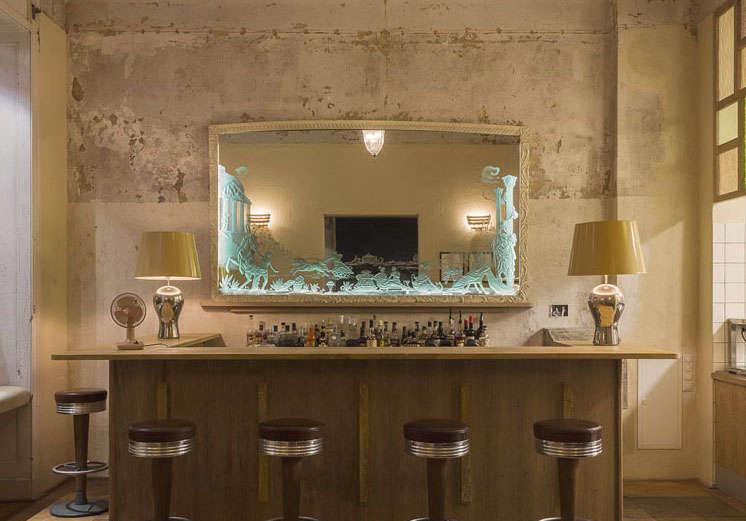

Berlin has a special talent for making old walls look like they know more than the rest of us. In Mitte, where polished galleries, government buildings, historic façades, and dangerously good coffee all jostle for elbow room, Dottír once offered a particularly memorable lesson in atmosphere. The restaurant blended Scandinavian restraint with antique warmth, creating a space that felt less like a design showroom and more like a beautiful old coat you secretly hope someone leaves to you in a will.
The title says it all: Scandi in the Mitte. Dottír brought Nordic food, pale textures, salvaged charm, and a quietly dramatic sense of age into the center of Berlin. Its interiors were not the glossy, all-white Scandinavian cliché that sometimes looks as if a snowstorm got a job in architecture. Instead, the restaurant leaned into texture, patina, original plaster, vintage objects, antique furniture, yellow travertine, old wooden floorboards, and a lived-in kind of elegance.
This article explores what made the antiqued interiors at Dottír in Berlin so magnetic, why the space mattered in the city’s hospitality scene, and how its design lessons can inspire restaurants, homes, cafés, boutique hotels, and anyone tired of interiors that look like they were assembled five minutes before the photographer arrived.
The Story Behind Dottír in Berlin Mitte
Dottír was located on Mittelstraße in Berlin’s Mitte district, a neighborhood that carries the city’s layered identity with unusual confidence. Mitte is central, historic, creative, sometimes expensive, occasionally aloof, and always ready to surprise you with a courtyard you did not know existed. That made it a fitting home for a restaurant that mixed Nordic clarity with Berlin’s fondness for unfinished edges.
The restaurant was associated with chef Victoria Eliasdóttir, whose Icelandic, Danish, and Swedish roots helped shape its culinary identity. Her food drew from Nordic ingredients and memories: fish, root vegetables, herbs, seaweed, dill, smoke, pickling, and the sort of clean flavors that make you sit up straighter without knowing why. Before Dottír, Eliasdóttir had experience in Icelandic kitchens and international culinary environments, including time connected to the ingredient-focused spirit of Chez Panisse in Berkeley. That background mattered because Dottír was not simply “Nordic” as a branding exercise. It felt personal.
Behind the restaurant were Berlin hospitality figures connected with prominent dining addresses such as Grill Royal and Pauly Saal. In other words, Dottír arrived with serious restaurant DNA, but its appeal was never just about who opened it. The real magic came from the dialogue between food and room. The dining space looked like it had been discovered rather than invented, which is much harder to pull off than it sounds.
Why the Interior Worked: Not Perfect, Just Perfectly Judged
The most memorable restaurants do not simply serve meals. They create a small world and invite you to behave slightly better inside it. Dottír’s interior did this through restraint. The space used original plaster walls, old timber floorboards, antique furniture, vintage pieces from the 1930s and 1950s, and a bar made with yellow travertine. These materials did not shout. They murmured, which is often more persuasive.
A key reason the design worked was its respect for age. Instead of hiding cracks, sanding away every irregularity, or painting history under a sterile coat of white, the interior allowed imperfection to stay visible. That approach is very Berlin. The city often looks best when it admits what it has been through. At Dottír, the antiqued effect softened the Scandinavian discipline and gave the rooms a soulful looseness.
Original Plaster as Atmosphere
Original plaster walls were central to the mood. Plaster has a depth that flat drywall struggles to imitate. It catches light unevenly, shifts tone throughout the day, and gives a room the feeling of having a pulse. In Dottír, the plaster backdrop made everything else feel more intentional: the art, the mirror, the furniture, the food, even the empty space.
This is a useful design lesson. A restaurant does not need to bury itself under décor to feel finished. Sometimes the wall is the décor. The trick is knowing when to stop before the room starts wearing too many accessories and looks like it lost a fight with a flea market.
The Yellow Travertine Bar
The yellow travertine bar added warmth and weight. Travertine is a stone with personality. It feels ancient, porous, architectural, and a little glamorous without needing rhinestones. In a Nordic-inspired room, where the palette can easily drift toward cool restraint, the stone gave the space a golden anchor.
The bar also performed an important hospitality function. It suggested generosity. A restaurant bar should feel like a place where the evening might improve. Dottír’s travertine did exactly that, offering an earthy counterpoint to the pale walls and worn wooden floors.
Vintage Objects Without Costume Drama
Dottír’s use of antique and vintage pieces was not a theme-party version of history. The furniture and objects from different decades created a layered, collected feeling. A mirror above the bar, older furniture, and carefully chosen details made the space feel like it belonged to real people with excellent taste and possibly very strong opinions about candles.
The result was not “retro.” It was atmospheric. That distinction matters. Retro design often points at the past with both hands. Antiqued design lets the past sit quietly in the room while everyone else gets on with dinner.
Scandinavian Design, But With Berlin Bones
Scandinavian interior design is often summarized with familiar words: minimal, functional, natural, light, cozy, honest. All true. But when done well, Scandi style is not cold minimalism. It is warmth achieved through discipline. It reduces clutter so that material, light, texture, and proportion can do the heavy lifting.
Dottír’s design took those principles and gave them a Berlin accent. The rooms were not polished into anonymity. They had roughness, memory, and a slightly deconstructed feel. In a different city, the plaster might have been repaired until it looked new. In Berlin, the old surface became a feature. In a different restaurant, the antiques might have been matched for symmetry. At Dottír, the mix felt relaxed and personal.
This is where the phrase Scandi in the Mitte becomes more than a cute headline. Dottír was not simply Scandinavian design imported to Germany. It was Nordic sensibility filtered through Berlin’s urban history. The result was a room where clean lines met scuffed edges, and the combination felt surprisingly luxurious.
The Layout: Dining Room, Bar, and Open Kitchen
Dottír’s interior was organized around distinct but connected zones: a dining room, a bar, and an open kitchen. That arrangement helped the restaurant feel intimate rather than cramped. Guests could sense the rhythm of the kitchen, the casual magnetism of the bar, and the quieter pleasure of the dining area.
The open kitchen was especially important. In contemporary restaurants, the kitchen is no longer just a backstage zone where pans clang and someone urgently asks where the parsley went. It is part of the performance. At Dottír, the open kitchen suited Eliasdóttir’s ingredient-led cooking. It reinforced the idea that food and design were both built from honest materials.
When weather allowed, a hidden courtyard added another layer to the experience. Courtyards are one of Berlin’s underrated pleasures. You step away from the street and suddenly the city rearranges itself around a quieter center. For a restaurant like Dottír, that kind of outdoor pocket made perfect sense: private, modest, charming, and just dramatic enough to make people say, “How did you find this place?”
Food and Interior: Why They Felt Connected
The best restaurant interiors do not merely look good. They prepare you for the food. Dottír’s rooms did exactly that. The plaster, wood, stone, and vintage furniture suggested simplicity without plainness. The food followed a similar logic: Nordic flavors, thoughtful preparations, clean ingredients, and unexpected combinations.
Dishes associated with the restaurant’s early identity included seafood, root vegetables, herbs, Icelandic references, pickled flavors, smoke, and seasonal produce. These ingredients belong naturally in a room of wood, stone, and aged surfaces. Imagine eating smoked fish, rye bread, or a dish brightened with dill in a glossy neon dining room. Technically possible, emotionally suspicious.
At Dottír, the setting made the food feel grounded. The room did not compete with the plate. It set the mood, then stepped back. That is sophisticated hospitality design: not a stage that steals the show, but lighting that makes the actors look better.
Antiqued Interiors as a Design Strategy
The phrase antiqued interiors can be misunderstood. It does not mean filling a room with dusty objects and hoping nostalgia will do the interior design. It means creating depth through age, material contrast, and visible history. Dottír’s success came from balance. There was enough oldness to make the space soulful, but enough restraint to keep it elegant.
For restaurants, this approach is especially powerful. Diners are sensitive to atmosphere, even when they do not consciously analyze it. A room with too many new surfaces can feel temporary. A room with layers feels trustworthy. It suggests that someone cared enough to choose, repair, keep, and combine.
How to Borrow the Look Without Copying It
The Dottír mood can be translated into many interiors, from restaurants to apartments. Start with natural materials. Wood, stone, plaster, linen, leather, ceramic, and metal age better than plastic finishes pretending to be those things. Then choose a calm palette. Warm whites, chalky neutrals, muted browns, soft grays, and pale woods create a base that can handle stronger accents.
Add one substantial vintage piece rather than twenty tiny nostalgic objects. A mirror, a dining table, a cabinet, or an old chair can give a room a spine. Avoid making every piece match. Matching is tidy, but too much of it can feel like the room is waiting for a catalog photographer to approve its life choices.
Finally, let negative space do some work. Scandinavian design depends on breathing room. Antiqued interiors depend on objects that have presence. Put them together and you get a room that feels calm but not empty, old but not gloomy, stylish but not desperate for compliments.
Dottír and the Château Royal Chapter
The Dottír story also connects to the later evolution of the same Berlin setting. The building became part of the Château Royal, a boutique hotel known for its art-filled interiors, historical references, and contemporary hospitality. Reports on the hotel describe a layered design language that honors 19th- and 20th-century Berlin influences, local craft, custom furniture, artwork, warm tones, and carefully considered materials.
That continuation makes sense. Dottír’s original interiors already understood something essential about Berlin luxury: it does not need to sparkle aggressively. It can be quiet, intellectual, imperfect, and deeply tactile. The later hotel context expanded that idea into a broader hospitality experience, with the restaurant and bar becoming part of a larger world of art, design, and urban memory.
For readers researching Dottír Berlin interiors, it is useful to think of the restaurant as both a place and a design case study. Its original Mitte identity captured a moment when Nordic food, antique atmosphere, and Berlin’s appetite for adaptive reuse met beautifully.
Why This Look Still Feels Fresh
Trends usually age faster than milk in a hot car. But Dottír’s interior language still feels relevant because it was never dependent on gimmicks. Natural materials, good proportions, visible history, and warm minimalism do not expire quickly. They are design’s version of rye bread: humble, sturdy, and far more interesting than they first appear.
The current popularity of warm minimalism, vintage furniture, limewash walls, handmade ceramics, and textured neutrals shows that many people are craving interiors with both calm and character. Dottír anticipated that mood. It understood that people do not only want beautiful spaces. They want spaces that feel human.
Lessons for Restaurant Owners, Designers, and Home Decor Lovers
Dottír offers several practical lessons. First, use the building’s history rather than fighting it. If the walls, floors, or layout have character, preserve what you can. Second, invest in a few strong materials instead of many decorative gestures. A travertine bar will do more for a room than a dozen trendy pendant lamps having an identity crisis.
Third, make the interior support the food. A Nordic-inspired menu feels more convincing in a room of wood, plaster, stone, and soft light than in a space overloaded with glossy surfaces. Fourth, combine custom elements with found pieces. Tailor-made sofas and old furniture can coexist beautifully when the palette and proportions are controlled.
Finally, remember that comfort is not the enemy of sophistication. Dottír’s charm came from its ability to feel refined and relaxed at the same time. That is difficult to achieve, but when it works, guests remember it long after they forget exactly what was in the sauce.
Experience: Living With the Dottír Mood
Spending time in a space like Dottír changes how you look at interiors. At first, you notice the obvious things: the warm stone, the worn wood, the antique mirror, the old plaster, the gentle light. But after a while, the room starts teaching a quieter lesson. It shows that atmosphere is not built from perfection. It is built from patience.
The experience of a Scandi-antique interior is different from the experience of a shiny modern restaurant. In a glossy room, you are aware of the design immediately. You might admire the lighting, the chairs, the expensive surfaces, the dramatic ceiling. But sometimes the room keeps asking to be admired, which can be exhausting. It is hard to enjoy dinner when the furniture is metaphorically tapping you on the shoulder saying, “Did you notice I am imported?”
A room in the spirit of Dottír behaves differently. It lets you settle in. The old materials lower the temperature of the evening. The wood floor makes footsteps sound softer. The plaster gives the wall a gentle irregularity. The antique pieces suggest continuity. Nothing feels too precious, yet everything feels chosen. That is a rare combination.
Imagine arriving from a cold Berlin street, cheeks slightly dramatic from the wind, coat doing its best but not winning. You step inside and the room does not attack you with brightness. Instead, it absorbs you. The bar has a warm mineral glow. The chairs feel as if they have opinions but good manners. The kitchen is visible enough to remind you that real people are cooking, not just plating architecture with tweezers. The whole experience feels grounded.
This kind of interior also changes conversation. In a calmer room, people speak differently. They lean in. They notice details. They ask about ingredients. They look at art. They remember the feel of the table under their hands. That is the power of tactile design: it brings the body back into the experience.
For a home, the same mood can be surprisingly livable. You do not need a Berlin restaurant budget or a hidden courtyard, although nobody would complain if one appeared. Start with one room. Remove the objects that only create noise. Keep materials that feel honest. Add a vintage mirror, a wooden bench, a linen curtain, a handmade ceramic lamp, or a table with a few scars. Use warm light. Let one imperfect wall stay imperfect if it has character. Suddenly the room feels less decorated and more inhabited.
The most important experience-related lesson from Dottír is this: good design gives people permission to relax. It does not need to prove itself every second. It does not chase novelty like a puppy chasing a delivery bike. It trusts material, proportion, memory, and mood. That is why antiqued Scandinavian interiors remain so appealing. They offer calm without boredom, elegance without stiffness, and history without turning the room into a museum where the soup is nervous.
Conclusion
Scandi in the Mitte: Antiqued Interiors at Dottír in Berlin is more than a story about a beautiful restaurant. It is a study in how design can carry memory, support food, and create intimacy in the middle of a busy city. Dottír’s combination of Nordic restraint and Berlin patina made its interiors feel timeless: old plaster, vintage objects, antique furniture, wooden floors, a travertine bar, and a relaxed sense of imperfection all working together like a very stylish choir.
For designers, the lesson is clear: do not flatten history. For restaurant owners, the lesson is even clearer: atmosphere is part of the menu. And for anyone decorating a home, Dottír proves that a room does not need to be flawless to be beautiful. In fact, the flaws might be where the beauty finally gets comfortable.
Note: This article is written as an editorial design and hospitality feature based on publicly available information about Dottír, Berlin Mitte, Victoria Eliasdóttir, Nordic cuisine, and Scandinavian interior design principles.


