
Dr. Gregory House solves impossible medical mysteries while insulting everyone within cane-swinging distance. Impressive? Certainly. However, House also enjoys modern laboratories, imaging machines, sterile operating rooms, trained assistants, and the magical power of television writers.
Real doctors from history often worked without antibiotics, dependable anesthesia, blood banks, advanced imaging, or even a solid understanding of germs. Some responded to those limitations by becoming cautious. Others apparently looked at the danger, tightened their aprons, and said, “Well, this should make an interesting afternoon.”
The five physicians below were not “insane” in a clinical sense. The word is used here as playful shorthand for extraordinary nerve, extreme risk tolerance, and decisions that would make a modern hospital’s safety committee spontaneously combust. Their stories combine medical innovation, battlefield improvisation, self-experimentation, and the kind of courage that is admirable precisely because nobody should try to imitate it.
Surgery before reliable anesthesia was especially brutal. Speed could reduce a patient’s suffering and blood loss, but it also left almost no room for hesitation. Infection remained a deadly threat, and even technically successful procedures could end badly days later.
1. Robert Liston: The Surgeon Who Treated Operations Like a Sprint
Why Surgical Speed Once Saved Lives
Scottish surgeon Robert Liston became famous during the first half of the nineteenth century, when entering an operating theater was less like checking into a hospital and more like volunteering for a public endurance test. General anesthesia was not yet routinely available, so patients often remained conscious while surgeons cut through skin, muscle, and bone.
Under those conditions, speed was not simply a dramatic flourish. Every additional second meant more pain, more movement, and potentially more blood loss. Liston reportedly performed major amputations in roughly two and a half minutes. He was tall, physically powerful, and technically skilled, with the confidence of a man who had never once whispered, “Let us take this slowly.”
He supposedly began some procedures by telling observers to time him. That sounds horrifying today, but surgical theaters were also teaching spaces, and a fast operation could be considered merciful. If a diseased leg had to be removed without modern anesthesia, the patient was unlikely to complain that the surgeon had finished too quickly.
The Famous 300 Percent Mortality Story
Liston is often associated with a legendary operation in which the patient died from infection, an assistant allegedly lost fingers and later died, and a spectator supposedly died from shock after being cut or frightened. The tale is frequently described as the only operation with a “300 percent mortality rate.”
It is a magnificent piece of medical folklore, but historians have questioned whether it happened exactly as later writers described it. The safer conclusion is that Liston’s reputation for speed inspired increasingly dramatic stories. He was unquestionably aggressive and exceptionally fast, but he was also a respected surgeon rather than a cartoon butcher waving a knife through the audience.
Liston later participated in Britain’s early adoption of ether anesthesia. In December 1846, he performed one of England’s pioneering major operations under ether at University College Hospital. The famous speed surgeon recognized that making patients unconscious was preferable to making surgeons faster. That may sound obvious now, but medicine advances whenever somebody finally questions an old form of suffering.
2. Dominique Jean Larrey: Napoleon’s Battlefield Medical Machine
The Problem With Waiting Until the Battle Ended
During the Napoleonic Wars, wounded soldiers could remain on a battlefield for hours or even days before receiving treatment. Medical care was often organized according to military hierarchy rather than urgency. An officer might receive attention before a critically wounded ordinary soldier simply because his uniform had more decorative metal attached to it.
French surgeon Dominique Jean Larrey considered that arrangement medically ridiculous. He promoted treatment based on the severity and urgency of injuries, helping shape the practice that became known as triage. A soldier’s rank, nationality, or social importance mattered less than whether immediate care might save his life.
Larrey also developed the ambulance volante, or “flying ambulance.” These light, horse-drawn vehicles carried medical personnel and equipment closer to the fighting and transported wounded soldiers away more quickly. Modern ambulances look vastly different, but the central idea remains familiar: bring organized emergency care to the patient instead of waiting for the patient to somehow reach safety.
Operating While the Battlefield Was Still Exploding
Larrey did not direct all this activity from a comfortable tent several miles away. He frequently worked near active combat, treating catastrophic injuries while artillery, cavalry, and infantry created what doctors might now describe as a “challenging workplace environment.”
Historical accounts credit him with performing enormous numbers of amputations under battlefield conditions, including a reported 200 procedures within 24 hours during one campaign. Such numbers are difficult to verify by modern standards, but they illustrate both the scale of wartime trauma and Larrey’s legendary stamina.
He also treated enemy soldiers. This principlethat wounded people deserve care regardless of which uniform they wearhelped establish an enduring ethical foundation for military medicine. Larrey’s combination of triage, rapid evacuation, mobile medical support, and impartial treatment made him one of the founders of modern trauma care.
Dr. House usually needed an hour of television to identify a rare disease. Larrey had approximately six seconds to decide who needed surgery while cannons tried to remove the hospital from the map.
3. Dr. Lidia Soto: The Surgeon Who Removed a Live Grenade
A Patient Arrived With an Explosive Emergency
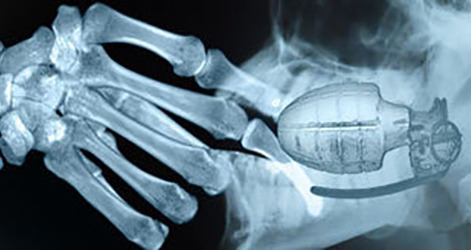
In 2011, Karla Flores was working in Culiacán, Mexico, when an explosive projectile struck her face. At first, people reportedly thought she had been hit by a stone or another piece of debris. Medical imaging revealed something much worse: part of a live grenade had become lodged in her facial tissue.
This was not a conventional foreign-object removal. A wrong movement could injure the patient, the medical team, nearby staff, and anyone else inside the device’s potential blast area. Ordinary operating rooms contain electrical equipment, oxygen systems, and many peopleall excellent things to keep far away from a grenade.
Hospital leaders requested volunteers. Dr. Norma Lidia Soto Valle stepped forward, joined by anesthesiology personnel, a nurse, and military explosives specialists. The procedure was moved to an open area away from the main hospital so that a detonation would not cause even greater casualties.
Surgery With Bomb Experts Giving Advice
The team had to balance two different disciplines. The clinicians understood airways, bleeding, facial anatomy, and tissue damage. The explosives experts understood which movements might turn the operating site into a crater. Cooperation was not optional.
Flores received a tracheotomy to protect her breathing. Working with limited anesthesia and under extraordinary pressure, Soto and the team carefully removed the explosive object. The operation succeeded. Flores survived, although she suffered facial injuries, dental loss, and scarring.
This case stands out because bravery alone would not have been enough. Reckless enthusiasm around a live grenade is not courage; it is an extremely brief personality trait. Soto’s team succeeded through planning, controlled movement, communication, and respect for expertise outside medicine.
House occasionally defused an emotional situation with sarcasm. Soto helped defuse a literal explosive situation with surgery. There is no contest.
4. Evan O’Neill Kane: The Doctor Who Operated on Himself
Proving a Point About Local Anesthesia
American surgeon Evan O’Neill Kane believed that general anesthesia was sometimes used unnecessarily and could expose vulnerable patients to avoidable risks. In 1921, he decided to demonstrate that an appendectomy could be completed using local anesthesia.
There were several reasonable ways to investigate this idea. He could study previous cases. He could collect data from consenting patients. He could present a carefully designed clinical proposal to colleagues.
Instead, Kane made himself the patient.
At approximately 60 years old, he positioned himself on the operating table, numbed his abdomen with local anesthetic, and performed an appendectomy on his own body while medical staff assisted and observed. He had performed thousands of appendectomies on other patients, so the anatomy was familiar. The viewing angle was less cooperative.
Kane wanted to demonstrate that the procedure was tolerable without putting a patient fully under. He also reportedly wished to understand the operation from the patient’s perspective. Most physicians accomplish that second goal by listening carefully. Kane preferred the deluxe hands-on package.
Because One Self-Operation Apparently Was Not Enough
Kane recovered from the appendectomy, but his adventures in self-surgery were not finished. In 1932, at about 70 years old, he performed much of an operation to repair his own inguinal hernia, again using local anesthesia and working with a medical team present.
He had also previously amputated one of his own infected fingers. These procedures were not desperate wilderness emergencies. Kane worked in a hospital surrounded by qualified people who could have operated on him. His motivation was experimentation, demonstration, and a remarkable confidence in his ability to remain professionally focused while cutting into himself.
Modern medical ethics would demand strict oversight, careful study design, and a serious discussion about whether the principal investigator should also be the surgical site. Kane’s experiments nevertheless contributed to public discussion about local anesthesia and the patient’s experience during surgery.
He proved his point, although the phrase “do not try this at home” feels hilariously inadequate.
5. David Nott: The War Surgeon Guided by Text Message
An Operation He Had Never Performed
David Nott is a British vascular and trauma surgeon known for volunteering in conflict and disaster zones. Unlike some figures on this list, his extraordinary behavior was not driven by showmanship or self-experimentation. It came from repeatedly choosing to work where trained surgeons, equipment, medication, and blood supplies were dangerously scarce.
During a mission in the Democratic Republic of the Congo, Nott encountered a teenage patient with a severely infected and gangrenous injury. Saving the boy required a rare forequarter amputation, a complex operation removing the arm and shoulder structures. Nott had never performed that particular procedure.
In a modern specialist hospital, the appropriate expert could enter the operating room. In the Congo, the appropriate expert was thousands of miles away. Nott contacted surgeon Meirion Thomas in London and received step-by-step instructions through text messages.
Imagine assembling furniture from brief phone messages, except the furniture has arteries and every missing screw causes catastrophic bleeding. Nott followed the instructions and successfully completed the operation.
Turning Experience Into Training
Nott continued working in conflict zones, including Syria, Afghanistan, Sierra Leone, Haiti, Gaza, and other areas where attacks and disasters overwhelmed local medical systems. He also trained local clinicians in trauma surgery so that knowledge would remain after visiting teams departed.
That distinction matters. Heroic rescue stories attract attention, but sustainable medical support depends on teaching, preparation, and strong local teams. A surgeon may save several patients during one mission. Training other surgeons can indirectly save thousands over many years.
Nott’s work also illustrates the emotional cost of extreme medicine. War surgeons do not leave every experience behind when they fly home. Exposure to devastated hospitals, injured children, exhausted colleagues, and deliberate attacks on medical facilities can produce lasting psychological trauma.
His courage was therefore not a single dramatic act. It was the repeated decision to return, operate, teach, and support medical professionals working under conditions that no television drama could reproduce without viewers accusing the writers of being unrealistic.
The Human Experience Behind These Medical Stories
The most memorable details in these stories are almost cinematic: the stopwatch, the flying ambulance, the live grenade, the self-appendectomy, and the lifesaving text messages. Yet the deeper experiences are not really about spectacle. They are about what people do when the safe, familiar option does not exist.
Experience One: Fear Does Not Automatically Mean Stop
Every person involved in these events probably experienced fear. Larrey’s battlefield teams could hear artillery. Soto’s team knew an explosive device might detonate. Kane could feel pressure and movement while operating on his own abdomen. Nott knew that one wrong step during an unfamiliar amputation could cause uncontrollable bleeding.
Courage did not require them to feel calm. It required them to continue functioning while fear delivered a loud and completely reasonable objection. This is an important distinction. Courage is not the absence of anxiety; it is the ability to make disciplined decisions without allowing anxiety to control every movement.
Experience Two: Preparation Makes Improvisation Possible
These doctors sometimes appeared to improvise miracles, but improvisation only worked because it rested on deep technical knowledge. Nott could follow remote instructions because he already understood anatomy, vascular control, trauma surgery, and surgical judgment. Soto could collaborate with explosives specialists because she knew how to protect an airway and manage facial trauma.
Expert improvisation is not guessing. It is the rapid rearrangement of skills that have been practiced for years. The jazz solo sounds spontaneous because the musician already knows the instrument. The emergency surgeon looks inventive because thousands of ordinary lessons are available when the extraordinary case arrives.
Experience Three: Medical Progress Often Begins With Discomfort
Liston’s acceptance of ether challenged a culture that had treated surgical agony as unavoidable. Larrey challenged systems that delayed treatment and favored rank. Kane questioned whether general anesthesia was always necessary. These challenges were not equal in wisdom or ethics, but each forced medicine to reconsider an accepted routine.
That is often how progress feels from inside a profession. The old method is familiar, supported by authority, and easier to defend. The new method can appear disruptive or even ridiculous. Improvement requires evidence, but it also requires somebody willing to ask whether “the way we have always done it” is actually good enough.
Experience Four: The Best Heroics Are Team Efforts
Popular retellings naturally focus on one remarkable doctor, but none of these stories occurred in a vacuum. Liston depended on assistants and hospital staff. Larrey built organized evacuation and medical teams. Soto worked with anesthesiologists, nursing personnel, and explosives experts. Kane had colleagues ready to assist. Nott relied on remote specialists and local clinicians.
The lone-genius myth makes excellent entertainment, but real medicine is collaborative. A brilliant surgeon without anesthesia support, nursing care, sterilization, blood management, transportation, or postoperative monitoring is simply a very educated person standing beside a growing problem.
Experience Five: Bold Medicine Needs Ethical Boundaries
Admiring these doctors does not mean every risk they took should be celebrated or repeated. Patients deserve informed consent, evidence-based care, privacy, and protection from unnecessary experimentation. A dramatic result does not automatically justify a dangerous method.
Modern medicine has safety reviews and ethical rules because history contains both courageous innovation and terrible abuse. The challenge is to preserve curiosity without treating people as props. The ideal physician combines Larrey’s urgency, Soto’s teamwork, Kane’s interest in the patient experience, Liston’s technical confidence, and Nott’s humanitarian commitmentwhile leaving the unnecessary knives, theatrical timing, and self-surgery in the history books.
Conclusion: Even House Would Have Asked for Backup
These five doctors practiced in radically different places and periods, but they shared a refusal to accept helplessness. Robert Liston raced against conscious agony. Dominique Jean Larrey reorganized battlefield medicine around urgency. Lidia Soto entered an improvised operating area with a live explosive inside her patient. Evan O’Neill Kane turned himself into a surgical demonstration. David Nott used remote instructions and battlefield experience to deliver advanced care where specialist resources barely existed.
Their stories are entertaining because they seem unbelievable. They are important because they reveal how medicine evolves under pressure. Skill matters, but so do organization, communication, adaptability, ethics, and the willingness to act when every available option is terrible.
Dr. House may have been the smartest person in his fictional hospital. These real doctors had something television cannot manufacture with dramatic music: patients whose survival depended on what happened next.
Note: The headline uses “insane” informally to describe unusually daring behavior. It is not intended as a diagnosis or as a description of people living with mental health conditions. Some colorful historical anecdotesparticularly stories surrounding Robert Listonhave been repeated in multiple versions and should be treated as medical folklore when firm documentation is unavailable.


