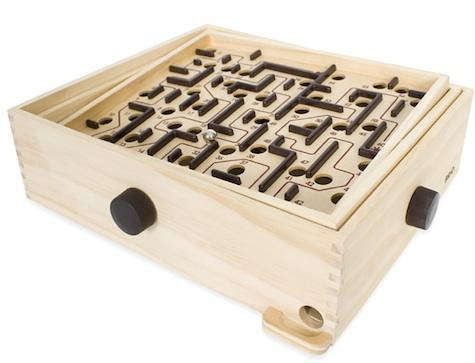

The Brio Labyrinth Game is proof that a toy does not need batteries, Wi-Fi, flashing lights, or a tiny digital wizard yelling instructions to be completely addictive. It is a wooden maze game with a metal ball, two side knobs, and one very simple mission: guide the ball from start to finish without letting it fall into one of the holes. Easy? In theory, yes. In real life, it can turn a calm adult into someone negotiating with gravity like it owes them money.
First introduced in 1946, the Brio Labyrinth Game has become one of those rare classic toys that still feels fresh in a world packed with screens. Its design is clean, its challenge is timeless, and its replay value is surprisingly strong. The game is recommended for children around age 6 and up, but adults often get pulled in just as quickly. That is part of the magic: it looks like a child’s game, plays like a patience test, and quietly trains focus, coordination, spatial reasoning, and emotional control.
This guide takes a closer look at what the Brio Labyrinth Game is, how it works, why it remains popular, what skills it supports, who it is best for, and how families can get the most fun from it. Spoiler alert: the tiny metal ball is not your enemy. It is just very committed to teaching you humility.
What Is the Brio Labyrinth Game?
The Brio Labyrinth Game is a classic wooden maze puzzle made by BRIO, the Swedish toy brand famous for durable wooden toys and simple Scandinavian design. The standard game includes one wooden labyrinth board and two metal balls. Players place a metal ball at the starting point, then use two knobs on the sides of the board to tilt the playing surface. One knob controls movement in one direction, while the other controls the opposite axis. By combining tiny adjustments, players guide the ball along a printed path while avoiding holes.
The goal is beautifully simple: get from start to finish. The challenge is everything between those two points. The board has numbered zones, narrow tracks, corners, slopes, and traps that punish rushed movements. A heavy-handed twist can send the ball rolling straight into a hole. A nervous overcorrection can undo a perfect run. The game rewards steady hands, careful observation, and the ability to slow down before disaster strikes.
Unlike many modern toys that explain every step, the Brio Labyrinth Game lets players discover control through trial and error. Children quickly learn that big movements create big problems. Adults quickly learn that being older does not automatically make them better at wooden maze games. Everyone learns that patience is not just a virtue; it is a survival strategy.
Why the Brio Labyrinth Game Has Lasted for Generations
Few toys remain relevant for decades. The Brio Labyrinth Game has endured because it is built around a universal kind of challenge. It does not depend on trends, characters, apps, or pop culture references. It depends on balance, focus, and the deeply human desire to say, “One more try,” even after the ball has dropped into the same hole seven times in a row.
Simple Rules, Serious Challenge
The best classic games are easy to understand but hard to master. Chess, checkers, Jenga, and tic-tac-toe all work because the basic idea is instantly clear. Brio Labyrinth follows the same formula. You do not need a rulebook marathon before playing. You place the ball, grab the knobs, and begin. Within seconds, the game explains itself through movement.
That simplicity makes the game friendly for children, parents, grandparents, classrooms, therapy spaces, and family game nights. Yet the challenge keeps it from feeling childish. Even a confident player can be humbled by a tricky corner or a sudden roll. The game has a way of making people lean forward, hold their breath, and act as if one tiny marble is carrying the future of civilization.
A Screen-Free Toy That Still Feels Exciting
Parents often look for screen-free activities that do not feel like punishment. The Brio Labyrinth Game works because it offers immediate feedback. When the ball moves correctly, the player feels in control. When it falls, the result is clear and oddly motivating. There is no loading screen, no subscription, and no update that takes 43 minutes right when someone wants to play.
The physical experience matters. Players hear the soft rolling of the metal ball, feel the resistance of the knobs, and see every movement happen in real time. That hands-on quality gives the game a satisfying presence that digital puzzles cannot fully replace.
How to Play the Brio Labyrinth Game
Playing the Brio Labyrinth Game is straightforward, but playing it well takes practice. Here is the basic process:
- Place the game on a flat, stable surface.
- Put one metal ball at the starting mark.
- Hold the side knobs gently.
- Turn the knobs slowly to tilt the board.
- Guide the ball along the maze path.
- Avoid the holes and obstacles.
- Try to reach the finish without dropping the ball.
The key word is slowly. Beginners often twist the knobs too far, too fast. The ball responds immediately, and once it gains speed, it can be difficult to recover. Better players use small movements, pause often, and think ahead. They do not just react to where the ball is; they prepare for where it is about to go.
For younger children, it can help to create shorter goals. Instead of expecting a full start-to-finish run, ask them to reach number 10, then number 20, then number 30. Small victories build confidence. They also reduce the “I am never playing this again” drama that sometimes happens when a game has the nerve to be challenging.
Educational Benefits of the Brio Labyrinth Game
The Brio Labyrinth Game is fun first, but it also supports several useful developmental skills. It is not a magic brain machine, and it will not teach algebra before breakfast. However, as a hands-on skill game, it naturally encourages abilities that matter for learning, movement, and self-control.
Fine Motor Skills
Fine motor skills involve small, controlled movements of the hands and fingers. The Brio Labyrinth Game requires players to make gentle, precise adjustments with both hands. Turning the knobs too aggressively usually causes the ball to fall. Turning them carefully helps the player maintain control.
This makes the game especially valuable for children who benefit from practice with hand control, coordination, and graded movement. Instead of feeling like a worksheet or exercise, the practice is hidden inside play. The child is not thinking, “I am developing fine motor control.” The child is thinking, “I will defeat hole number 17 today.” That is much more motivating.
Hand-Eye Coordination
Hand-eye coordination is the ability to use visual information to guide movement. In the Brio Labyrinth Game, the player watches the ball and adjusts the board at the same time. The eyes track speed and direction. The hands respond through the knobs. The brain tries to keep everyone on the same team.
This kind of coordination is useful in many everyday activities, including writing, drawing, sports, building, crafting, and using tools. The game gives players a playful way to practice that connection between seeing and doing.
Concentration and Sustained Attention
The Brio Labyrinth Game does not reward multitasking. Looking away for even a second can send the ball into a hole. Players must pay attention, plan their movements, and stay engaged. For children who are learning how to focus through a task, the game offers a clear reason to keep watching.
Because each attempt is short, the game also creates natural practice cycles. A child can try, fail, reset, and try again without needing a long setup. That makes it easier to build attention gradually.
Problem-Solving and Spatial Reasoning
The maze is not only a test of steady hands. It is also a puzzle. Players must understand the layout, notice danger zones, choose angles, and anticipate how the ball will roll. This supports spatial reasoning, which is the ability to understand position, direction, shape, and movement in space.
Players begin to ask useful questions: Should I approach this corner slowly? Do I need to tilt left before tilting forward? Where will the ball go if I overshoot? These are small decisions, but they build a problem-solving mindset.
Patience and Emotional Regulation
Let us be honest: the Brio Labyrinth Game can be frustrating. That is part of its value. The ball will fall. A good run will collapse near the finish. Someone will blame the table, the lighting, or “a weird vibration in the room.” But over time, players learn to reset calmly and try again.
This is a healthy kind of challenge. Children practice handling mistakes in a low-stakes environment. They learn that failure is not the end of the game; it is part of the game. That lesson can travel far beyond the wooden board.
Who Is the Brio Labyrinth Game Best For?
The Brio Labyrinth Game is especially good for families who want a durable, quiet, screen-free activity that appeals to multiple ages. It works well for children around age 6 and older, but many teens and adults enjoy it too. It can be a great fit for:
- Kids who like puzzles, mazes, and hands-on challenges
- Parents looking for a classic wooden toy with long-term play value
- Teachers who want a calm activity for focus and coordination
- Grandparents searching for a nostalgic gift
- Families who enjoy friendly skill competitions
- Adults who need a desk toy that is more interesting than spinning a pen
It may not be ideal for very young children who still put small objects in their mouths, because the game includes metal balls. Adult supervision is sensible when younger siblings are nearby. It may also frustrate children who strongly dislike precision tasks, although shorter goals and encouragement can help.
Brio Labyrinth Game vs. Digital Puzzle Games
Digital puzzle games can be fun and educational, but the Brio Labyrinth Game offers something different. It is tactile. It uses gravity. It requires real-world movement. There is no undo button, which sounds cruel until you realize it makes every successful section feel more rewarding.
In digital games, mistakes often disappear with a tap. In the Brio Labyrinth Game, mistakes are visible and immediate. The ball drops, rolls away, and tells the truth. That direct feedback helps players understand cause and effect. A fast twist caused a fast roll. A careful tilt created a controlled turn. The lesson is physical, not theoretical.
The game also brings people together. Someone watching from across the table can cheer, gasp, or offer completely unnecessary advice like, “Just don’t let it fall.” Thank you, Coach. Very helpful. This shared tension makes the game fun for family play, even though it is technically a one-player game.
Tips for Getting Better at the Brio Labyrinth Game
Improving at the Brio Labyrinth Game is mostly about control. Here are practical tips that help beginners progress faster:
Use Tiny Movements
Small knob turns are easier to correct. Big turns create speed, and speed creates panic. Treat the knobs like volume controls on a radio in a quiet library, not like a steering wheel in an action movie.
Pause Before Dangerous Sections
When the ball reaches a tricky area, slow it down before entering. A calm ball is easier to guide than a rolling cannonball with personal goals.
Look Ahead, Not Just at the Ball
Watch the path ahead so you can plan the next movement. If you only stare at the ball, you may react too late. Good players think one or two turns ahead.
Practice in Sections
Do not worry about finishing the whole maze immediately. Practice difficult zones repeatedly. Celebrate reaching a new number or passing a tricky hole.
Keep the Board Level Before Starting
Make sure the board is stable and the surface is flat. A wobbly table adds a challenge that nobody asked for.
Is the Brio Labyrinth Game Worth Buying?
For many families, the answer is yes. The Brio Labyrinth Game offers strong long-term value because it is not limited to a narrow age group or a short trend cycle. A child may play it one way at age 6, then return to it later with better control and a desire to beat previous attempts. Adults may enjoy it as a quick focus challenge or family competition.
The wooden construction, classic design, and simple mechanics make it feel more like a lasting household object than a throwaway toy. It can sit on a shelf, coffee table, classroom station, or game cabinet without looking out of place. It is the kind of game guests notice and immediately want to try, usually followed by the phrase, “Oh, this looks easy.” Famous last words.
If you are buying it as a gift, it works especially well for children who enjoy building sets, puzzles, marble runs, logic toys, or board games. It is also a smart option when you want something educational without making the gift feel like homework wearing a party hat.
Common Questions About the Brio Labyrinth Game
Is the Brio Labyrinth Game only for one player?
The standard Brio Labyrinth Game is designed as a one-player skill game, but families often turn it into a group activity by taking turns, timing attempts, or seeing who can reach the highest numbered section.
What age is best for the Brio Labyrinth Game?
The game is commonly recommended for children age 6 and up. Younger children may enjoy watching or trying with help, but the metal balls require supervision around small children.
Does the game help with learning?
Yes, in a practical play-based way. It supports concentration, fine motor skills, hand-eye coordination, spatial reasoning, patience, and problem-solving. It is not a formal lesson, but it gives the brain and hands a useful workout.
Is the Brio Labyrinth Game frustrating?
It can be, especially at first. That is also why it is rewarding. The game teaches players to slow down, reset, and improve through repeated attempts.
How can parents make it easier for kids?
Set mini-goals, such as reaching a specific number on the board. Encourage slow movements and praise progress, not just finishing. A child who gets from the start to a new checkpoint has still improved.
Final Review: A Classic Wooden Game That Still Works
The Brio Labyrinth Game remains popular because it understands something many modern toys forget: challenge is fun when the goal is clear and improvement feels possible. It does not overwhelm players with rules. It simply invites them to try, fail, adjust, and try again.
Its greatest strength is the balance between simplicity and depth. Anyone can understand it in seconds, but mastering it takes patience. Children can use it to build coordination and focus. Adults can use it to test their steady hands and possibly their ability to remain humble. Families can use it as a shared screen-free activity that sparks laughter, groans, cheers, and the occasional dramatic accusation against gravity.
If you want a beautiful, durable, skill-building game with classic appeal, the Brio Labyrinth Game deserves a spot on the shortlist. It is not loud. It is not flashy. It does not need a charger. It just sits there quietly, waiting for someone brave enough to guide a tiny metal ball through a maze and discover that “simple” does not always mean “easy.”
Personal Experience and Real-Life Playing Impressions
The first experience many people have with the Brio Labyrinth Game follows a predictable pattern. They see the wooden board, notice the tiny metal ball, and think, “How hard could this possibly be?” Then they touch the knobs, the ball rolls confidently into the nearest hole, and suddenly the room becomes very quiet. The game has introduced itself.
What makes the experience memorable is how quickly it turns into a personal challenge. You are not just playing against the maze. You are playing against impatience, shaky hands, overconfidence, and that tiny voice in your head saying, “Go faster.” The game teaches you to ignore that voice. Going faster usually means starting over.
In a family setting, the Brio Labyrinth Game creates surprisingly good entertainment. One person plays while everyone else becomes an unpaid commentator. Someone will say, “Careful, careful, careful,” as if the player planned to be reckless. Another person will gasp at every corner. A younger child might celebrate reaching a new section, while an adult who fails at the same place three times suddenly claims the board is “tilted weird.” It is all part of the fun.
The game also works well as a quiet solo activity. After a long day of screens, it feels refreshing to focus on something physical and simple. There are no notifications, no messages, and no menus. Just wood, metal, movement, and concentration. A five-minute session can become twenty minutes because every failed attempt feels close enough to success to justify one more try.
For children, the best experiences often come when adults avoid turning the game into a performance test. Instead of asking a child to finish the whole maze, it is better to say, “Can you beat your last score?” or “Can you reach the next number?” That changes the mood from pressure to progress. The child learns that improvement matters more than perfection.
One of the most satisfying moments is watching a player discover control. At first, the knobs are turned too much. The ball rushes everywhere. Then, slowly, the player starts making smaller movements. The ball begins to glide instead of panic. Corners become manageable. Holes become avoidable. The game has not become easier; the player has become better. That feeling is powerful.
The Brio Labyrinth Game also has strong replay value because success is never guaranteed. Even after completing the maze once, players often want to do it again more smoothly, more quickly, or with fewer scary moments near the holes. Some families create house rules, such as timed rounds, checkpoint challenges, or “no talking while playing” rounds, which are usually impossible because someone always talks.
As a gift, the game feels thoughtful because it is both fun and skill-building. It does not scream “educational toy,” but it quietly supports useful abilities. It is also attractive enough to leave out on a table, which increases the chance that people will actually play it. Many toys disappear into closets. The Brio Labyrinth Game has the rare quality of inviting casual play whenever someone walks by.
The overall experience is a mix of focus, frustration, laughter, and satisfaction. It is a game that respects effort. It does not hand out easy wins, but it makes every bit of progress feel earned. That is why it still works after so many decades. In a world full of quick entertainment, the Brio Labyrinth Game reminds players that slow hands, steady attention, and a little patience can still be exciting.
Conclusion
The Brio Labyrinth Game is more than a wooden maze. It is a timeless skill challenge that blends fun, focus, coordination, and patience into one beautifully simple design. Its lasting appeal comes from the fact that anyone can try it, but nobody masters it instantly. That makes every improvement feel meaningful.
For parents, it is a screen-free toy with real developmental value. For kids, it is a satisfying challenge that feels like play, not practice. For adults, it is a nostalgic reminder that tiny metal balls can still damage your confidence in under five seconds. Whether used at home, in a classroom, or as a family game night warm-up, the Brio Labyrinth Game remains one of the best examples of classic toy design done right.


