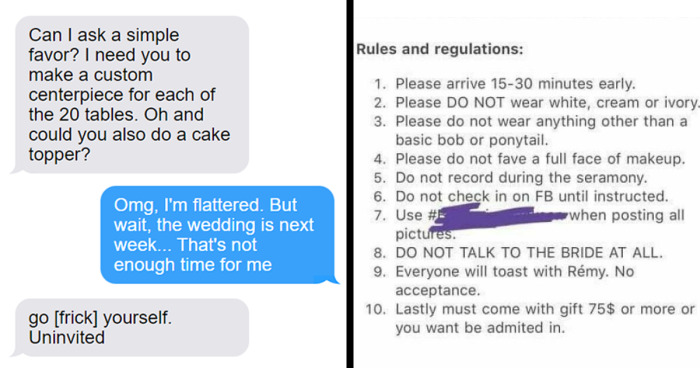
40 Delusional Brides And Grooms Who Thought Getting Married Earned Them Special Treatment

Marriage is beautiful. Two people promise forever, families cry into cocktail napkins, and someone’s uncle discovers the open bar like it’s buried treasure. But somewhere between “Will you marry me?” and “Please Venmo me for your assigned portion of the centerpiece,” a few brides and grooms lose contact with Earth.
Welcome to the strange, sparkly universe of wedding entitlement: the place where love is eternal, but patience expires immediately. These are the brides and grooms who believe getting married turns them into royalty, travel agents, financial advisors, wardrobe police, and emotional dictators with a floral arch.
To be clear, weddings are stressful. They are expensive, emotional, and packed with moving parts. Couples have every right to set boundaries, protect their budget, and plan a day that feels meaningful. But there is a difference between “Please RSVP by June 1” and “Please lose 20 pounds, dye your hair, pay $3,000, and clap when I enter brunch.” One is planning. The other is a group project from the Department of Delusion.
Why Wedding Entitlement Happens
Modern weddings carry a lot of pressure. Couples see polished ceremonies online, compare venues, chase trends, and try to create a once-in-a-lifetime event while also managing family opinions, vendor costs, and guest expectations. The average American wedding now costs tens of thousands of dollars, and pre-wedding events can add even more financial strain for friends and relatives.
That pressure can make reasonable people act unreasonably. A bride may think, “It’s my one special day,” and accidentally translate that into, “Everyone must obey me for eighteen months.” A groom may feel ignored during planning and suddenly decide the bachelor party needs to become a five-day international sports pilgrimage. Add social media, comparison culture, and a few relatives whispering, “You deserve the best,” and suddenly the wedding party is being asked to finance a destination event they never chose.
The problem is not wanting a special wedding. The problem is believing a wedding gives someone permission to treat other people like unpaid staff, walking wallets, or decorative props.
40 Delusional Brides And Grooms Who Expected Special Treatment
1. The Couple Who Charged Guests an Entrance Fee
Some couples decide that because weddings are expensive, guests should “help cover their plate.” A gift is thoughtful. A cover charge is a restaurant policy wearing a veil. Guests are invited to celebrate, not purchase admission to a love-themed nightclub.
2. The Bride Who Demanded Everyone Buy Designer Dresses
Matching bridesmaid dresses are normal. Requiring a $900 gown, designer shoes, professional makeup, and three backup outfits is not. Friendship should not come with a luxury invoice.
3. The Groom Who Wanted a Destination Bachelor Party Paid by Friends
A weekend trip can be fun when everyone agrees. But assuming friends will fund flights, hotels, bottle service, and custom jerseys because “it’s my last night of freedom” is a red flag in cargo shorts.
4. The Bride Who Asked a Pregnant Bridesmaid to Step Down
Some brides fear that pregnancy will “distract” from their photos. That is not wedding planning; that is competing with a fetus. Life does not pause because someone booked a ballroom.
5. The Groom Who Expected Vendors to Work for Exposure
“We have a lot of followers” is not a payment method. Photographers, florists, bakers, musicians, and planners have bills. Exposure does not keep the lights on unless the electric company recently became very sentimental.
6. The Couple Who Assigned Guests a Dress Code by Body Type
Color palettes are one thing. Telling people what they can wear based on size, age, tattoos, hair color, or perceived attractiveness is another. Guests are not background actors hired for a perfume commercial.
7. The Bride Who Wanted a Friend to Cut Her Hair
Wedding photos matter, but asking someone to change their hair, hide their natural curls, cover tattoos, or remove piercings crosses the line from aesthetic preference into personal control.
8. The Groom Who Asked Guests to Fund the Honeymoon Instead of Giving Gifts
Honeymoon funds are common and perfectly acceptable when presented politely. The delusion begins when the couple treats contributions as mandatory and complains that Aunt Linda only gave $50 toward “sunset villa energy.”
9. The Bride Who Expected Bridesmaids to Attend Every Event
Engagement party, dress shopping, shower, second shower, bachelorette weekend, rehearsal dinner, morning-after brunchevent fatigue is real. People have jobs, kids, budgets, and occasionally a desire to sit quietly in their own homes.
10. The Couple Who Refused Plus-Ones but Wanted Expensive Gifts
Guest lists are difficult, and not everyone can receive a plus-one. But demanding generous gifts from people while refusing to let them bring a long-term partner can feel less like hospitality and more like inventory management.
11. The Bride Who Wanted a “No Engagements, Pregnancies, or Announcements” Year
Requesting no big announcements at the wedding is fair. Expecting no one in your entire social circle to have life events for a full calendar year is not a boundary. It is a monarchy.
12. The Groom Who Claimed the Wedding Weekend as His Birthday Too
Some grooms discover that attention feels wonderful and begin collecting occasions like coupons. Wedding day, bachelor party, birthday, fantasy football draftsuddenly every weekend belongs to them.
13. The Couple Who Expected Cash Gifts to Match Meal Costs
Guests are not responsible for reimbursing catering choices. If a couple chooses truffle risotto and a late-night taco truck, that is their decision. Love is not a spreadsheet with assigned columns.
14. The Bride Who Asked Friends to DIY the Entire Wedding
A little help is sweet. Turning friends into unpaid florists, decorators, chauffeurs, calligraphers, and cleanup crew is not sweet. It is a labor shortage with centerpieces.
15. The Groom Who Wanted Final Approval Over Guests’ Social Media Posts
Unplugged ceremonies are common. But demanding that every guest submit captions for approval before posting is less “romantic privacy” and more “corporate brand launch.”
16. The Couple Who Invited People Only to the Reception Cleanup
If someone is not close enough to attend the ceremony or dinner, they are definitely not close enough to stack chairs at midnight.
17. The Bride Who Ranked Bridesmaids by Appearance
Assigning positions based on height for photo balance is harmless. Ranking friends by who looks “best” beside the bride is the kind of move that makes group chats explode.
18. The Groom Who Thought His Fiancée’s Friends Should Fund His Party
No, the bridesmaids do not need to contribute to the bachelor party because “everyone benefits from the wedding.” That logic has the structural integrity of a wet napkin.
19. The Couple Who Sent a Gift Reminder Before the Invitation
Registries are helpful. Sending people a shopping link before they even know the date is bold in the same way eating someone else’s fries without asking is bold.
20. The Bride Who Banned Certain Guests for Looking Too Good
If a guest’s normal appearance threatens the wedding, the issue is not the guest. Confidence is cheaper than security at the door.
21. The Groom Who Expected His Friends to Take Time Off Without Notice
Last-minute wedding events can be hard for people with work schedules. Assuming everyone can vanish from their responsibilities because “bro, it’s my wedding” is not friendship. It is poor calendar management.
22. The Couple Who Asked Guests to Bring Their Own Chairs
Budget weddings can be wonderful. But if guests must bring seating, food, drinks, decorations, and a gift, they are no longer guests. They are shareholders.
23. The Bride Who Demanded Weight Loss From the Wedding Party
This is one of the ugliest forms of wedding entitlement. No photo is worth making someone feel ashamed of their body. Dresses can be altered. Friendships are harder to repair.
24. The Groom Who Wanted a “No Kids” Wedding but Made Exceptions Only for His Side
Child-free weddings are valid. Selective enforcement that magically favors one family creates resentment faster than a bouquet toss near competitive cousins.
25. The Couple Who Expected Guests to Travel Internationally With No Notice
Destination weddings require time, money, passports, and planning. Springing one on guests and acting offended when they decline is like inviting people to a marathon and being shocked they did not pack sneakers.
26. The Bride Who Wanted a Friend to Give Free Professional Services
Friends who are photographers, bakers, stylists, or planners often get hit with “Can this be your gift?” Sometimes they offer. Sometimes they do not. Their talent is not a communal wedding coupon.
27. The Groom Who Complained About “Cheap” Gifts
A wedding gift is not proof of loyalty. Publicly complaining about gifts is the fastest way to turn a thank-you card into an apology tour.
28. The Couple Who Created Multiple Gift Registries for Different Income Levels
Offering a range of gift prices is thoughtful. Labeling them by income tier is not. Nobody wants to discover they have been sorted into “budget friend.”
29. The Bride Who Wanted Guests to Pay for Her Shower
Traditionally, showers are hosted by others voluntarily. A bride organizing her own shower and invoicing guests for decorations, food, and her outfit has misunderstood the word “host.”
30. The Groom Who Demanded a Groomzilla Entrance
There is nothing wrong with personality. But fog machines, motorcycles, choreographed pyrotechnics, and a demand that guests chant your nickname may be less “wedding” and more “minor league wrestling debut.”
31. The Couple Who Expected a Full Year of Attention
Engagement season is exciting. But friends cannot be expected to discuss napkin folds, signature drinks, and seating charts every day for twelve months. Even love needs office hours.
32. The Bride Who Treated the Maid of Honor Like a Personal Assistant
The maid of honor supports the bride. She does not become a 24/7 concierge, therapist, debt collector, luggage handler, and emergency glitter manager.
33. The Groom Who Refused to Help but Criticized Everything
This groom avoids planning, then appears at the end with strong opinions about fonts, appetizers, and chair colors. Sir, you had months. The chair-color courtroom is closed.
34. The Couple Who Wanted Guests to Follow a Social Media Script
Wedding hashtags can be fun. Requiring guests to post prewritten captions about “the most iconic love story of our generation” is not fun. It is influencer homework.
35. The Bride Who Got Angry When Friends Could Not Afford the Bachelorette Trip
A friend saying “I can’t afford it” should be met with compassion, not exile. If someone’s presence matters only when they can pay, the friendship has already been downgraded.
36. The Groom Who Expected His Parents to Pay Without Input
Family contributions are gifts, not blank checks. If parents help pay, respectful conversations matter. Taking their money while rejecting every opinion can create a family drama buffet.
37. The Couple Who Wanted a Wedding Loan From Friends
Borrowing from friends for a party is risky. Borrowing from friends for a party and then serving them dry chicken is a villain origin story.
38. The Bride Who Banned Guests From Wearing Certain Colors for a Whole Weekend
Saving white for the bride is standard. Banning champagne, blush, cream, silver, gold, black, red, floral prints, and “anything photogenic” leaves guests shopping in panic mode.
39. The Groom Who Thought Marriage Made Him the Family CEO
Some people act like the wedding gives them authority over relatives, traditions, and schedules. Marriage creates a partnership, not a corporate merger with hostile management.
40. The Couple Who Forgot the Point Entirely
The saddest delusional couples are not the ones with big budgets or dramatic entrances. They are the ones who forget that a wedding is about love, gratitude, and community. When the day becomes a test everyone else must pass, the celebration loses its heart.
What These Wedding Meltdowns Teach Us
The funniest wedding entitlement stories work because they reveal something familiar. Most of us have seen a tiny version of this behavior: the couple who talks about nothing but their wedding, the friend who assumes everyone can afford a luxury trip, the relative who treats the guest list like a political campaign. The comedy comes from exaggeration, but the lesson is practical.
Healthy wedding planning starts with respect. Respect for guests’ budgets. Respect for vendors’ labor. Respect for friends’ time. Respect for family boundaries. A wedding invitation is not a summons, and being in a wedding party is not a legally binding subscription service.
The best couples communicate early and clearly. They tell bridesmaids what expenses to expect. They give guests enough notice for travel. They accept “no” gracefully. They choose a celebration they can afford instead of quietly transferring the cost to everyone around them. Most importantly, they remember that people are showing up because they care, not because they owe a performance.
Experiences and Real-Life Lessons From Wedding Entitlement
Anyone who has attended enough weddings eventually collects a few stories. Maybe it was the bride who sent a seven-page PDF explaining the approved nail colors for bridesmaids. Maybe it was the groom who asked his friends to pay for a luxury cabin weekend, then acted betrayed when two of them said rent was more urgent than hot-tub brotherhood. Maybe it was the couple who invited 200 people but seemed personally offended that 200 people had opinions, dietary needs, and human limitations.
One common experience is the “slowly boiling bridesmaid” situation. At first, everything sounds reasonable. Buy a dress? Fine. Attend a shower? Lovely. Help plan the bachelorette party? Sure. Then the list grows. There is a destination weekend, matching pajamas, professional glam, custom shoes, group gifts, hotel blocks, decor contributions, and a request to arrive two days early to “help set up.” By the time the bridesmaid realizes she has spent the equivalent of a used car payment, she feels too guilty to step back. Good couples prevent this by being transparent from the beginning.
Another familiar experience is the guest who receives a destination wedding invitation with very little notice. The couple may be thrilled about a beach ceremony, and that joy is valid. But guests must consider airfare, lodging, time off work, childcare, pet care, passports, and the emotional cost of explaining to family members why they cannot attend. When couples take declines personally, they turn a celebration into a loyalty test. A destination wedding can be magical, but only when everyone understands that attendance is optional, not a friendship exam with sunscreen.
Then there is the vendor side. Wedding professionals often see entitlement at close range. A baker is asked to recreate a five-tier celebrity cake on a grocery-store budget. A photographer is expected to stay three extra hours for free because “you’re already here.” A planner becomes the emotional shock absorber for family conflicts that began in 1997. The best vendors are calm, skilled, and generous, but they are not magicians. Respecting contracts, timelines, and payment terms is not boring; it is the foundation of a smooth wedding.
Family experiences can be especially delicate. Parents who contribute money may expect influence. Couples who receive help may feel controlled. Siblings may feel overlooked. Divorced relatives may require careful seating arrangements. In these moments, entitlement can appear on all sides. The cure is honest communication before resentment starts wearing formalwear. “Here is what we can afford,” “Here is what we are comfortable accepting,” and “Here is what matters most to us” are much better sentences than “You should just know because it’s my day.”
The biggest lesson is simple: the wedding is important, but so are the relationships that remain after the last centerpiece is packed away. A beautiful day is wonderful. A beautiful day that does not financially or emotionally bulldoze everyone nearby is even better. Couples who lead with gratitude rarely become cautionary tales. They still get the photos, the music, the vows, and the cake. They also get friends who are happy to answer their texts after the honeymoon.
Conclusion: Love Should Not Require a Service Fee
Delusional brides and grooms make entertaining stories because they take a joyful event and add a confetti cannon of unreasonable expectations. But behind the humor is a useful reminder: weddings do not give anyone permission to become selfish. Marriage is supposed to begin with partnership, gratitude, and communitynot invoices, ultimatums, and emotional hostage situations.
The couples people remember fondly are not always the ones with the most expensive flowers or the most dramatic entrance. They are the ones who made guests feel welcome, treated vendors with respect, and understood that love is not measured by how much everyone else sacrifices. A wedding day can be special without making everyone around it miserable. In fact, that is usually what makes it truly special.
Note: This article is written as original, publication-ready SEO content based on current wedding etiquette, cost trends, and common real-world wedding planning conflicts. It avoids copied source text, source-link clutter, and unnecessary citation placeholders.


