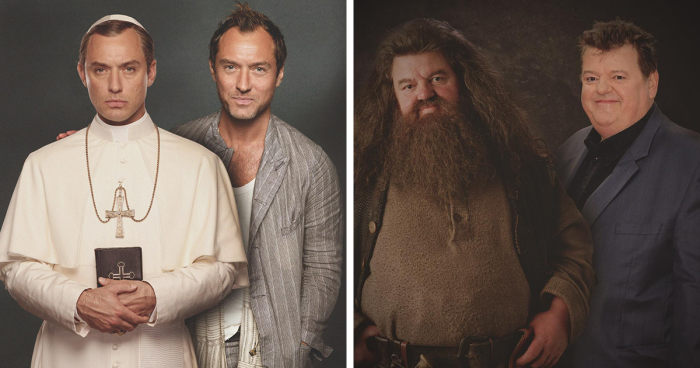

Some actors play a role. Others accidentally create a second version of themselves that refuses to leave the internet, Halloween parties, Comic-Con floors, quote mugs, reaction GIFs, and our collective emotional support system. That is the magic behind the idea of actors standing together with the most famous characters they played: it lets us see the person and the legend side by side.
Think about it. Robert Downey Jr. can wear a regular suit, and fans still hear the faint sound of Iron Man’s helmet snapping shut. Daniel Radcliffe can grow a beard, choose strange indie films, and live a perfectly grown-up life, yet millions still see the boy with round glasses and a lightning scar. These characters became cultural roommates. They moved in, ate snacks, and never paid rent.
This article explores 22 unforgettable actor-character pairings, why they worked, and why audiences still love seeing the real performer “standing beside” the fictional icon. It is part nostalgia trip, part pop-culture analysis, and part reminder that great acting is basically emotional wizardry with better lighting.
Why Actor and Character Comparisons Are So Fascinating
When audiences compare an actor with a famous role, they are not just looking at costumes, makeup, or hair. They are watching identity split in two. The actor is a working artist with a career, interviews, off-screen personality, and probably a normal opinion about breakfast. The character is something stranger: a symbol.
A superhero can represent courage. A sitcom character can represent awkward comfort. A fantasy hero can represent childhood itself. When the actor appears next to the character, whether in a fan edit, wax figure, reunion special, poster display, or red-carpet tribute, the image feels like meeting the magician and the rabbit at the same time.
22 Actors and the Characters That Became Pop-Culture Icons
1. Robert Downey Jr. and Tony Stark / Iron Man
Robert Downey Jr. did not just play Tony Stark; he gave the Marvel Cinematic Universe its first major personality engine. His Iron Man was arrogant, wounded, funny, brilliant, and somehow able to make a metal suit feel emotionally complicated. The role worked because Downey brought speed, charm, and vulnerability to a character who could have easily become a walking technology brochure.
Standing next to Iron Man, Downey looks less like an actor beside a costume and more like a retired inventor visiting his own very expensive garage project.
2. Mark Hamill and Luke Skywalker
Mark Hamill’s Luke Skywalker became one of cinema’s most enduring hero figures: the farm boy who looked at two suns and wanted more. Luke’s journey from impatient dreamer to Jedi legend helped shape modern blockbuster storytelling. Hamill’s sincerity made the character believable, even while surrounded by spaceships, laser swords, and family drama so intense it needed several trilogies to cool down.
Put Hamill beside Luke, and the comparison feels like seeing optimism age into wisdom.
3. Harrison Ford and Indiana Jones
Harrison Ford’s Indiana Jones is the rare adventure hero who looks heroic while constantly appearing irritated that adventure found him again. The hat, whip, leather jacket, and academic skepticism turned Indy into a classic screen icon. Ford’s gift was making the character tough but not invincible. He got punched, dusty, scared, annoyed, and still kept chasing history like it owed him money.
Beside Indiana Jones, Ford looks like the only man who could both grade your archaeology paper and steal it from a temple before lunch.
4. Daniel Radcliffe and Harry Potter
Daniel Radcliffe grew up on screen as Harry Potter, which makes the actor-character relationship unusually intimate for fans. Harry was not simply a role; he was a decade-long coming-of-age story watched by millions. Radcliffe gave the character a believable mix of bravery, confusion, grief, and teenage stubbornness. In other words, magic or not, Harry was still a kid who had homework and trauma.
Standing beside Harry, Radcliffe represents the strange beauty of outgrowing a role while remaining forever connected to it.
5. Johnny Depp and Captain Jack Sparrow
Captain Jack Sparrow could have been a standard pirate. Instead, Johnny Depp turned him into a swaggering, mumbling, eyeliner-powered hurricane of bad decisions. Jack became famous because he felt unpredictable in every scene. Was he brilliant? Was he lucky? Was he simply walking in a direction and hoping the plot followed? Yes, probably all three.
Beside Jack Sparrow, Depp’s transformation shows how one eccentric performance can redefine an entire genre’s tone.
6. Hugh Jackman and Wolverine
Hugh Jackman’s Wolverine became one of the longest-running and most beloved superhero performances in film history. The character needed rage, pain, sarcasm, physicality, and just enough softness to make audiences care. Jackman found the balance. His Wolverine could terrify enemies, grumble through friendships, and still make viewers emotional over a man with metal claws and spectacular sideburns.
Put Jackman next to Wolverine, and you see discipline standing beside animal instinct.
7. Gal Gadot and Wonder Woman
Gal Gadot’s Wonder Woman brought warmth, grace, and battlefield power to Diana Prince. The role required more than superhero posing. Diana had to feel ancient and innocent, royal and compassionate, fierce and hopeful. Gadot’s performance connected especially strongly because she played Wonder Woman as someone who believed kindness was not weakness but strategy.
Standing with Wonder Woman, Gadot reminds audiences why heroic characters endure: they make goodness look active, not passive.
8. Heath Ledger and the Joker
Heath Ledger’s Joker in The Dark Knight became one of the most analyzed villain performances in modern film. The character was chaotic, theatrical, terrifying, and weirdly magnetic. Ledger avoided a cartoonish interpretation and created a Joker who felt like a walking philosophical threat. Every gesture seemed planned and unplanned at the same time, which is a very Joker thing to do.
Beside that character, Ledger’s performance stands as a reminder that villains become unforgettable when they disturb the rhythm of the whole story.
9. Keanu Reeves and Neo
Keanu Reeves’ Neo became the black-coated symbol of cyberpunk awakening. At first, Neo is confused and searching; later, he becomes calm, focused, and impossibly cool. Reeves’ minimalist style worked perfectly for a character discovering that reality itself might need a software update. His stillness made the action feel spiritual rather than merely physical.
Standing next to Neo, Reeves looks like the rare actor whose off-screen calm only strengthens the character’s mythology.
10. Sigourney Weaver and Ellen Ripley
Sigourney Weaver’s Ellen Ripley helped redefine science-fiction heroes. Ripley was practical, intelligent, exhausted, and brave without needing speeches every five minutes. She became iconic because she felt like a real person forced into impossible circumstances. Weaver’s performance made survival feel like strategy, not luck.
Beside Ripley, Weaver represents one of cinema’s greatest examples of strength without artificial swagger.
11. Patrick Stewart and Jean-Luc Picard
Patrick Stewart’s Jean-Luc Picard became a gold standard for thoughtful leadership in science fiction. Picard was intellectual, diplomatic, firm, and deeply moral. Stewart’s stage-trained voice gave the character authority, but his emotional control made Picard more than a captain. He became an ideal: leadership powered by principle rather than ego.
Standing beside Picard, Stewart looks like the human version of a well-written mission statement.
12. Bryan Cranston and Walter White
Bryan Cranston’s Walter White is one of television’s most famous transformations: a chemistry teacher who becomes a criminal mastermind. The brilliance of the performance lies in its gradual change. Cranston did not flip a switch from mild to monstrous. He let Walter curdle slowly, like milk left in a desert RV.
Beside Walter White, Cranston shows how a great actor can make audiences understand a character without excusing him.
13. Peter Dinklage and Tyrion Lannister
Peter Dinklage’s Tyrion Lannister became a fan favorite because he combined wit, pain, intelligence, and survival instinct. Tyrion’s sharp tongue was his sword, shield, and occasionally his shovel when he talked himself into trouble. Dinklage gave the character humor without making him lightweight and sorrow without making him pathetic.
Standing next to Tyrion, Dinklage embodies the power of dialogue delivered like a dagger wrapped in velvet.
14. Sarah Jessica Parker and Carrie Bradshaw
Sarah Jessica Parker’s Carrie Bradshaw became an emblem of late-1990s and early-2000s television fashion, friendship, romance, and questionable financial planning. Carrie was stylish, witty, messy, and endlessly curious about love. Parker made her feel glamorous without sanding off her contradictions.
Beside Carrie, Parker shows how a character can become a style reference, a city fantasy, and a debate topic all at once.
15. Jennifer Aniston and Rachel Green
Jennifer Aniston’s Rachel Green started as a runaway bride and became one of sitcom television’s most recognizable characters. Rachel’s evolution from spoiled and sheltered to independent and career-focused gave Friends a strong emotional arc. Aniston’s comic timing and warmth made Rachel funny even when she was being wonderfully dramatic.
Standing beside Rachel, Aniston reflects the lasting appeal of a character who made growth look stylish and slightly chaotic.
16. Steve Carell and Michael Scott
Steve Carell’s Michael Scott could have been unbearable. Instead, Carell turned him into a cringe-comedy legend with a surprisingly tender center. Michael was needy, inappropriate, lonely, ambitious, and convinced he was much funnier than he was. The genius of the performance is that viewers laugh at him and occasionally feel crushed for him.
Beside Michael Scott, Carell shows how comedy can make a ridiculous character painfully human.
17. Julia Louis-Dreyfus and Selina Meyer
Julia Louis-Dreyfus’ Selina Meyer in Veep is a masterclass in political comedy. Selina is ambitious, insecure, sharp, selfish, and constantly one sentence away from disaster. Louis-Dreyfus plays her with fearless timing, turning panic, vanity, and profanity into high art. The result is a character who feels absurd and uncomfortably plausible.
Standing next to Selina Meyer, Louis-Dreyfus looks like the calm professional who knows exactly where the comedy bodies are buried.
18. Millie Bobby Brown and Eleven
Millie Bobby Brown’s Eleven became the emotional center of Stranger Things. The character’s shaved head, nosebleeds, telekinetic power, and love of waffles made her instantly recognizable. But Eleven lasted because Brown made her vulnerability just as memorable as her powers. She was not only a sci-fi mystery; she was a child learning friendship, language, anger, and trust.
Beside Eleven, Brown represents how young actors can create characters that feel mythic and fragile at the same time.
19. Margot Robbie and Harley Quinn
Margot Robbie’s Harley Quinn exploded off the screen with bubblegum chaos, emotional volatility, and a baseball bat that looked like it had seen things. Robbie gave Harley a mix of comedy, danger, heartbreak, and survival instinct. The character became a cosplay staple because she is visually loud, but she endured because Robbie made her more than colorful madness.
Standing with Harley Quinn, Robbie shows how a performance can rescue a character from becoming only an aesthetic.
20. Chadwick Boseman and T’Challa / Black Panther
Chadwick Boseman’s T’Challa brought dignity, restraint, strength, and emotional depth to Black Panther. His performance mattered because he played a superhero king with both moral seriousness and personal warmth. T’Challa was powerful, but Boseman made his thoughtfulness just as heroic as his combat skills.
Beside Black Panther, Boseman’s legacy feels larger than a franchise. It feels like cultural memory wearing a vibranium suit.
21. Carrie Fisher and Princess Leia
Carrie Fisher’s Princess Leia changed what a space princess could be. Leia was regal, sarcastic, brave, impatient, and absolutely not interested in waiting around to be rescued. Fisher’s sharp intelligence shaped the character’s voice, making Leia both a rebel leader and a pop-culture icon.
Standing next to Leia, Fisher represents the rare performer whose personality seemed to strengthen the character even beyond the script.
22. James Gandolfini and Tony Soprano
James Gandolfini’s Tony Soprano remains one of television’s defining antiheroes. The character was violent, charismatic, anxious, funny, cruel, wounded, and deeply complicated. Gandolfini made viewers sit with contradictions rather than escape them. Tony could be terrifying in one scene and weirdly vulnerable in the next, which made him impossible to reduce to a simple villain.
Beside Tony Soprano, Gandolfini shows how performance can turn television into psychological excavation.
What These Actor-Character Pairings Teach Us About Fame
The most famous characters are not always the loudest, strongest, or most heroic. They are the ones with a clear emotional signature. Iron Man has swagger covering fear. Harry Potter has courage under grief. Michael Scott has desperation disguised as confidence. Walter White has pride pretending to be sacrifice. These characters stick because they make human contradictions visible.
Actors become attached to roles when the performance feels irreplaceable. Audiences may accept remakes, reboots, prequels, and multiverse gymnastics, but certain pairings become difficult to separate. That does not mean no one else can ever play the character. It means the original performance created the reference point.
This is why side-by-side images, reunion photos, wax museum displays, and fan edits are so popular. They give us permission to compare reality and imagination. We can admire the costume, remember the story, and appreciate the human craft behind the illusion.
Experience Section: Why Fans Love Seeing Actors Beside Their Characters
There is a special little thrill in seeing an actor standing beside the character that made them famous. It is not the same as watching the movie or show. It feels more like catching fiction off duty. The cape is on display, the lightsaber is mounted, the hat is tilted just right, and the actor is standing there as if to say, “Yes, that was me. Also, yes, I had lunch breaks.”
For fans, this kind of image creates a bridge between memory and reality. Many people first met these characters at important moments in their lives. Harry Potter may be tied to childhood reading nights, midnight premieres, or the first time a school library felt magical. Iron Man may remind someone of the early Marvel era, when post-credit scenes trained audiences to sit patiently through thousands of names. Rachel Green may bring back comfort television after a long day. Picard may represent calm leadership when real life feels like the opposite of a well-run starship.
Seeing the actor beside the character can also make fans appreciate the work behind the illusion. A superhero suit is not heroic by itself. A pirate costume does not automatically become funny. A wizard robe does not create wonder unless the actor inside it believes in the world enough for us to believe too. The comparison reveals the transformation: posture, voice, timing, expression, movement, silence, and attitude.
It is especially powerful when the actor looks very different from the character. Off screen, performers may be quieter, older, more relaxed, or completely opposite from the role. That difference can be delightful. Steve Carell is not Michael Scott stumbling through a conference room disaster. Bryan Cranston is not Walter White calculating doom in a porkpie hat. Margot Robbie is not actually Harley Quinn plotting glitter-covered mayhem. The gap between person and persona reminds us that acting is not just pretending; it is construction.
These images also invite nostalgia without requiring us to live in the past. Fans can celebrate what a character meant while allowing the actor to keep growing. Daniel Radcliffe can remain Harry Potter in cultural memory and still build a career full of daring, unusual choices. Harrison Ford can always be Indiana Jones and still be Harrison Ford, a performer with multiple iconic roles and decades of craft behind him.
The best actor-character pairings become a kind of shared language. Say “I am Iron Man,” “May the Force be with you,” “That’s what she said,” or “You know nothing,” and entire audiences know the emotional neighborhood. These characters help people joke, bond, quote, dress up, and remember. In that sense, seeing actors standing together with their famous characters is more than a visual gimmick. It is a celebration of storytelling’s strange power to create people who never existed, yet somehow feel like old friends.
Conclusion
The fascination with actors standing together with the most famous characters they played comes from the beautiful collision between reality and imagination. We know Tony Stark is fictional, yet Robert Downey Jr.’s performance made him feel alive. We know Luke Skywalker belongs to a galaxy far, far away, yet Mark Hamill gave him a human heartbeat. We know Michael Scott is a sitcom disaster, but Steve Carell made him oddly lovable.
Great characters do not become iconic by accident. They need writing, design, timing, costume, direction, and, most of all, the actor who understands how to turn a role into a living memory. When audiences see the performer beside the character, they are really seeing two legends at once: the fictional figure and the real artist who made us believe.


