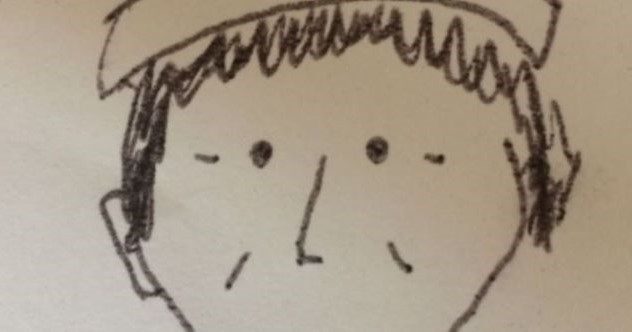

Police sketches are supposed to help the public recognize a person, not win an award for “Most Likely to Be Drawn During a Power Outage.” Yet history has a funny habit of proving that even the oddest composite drawing can become useful. Sometimes a sketch looks like a cartoon character, a sleepy uncle, a potato with opinions, or a doodle from the back of a math notebookand somehow, it still helps investigators.
The best police sketches are not always perfect portraits. They are memory tools. They turn a witness’s description into something visual enough to jog someone else’s memory. That may be a neighbor, a patrol officer, a motel clerk, or one extremely observant 11-year-old with a pencil and confidence. Below are 10 wild police sketches and the equally wild stories that made them famous, infamous, or permanently glued to the internet’s refrigerator door.
Why Police Sketches Can Look So Strange
A police sketch, also called a composite sketch or facial composite, is usually built from memory. That is already a complicated starting point. Witnesses may remember a nose, hairstyle, jacket, posture, or expression better than the entire face. Stress, lighting, distance, and time can all affect recall. A forensic artist then translates spoken descriptions into lines, shadows, and proportions. That is less like taking a photograph and more like building a sandwich from someone describing bread they saw last Tuesday.
This is why “bad” sketches sometimes work. They may capture one useful thing: a round face, unusual hairline, glasses, a distinctive smile, a hat, or a general vibe. Investigators do not expect the drawing to convict anyone by itself. A sketch is a lead generator, not a courtroom magic wand. Still, when a sketch goes viral for looking ridiculous and then helps solve a case, the internet collectively drops its coffee.
1. The Lancaster, Pennsylvania Sketch That Looked Like a Fridge Magnet
In 2018, police in Lancaster, Pennsylvania, released a witness-drawn sketch of a theft suspect. The drawing was wonderfully simple: round head, basic hair, tiny eyes, and a face that looked like it had been created using three office supplies and a lunch break. Online commenters had a field day. People called it amateurish, cartoonish, and everything short of “gallery-ready.”
Then came the twist: the sketch actually helped. Lancaster police said the image, combined with physical descriptors, jogged the memory of at least one investigator. Authorities identified Hung Phuoc Nguyen as the suspect in a theft case involving cash taken from a market vendor area. The story became a perfect reminder that a composite sketch does not need to look like a Renaissance portrait. Sometimes it only needs to be weirdly specific enough to make one person say, “Wait a minuteI know that face.”
The wild part was not just the drawing. It was the police department’s confidence in posting it publicly, knowing the internet would laugh. And laugh it did. But the sketch did its job. In the world of investigative art, that is the equivalent of showing up to prom in Crocs and still being crowned king.
2. The Texas “Muppet” Sketch That Helped Catch a Suspect
In Lamar County, Texas, a 2014 composite sketch of an armed robbery suspect went viral because the face looked less like a realistic human and more like a background character from a children’s puppet show. The round face, minimal features, and unusual proportions made the image an instant internet celebrity. It was the kind of sketch that made people wonder whether the witness had described a man or a moon with hair.
But the Lamar County Sheriff’s Department defended the sketch, explaining that a composite is not supposed to be a perfect portrait. It represents a likeness based on witness information. That distinction mattered. Police later arrested Glenn Edwin Rundles after an officer recognized similarities between the sketch, the suspect description, and a local man.
This case became one of the classic examples of a “terrible” police sketch working surprisingly well. The lesson is simple: the internet judges art. Police judge usefulness. If a sketch gets attention, reaches the right person, and helps generate a lead, it has already earned its little gold star.
3. The Bolivian “World’s Worst Police Sketch” That Still Got Attention
One of the most famous examples of an odd police composite came from Bolivia, where a sketch connected to a serious murder investigation became known online as one of the “world’s worst” police sketches. The face had an egg-like shape, straw-like hair, and features so minimal that it looked as if someone had tried to draw a person from memory during a bumpy bus ride.
The image was widely mocked after appearing in media appeals. Yet reports said the sketch helped authorities track down a suspect. That combinationridicule plus real investigative valueis exactly what makes strange police sketches so fascinating. A drawing can be visually awkward and still serve a practical purpose.
It also raises a bigger point: public appeals are not art contests. They are designed to reach people who might know something. A strange image can sometimes travel farther than a polished one because people share it, debate it, and joke about it. In other words, the sketch may have looked like a rejected breakfast cereal mascot, but it became memorable. In an investigation, memorable can matter.
4. The Riverside Caricature Robbery: When the Suspect Left His Own Portrait
In Riverside, California, police had one of the strangest “suspect sketches” imaginable: a caricature drawn by the victim. In 2019, a caricature artist at the Festival of Lights event said a man sat for a portrait, waited until the drawing was finished, then stole the artist’s money bag and ran away. Unfortunately for the suspect, he left behind a drawing of himself.
Police shared the caricature publicly, noting that it had exaggerated characteristics because, well, that is what caricatures do. A normal police sketch tries to avoid going too far with one feature. A caricature grabs a feature, puts it on a trampoline, and lets it bounce. Still, the drawing was useful because it was based on a direct, in-person sitting. The artist had not merely glimpsed the suspect; he had studied him closely enough to draw him.
This story has the energy of a crime scene written by a sitcom writer. If you are going to steal from an artist, perhaps do not first commission a customized visual aid for the police. That is not criminal mastermind behavior. That is leaving your business card in glitter.
5. The Warwickshire “Cheshire Cat” E-Fit That Looked Like a Prank
In 2018, Warwickshire Police in England released an e-fit image of a burglary suspect. The face had wide-set features and a grin so dramatic that many social media users thought it was an April Fool’s joke. Comparisons flew fast: the Cheshire Cat, SpongeBob SquarePants, and various cartoon villains all entered the chat.
Police confirmed the image was real. It had been created from a victim’s description after burglars reportedly tricked their way into a home in Stratford-upon-Avon and stole money. The sketch did exactly what public appeals often do: it got people looking, talking, and sharing.
The wild thing here was the gap between law-enforcement intent and public reaction. Investigators wanted help identifying suspects. The internet saw a grin wide enough to sell toothpaste to a shark. Still, the attention meant more people saw the appeal. In the modern world, a viral sketch can become a strange partnership between police work and meme cultureone side wants leads, the other wants captions.
6. The 11-Year-Old’s Stick-Figure Sketch That Helped Police
In Stratford, Connecticut, 11-year-old Rebecca DePietro drew a simple stick-figure-style sketch after police asked whether she had seen anyone suspicious near a string of burglaries. She reportedly thought officers might not take the drawing seriously. Instead, they did exactly that.
Police later said the drawing helped them confirm the identity of a suspect, Pedro Bruno, who confessed to multiple burglaries, including one at DePietro’s home. The sketch itself was not fancy. It was the kind of drawing that says, “I have five minutes, one pencil, and a mission.” But it included enough useful information to help investigators connect dots.
This is one of the most charming police sketch stories because it proves that observation matters more than artistic perfection. Rebecca was honored by police for her help, and her drawing became a small but memorable example of community involvement. Not every hero wears a cape. Some use notebook paper and probably have homework due tomorrow.
7. The Oklahoma City “John Doe No. 1” Sketch That Became a Major Lead
Not all wild police sketch stories are funny. Some are powerful because of how important the image became. After the 1995 Oklahoma City bombing, investigators traced a rental truck and interviewed employees connected to the rental process. An FBI forensic artist created a composite sketch of the man believed to have rented the truck.
The sketch became a major break. A motel owner in Junction City, Kansas, recognized the person in the drawing as a guest registered under the name Timothy McVeigh. FBI accounts describe the composite as a key step in identifying him. The story shows the serious side of forensic art: a drawing can move an investigation from a vague public appeal to a specific name.
The sketch was not “wild” because it looked silly. It was wild because of its impact. In a case involving thousands of leads and enormous public attention, a hand-drawn face helped point investigators toward the person they needed to identify. That is the quiet power of a good composite: it can turn memory into momentum.
8. D.B. Cooper: The Sketch That Became a Pop-Culture Ghost
The D.B. Cooper case is one of America’s most enduring mysteries. In 1971, a man using the name Dan Cooper hijacked a Northwest Orient flight, received ransom money, and disappeared after parachuting from the aircraft. The FBI later produced multiple composite sketches based on witness descriptions, including the now-famous image of a calm-looking man in a suit, tie, and dark sunglasses.
The sketch is wild because it looks so ordinary. That is the unsettling part. Cooper does not look like a movie villain. He looks like someone who might sell insurance, complain about airplane peanuts, and vanish into folklore by dinner. The image became inseparable from the legend: neat hair, sunglasses, businesswear, and a mystery that refused to sit down and behave.
Decades later, people still compare suspects, relatives, old photographs, and random yearbook pictures to the FBI composites. The case remains officially unresolved, but the sketch has lived on as one of the most recognizable faces of an unidentified person in American history. It is proof that sometimes a police sketch does not solve a mysteryit becomes the symbol of it.
9. The Zodiac Killer Composite: A Simple Face That Launched Endless Debate
The Zodiac Killer composite sketch is another example of an image becoming larger than the case file. Based on witness descriptions from the late 1960s, the famous sketch showed a man with glasses, short hair, and a plain expression. It was not bizarre in the cartoon sense. In fact, it was almost too normal. That normality helped make it haunting.
For decades, researchers, journalists, amateur sleuths, and true-crime followers have compared the sketch to possible suspects. The problem is that many men from that era could resemble the drawing if you added glasses and the right haircut. That is the danger of a composite that is both specific and generic: it feels meaningful, but it can also invite overconfidence.
The Zodiac sketch is wild because it shows the double-edged nature of police composites. They can help focus attention, but they can also fuel speculation. A sketch is a clue, not a conclusion. Treating it like a photograph can lead people down very strange roads, some of which end at “my neighbor’s uncle looked like this in 1972.”
10. The Delphi Sketch Confusion: When Two Images Complicated the Public Conversation
The Delphi, Indiana case showed how complicated police sketches can become when public attention is intense. Investigators released different sketches at different points in the investigation, and the contrast between them created confusion among many people following the case. In 2019, Indiana State Police clarified that the two sketches represented different people and asked the public to focus on the newer image at that time.
The case later led to the conviction and sentencing of Richard Allen, but the sketch history remains an important lesson. When a case becomes a national obsession, every image can become a magnet for theories. People compare faces, circulate side-by-side photos, and sometimes accuse innocent people based on resemblance alone. That is not helpful detective work. That is internet guesswork wearing a trench coat.
The wildness here is not about a funny drawing. It is about how sketches can shape public perception. A composite image can generate leads, but it can also create noise if people forget its limits. The Delphi sketches remind us that police art lives in a delicate space between information and interpretation.
What These Wild Police Sketches Teach Us
A sketch does not have to be beautiful to be useful
The Lancaster and Lamar County cases prove that a sketch can look laughably simple and still trigger recognition. Beauty is not the job. Usefulness is the job. If one investigator, neighbor, clerk, or patrol officer recognizes something familiar, the drawing has done its work.
Memory is messy, but details matter
Witnesses may forget full faces but remember one strong feature. A round face, a grin, glasses, a hat, a tattoo, or posture can be more useful than a polished but generic portrait. That is why forensic artists ask careful questions and why investigators combine sketches with other evidence.
Going viral can help and hurt
Viral attention can spread a sketch far beyond a local police department’s usual audience. That can be helpful. But it can also turn serious investigations into comedy threads or speculation factories. The best public response is not “Who can make the funniest meme?” It is “Do I actually know something useful?”
A composite is a lead, not proof
This point cannot be repeated enough. Looking like a sketch does not make someone guilty. Police still need evidence, interviews, records, timelines, and proper investigation. A sketch may open a door, but it should never be treated as the whole house.
Extra Experience: What It Feels Like to Study Wild Police Sketch Stories
Spending time with wild police sketch stories is a strange experience because your brain keeps switching lanes. One moment you are laughing at a drawing that looks like it escaped from a cereal box. The next moment you remember that behind every sketch is a real report, a real witness, and often a real victim hoping someone will recognize a face. That balance matters. Humor can make a story readable, but respect keeps it human.
The first experience these stories teach is humility. It is easy to sit at a desk, look at a viral sketch, and say, “I could do better than that.” Maybe you could. Or maybe, after a stressful encounter, poor lighting, and a police interview, your memory would produce a man who looks like a baked potato wearing a wig. Human memory is not a security camera. It edits, blurs, emphasizes, and occasionally throws glitter on the wrong detail.
The second lesson is that recognition is often emotional and contextual. People do not always identify someone because every facial feature matches perfectly. Sometimes they recognize a combination: the face shape, the way the eyes sit, the hairline, the build, the clothing, or simply the “I have seen this person before” feeling. That is why a rough sketch can work. It does not need to fool a passport scanner. It needs to wake up someone’s memory.
The third experience is realizing how much responsibility comes with sharing these images. Online audiences love mystery, but they can move too fast. A sketch can make people feel like detectives, and that feeling can be dangerous when it turns into public accusations. The right way to respond to a police sketch is to contact authorities if you have real informationnot to build a 40-post theory about a stranger because his glasses look “kind of similar.”
Finally, these stories show that investigation is often a patchwork. A sketch rarely works alone. It pairs with descriptions, timelines, surveillance, tips, records, interviews, and sometimes pure luck. The silly-looking drawing might be the spark, but the case still needs fuel. That is what makes wild police sketches so oddly compelling. They sit at the intersection of art, memory, law enforcement, and human weirdness. They remind us that even an imperfect drawing can matter when the right person sees it at the right time.
Conclusion
Wild police sketches are internet gold, but they are also serious investigative tools. The funniest-looking drawings can still help identify suspects, confirm leads, or draw public attention to a case. From the Lancaster doodle to the Texas “Muppet” sketch, from a child’s stick figure to the unforgettable D.B. Cooper composite, these images prove that police work does not always arrive in a sleek package.
The big takeaway is simple: a sketch is not supposed to be perfect. It is supposed to be useful. Sometimes it is useful because it is accurate. Sometimes it is useful because it is memorable. And sometimes it is useful because the entire internet points at it and says, “What on earth is that?”right before someone recognizes the person it was meant to find.
SEO Tags
Note: This article is written for web publication in standard American English and is based on real publicly reported cases while avoiding unnecessary graphic details.


