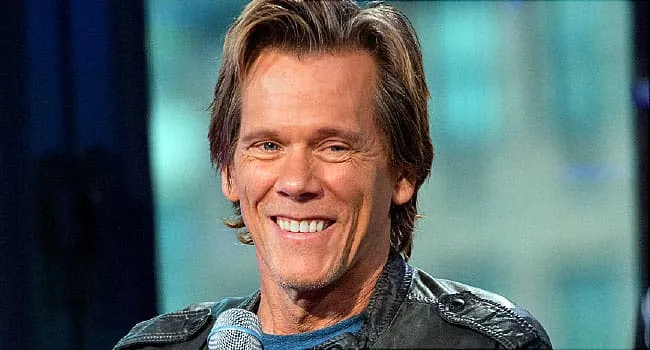

Some actors become famous. Kevin Bacon became famous, stayed famous, became a game, became a meme, became a nonprofit founder, became a touring musician, and somehow still kept his acting career from turning into a museum exhibit with dusty velvet ropes. That is not normal. That is Kevin Bacon normal.
For decades, he has been one of those rare performers who can slide from teen icon to thriller heavy, from horror favorite to prestige ensemble player, from dancing rebel to weary lawman, and from rock-star cool to slightly rumpled guy-next-door without breaking the illusion. He is both instantly recognizable and oddly slippery, which may be the secret sauce behind his longevity. You know the face, you know the voice, you know the name, but you never quite know what flavor of Kevin Bacon you are getting next.
This is exactly why a “10 Questions With Kevin Bacon” piece works so well. The man’s career is basically a pop culture escape room. Every door opens into something different: Footloose, Tremors, Apollo 13, Mystic River, The Following, City on a Hill, The Bacon Brothers, SixDegrees.org, and now newer projects that prove he is still very much in the game. So let’s ask the obvious, the interesting, and the slightly nosy questions.
1. Who is Kevin Bacon when he is not just “the guy from Footloose”?
He is an actor, director, musician, and philanthropist with one of the most varied careers in modern American entertainment. Born in Philadelphia in 1958, Bacon trained seriously from a young age, studying in programs that sharpened his performance instincts long before Hollywood put a spotlight on him. In other words, he was not assembled in a lab by the 1980s. He arrived with craft, not just cheekbones.
That matters because Bacon’s staying power has never come from one hit. Yes, Footloose made him a star, but his identity did not freeze there. Over the years, he built a resume that includes comedy, horror, courtroom drama, historical films, television thrillers, and character-driven indie work. Plenty of actors get branded by one role. Bacon built a career by wriggling out of the label every time somebody tried to stick one on him.
2. Why did Footloose hit so hard?
Because it was never just about dancing. The movie worked because Bacon’s Ren McCormack was not some cardboard rebel in tight jeans and righteous hair. He was funny, stubborn, bruised, restless, and deeply believable as a teenager trapped in a town that treated joy like contraband. Footloose sold rebellion with rhythm, but it also sold vulnerability. That combination gave the film real legs, pun shamelessly intended.
Bacon’s performance became iconic because he understood the balance. He gave the movie enough cool to fuel the posters and enough emotional honesty to keep it from collapsing into pure cheese. To this day, the role follows him like a loyal golden retriever wearing leg warmers. Even when he jokes about the baggage of that fame, he knows it gave him a permanent place in pop culture history.
3. Was he always destined to become a serious actor?
Not destined, exactly. Driven? Absolutely. Bacon’s early path was not a fairy tale where one perfect audition led to immediate glory. He worked in theater, soap operas, and smaller film roles before finding his breakthrough. That grind matters because it explains something crucial about his screen presence: he never feels manufactured. Even at his most polished, there is still a little rough edge left, like a performer who remembers what it means to hustle.
That rough edge became part of the brand. He could play a charmer, but he could also play men with shadows under their boots. That is why his filmography feels so durable. Bacon has always been willing to look messy, morally compromised, or plain uncomfortable onscreen. In a business that often rewards smooth surfaces, he built a career by keeping the grain visible.
4. How did Kevin Bacon avoid becoming an ’80s time capsule?
He refused to act like a nostalgia act. After Footloose, Bacon could have spent decades cashing checks from people yelling, “Let’s dance!” at weddings. Instead, he kept choosing projects that challenged the image. Tremors made him part of a cult monster classic. A Few Good Men and Apollo 13 put him in first-rate ensembles. Mystic River and The Woodsman showed just how dark and complex he could go.
There is also a practical intelligence to the way he has aged as a performer. Bacon has never seemed obsessed with protecting a younger version of himself. He moved from leading-man energy into character-actor freedom without acting like the promotion was beneath him. That shift matters. Some stars spend years fighting time. Bacon figured out that time can be a scene partner if you stop trying to wrestle it to the ground.
5. What is the real story behind “Six Degrees of Kevin Bacon”?
The short version
The game became famous because Bacon’s career connected him to an absurd number of actors through shared casts. He was everywhere, with everyone, across genres and decades. A pop-culture joke was born, and unlike most pop-culture jokes, it refused to die quietly in a dorm room.
The bigger picture
What makes the story interesting is that Bacon did not just roll his eyes and move on forever. He eventually transformed that accidental fame into something useful. His nonprofit, SixDegrees.org, took the idea of human connection and turned it toward social good. That move says a lot about him. Plenty of celebrities would have treated the game as a punchline. Bacon helped convert it into a mission.
That is one reason his public image has aged better than many of his peers. The “Six Degrees” phenomenon could have reduced him to a novelty. Instead, he absorbed it, laughed with it, and redirected it toward philanthropy. It is one of the smartest reputation pivots in celebrity culture. Also one of the least annoying. That alone deserves a polite round of applause.
6. How important is music to Kevin Bacon’s identity?
Very. Not hobby-level important. Not “I own a guitar and know three chords” important. Real, lived-in, road-tested important. Through The Bacon Brothers, his long-running musical partnership with his brother Michael Bacon, Kevin has spent decades building a second creative life outside acting. Their sound blends folk, rock, soul, and country, which is either an eclectic musical vision or a very elegant refusal to sit still.
Music gives Bacon something acting cannot fully provide: authorship. In film and television, he interprets stories created by other people. In music, he gets to help write the emotional weather from scratch. That difference matters, and Bacon has spoken openly over the years about the deeper ownership music gives him. You can hear it in the way he talks about performing. Acting is a craft he loves. Music feels like oxygen.
That musical side also connects neatly with newer work like The Bondsman, where performance, character, and sound overlap in a way that seems tailor-made for him. When a project lets Bacon bring both his acting instincts and his musician’s soul to the table, the result feels less like a casting choice and more like a custom suit.
7. Why has his marriage to Kyra Sedgwick fascinated people for so long?
Because Hollywood has trained us to expect relationships to explode on contact, preferably with a press release and matching sunglasses. Bacon and Sedgwick have been married since 1988, which in celebrity terms is approximately four thousand years. Their longevity attracts attention because it feels grounded rather than performative.
What makes their story compelling is not some polished fairy tale of perfection. It is the sense that they built a life together while keeping work, parenting, and public attention in perspective. They have also talked about protecting their children from the weirdness of fame, which is a smart and refreshingly sane instinct. More recently, the family collaborated on Family Movie, a 2026 project that brought Kevin, Kyra, and their children into the same creative orbit. That is not just a Hollywood anecdote. It is evidence of a family culture built around trust, humor, and shared work.
There is something undeniably appealing about Bacon in this context. He does not sell himself as an untouchable icon. He often comes off like a guy who knows his career matters, but also knows that the people at his dinner table matter more. In a fame economy built on self-inflation, that makes him oddly radical.
8. Has Kevin Bacon had setbacks, or has he just been gliding through life in cinematic lighting?
Oh, he has had setbacks. Career disappointments, critical misses, and very public financial pain all belong in the story. Bacon has spoken about the damage caused by Bernie Madoff’s scheme, and he has never presented his life as one long standing ovation. That honesty is part of why people keep listening to him. He does not posture as a man who conquered adversity with perfect hair and a motivational quote.
Instead, he often sounds like someone who understands that longevity is less glamorous than people imagine. It involves bad bets, uneven projects, moments of doubt, reinvention, and the ability to keep working when the spotlight shifts elsewhere. Bacon’s career is impressive not because it has been flawless, but because he has remained creatively alive through the flaws. There is a difference between surviving Hollywood and continuing to make interesting choices inside it. He has managed both.
9. Why does horror fit Kevin Bacon so well?
Because he knows how to play fear without turning it into cartoon furniture. Horror works best when an actor treats impossible circumstances like emotional reality, and Bacon has always been strong at that. From Friday the 13th to Stir of Echoes to newer material like The Bondsman, he brings credibility to weird premises. He does not wink at the audience too hard. He commits, and horror loves commitment.
The Bondsman is a perfect modern example. The premise is gloriously bonkers: Bacon plays Hub Halloran, a murdered bounty hunter resurrected to track down escaped demons while confronting his own sins, his family, and his stalled dreams. That could have been a one-note gimmick. Instead, it plays to Bacon’s strengths: grit, melancholy, menace, humor, and a face that always looks like it knows the world is stranger than advertised.
He also carries the kind of seasoned weariness that horror-comedy thrives on. Young heroes can scream. Bacon can look at a demon problem like a man who has already dealt with three mortgages, two regrets, and a suspicious smell in the basement. It lands differently. It lands better.
10. What is Kevin Bacon doing now, and why does it still feel relevant?
Still acting, still evolving
As of spring 2026, Bacon is not coasting on legacy. He is still taking on new screen work, still expanding his creative partnerships, and still showing up in projects that keep him connected to contemporary audiences. The Bondsman gave him a fresh showcase in 2025, and Family Movie added an intriguing family collaboration in 2026. He has also been linked to Hulu’s Southern Bastards pilot, a reminder that the industry still sees him as present-tense talent, not archival material.
Still making music, too
The Bacon Brothers remain active, which says a lot about the rhythm of his career. Bacon is not trying to do one thing forever. He is building a creative life broad enough to move between mediums without seeming lost in any of them.
Why it matters
Because relevance is not just about being famous. It is about staying curious. Bacon’s public comments in recent years suggest a performer who still wants to learn, still wants to create, and still feels a spark when he finds a new angle on a character. That might be the simplest explanation for his longevity. Kevin Bacon is still working like someone who believes the next interesting thing might be just around the corner. And honestly, that is a pretty good way to age in public.
Conclusion: Kevin Bacon Is More Than a Pop Culture Shortcut
If you reduce Kevin Bacon to a dance scene, a party game, or a familiar face from cable reruns, you miss the actual story. The real story is range. The real story is durability. The real story is a performer who started young, worked hard, got famous, got typecast, dodged the trap, reinvented himself, built a meaningful music career, turned a joke into a nonprofit idea, and kept moving.
That is why “10 Questions With Kevin Bacon” turns out to be more than a catchy headline. Each question opens onto a bigger truth about modern stardom: the actors who last are rarely the ones who cling hardest to their original image. They are the ones who adapt without becoming hollow. Bacon has done exactly that. He has stayed visible without becoming stale, familiar without becoming boring, and successful without pretending success erased struggle.
So yes, Kevin Bacon is still connected to everyone. But the more impressive thing is this: after all these years, he still feels connected to the work.
Extended Reflections: 500 More Words on the Kevin Bacon Experience
The experience of following Kevin Bacon’s career is unusually satisfying because it never feels like watching the same movie twice. Some stars create a dependable lane and stay in it forever. Bacon has spent decades treating genre like a buffet. He will take some drama, a scoop of horror, a side of comedy, a little television prestige, and then wander off to make music with his brother before anyone can pin him down. That unpredictability is part of the pleasure. Viewers do not return to Kevin Bacon because he always delivers the same thing. They return because he keeps finding new ways to be Kevin Bacon.
There is also a specific emotional texture to his work that is easy to recognize once you notice it. Even when he is playing authority, he often brings a flicker of fragility. Even when he is playing charm, there is usually something unsettled underneath. That tension gives his performances a human pulse. It is why he fits so naturally into stories about men under pressure, men carrying secrets, men trying to look composed while life quietly lights matches behind them. Bacon understands how to play confidence with a crack in it, and that is catnip for audiences who want something more interesting than surface cool.
Then there is the generational factor. One audience met him in Footloose. Another found him through Tremors. Another through Apollo 13 or Mystic River. Younger viewers might know him from television, memes, social clips, or recent horror projects. That broad recognition is not an accident. Bacon has managed to remain legible across decades without pandering to any one era. He does not chase youth culture in a desperate sprint. He just keeps showing up in work that gives each generation a new doorway into his career.
The Kevin Bacon experience also includes a certain offscreen appeal. His public persona has matured well because it seems rooted in work, family, humor, and perspective rather than self-mythology. When he talks about fame, he rarely sounds intoxicated by it. When he talks about music, you can hear genuine passion. When he appears with Kyra Sedgwick or their children, the dynamic feels lived in rather than polished for display. That grounded quality makes his continued relevance easier to enjoy. He feels accomplished, but not embalmed in his own legend.
And perhaps that is the final secret. Kevin Bacon remains interesting because he still seems interested. He still appears open to risk, open to collaboration, open to strange new projects, open to laughing at himself, and open to turning old baggage into something meaningful. For a performer who has spent nearly five decades in public view, that is no small achievement. It is the difference between being remembered and being alive in the culture right now. Kevin Bacon is both, which is why asking ten questions about him still does not feel like enough.