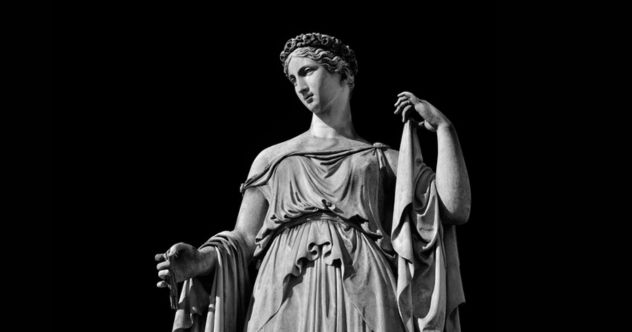

When people picture Roman gods, they usually imagine Jupiter throwing lightning bolts, Mars polishing a sword, or Venus making every situation unnecessarily dramatic. But Roman religion was far more crowded, practical, and delightfully specific than the celebrity lineup suggests.
The Romans recognized divine powers connected to grain storage, rusty wheat, door hinges, thresholds, drainage systems, flocks, and even the uncomfortable business of keeping certain things unspoken. In other words, they did not merely have gods for “the big stuff.” They had divine specialists for the parts of life that could go wrong before breakfast.
These lesser known Roman gods reveal how Romans understood their world. A safe home depended on more than walls. A successful harvest depended on more than weather. A city needed more than armies and senators; it also needed clean water, secure ports, protected doorways, and food that did not spoil in storage.
One important note before we meet the divine deep cuts: Roman religious evidence is uneven. Some deities appear in festivals, priesthoods, poetry, inscriptions, or archaeology. Others survive mostly in later lists and literary references. Their exact functions sometimes changed over centuries, and scholars do not always agree on every detail. That uncertainty is part of what makes them fascinating.
Why Lesser Known Roman Gods Matter
Roman religion was not a tidy character encyclopedia with one god per job and a collectible trading card for each. It was a living system shaped by farming, trade, family life, politics, local customs, and contact with other cultures. Some deities were ancient Italic powers. Others became associated with better-known gods. Some were worshiped publicly, while others were tied closely to homes, fields, gates, or particular rituals.
The lesser known Roman gods below show that the Romans treated everyday risks seriously. A squeaky hinge might be annoying today. In ancient Rome, a hinge marked the boundary between safety and danger. A harbor was not merely a place for ships. It was a gateway for grain, wealth, travelers, and trouble. A drain was not just infrastructure. It helped turn marshy land into a functioning city.
1. Robigo: The Divine Enemy of Crop Disease
Robigo, sometimes called Robigus in ancient sources, was associated with the red blight or “rust” that could damage grain crops. That may sound like an oddly specific divine assignment, but wheat disease was no joke in an agricultural society. One bad season could mean hunger, debt, and a lot of very unhappy Romans staring at their empty grain jars.
The festival of Robigalia took place in late April, when crops were vulnerable. Romans performed rites asking Robigo to spare the fields from destructive rust. The ceremony was not about celebrating plant disease; it was an attempt to control or soften a threat that farmers could see but could not fully explain.
Robigo is a perfect example of Roman practicality. Rather than waiting for Jupiter to manage every weather-related emergency, the Romans addressed the divine force closest to the problem. If wheat was turning reddish and sickly, they had a god for that. Ancient Rome was basically running the world’s earliest customer service department for agricultural disasters.
2. Pales: Protector of Shepherds, Flocks, and Pastures
Pales was a pastoral deity connected with shepherds, sheep, cattle, and the movement of animals to seasonal grazing land. Ancient sources are not entirely consistent about whether Pales was male, female, or understood in a more flexible way. That ambiguity has survived for more than two thousand years, which is impressive for a deity whose main concern was livestock management.
The festival of Parilia, held on April 21, honored Pales and focused on purification. Shepherds and their animals participated in rites meant to protect flocks and encourage fertility. The date also became associated with Rome’s traditional birthday, linking the city’s identity to pastoral life and its legendary rural beginnings.
Pales reminds us that Rome was not always marble columns, legal speeches, and people dramatically fainting in the Senate. Before it became a giant Mediterranean power, Rome depended on fields, animals, and the people who managed them. Pales stood close to the muddy boots part of Roman life.
3. Consus: Guardian of Stored Grain
Consus was connected with stored grain, hidden reserves, and the security of food after harvest. His name is often linked with the Latin idea of storing away. While Ceres received much of the spotlight as a goddess of grain and agriculture, Consus handled a quieter but equally important stage: keeping harvested food safe once it had been collected.
His altar was located near the Circus Maximus and was traditionally kept covered or underground except during festival observances. The festivals known as Consualia were connected with harvest and grain storage. Horses, mules, and donkeys were honored during the celebrations and given relief from work, which was probably the ancient Roman version of finally receiving a much-deserved paid day off.
Consus represented food security. A field full of grain was useful, but only if the grain could be preserved, protected, and distributed. In a city that eventually relied heavily on imported food, that was not a minor concern. Consus watched over the “do not touch until winter” pantry shelf of the Roman world.
4. Portunus: God of Gates, Keys, and Harbors
Portunus was associated with doors, gates, keys, ports, and harbors. His sphere may have developed over time, moving from gateways and storage spaces toward maritime travel and safe arrival at ports. The connection makes sense: a harbor is, in many ways, a doorway between land and sea.
The Portunalia festival took place in August. Portunus mattered especially in a trading society where ships brought grain, luxury goods, military supplies, travelers, and occasionally a fresh batch of problems from another province. A secure port meant more than commercial success. It meant survival for a growing city.
The Temple of Portunus near the Forum Boarium remains one of the best-known surviving examples of Republican Roman temple architecture. It is a useful reminder that this lesser known god was not a tiny background character. He had a visible place in the landscape of Rome and in the daily concerns of merchants, sailors, and warehouse workers.
5. Cloacina: The Goddess of Purification and Drainage
Cloacina may be the Roman deity with the most unfairly funny modern reputation. She is often described as a “sewer goddess” because she was associated with the Cloaca Maxima, Rome’s major drainage system. But reducing her to that label misses the larger idea behind her cult: cleansing, flowing water, and the maintenance of urban life.
Over time, Cloacina became linked with Venus as Venus Cloacina. Scholars still debate whether Cloacina began as an independent deity who merged with Venus or whether the name functioned as a title emphasizing Venus’s purifying powers. Ancient religion rarely gives us a simple answer when it can offer three mysterious ones instead.
A shrine of Venus Cloacina stood in the Roman Forum near the drainage system. That location says a great deal about Roman priorities. The Romans could honor beauty, love, and civic order while also recognizing that a thriving city needs drainage. It is hard to think of a more Roman sentence than that.
6. Dea Dia: The Agricultural Goddess of the Arval Brothers
Dea Dia was an ancient Roman agricultural goddess honored by the Arval Brothers, a prestigious priestly college. Her name means something like “Goddess Divine,” which is not exactly a detailed job description. Yet the rites performed for her clearly connected her with the fertility of fields and the success of crops.
The Arval Brothers held ceremonies for Dea Dia in a sacred grove outside Rome. Their rituals included formal sacrifices, processions, feasting, and the performance of the Carmen Arvale, an old religious chant preserved in inscriptions. The language of the hymn was already archaic to many Romans who heard it, which gave the ritual an extra layer of ancient mystery.
Dea Dia is sometimes compared with Ceres or other fertility goddesses, but it is safer not to treat her as simply another name for a better-known deity. Her cult had its own traditions, sacred place, and priesthood. She represents the deep roots of Roman religion, reaching back to agricultural communities before Rome became an empire with excellent roads and a terrible relationship with political stability.
7. Furrina: The Goddess We Can Barely See
Furrina is one of the most mysterious figures in Roman religion. We know she had a festival called the Furrinalia, observed in July, and that a priest known as the flamen Furrinalis was connected with her worship. She was also associated with a sacred grove in Rome.
What exactly did Furrina govern? That is where the evidence becomes foggy. Some older interpretations connect her with water, springs, or a possible Etruscan background, but there is no complete ancient biography waiting to be discovered in a dusty Roman filing cabinet. The Romans left us clues, not a full instruction manual.
That uncertainty makes Furrina important. She shows that Roman religion included ancient powers whose meanings could become unclear even to later Romans. A deity did not need a polished myth, a famous statue, or a blockbuster epic to remain part of the sacred calendar. Sometimes surviving in the calendar was enough.
8. Cardea and Carna: Divine Power at the Hinge
Cardea is usually described as a goddess of hinges, especially the pivot on which a door turns. However, the story is complicated because the poet Ovid discusses a goddess named Carna in connection with opening and closing, household protection, and the first day of June. Ancient literature and later interpretation do not always separate Cardea and Carna neatly.
What matters most is the idea behind the deity: a door hinge was not trivial. It controlled movement between the protected household and the unpredictable outside world. A hinge could open the home to guests, family members, and opportunity. It could also close against thieves, illness, and whatever suspicious noise was happening in the alley after dark.
Cardea or Carna also had protective associations involving doorways and children. Ovid’s account includes the use of hawthorn as a protective plant near entrances. The larger lesson is clear: Romans treated the home as a vulnerable space that needed divine support at every turning point, including the literal turning point of the door.
9. Forculus: Keeper of the Door Itself
Forculus was associated with the door, especially the physical door panels. He is often mentioned alongside other household boundary deities, including Cardea and Limentinus. Together, they formed something like a divine home-security team, except their customer support response time was measured in prayers and ritual rather than push notifications.
Much of what we know about Forculus comes from later writers who listed Roman gods with very specialized functions. That means historians must be cautious. We should not imagine every Roman family holding elaborate daily ceremonies for a door deity. Still, the existence of Forculus in religious discussion reveals an important Roman habit of thought: ordinary objects could carry sacred significance.
A door was more than wood, metal, and a lock. It separated household order from public uncertainty. It was the point through which goods entered, family members left, guests arrived, and danger might appear. Forculus gave the door a divine personality because, in Roman life, boundaries mattered.
10. Limentinus: Guardian of the Threshold
Limentinus protected the threshold, or limen, the exact line between inside and outside. That may sound even more specific than a hinge god or a door god, but Roman religion had room for all three. The hinge moved the door. The door created the barrier. The threshold marked the crossing.
Thresholds were symbolically powerful in Roman culture. Crossing one could mean entering a household, joining a family, attending a ceremony, or moving from the public street into private life. The threshold was not an empty strip of stone or wood. It was a boundary with social, legal, and religious meaning.
Limentinus is a wonderful example of how Romans turned everyday transitions into sacred moments. Modern people step over thresholds while checking their phones, carrying grocery bags, and wondering where they put their keys. Romans could see that same small movement as something worthy of divine attention. Honestly, after tripping over a doorstep, it is easy to understand why.
What These Lesser Known Roman Gods Reveal About Rome
The lesser known Roman gods were not random extras added to make the pantheon more crowded. They reflected the pressures of Roman life: protecting food, preserving homes, managing cities, guarding boundaries, caring for animals, and coping with forces people could not control.
Rome’s famous gods represented power, war, fertility, law, and the sky. Its quieter gods represented hinges, grain bins, drainage channels, thresholds, and crop disease. Together, they created a religious world that was both grand and practical. The Romans did not separate daily life from sacred life as neatly as modern readers often do.
That is why these forgotten gods remain memorable. They show that ancient religion was not only about dramatic myths and marble temples. It was also about getting through the year with enough grain, healthy animals, a safe home, and a front door that kept doing its job.
Experiencing the World of Lesser Known Roman Gods
Learning about lesser known Roman gods can change the way you experience ancient history. Instead of seeing Rome as a city populated only by emperors, gladiators, and famous gods with excellent branding, you begin to notice the ordinary pressures that shaped daily life. A Roman farmer worried about disease in the wheat. A shepherd worried about a flock. A merchant worried about a ship reaching the harbor. A family worried about the safety of its home.
One of the best ways to explore these gods is through Roman festivals. The calendar was a map of anxieties, hopes, and seasonal work. Robigo appears when crops need protection. Pales appears when shepherds prepare flocks for a new season. Consus matters when grain must be stored. Portunus becomes important when trade and travel move through gates and harbors. The calendar tells us that Roman religion was not separate from weather, farming, transport, and family life. It was woven directly into them.
You can also experience the topic through Roman architecture. Imagine standing near the Forum Boarium and looking at the Temple of Portunus. It is not just an old building with impressive columns. It represents a city whose survival depended on movement: people moving through gates, ships moving into ports, grain moving from storage to market, and ideas moving from local traditions into a vast empire.
Then think about the humble doorway. Most people do not stare at a hinge and feel a rush of religious curiosity. Yet the Romans could find meaning in the smallest structural details of a home. Cardea, Forculus, and Limentinus make doorways feel less boring because they reveal a world where every entrance involved risk and possibility. A door could welcome a friend, protect a child, admit a customer, or keep out a thief. The Romans saw that complexity and assigned divine help accordingly.
There is also something surprisingly modern about Cloacina. Ancient Rome celebrated massive public monuments, but it also depended on infrastructure that most people preferred not to discuss at dinner. Roads, drains, water systems, warehouses, and ports are not glamorous until they fail. Cloacina reminds us that a civilization can be impressive because of what happens below street level as much as what rises above it.
For readers, students, travelers, and history fans, the experience of studying these gods is a useful reminder not to chase only the famous names. The small gods often reveal the bigger picture. They show how Romans handled uncertainty in practical ways: through rituals, calendars, sacred spaces, and the belief that no problem was too ordinary for divine attention.
In the end, the lesser known Roman gods make ancient Rome feel more human. They bring us away from thunderbolts and triumphal marches and toward grain sacks, sheep pens, doorframes, harbors, and drains. That may sound less glamorous than Jupiter’s lightning, but it is much closer to how most Romans actually lived.


