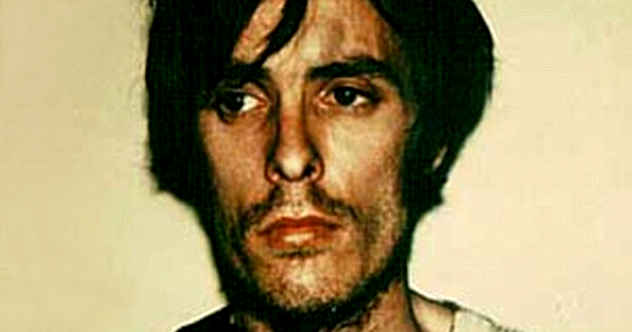

Note: This article discusses murder, animal cruelty, cannibalism, and severe mental illness. Disturbing details are limited, and the victims are treated as people rather than props in a killer’s mythology.
True crime has produced plenty of dramatic nicknames, but few are as unsettling as “the Vampire of Sacramento.” Richard Trenton Chase received that label after committing six murders in California between December 1977 and January 1978. His crimes involved blood consumption and mutilation, yet the reality was not supernatural. Chase was a profoundly disturbed man whose deteriorating mental condition, violent behavior, substance abuse, and access to weapons formed a catastrophic combination.
The case still attracts attention because almost every part of it seems implausible. Chase believed his blood was turning into powder. He interpreted unlocked doors as invitations. An early FBI profile described him with remarkable accuracy. Meanwhile, authorities had encountered multiple warning signs before his killing spree began.
Unfortunately, catchy labels can turn killers into horror characters while reducing victims to footnotes. The six people Chase murdered were Ambrose Griffin, Teresa Wallin, Evelyn Miroth, Daniel Meredith, six-year-old Jason Miroth, and 22-month-old David Ferreira. Their names matter more than the nickname that made their killer infamous.
Who Was Richard Chase?
Richard Chase was born on May 23, 1950, and grew up in the Sacramento area. Accounts of his early adulthood describe increasing isolation, heavy drug use, poor hygiene, paranoia, and bizarre physical complaints. He repeatedly sought medical attention for imagined illnesses and eventually received psychiatric treatment.
By the mid-1970s, Chase had been diagnosed with paranoid schizophrenia and institutionalized. Medication reportedly reduced some of his symptoms, but his care was inconsistent after his release. His condition later deteriorated dramatically. That history does not excuse his crimes, but it is essential for understanding how the case unfolded.
It is equally important not to treat schizophrenia as a synonym for violence. Most people with mental illness are not violent. Chase’s behavior was an extreme case involving numerous interacting factors and should never be used as a convenient stereotype.
1. His “Vampire” Nickname Came From a Terrifying Delusion
Richard Chase did not drink blood because he believed he was an immortal count with excellent eveningwear. He reportedly believed his own blood was disappearing, becoming contaminated, or turning into powder. He also claimed that his heart was shrinking and that his body was gradually dying.
These beliefs were part of an elaborate delusional system. Chase thought consuming blood could replenish his supply and keep him alive. He associated his imagined medical problems with poison, soap dishes, hostile organizations, UFOs, and other supposed threats. The explanations changed, but the central obsession remained: he believed he needed outside blood to survive.
The press transformed that obsession into the “Vampire of Sacramento” and “Dracula Killer” labels. Those names were memorable, but they also made a real criminal case sound like gothic entertainment.
2. He Complained That His Body Was Falling Apart
Years before the murders, Chase repeatedly reported physical emergencies that doctors could not verify. He claimed that his head was changing shape, that bones in his skull were moving, and that important parts of his circulatory system had stopped functioning. At one point, he reportedly held oranges against his head because he believed his brain could absorb vitamin C through the skin.
These were not ordinary health worries turned up a few notches. They were fixed somatic delusionsfalse beliefs centered on the body that persisted despite medical evidence. Chase’s conviction that he was physically disintegrating helped fuel increasingly dangerous attempts at self-treatment.
His medical history also demonstrates why “strange behavior” is an inadequate summary. Records described a serious and worsening psychiatric crisis that required sustained professional intervention.
3. He Had Already Been Institutionalized Before the Murders
Chase entered psychiatric care several times during the 1970s. In 1976, he was involuntarily committed after an incident involving animal blood and was again diagnosed with paranoid schizophrenia. Staff reportedly observed his fixation on blood, his refusal to accept that he was mentally ill, and his belief that ordinary food or household substances could poison him.
Medication appeared to improve his behavior sufficiently for him to be transferred to a less restrictive setting. He was eventually released into his family’s care and later lived independently. Reports indicate that consistent supervision and medication management did not continue.
In hindsight, this sequence looks like a line of emergency flares stretching toward disaster. However, the case should not be reduced to the simplistic claim that one person or one institution could easily have predicted every future crime. Mental-health law, patient rights, family dynamics, clinical judgment, and limited community support all complicated the situation.
4. His Obsession With Blood Escalated Through Animal Cruelty
Before attacking people, Chase harmed animals and consumed their blood or remains. Accounts describe rabbits, birds, cats, and dogs among the animals he targeted. He sometimes used a blender to create mixtures he believed would restore his health.
This behavior was not harmless eccentricity, nor was it a quirky dietary phase that got wildly out of hand. It combined severe delusions with deliberate cruelty and escalating experimentation. Animal remains, bloodstained objects, and pet collars were later reported among the evidence found in his apartment.
Animal cruelty can appear in many contexts and does not automatically predict serial murder. In Chase’s case, however, it was part of a documented progression toward increasingly destructive acts.
5. Police Once Found Him Naked and Covered in Blood
One of the most unnerving episodes occurred months before the Sacramento murders. In August 1977, authorities encountered Chase near Pyramid Lake in Nevada. He was reportedly naked and smeared with blood. His vehicle also contained blood, weapons, clothing, and a bucket holding a liver.
Investigators understandably suspected that they had stumbled onto a homicide. Laboratory testing, however, identified the blood and organ as bovine. With no evidence of a human victim, no murder charge followed.
The incident is disturbing because it shows just how visible Chase’s deterioration had become. Authorities encountered a scene that looked like the final reel of a horror film, yet the available evidence did not establish a human crime. The episode later became one of the case’s most haunting missed-warning narratives.
6. A Locked Door Could Make Him Walk Away
Chase later told FBI profiler Robert Ressler that he tested residential doors while searching for places to enter. According to the account, Chase interpreted a locked door as a sign that he was not welcome. An unlocked door, in his delusional reasoning, represented permission.
This detail has become one of the most frequently repeated Richard Chase facts because it is both bizarre and practical. Chase was not describing a rational rule, and locking a door is never a guarantee against violence. Nevertheless, reports indicate that he abandoned at least one attempted entry when he found the doors secured.
The case consequently became an enduring reminder that simple security habits matter. Locking doors and windows is not paranoia; it is a low-effort barrier that can discourage opportunistic intruders.
7. His Six Murders Occurred During a One-Month Spree
Chase’s first known murder occurred on December 29, 1977, when he shot Ambrose Griffin during an apparently random attack. Griffin was a husband, father, and engineer who had been helping unload groceries at his home.
On January 23, 1978, Chase entered Teresa Wallin’s home through an unlocked door and murdered her. Wallin was pregnant. The crime scene revealed that Chase’s obsession with blood had crossed into human violence, allowing investigators to begin forming a behavioral picture of the person responsible.
Four days later, Chase entered Evelyn Miroth’s home. He murdered Miroth, Daniel Meredith, Jason Miroth, and David Ferreira. The presence of two children made the crime particularly devastating. Chase fled when the arrival of a visitor interrupted him.
Officially, Chase killed six people over approximately one month. The speed of the escalation gave investigators little time to connect the attacks before another household was targeted.
8. The FBI Profile Was Remarkably Close
FBI profiler Robert Ressler assisted local investigators after the Wallin murder. The resulting profile reportedly suggested that the offender would be a young white man, undernourished, socially isolated, disorganized, poorly groomed, and affected by paranoid psychosis. Investigators also expected him to have a history of drug use and believed incriminating evidence would remain in his home.
Chase matched much of that description. He was 27, emaciated, disheveled, isolated, and living near the relevant neighborhoods. His apartment contained extensive physical evidence.
The accuracy sounds almost clairvoyant, but criminal profiling is not magic. Ressler and his colleagues analyzed the offender’s choices, the disorder visible at the scenes, and the absence of efforts to conceal evidence. The profile helped narrow an investigation; fingerprints, ballistics, witness information, stolen property, and other physical evidence actually built the case.
9. He Left Investigators an Overwhelming Trail of Evidence
Chase was not a meticulous criminal mastermind. Investigators found bloody handprints and shoe impressions, while witnesses described a thin, disheveled man wearing a distinctive orange parka. A former high-school acquaintance reported an alarming encounter with him shortly before one of the attacks.
Police traced Daniel Meredith’s abandoned vehicle to an area close to Chase’s apartment and examined Chase’s background. When detectives arrived, he initially refused to open the door. Officers pretended to leave, waited nearby, and arrested him when he emerged carrying a box.
Searches connected him to the crimes through a large collection of physical evidence. His .22-caliber handgun was linked through ballistics, while property belonging to victims and bloodstained items were recovered. Despite the case’s mythology, his capture came through conventional investigative work rather than an elaborate duel between glamorous adversaries.
10. Mental Illness Did Not Produce a Successful Insanity Defense
Chase’s trial began in 1979. His defense emphasized his documented psychosis and argued that his mental condition prevented genuine premeditation. Prosecutors countered that his behavior demonstrated choices, preparation, and awareness of wrongdoing. Among other points, he selected a weapon, moved between locations, left locked homes alone, fled when interrupted, and attempted to avoid police.
The jury convicted Chase of six counts of first-degree murder, and he received a death sentence. The result illustrates a frequently misunderstood distinction: a clinical diagnosis is not identical to legal insanity. A defendant can be severely mentally ill yet still be found criminally responsible under the law’s specific test.
Chase was sent to San Quentin State Prison and was later temporarily transferred to a psychiatric facility. On December 26, 1980, he was found dead in his cell after an overdose of prescribed medication. His death was generally regarded as suicide. He was 30 years old.
Conclusion: The Reality Is More Disturbing Than the Nickname
Richard Chase remains one of America’s most disturbing killers, but the useful lessons in his case do not come from treating him like a supernatural villain. They come from examining the collision of escalating behavior, failed continuity of care, delusional thinking, animal cruelty, substance misuse, opportunity, and access to a firearm.
The case also demonstrates why true-crime storytelling needs restraint. Chase’s grotesque nickname may attract clicks, but it should not eclipse Ambrose Griffin, Teresa Wallin, Evelyn Miroth, Daniel Meredith, Jason Miroth, and David Ferreira. They were not supporting characters in “the Vampire of Sacramento” story. They were six people whose lives were taken during a brief and preventable-looking explosion of violence.
Extended Perspective: Experiencing the Richard Chase Case Responsibly
Expect Discomfort, Not Entertainment Alone
Reading about Richard Chase can produce a peculiar mix of disbelief, fear, and morbid curiosity. The stranger the facts become, the easier it is to experience the case like fictional horror. That reaction is understandable, but it can quietly shift attention toward the killer’s spectacle and away from the human cost.
A more responsible reading experience begins by recognizing where fascination turns into consumption. It is possible to study an extreme criminal case without collecting gruesome details as if they were trading cards. The strongest accounts provide enough information to explain the investigation, psychology, and legal issues while avoiding unnecessary descriptions of suffering.
Separate Documented Facts From True-Crime Folklore
Chase’s story has been retold in books, television programs, podcasts, listicles, and social-media videos. Every retelling creates opportunities for errors to multiply. Ages vary between accounts, quotations lose their original context, and disputed childhood anecdotes are sometimes presented as proven facts.
Readers can improve the experience by comparing archival news coverage, FBI material, trial reporting, law-enforcement recollections, and later historical analysis. Claims repeated on twenty entertainment blogs may still originate from one unverified paragraph. Repetition is not the same thing as corroborationalthough the internet occasionally wears a fake mustache and hopes nobody notices.
Do Not Turn a Diagnosis Into a Villain Costume
The psychiatric dimensions of the case deserve serious analysis. Chase experienced severe delusions and received a schizophrenia diagnosis, but it would be irresponsible to imply that schizophrenia normally produces behavior like his. The overwhelming majority of people with mental illness are not violent, and many are more vulnerable to victimization than the general population.
The relevant experience for readers is learning to hold two ideas at once: Chase was profoundly ill, and he committed calculated actions for which a jury held him responsible. Clinical illness can explain parts of behavior without erasing accountability. Legal insanity, meanwhile, is a narrow legal determination rather than a casual synonym for “extremely disturbed.”
Notice the Ordinary Details That Shaped the Case
The most practical lesson is almost embarrassingly simple: lock the door. Chase’s reported interpretation of locked and unlocked homes arose from his delusions, but the physical barrier still influenced his behavior. Good lighting, secured windows, attentive neighbors, and prompt reporting of suspicious conduct are not dramatic crime-fighting techniques. That is precisely why they are useful.
The investigation offers another grounded lesson. Chase was identified through witness observations, vehicle tracing, background checks, ballistics, fingerprints, and evidence recovered during searches. Behavioral profiling contributed direction, but routine police work delivered proof. Real investigations tend to depend less on dazzling monologues and more on carefully connecting unglamorous details.
Finish With the Victims, Not the Killer
A thoughtful experience of this case should end by restoring the people whom the nickname obscured. Ambrose Griffin was returning to an ordinary family task. Teresa Wallin was building a life with her husband and expecting a child. Evelyn Miroth’s home contained family members and a friend preparing for an ordinary day. Jason Miroth and David Ferreira were children.
Remembering those details changes the emotional center of the story. Richard Chase becomes neither an antihero nor a supernatural monster, but the person responsible for six devastating losses. That perspective may be less sensational than vampire mythology, yet it is far more honestand ultimately more unnerving.
Research Note
This article was synthesized from archival, government, academic, legal, medical, and established media material, including the FBI Vault, UPI archives, History, California Revealed, KCRA-TV archival footage, Oxygen, Sacramento News & Review, Radford University, Kutztown University’s Journal of Dracula Studies, the American Psychological Association, the National Institute of Mental Health, and Cornell Law School’s Legal Information Institute.
SEO Metadata


