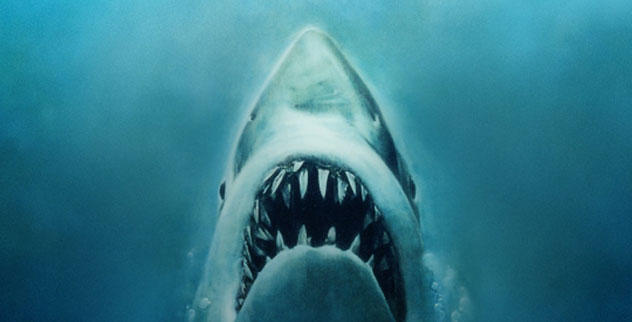

Movie directors get the magazine covers, actors get the standing ovations, and editors often get a dark room, a monitor, cold coffee, and several hundred hours of footage that looks suspiciously like a garage sale organized by chaos. Yet some of cinema’s most beloved films became what we know and love only after an editor found the right rhythm, removed the dead weight, sharpened the emotion, or rebuilt the story from a mountain of material.
Calling a film “rescued by the editor” does not mean one person magically turned a disaster into a masterpiece while everyone else was out buying sandwiches. Filmmaking is collaborative. But editing is where a movie finally learns how to breathe. A great editor can turn a malfunctioning shark into terror, a sprawling comedy into a romance, or a noisy action sequence into something audiences can follow without needing a map, a helmet, and a recovery day.
Here are 10 films that demonstrate just how much movie editing can shape, strengthen, and sometimes save a finished film.
Why Film Editing Can Save a Movie
A screenplay is only a blueprint. Production creates raw material. The editing room decides what the audience actually experiences: when a reaction lands, when a joke gets air, when a reveal arrives, and when a scene needs to be launched into the sun. Editors manage pacing, emotional clarity, visual geography, sound, performance, and story logic at the same time.
The best film editors do not simply remove footage. They discover the movie hidden inside the footage. Sometimes that means reducing a three-hour experiment to a crisp romantic comedy. Sometimes it means withholding a broken creature effect until viewers are convinced it is lurking beneath their seats. Either way, editing is less like trimming a hedge and more like performing emergency surgery on a runaway train.
10 Films That Were Rescued by the Editor
1. Annie Hall (1977): Ralph Rosenblum Found the Love Story
Before Annie Hall became a landmark romantic comedy, it was a sprawling project called Anhedonia. The early version contained multiple storylines, philosophical detours, comic fragments, and enough free-association energy to make a college notebook look organized.
Editor Ralph Rosenblum helped identify the film’s emotional center: the relationship between Alvy Singer and Annie Hall. By cutting away side roads and reorganizing material around the couple, Rosenblum and the creative team transformed a loose collection of ideas into a funny, bittersweet story about love, memory, insecurity, and the universal human talent for overthinking a perfectly decent dinner date.
The final film feels playful and spontaneous, but that apparent ease came from hard editorial choices. Rosenblum’s work gave the movie its structure without sanding off its personality. The result won the Academy Award for Best Picture and proved that a film can be intellectually restless while still having a clear emotional heartbeat.
2. Jaws (1975): Verna Fields Made the Shark Scarier by Showing Less
Jaws had a famously difficult production. The mechanical shark frequently failed, which was not ideal for a movie whose title creature was supposed to spend a good deal of time being terrifying. Fortunately, the production problem created an opportunity for suspense.
Editor Verna Fields shaped the movie’s tension through suggestion, rhythm, point of view, sound, and reaction shots. Instead of constantly displaying the shark, the film often lets viewers imagine it. A barrel skimming across the water, a terrified swimmer, a sudden musical cue, or an empty ocean frame becomes more unsettling than a rubber monster posing for a close-up.
Fields won the Academy Award for Best Film Editing, and her work remains a masterclass in cinematic suspense. The lesson is deliciously simple: when the visual effect is not working, do not panic. Hide it, build anticipation, and let the audience do the expensive special effects inside its own imagination.
3. Star Wars (1977): A Team of Editors Turned Space Opera into Propulsion
The original Star Wars, later renamed Star Wars: Episode IV – A New Hope, is often described as a film “saved in the edit.” That phrase can oversimplify the work of an enormous creative team, but it does point toward something important: the final film gained much of its speed, clarity, humor, and emotion through editorial shaping.
Editors Richard Chew, Paul Hirsch, and Marcia Lucas helped tighten scenes, clarify the story, strengthen reactions, and turn the final Death Star battle into a high-stakes race against time. The final assault works because the editing keeps multiple threats alive at once: Luke’s mission, the approaching Death Star, the Rebel base, the fighters in combat, and the emotional reactions of characters watching the battle unfold.
Marcia Lucas, Chew, and Hirsch shared the Academy Award for Best Film Editing. Their contribution demonstrates that a blockbuster is not simply a collection of spaceships, lasers, and heroic haircuts. It needs momentum. Without editorial rhythm, even the Millennium Falcon would feel like it was stuck in airport traffic.
4. The Godfather (1972): The Editors Controlled a Giant Family Saga
The Godfather had an enormous storytelling challenge. It needed to follow Michael Corleone’s transformation, establish an entire criminal family, balance intimate domestic moments with violence, and maintain the feeling that every decision had consequences. That is a lot of pasta to keep on one plate.
Editors William Reynolds and Peter Zinner, along with other contributors during post-production, helped shape the film’s patient but purposeful pacing. The movie takes its time, but it rarely feels static. Scenes are allowed to breathe, performances are given room to land, and transitions quietly reveal Michael’s gradual movement from reluctant outsider to ruthless leader.
The famous baptism sequence is a prime example of editing as moral storytelling. The film crosscuts a sacred ceremony with coordinated murders, turning the sequence into an indictment of Michael’s hypocrisy and transformation. The scene does not need a narrator to explain what has happened. The cuts do the talking, and they do not whisper.
5. Apocalypse Now (1979): Walter Murch Created Order from Controlled Madness
Apocalypse Now was born from a massive, complicated production with enormous amounts of footage, changing ideas, difficult locations, and a story that could easily have become a foggy pile of helicopters and existential dread. Walter Murch’s work as editor and sound designer helped give the film its unforgettable shape.
The finished movie moves through war like a fever dream. Its structure is deliberately disorienting, yet it never loses the central pull of Captain Willard’s journey toward Kurtz. Murch’s editing and sound design allow scenes to feel surreal without becoming meaningless. Music, dialogue, silence, explosions, and image rhythms combine into a psychological experience rather than a simple military adventure.
The film was not “fixed” in one heroic afternoon, because no film is. But post-production turned a troubled and oversized project into one of the most haunting war films ever made. It is proof that a movie can be chaotic on the inside while still feeling hypnotically controlled on screen.
6. Touch of Evil (1958/1998): Walter Murch Helped Restore Orson Welles’ Vision
Touch of Evil is a special case because the rescue happened decades after the original release. Orson Welles lost control of the film’s post-production process, and the studio released a version that differed significantly from his intended design. Welles wrote a detailed memo explaining the changes he believed were needed, but his recommendations were ignored at the time.
In 1998, editor Walter Murch worked with producer Rick Schmidlin to create a restored version based on Welles’ notes. The goal was not to invent a new movie or pretend that missing footage had magically appeared from a secret drawer. It was to make the best possible version from the available material while honoring Welles’ documented intentions.
The restoration adjusted sound, pacing, transitions, titles, and editorial emphasis. The result helped audiences see the film as a more complete expression of Welles’ style. It is one of the clearest examples of editing functioning not just as post-production, but as historical repair.
7. Mad Max: Fury Road (2015): Margaret Sixel Made Mayhem Readable
Action movies often confuse speed with excitement. Mad Max: Fury Road proves that the real secret is clarity. Editor Margaret Sixel worked through an extraordinary amount of footage to build a movie that moves at a ridiculous pace while remaining surprisingly easy to follow.
The final film contains thousands of cuts, but it does not feel like a blender full of motorcycles. Sixel and director George Miller carefully guide the viewer’s eye, often keeping important action near the center of the frame. That visual strategy allows the audience to understand who is moving, where danger is coming from, and why each split-second decision matters.
The movie’s editing also protects character. Furiosa, Max, Nux, Capable, and the wives are not lost beneath explosions and chrome. Their choices are communicated through glances, pauses, and sudden shifts in rhythm. Fury Road shows that fast editing works best when it is rooted in story, not when it is simply caffeinated.
8. Rogue One: A Star Wars Story (2016): Editorial Problem-Solving Built a Stronger Mission
Rogue One went through substantial reshoots and revisions, which turned its post-production process into the kind of situation that makes editors consider taking up gardening. The final film benefited from the work of editors Jabez Olssen, Colin Goudie, and John Gilroy, along with the wider creative team shaping the revised material.
The movie had to introduce a new group of characters, connect to an established franchise, create a believable rebellion, and land directly before the events of Star Wars. Editorial changes helped sharpen the mission, improve character connections, and create a more focused progression toward the battle on Scarif.
The finished film is especially effective in its final act because the cutting balances multiple locations, character sacrifices, aerial combat, ground action, and the looming awareness that the story is racing toward a familiar chapter in the franchise. The editing does not erase every production difficulty, but it helps convert a complicated process into a cohesive war story.
9. The French Connection (1971): Jerry Greenberg Turned a Chase into Pure Panic
The car chase in The French Connection is one of the most famous action sequences ever made, and its power comes from far more than a speeding car under an elevated train. Editor Jerry Greenberg helped transform the sequence into a tense, rough-edged experience that feels less like a polished stunt display and more like a terrible idea escalating in real time.
The chase works because of its uneven rhythm. The editing cuts between the driver, the train, pedestrians, traffic, obstacles, and the chaotic city environment. Viewers are never allowed to settle into a comfortable rhythm, because the sequence itself is built on discomfort.
Greenberg’s work shows how editing can create danger beyond what was physically filmed. The action does not merely move faster. It feels more unpredictable. The sequence has the rough pulse of a nightmare where you are late, lost, and somehow responsible for a Pontiac.
10. American Graffiti (1973): Editing Made One Night Feel Like a Whole World
American Graffiti follows several young characters over one long night, weaving together romance, uncertainty, friendship, cruising, radio music, bravado, and the looming fear of growing up. Its structure could easily have become scattered, especially because the film moves constantly among different characters and locations.
Editors Verna Fields and Marcia Lucas helped give the film its easy-flowing rhythm. The storylines intersect and separate without losing momentum, while the soundtrack creates a continuous emotional thread. Songs do more than fill space; they connect scenes, define mood, and make the night feel like a shared experience.
The editing creates the illusion that the viewer is cruising through the town alongside the characters. It is loose enough to feel lived-in but controlled enough to keep the emotional arcs clear. That balance is difficult to achieve. Anyone who has tried to coordinate a group dinner knows that getting four people to arrive at the same restaurant is already an epic narrative challenge.
What These Films Teach Us About the Experience of Editing
Watching these films with an editor’s mindset changes the experience completely. Instead of only asking, “What happens next?” you begin to ask, “Why did the movie cut there?” A reaction shot suddenly becomes a plot point. A pause becomes a decision. A scene that feels effortless starts to reveal dozens of invisible choices working quietly underneath it.
The first lesson is that editing is emotional timing. In Annie Hall, the cuts help turn jokes into reflections on memory and regret. In Jaws, the timing of what is withheld creates fear. In The Godfather, long pauses and carefully paced scenes let power shift almost invisibly. The editor is constantly asking a simple but brutal question: what should the audience feel right now?
The second lesson is that clarity is more valuable than volume. Mad Max: Fury Road has relentless movement, but viewers can usually understand where to look. Rogue One has a crowded final act, yet the important choices remain visible. A movie can contain a thousand explosions, but if viewers do not understand who is in danger or why it matters, the explosions become expensive wallpaper.
The third lesson is that cutting can create meaning that was never present in a single shot. The baptism montage in The Godfather gains its power from juxtaposition. The shark in Jaws becomes frightening through a relationship between sound, water, faces, and absence. In Touch of Evil, editorial restoration helped recover intentions that had been blurred by studio intervention. Editing is not only about shortening; it is about connecting ideas.
For writers, creators, marketers, and anyone telling a story, the same principle applies. Not every good detail belongs in the final version. The strongest message often appears after removing the clever but unnecessary parts. A scene, paragraph, video, or presentation improves when each moment earns its place.
The final experience of studying great film editing is a little humbling. You realize how often movies make you feel something before you consciously understand why. A cut can make you laugh, worry, gasp, or suddenly miss a character who is still standing in the frame. Editors work in the shadows, but their decisions live in every heartbeat of the finished film.
Note: The word “rescued” is used as shorthand for films whose final impact depended heavily on editorial choices. Each movie remained the result of collaboration among directors, writers, performers, editors, sound teams, producers, and many other filmmakers.
Conclusion
These films prove that editing is not merely the last step before a release date. It is where raw material becomes a story with shape, energy, tension, and emotional meaning. From Verna Fields making viewers fear an unseen shark to Ralph Rosenblum discovering the true heart of Annie Hall, editors have repeatedly shown that the cutting room can be where a movie finally finds itself.


