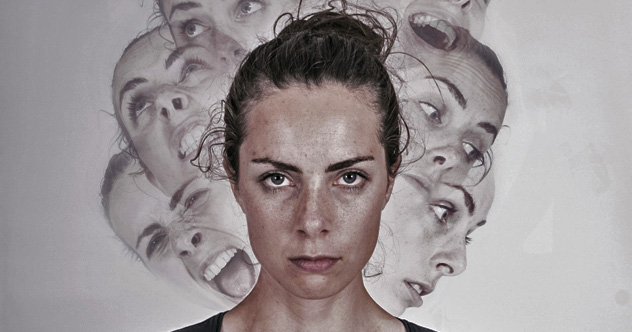

Editorial note: This article discusses trauma, abuse, memory loss, self-harm, and criminal proceedings. It is intended for education, not self-diagnosis. Some historical diagnoses remain controversial, and public accounts cannot replace confidential clinical records.
Dissociative identity disorder has spent decades trapped between serious clinical research and Hollywood’s fog machine. Movies often portray a person changing instantly into a dangerous villain with a new accent and suspiciously convenient wardrobe. Real dissociative identity disorder, commonly shortened to DID, is generally far less theatrical and much more complicated.
DID is a mental health condition involving disruption in identity, memory, awareness, and the sense of self. A person may experience two or more identity states, sometimes called parts or alters, along with memory gaps that cannot be explained by ordinary forgetfulness. Many clinicians associate the condition with overwhelming, repeated childhood trauma, although researchers continue to debate aspects of its development, diagnosis, prevalence, and interpretation.
The following famous cases of dissociative identity disorder became influential through books, interviews, court proceedings, art, television, or public advocacy. Fame, however, does not automatically equal certainty. Some accounts are supported by extensive treatment histories, while others rely heavily on memoirs or remain disputed. That distinction matters.
What Is Dissociative Identity Disorder?
DID was previously called multiple personality disorder. The newer name reflects a more accurate clinical idea: the condition is not simply several complete people sharing one body. It involves fragmentation or discontinuity within one person’s identity, consciousness, memory, and emotional experience.
Possible dissociative identity disorder symptoms include:
- Unexplained gaps in memory or periods of “lost time”
- Feeling detached from the body, thoughts, or surroundings
- Noticeable changes in speech, posture, preferences, or behavior
- Finding objects, messages, or purchases one does not remember
- Hearing internal voices or experiencing conflicting inner dialogue
- Symptoms of post-traumatic stress, depression, anxiety, or sleep disturbance
These experiences can also occur in other medical or psychiatric conditions. Diagnosis therefore requires a careful professional assessment that considers trauma-related disorders, neurological conditions, substance effects, psychosis, sleep disorders, and other possible explanations.
10 Well-Known Dissociative Identity Disorder Cases
1. Chris Costner Sizemore: The Woman Behind “The Three Faces of Eve”
Chris Costner Sizemore became one of the earliest widely recognized Americans associated with what was then called multiple personality disorder. Her psychiatrists, Corbett Thigpen and Hervey Cleckley, described her under the pseudonym “Eve” in the 1957 book The Three Faces of Eve. A movie released the same year starred Joanne Woodward, who won an Academy Award for the role.
The original story concentrated on three identity states: the restrained Eve White, the energetic Eve Black, and a more stable identity called Jane. Sizemore later said her experience was considerably more complex and involved many identity states over the yearsnot merely the tidy trio presented to the public.
She eventually revealed her identity, wrote autobiographical books, painted, and spoke about recovery. Sizemore also criticized the commercial handling of her story and said that the simplified media version made her feel exploited. Her case remains important not only because it introduced millions of people to dissociation, but because it demonstrates how quickly a patient’s life can become someone else’s screenplay.
2. Shirley Ardell Mason: The Controversial Story of “Sybil”
Shirley Ardell Mason became famous under the pseudonym Sybil after journalist Flora Rheta Schreiber published Sybil in 1973. The book described a woman who allegedly developed 16 identities following severe childhood abuse. A successful 1976 television adaptation starring Sally Field transformed the case into a cultural landmark.
After the book’s success, public awareness of multiple personality disorder increased dramatically. So did the number of reported diagnoses. For many readers, Sybil appeared to provide a clear explanation of how childhood trauma could divide memory and identity.
However, the case later became deeply controversial. Critics argued that psychiatrist Cornelia Wilbur may have encouraged or shaped the presentation through suggestion, hypnosis, medication, and leading questions. Accounts also emerged indicating that Mason had once denied having multiple personalities, although supporters disputed the meaning and context of that statement.
Today, Mason’s story should not be presented as settled clinical proof. Its greater historical value may be the questions it raises about therapeutic influence, recovered memories, publishing incentives, and the ethical responsibilities involved in converting confidential treatment into bestselling entertainment.
3. Billy Milligan: DID in an American Courtroom
Billy Milligan’s case became famous because it placed dissociative identity disorder at the center of a major criminal proceeding. Milligan was arrested in Ohio in 1977 and charged with kidnapping, robbery, and the rape of three women near the Ohio State University campus.
During psychiatric evaluations, clinicians described multiple identity states and concluded that Milligan was not unified or mentally competent in the ordinary sense during the alleged crimes. His defense argued that certain identities had committed the offenses while the identity called Billy lacked awareness of them.
In 1978, he was found not guilty by reason of insanity and committed to psychiatric institutions. The decision became a legal and cultural milestone, later inspiring Daniel Keyes’ book The Minds of Billy Milligan and numerous documentaries and dramatizations.
The diagnosis and legal outcome remain controversial. It is also essential not to treat Milligan as representative of people with DID. One unusual criminal case cannot establish that dissociative identity disorder causes violence. Most people living with mental illness are not violent, and many are more vulnerable to harm than likely to inflict it.
4. Truddi Chase: “The Troops” and When Rabbit Howls
Truddi Chase shared her story in the 1987 memoir When Rabbit Howls, written from the viewpoints of identity states collectively called “the Troops.” The book described dozens of parts that Chase believed developed in response to prolonged childhood abuse.
Rather than pursuing complete fusion into one identity, Chase and her therapist worked toward cooperation among her parts. That approach attracted attention because many treatment narratives of the period treated integration as the only acceptable outcome.
Chase later appeared on The Oprah Winfrey Show, bringing her account to a much larger audience. Her memoir was also adapted into the television miniseries Voices Within: The Lives of Truddi Chase.
The precise number of identities received plenty of publicity, but the more meaningful element of the story was their described function. The parts were portrayed not as a collection of party tricks, but as survival responses carrying different memories, emotions, and responsibilities.
5. Robert B. Oxnam: A Scholar’s Fractured Mind
Robert B. Oxnam was a respected China scholar and former president of the Asia Society when he sought professional treatment for alcoholism and emotional difficulties. During therapy, his psychiatrist identified dissociative identity disorder and introduced him to an angry internal child part named Tommy.
Oxnam eventually described 11 identity states in his memoir A Fractured Mind. Some appeared to hold fear or anger, while others handled professional, intellectual, or social responsibilities. His account showed how a person can appear successful while experiencing significant internal distress and memory fragmentation.
Oxnam’s public story challenged the assumption that DID must always be glaringly obvious. According to his account, professional achievement had coexisted with symptoms he did not understand. Therapy focused on communication, trauma processing, and eventually integrating several parts.
His case is frequently discussed because it presents DID through the eyes of an established academic rather than through a courtroom or sensational television production.
6. Karen Overhill: The Case Documented in Switching Time
Karen Overhill entered treatment with psychiatrist Richard Baer in 1989, initially reporting depression, unexplained physical discomfort, and disturbing memory problems. Over time, Baer said he identified 17 identity states associated with different memories and emotional roles.
Their treatment continued for approximately 18 years and became the subject of Baer’s book Switching Time. Unlike many dramatic summaries of DID, this account emphasized the slow pace of therapy. Progress involved establishing safety, recognizing patterns, building trust, and addressing traumatic memories without overwhelming the patient.
Overhill later spoke publicly about her experience and recovery. Her case became notable because it followed a long therapeutic relationship from early confusion through increased cooperation and eventual integration.
It also illustrates a practical truth: trauma therapy rarely moves in a straight, graceful line. It is usually less like climbing a staircase and more like assembling furniture with three missing screws and instructions translated by a sleepy robot.
7. Cameron West: A First-Person Account of Family Life With DID
Businessman and psychologist Cameron West documented his experiences in the 1999 memoir First Person Plural: My Life as a Multiple. West described encountering an identity state called Davy and gradually becoming aware of numerous other parts.
His memoir explored the effect of dissociation on marriage, parenting, work, and daily routines. Rather than treating DID as an isolated set of symptoms, West showed how memory gaps and sudden behavioral changes can affect everyone within a household.
The book also captured the difficult position of a spouse who wants to be supportive but cannot always determine what is happening. Communication, boundaries, professional guidance, and patience became central to maintaining family stability.
West’s story reached a wide audience and helped present DID as a condition affecting ordinary responsibilities: paying bills, caring for children, keeping appointments, and preserving relationshipsnot merely dramatic moments of switching.
8. Herschel Walker: A Public Disclosure From a Sports Celebrity
Former professional football player and Heisman Trophy winner Herschel Walker publicly discussed his diagnosis in the 2008 memoir Breaking Free: My Life with Dissociative Identity Disorder. He described different parts that he believed helped him cope with childhood bullying, isolation, anger, and intense pressure to succeed.
Walker said some states were highly competitive and productive, while others were associated with troubling thoughts or behaviors. He reported receiving a formal diagnosis after seeking mental health treatment as an adult.
His disclosure brought DID into conversations about professional sports, masculinity, trauma, and the stigma attached to psychiatric care. It also demonstrated how extreme discipline and achievement can sometimes conceal emotional suffering rather than eliminate it.
Because the account is largely autobiographical and some aspects of Walker’s treatment history have drawn public scrutiny, it should be described as his reported experiencenot used to make broad conclusions about every person with DID.
9. Kim Noble: Identity, Memory, and Art
British artist Kim Noble became internationally known through television interviews, exhibitions, and the memoir All of Me. She has described living with numerous identity states, several of which create artwork in noticeably different styles.
The paintings have attracted attention because they appear to express separate emotional perspectives. Some are bright and playful; others are abstract, dark, or disturbing. Noble has said certain parts possess skills, preferences, and memories that are not equally accessible to others.
Her experience also demonstrates the practical challenges of dissociative amnesia. Everyday life may involve unfamiliar purchases, interrupted projects, missed conversations, or discovering work one does not remember creating.
Although the artwork makes Noble’s story visually compelling, its value is not in proving DID through brushstrokes. Instead, it offers a window into how creativity can become a method of expression, communication, and trauma processing when ordinary language feels inadequate.
10. AnnaLynne McCord: A Modern Celebrity Discussing DID
Actor AnnaLynne McCord publicly disclosed a diagnosis of dissociative identity disorder in 2021. Known for roles in television programs such as 90210 and Nip/Tuck, McCord discussed memory gaps, trauma-related symptoms, and noticeable shifts in identity and behavior.
She explained that acting sometimes interacted with her internal experience. Moving rapidly between intense fictional roles and public expectations could feel disorienting, particularly before she understood her symptoms.
McCord said receiving the diagnosis gave her a framework for healing rather than a reason for shame. Her interviews have emphasized trauma awareness, treatment, and more responsible portrayals of DID in entertainment.
Her public disclosure is significant because it presents diagnosis as the beginning of understandingnot the final plot twist in a psychological thriller. That may not sell as many movie tickets, but it is considerably more useful to real people seeking help.
What These Famous DID Cases Canand CannotTeach Us
These stories differ sharply in quality and reliability. Some were documented by treating clinicians, some were narrated by the individuals themselves, and some were transformed by publishers, filmmakers, lawyers, or television producers. Historical records may use outdated terminology, and even extensive documentation does not make every interpretation unquestionable.
The cases can show how dissociation may affect memory, identity, work, relationships, and treatment. They cannot provide a home diagnostic checklist. Identifying with one memoir or noticing mood changes does not mean someone has DID.
They also demonstrate why ethical storytelling matters. People with DID are frequently portrayed as deceptive, supernatural, unpredictable, or dangerous. Such stereotypes may discourage individuals from discussing symptoms or seeking professional support.
Experiences Related to Living With Dissociative Identity Disorder
Lost Time May Feel Ordinary Before It Feels Alarming
One of the most commonly described experiences in public DID accounts is not a dramatic transformation but a blank space. A person may realize that several hours have passed, find themselves in a different room, or discover that a task has already been completed. At first, these incidents may be dismissed as distraction, exhaustion, stress, or forgetfulness.
The confusion can accumulate gradually. Someone may find unfamiliar clothing in a closet, receive a message continuing a conversation they do not recall, or meet a person who seems to know them well. These experiences can create embarrassment and fear, especially when the person worries that others will assume they are lying.
Different Parts May Carry Different Emotional Jobs
People who describe identity states often explain them in terms of functions rather than costumes. One part may handle work, another may contain anger, and another may hold fear or traumatic memories. A younger part may respond to situations with a child’s emotions, while a protective part may become distant, suspicious, or controlling.
This does not mean every part is completely unaware of the others. Awareness can vary. Some people report total amnesia between states, while others experience partial memory, internal observation, or a sense of being present without controlling their actions. These patterns may also change during treatment.
Relationships Can Become Complicated
Partners, relatives, and friends may notice changes before the person recognizes them. They might observe differences in voice, expression, posture, food preferences, vocabulary, or emotional reactions. However, confrontation without sensitivity can increase fear and defensiveness.
Supportive relationships usually require predictable boundaries. Loved ones can acknowledge distress without pretending to be therapists. They can encourage professional care, help maintain routines, and ask what forms of support feel safe. They should also protect their own well-being; compassion does not require accepting harmful conduct.
Diagnosis Can Bring Relief and Uncertainty at the Same Time
For some individuals, diagnosis explains years of bewildering symptoms. It may replace the belief that they are careless, dishonest, or “going crazy” with a trauma-informed framework. For others, the diagnosis initially creates disbelief or shame.
Because DID overlaps with symptoms seen in post-traumatic stress disorder, depression, personality disorders, psychotic disorders, neurological illnesses, and substance-related conditions, assessment can be lengthy. A responsible clinician examines alternative explanations rather than announcing a dramatic diagnosis after one conversation.
Therapy Usually Begins With Safety, Not Memory Excavation
Popular stories sometimes suggest that treatment consists of uncovering a hidden traumatic scene that instantly explains everything. In practice, aggressively searching for memories can be destabilizing and may increase confusion or suggestibility.
Trauma-informed treatment commonly begins with stabilization: reducing self-harm risk, improving sleep, managing overwhelming emotions, recognizing triggers, developing grounding skills, and strengthening communication among identity states. Trauma processing may occur later and should be paced carefully.
Some people work toward complete integration, in which identity states become more unified. Others pursue functional multiplicity, meaning the parts cooperate effectively even if they remain subjectively distinct. The appropriate goal depends on safety, clinical needs, personal values, and informed discussion with a qualified professional.
Daily Progress Is Often Quiet
Recovery may look surprisingly ordinary. It can mean remembering an entire afternoon, getting through a stressful conversation without losing awareness, attending an appointment, or recognizing a trigger before dissociation intensifies.
That is not cinematic, but it is meaningful. Living with DID is less about displaying extraordinary identities and more about building continuity, safety, trust, and control over daily life. The real victory is not producing a shocking reveal. It is helping one person experience their life as increasingly understandable and manageable.
When to Seek Professional Help
Professional assessment may be appropriate when memory gaps, identity disruption, depersonalization, internal voices, or unexplained behavioral changes interfere with work, relationships, safety, or daily functioning. A licensed mental health professional with experience in trauma and dissociation can conduct a comprehensive evaluation.
Anyone experiencing thoughts of suicide, self-harm, or harming another person should seek immediate crisis assistance or emergency care. DID and other trauma-related conditions are treatable, and early support can reduce risk while improving stability and quality of life.
Conclusion
The most famous cases of dissociative identity disorder have influenced psychiatry, law, publishing, television, sports, and popular culture. Chris Costner Sizemore helped introduce the condition to mainstream audiences. Shirley Mason’s disputed story revealed the dangers of suggestion and commercialization. Billy Milligan forced courts to confront difficult questions about identity and responsibility. Later memoirists, artists, athletes, and actors expanded the conversation beyond institutions and crime.
Yet no famous case tells the whole story of DID. The condition is not a spooky collection of personalities waiting for dramatic lighting. It is a complex disturbance of memory and identity, often discussed in relation to profound trauma and adaptation. Respectful reporting should therefore focus less on counting alters and more on understanding safety, functioning, treatment, and the humanity of the person involved.
SEO Information


