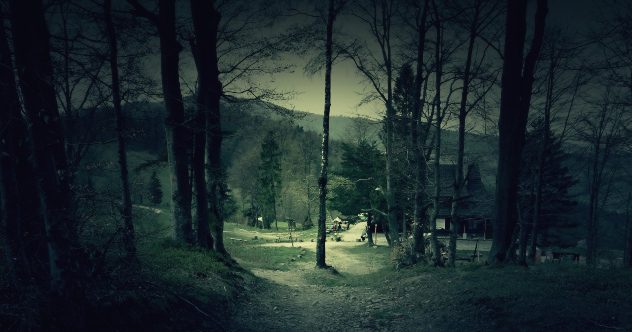

Every small town has at least one story that locals tell with a straight face and tourists repeat in a nervous whisper. It might involve glowing eyes in the woods, a cemetery no one visits after dark, a ghostly rider, a monster in a swamp, or a road where the trees seem to lean in a little too closely. Are these stories true? Usually, no one can prove it. Are they powerful? Absolutely. Creepy small town myths survive because they mix just enough history with just enough goosebumps to make your rational brain pack a tiny overnight bag and leave.
Across the United States, local legends have become part of community identity. Some began with real tragedies. Others grew from unexplained lights, strange animal sightings, old ghost towns, or good old-fashioned boredom. But whether you believe in monsters or simply enjoy the folklore, these small town legends reveal something fascinating: people do not just live in places. They haunt them with stories.
Why Creepy Small Town Myths Never Die
Small towns are perfect myth-making machines. Everybody knows everybody, which means one odd noise can become a three-generation warning. A dark road becomes “that road.” A ruined church becomes “the place.” A missing person, an abandoned mine, or a half-remembered newspaper story can grow into folklore faster than a raccoon can knock over a trash can at midnight.
The best American small town myths are not just scary. They are sticky. They give a town a strange identity, pull in curious visitors, and turn ordinary landscapes into living storybooks. Let’s take a lantern, a skeptical eyebrow, and maybe a backup flashlight into ten of the creepiest small town myths in America.
1. The Mothman of Point Pleasant, West Virginia
The myth
Point Pleasant, West Virginia, is forever linked to the Mothman, a winged creature reportedly seen in the 1960s. Witnesses described a tall, dark figure with glowing red eyes and wings large enough to ruin anyone’s evening stroll. The legend grew darker after the 1967 Silver Bridge collapse, when some people connected the creature to disaster, warning, or doom.
Why it still creeps people out
Mothman works because it is not just a monster story. It feels like an omen. Unlike a creature that simply jumps out from the bushes, Mothman hovers in the imagination as a question: what if something strange appears before something terrible happens? Today, Point Pleasant has embraced the legend with a museum, festival culture, and plenty of winged souvenirs. Nothing says “vacation” like buying a T-shirt of a cryptid that may or may not predict bridge failure.
2. The Headless Horseman of Sleepy Hollow, New York
The myth
Sleepy Hollow may be one of the most famous spooky small towns in America, thanks to Washington Irving’s story of Ichabod Crane and the Headless Horseman. The legend centers on a ghostly rider, often said to be a Hessian soldier who lost his head during the Revolutionary War and now gallops through the night searching for it.
Why it still creeps people out
The Headless Horseman is classic horror because it is simple, visual, and rude. A headless man on horseback is not open to polite conversation. The village atmosphere, old churchyard, wooded lanes, and historic landmarks make Sleepy Hollow feel like a place where the line between literature and local memory has worn thin. It is spooky, elegant, and just theatrical enough to make fog look professionally hired.
3. The Salem Witch Legends of Massachusetts
The myth
Salem’s reputation comes from real history, not pure invention. In 1692, fear of witchcraft led to accusations, trials, and executions in colonial Massachusetts. Over time, Salem became surrounded by myths about witches, curses, haunted houses, and lingering spirits.
Why it still creeps people out
The scariest part of Salem is not broomsticks or black cats. It is what fear can do when a community convinces itself that ordinary neighbors are dangerous. The modern myth of Salem mixes supernatural tourism with a grim lesson about panic, scapegoating, and bad courtroom decisions. It remains creepy because it reminds us that the monster in town may not have claws. Sometimes it has paperwork.
4. The Jersey Devil of the Pine Barrens, New Jersey
The myth
Deep in the New Jersey Pine Barrens, locals have long told stories of the Jersey Devil, also known as the Leeds Devil. Descriptions vary, but the creature is often said to have a horse-like head, wings, hooves, glowing eyes, and a scream capable of turning your spine into overcooked spaghetti.
Why it still creeps people out
The Pine Barrens are already atmospheric: dense woods, sandy roads, wetlands, and long stretches where your phone signal gives up and joins the witness protection program. The Jersey Devil fits that landscape perfectly. It is part monster, part cautionary tale, and part regional mascot. Plenty of states have birds, flowers, and flags. New Jersey has all that plus a winged nightmare with excellent brand recognition.
5. The Brown Mountain Lights of North Carolina
The myth
Near Brown Mountain in western North Carolina, people have reported mysterious glowing lights for generations. The lights are said to appear low over the landscape, hover, flicker, vanish, or drift in ways that do not always fit easy explanations. Some versions of the legend connect them to spirits, lost souls, or old tragedies.
Why it still creeps people out
Unlike a monster myth, the Brown Mountain Lights are eerie because they are quiet. No roaring, no claws, no dramatic cape. Just lights in the distance, appearing where they should not be. Scientists and investigators have offered explanations involving reflections, atmospheric effects, trains, cars, or natural conditions, but the legend remains. A mystery you can see from far away is especially powerful, because it gives your imagination plenty of room to make poor choices.
6. The Bell Witch of Adams, Tennessee
The myth
The Bell Witch legend centers on the Bell family of rural Tennessee in the early 1800s. According to the story, the family was tormented by an invisible entity that made noises, spoke, moved objects, and allegedly attacked members of the household. The haunting became one of the South’s most famous ghost stories.
Why it still creeps people out
The Bell Witch is terrifying because it turns the home into the haunted place. In many legends, danger waits outside: in the woods, cemetery, swamp, or abandoned building. Here, the threat comes indoors, sits down, and apparently has opinions. The story also has that old rural quality that makes it feel intimate. A cabin, a family, strange noises in the walls, and no modern technology to blame. No, you cannot say, “Maybe it’s the refrigerator.” The refrigerator has not been invented yet. Bad news.
7. The Lizard Man of Bishopville, South Carolina
The myth
In Bishopville, South Carolina, the Lizard Man of Scape Ore Swamp became famous after reported sightings in the late 1980s. The creature was described as tall, scaly, red-eyed, and extremely uninterested in being part of normal wildlife categories. Some reports involved damaged cars, muddy prints, and a media frenzy that turned the swamp into a cryptid hotspot.
Why it still creeps people out
The Lizard Man is a perfect modern small town myth because it has all the ingredients: a swamp, a teenager, a damaged vehicle, a strange description, and a town that realized a monster can be surprisingly good for tourism. It is weird, specific, and just silly enough to be fun until you are alone near dark water and hear something splash. Then suddenly “seven-foot swamp reptile” feels less like folklore and more like a scheduling conflict with your survival instincts.
8. The Fouke Monster of Arkansas
The myth
Near Fouke, Arkansas, stories of a large, hairy, human-like creature have circulated for decades. Often called the Fouke Monster or Boggy Creek Monster, the legend became nationally known after the 1972 docudrama-style horror film “The Legend of Boggy Creek.” The creature is usually described as a Bigfoot-like figure haunting the creeks, woods, and rural edges of town.
Why it still creeps people out
The Fouke Monster taps into the oldest fear of the woods: something is watching from beyond the tree line, and it is bigger than you. Unlike polished Hollywood creatures, this myth feels muddy, local, and sweaty. It smells like swamp water, old pickup trucks, and bug spray. That texture makes it believable enough to stick, especially in places where the night is loud and the darkness has depth.
9. Centralia, Pennsylvania: The Town That Burns Beneath Your Feet
The myth
Centralia is less myth than real-life nightmare. An underground coal mine fire began in the 1960s and eventually helped turn the once-active mining town into a near ghost town. Smoke, dangerous gases, unstable ground, empty streets, and abandoned structures gave Centralia a reputation as one of America’s creepiest places.
Why it still creeps people out
Centralia is frightening because the monster is geological. There is no vampire to stake, no ghost to appease, no werewolf to politely avoid during full moons. The ground itself is the problem. Stories about Centralia often exaggerate, but the core reality is already unsettling: a town slowly hollowed out by a fire below. It feels like a metaphor that got tired of being symbolic and became a municipal crisis.
10. Dudleytown, Connecticut: The “Cursed” Village
The myth
In Cornwall, Connecticut, an abandoned settlement known as Dudleytown became famous for stories of curses, hauntings, madness, mysterious deaths, and dark energy in the surrounding forest. The name alone sounds like something a horror novelist would invent after drinking too much coffee: Dudleytown, tucked in Dark Entry Forest.
Why it still creeps people out
Local historians have pushed back against many of the wilder claims, noting that much of the curse narrative is exaggerated or unsupported. But the myth survives because abandoned places invite stories. Stone foundations, old paths, heavy woods, and restricted access create mystery. Add a dramatic name like Dark Entry Forest and suddenly everyone’s imagination puts on a black cloak and starts whispering Latin.
What These Small Town Myths Have in Common
At first glance, these legends seem wildly different. One has a moth-like cryptid. One has a headless horseman. One has swamp reptiles, ghost lights, witch panic, and a town with an underground fire. But they share a few important traits.
They turn landscape into character
The Pine Barrens, Appalachia, Tennessee farmland, Carolina mountains, Arkansas swamps, and Connecticut woods are not just settings. They shape the myth. A Jersey Devil story would not feel the same in a shopping mall food court, although admittedly that would be its own kind of horror.
They mix fact with fear
Many creepy legends begin with something real: a trial, a disaster, a strange light, a damaged car, an abandoned town, or a historical conflict. The myth grows in the gap between what happened and what people cannot fully explain.
They give towns a strange kind of fame
Some communities lean into their legends with museums, tours, festivals, merchandise, and seasonal events. Others prefer people stop trespassing, vandalizing cemeteries, and acting like ghost hunting is a legal defense. Either way, folklore affects real places and real residents.
Experiences Related to Creepy Small Town Myths
Anyone who has spent time in a small town knows that the scariest stories are rarely told like official history. They arrive casually. Someone mentions a road you should not drive after midnight. A waitress points toward the woods and says, “People used to see things out there.” A gas station clerk tells you the old bridge is fine in daylight but “different” at night. No dramatic thunder. No violin screech. Just a local person handing you a story as if it were a receipt.
That is what makes small town myths so effective. They feel personal. When you visit a famous haunted city, you expect performance. When you visit a little town with one diner, one blinking traffic light, and one legend nobody jokes about too loudly, the story feels closer. You can stand in the exact landscape where people claim something happened. You can see the dark tree line, the old cemetery gate, the empty building, or the mountain ridge where lights sometimes appear. Your brain knows better. Your skin does not care.
A common experience among folklore travelers is the strange shift that happens around dusk. During the day, a creepy location may look ordinary, even peaceful. Brown leaves blow across the road. Birds yell at each other. A historical marker explains the facts with government-approved calm. Then sunset arrives, and the same place changes tone. Shadows lengthen. Trees stop looking like trees and start looking like witnesses. Every sound becomes suspicious. A squirrel becomes a demon with excellent cardio.
Another memorable part of exploring small town myths is hearing how locals balance belief and humor. Many residents do not literally believe a monster is waiting outside town, but they still respect the story. They may roll their eyes and then tell you three details you will never forget. They might say, “It’s nonsense,” followed immediately by, “But don’t go there alone.” That contradiction is the heartbeat of folklore. People can doubt a legend and still treat it carefully, because stories have power even when they are not factual.
There is also an ethical side to these experiences. Creepy tourism should never become creepy behavior. Many legendary locations are private property, active cemeteries, protected parks, or communities where people are simply trying to live without strangers climbing fences at midnight. The best way to enjoy small town myths is to take official tours, visit museums, support local businesses, read historical material, and respect signs. A ghost story is not an invitation to vandalize. Besides, if a place really is cursed, do you want your villain origin story to begin with trespassing and a bad flashlight?
In the end, the best creepy small town experiences are not about proving a myth true or false. They are about feeling how a story changes a place. A quiet road becomes a legend. A swamp becomes a monster’s address. A ruined settlement becomes a warning. A light on a mountain becomes a mystery people return to again and again. Whether you are a believer, skeptic, writer, traveler, or professional overthinker, small town myths remind us that America’s strangest stories are often hiding far from the interstate, just past the last porch light.
Conclusion: Small Town Myths Are America’s Haunted Memory
Creepy small town myths endure because they are more than spooky entertainment. They are local memory dressed in a dark coat. They preserve fears, tragedies, jokes, warnings, mysteries, and community pride. From the Mothman of Point Pleasant to the Jersey Devil, the Bell Witch, the Brown Mountain Lights, and the haunted reputation of Dudleytown, these legends prove that folklore does not need a huge city to survive. Sometimes all it needs is a dark road, a strange sound, and one person willing to say, “You know what happened here, right?”
So the next time you pass through a quiet town with an old cemetery, a shuttered building, or a diner where everyone looks up when you walk in, listen closely. The town may have a myth. And if someone tells you not to go into the woods after dark, consider taking their advice. At worst, you miss a walk. At best, you avoid becoming chapter eleven.


