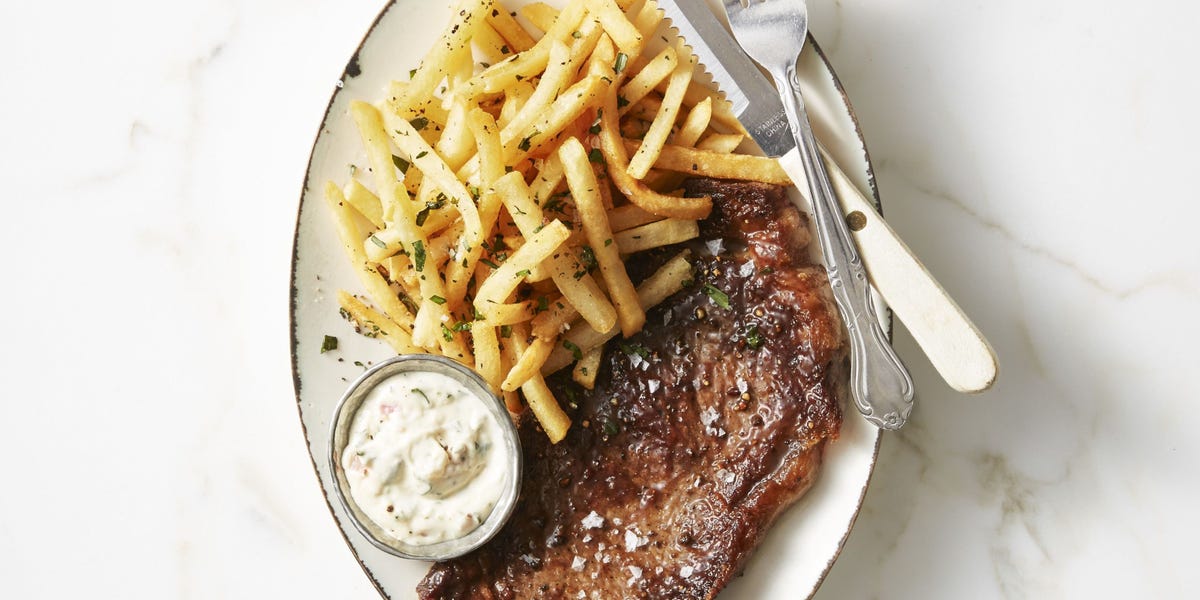
You’ll Never Find a Steak Frites Recipe Faster Than This One – How to Make the Best Steak Frites in Half the Time

Steak frites has the swagger of a Parisian bistro dinner: a deeply browned steak, a reckless-looking pile of crisp fries, and enough butter to make your cardiologist suddenly remember your phone number. Traditionally, however, the dish can involve soaking potatoes, blanching them, cooling them, frying them twice, cooking the steak, and preparing a sauce. Delicious? Absolutely. Convenient on a Wednesday night? Only if Wednesday has recently been expanded to 36 hours.
This faster steak frites recipe takes a more strategic route. Frozen fries become shatteringly crisp in an air fryer or hot oven while the steak sears in a skillet. A quick garlic-Dijon herb butter doubles as both steak sauce and fry seasoning. The whole dinner can be ready in approximately 25 minutes, with only one skillet, one small bowl, and no vat of used cooking oil staring at you afterward.
The shortcut is not culinary heresy. Double-frying produces exceptional fries, but it adds separate cooking and cooling stages. Modern home-friendly versions successfully use frozen fries, sheet pans, broilers, and air fryers to produce steak frites in as little as 20 to 40 minutes.
Why This Fast Steak Frites Recipe Works
The secret is not cooking faster simply by turning every burner to “volcano.” It is arranging the work so that the steak, fries, butter, and resting time overlap.
Frozen Fries Remove the Slowest Steps
Making authentic pommes frites from raw potatoes usually means cutting, rinsing or soaking, drying, frying at a lower temperature, resting, and frying again at a higher temperature. Those steps create fluffy interiors and crisp exteriors, but they also turn a quick dinner into a minor infrastructure project.
High-quality frozen fries have already completed much of that preparation. They go directly from freezer to air fryer without thawing and generally crisp at 400°F in about 10 to 15 minutes. Keeping them in a relatively uncrowded layer allows hot air to circulate instead of trapping steam around the potatoes.
A Moderately Thick Steak Cooks Quickly
A two-inch steak looks impressive, but it usually requires a combination of searing and oven finishing. For this quick steak frites recipe, choose steaks about 3/4 to 1 inch thick. New York strip offers a good balance of tenderness, beefy flavor, and manageable cooking time. Top sirloin is leaner and more affordable, while ribeye is richer but produces more rendered fat and smoke.
Pan-searing works best in cast iron or stainless steel because these pans tolerate high heat and hold enough energy to form a flavorful brown crust. A dry steak placed in shimmering oil browns more efficiently than a wet steak, which must first steam away its surface moisture.
The Sauce Is Built During the Rest
Instead of reducing wine, simmering cream, or attempting a last-minute béarnaise while the fries stage a rebellion, this recipe uses softened butter mixed with Dijon mustard, garlic, parsley, lemon, and black pepper. Half melts over the steak. The rest is tossed with the hot fries.
The flavor is unmistakably bistro-inspired, yet the sauce takes about two minutes and requires no additional pan.
Fast Steak Frites Recipe
Prep time: 7 minutes
Cook time: 15 to 18 minutes
Total time: Approximately 25 minutes
Yield: 2 generous servings
Ingredients
- 12 to 16 ounces frozen French fries, preferably thin-cut or hand-cut style
- 2 boneless New York strip or top sirloin steaks, 6 to 8 ounces each and 3/4 to 1 inch thick
- 1 teaspoon kosher salt, plus more for the fries
- 3/4 teaspoon freshly ground black pepper, divided
- 1 tablespoon avocado oil, canola oil, or another neutral high-heat oil
- 3 tablespoons unsalted butter, softened
- 1 small garlic clove, finely grated or minced
- 2 teaspoons Dijon mustard
- 1 tablespoon finely chopped flat-leaf parsley
- 1 teaspoon fresh lemon juice
- 1/2 teaspoon finely grated lemon zest, optional
- Mayonnaise, extra Dijon mustard, or a simple green salad for serving
Equipment
- Air fryer or rimmed baking sheet
- Heavy cast-iron or stainless-steel skillet
- Instant-read food thermometer
- Tongs
- Small mixing bowl
How to Make Steak Frites in Half the Time
Step 1: Start the Fries Immediately
Preheat the air fryer to 400°F. Add the frozen fries in a loose, even layer. Cook according to the package directions, usually 10 to 15 minutes, shaking the basket halfway through.
Do not thaw the fries. Thawing gives surface ice time to melt, encouraging the potatoes to become soft before their exteriors crisp. Also, avoid packing the basket like an overbooked commuter train. If the fries are piled too deeply, cook them in two batches or use the oven method below.
Oven alternative: Heat the oven to the temperature stated on the package, usually 425°F to 450°F. Spread the fries on a preheated metal sheet pan and bake until browned, turning once. A preheated pan gives the bottom surfaces an immediate head start.
Step 2: Dry and Season the Steaks
While the fries begin cooking, pat the steaks thoroughly dry with paper towels. Season both sides with kosher salt and approximately 1/2 teaspoon of the black pepper.
Drying is important. Surface water absorbs heat and creates steam, delaying browning. Salt and pepper are enough for a good steak because the garlic-herb butter will add several more layers of flavor later.
Step 3: Mix the Bistro Butter
In a small bowl, combine the softened butter, garlic, Dijon mustard, parsley, lemon juice, optional lemon zest, and remaining black pepper. Mash with a fork until evenly mixed.
The Dijon adds sharpness, the lemon cuts through the richness, and the parsley contributes freshness. More importantly, the entire sauce is finished before the steak even enters the pan. That is the sort of organization that makes you look suspiciously competent.
Step 4: Sear the Steak
Place a heavy skillet over medium-high to high heat. Let it heat for two to three minutes, then add the neutral oil. When the oil shimmers and just begins to smoke, place the steaks in the pan, laying them away from you to reduce splattering.
Cook without moving them for approximately three minutes. Flip and cook the second side for another two to four minutes, depending on thickness and desired doneness. During the final 30 seconds, add one tablespoon of the prepared butter and spoon the sizzling butter over the steaks.
Use a thermometer rather than cutting into the meat or attempting to communicate telepathically with it. The USDA advises cooking whole beef steaks to a minimum internal temperature of 145°F, followed by a rest of at least three minutes.
If the steak browns before the center reaches your target, reduce the heat to medium and continue cooking, flipping every 30 to 60 seconds. Frequent checking is useful because the difference between juicy steak and expensive shoe leather can be only a few minutes.
Step 5: Rest the Meat and Finish the Fries
Transfer the steaks to a cutting board or warm plate. Top each with another spoonful of garlic-Dijon butter and rest for at least three minutes.
Resting and carryover cooking allow the temperature inside the steak to continue changing after it leaves the pan. A thermometer is therefore more reliable than judging doneness from exterior color or firmness alone.
As the steak rests, remove the fries from the air fryer. Immediately toss them with a pinch of salt and a small spoonful of the remaining compound butter. Use only enough butter to lightly coat them. Too much can soften the crisp exteriors you worked so hardor, more accurately, allowed the air fryerto create.
Step 6: Slice and Serve
Slice the steaks across the grain, or serve them whole for the classic bistro presentation. Divide the fries between two plates and add the steak. Spoon any resting juices over the meat, then add the remaining herb butter.
Serve with mayonnaise, Dijon mustard, or a lightly dressed green salad. A peppery arugula salad with lemon vinaigrette is particularly useful because it makes the plate look balanced, even though everyone knows you came for the fries.
The 25-Minute Cooking Timeline
- Minute 0: Preheat the air fryer and skillet.
- Minute 2: Put the frozen fries in the air fryer.
- Minute 3: Dry and season the steaks.
- Minute 5: Mix the garlic-Dijon herb butter.
- Minute 7: Begin searing the steaks.
- Minute 10: Flip the steaks and shake the fries.
- Minute 14: Check the steak temperature.
- Minute 16: Rest the steaks and finish the fries.
- Minute 20 to 25: Slice, plate, and serve.
The exact time depends on steak thickness, air-fryer capacity, and how often someone opens the basket “just to check.” Still, this workflow eliminates nearly all dead time because one component cooks while another is prepared.
How to Choose the Best Steak
New York Strip
New York strip is the best all-around choice. It has enough marbling for flavor, a relatively uniform shape, and a defined fat edge that browns beautifully. It also slices neatly, which is helpful when serving steak frites to two people.
Top Sirloin
Top sirloin is a smart budget option. It is leaner, so avoid overcooking it and slice it against the grain. A generous spoonful of compound butter restores some of the richness found naturally in ribeye or strip steak.
Ribeye
Ribeye delivers maximum flavor and tenderness because of its marbling. It may produce more smoke in a hot skillet, so turn on the exhaust fan before your kitchen begins auditioning for the role of an airport runway.
Flat Iron or Skirt Steak
Flat iron and skirt steak cook extremely quickly and offer deep beef flavor. Skirt steak should be sliced thinly against the grain. Both cuts work well with Dijon butter, chimichurri, or a bright shallot vinaigrette.
Common Steak Frites Mistakes
Putting Wet Steak in the Pan
A wet surface inhibits fast browning. Pat the meat dry immediately before seasoning and searing.
Using Butter at the Beginning
Regular butter contains milk solids that can burn during a long high-heat sear. Start with a neutral high-heat oil, then introduce butter near the end for flavor and basting. Culinary steak methods commonly add butter, garlic, and herbs during the final stage rather than relying on butter as the primary searing fat.
Overcrowding the Fries
Crowded fries trap moisture. Use a broad layer with room for circulating air. A slightly smaller batch of crisp fries is more satisfying than a large basket of warm potato noodles.
Seasoning the Fries Too Early
Salt frozen fries after cooking unless the package specifically instructs otherwise. Salt draws surface moisture, and adding it too early may work against crispness.
Guessing the Steak’s Temperature
Cooking time is an estimate, not a guarantee. The starting temperature, thickness, fat content, and shape of each steak affect how quickly its center heats. Check the thickest part with an instant-read thermometer.
Letting the Steak Rest Forever
A brief rest is helpful, but a 20-minute meditation session is unnecessary for a small steak. Rest it while finishing the fries, then serve everything hot. For an especially crisp crust, spoon a little sizzling pan butter over the meat immediately before serving, a restaurant-style technique sometimes called flashing.
Quick Variations
Peppercorn Steak Frites
Press coarsely cracked black pepper onto the steaks before cooking. After removing the meat, lower the heat and add a splash of broth plus two tablespoons of cream. Scrape up the browned bits and simmer briefly.
Chimichurri Steak Frites
Replace the compound butter with chopped parsley, cilantro, garlic, red wine vinegar, olive oil, and red pepper flakes. The acidity balances rich cuts such as ribeye.
Garlic-Parmesan Frites
Toss the hot fries with finely grated Parmesan, parsley, garlic powder, and lemon zest. Add the cheese only after cooking so it clings instead of burning in the air fryer.
Sheet-Pan Steak Frites
For fewer dishes, bake frozen fries on a sheet pan and finish them under the broiler with the steaks. Watch carefully because broilers can turn perfect browning into smoke-alarm karaoke within seconds. Recent sheet-pan methods demonstrate that frozen fries and broiling can bring the meal together in approximately 20 minutes.
Kitchen Experience Notes: What Making Fast Steak Frites Is Really Like
The most noticeable part of this method is not the speed itself. It is the absence of the usual mid-recipe panic. Traditional steak frites can force the cook to manage hot frying oil, potatoes at different cooking stages, resting meat, sauce reduction, and final seasoning at nearly the same moment. With the streamlined method, the air fryer becomes a reliable second cookone that does not ask questions, steal fries, or suddenly decide the steak should be well done.
The beginning feels almost suspiciously easy. The fries go into the basket before much else has happened. That matters psychologically as well as practically. Once the longest-cooking component is underway, the dinner already feels like it is progressing. While the air fryer hums, there is enough time to dry the steaks properly, mix the butter, and clear the cutting board. No frantic chopping is required after the steak enters the skillet.
The searing stage is the only moment that demands full attention. When a properly dried steak touches a hot pan, the sound changes immediately from a quiet hiss to a confident sizzle. The meat should remain where it is until a crust develops. New cooks often become nervous and move the steak repeatedly, but an underdeveloped crust tends to stick. Once good browning has formed, the steak usually releases more easily.
Adding the garlic-Dijon butter near the end creates the most dramatic moment. The butter foams, the garlic becomes fragrant, and the browned surface turns glossy. This is where an ordinary skillet steak starts smelling like a restaurant dinner. It is also when the kitchen may become smoky, especially with ribeye. Opening a window before cooking is a much better strategy than standing under the smoke detector waving a dish towel while dinner gets cold.
The resting period is where the timing system proves itself. Resting no longer feels like an irritating delay because the fries still need their final shake and seasoning. By the time they are crisp, salted, and transferred to the plates, the steaks have rested. Two separate waiting periods have effectively canceled each other out.
The first bite also reveals why the shortcuts work. The frozen fries provide the clean snap and fluffy center people expect, while the freshly seared steak supplies the aroma and texture that cannot be faked. The compound butter connects the two components. A little Dijon sharpens the beef; lemon keeps the butter from tasting heavy; parsley makes the whole plate feel fresher.
There are useful lessons after the meal, too. Thin shoestring fries cook fastest but can go from pale to overly dark quickly. Medium-cut fries are more forgiving. A steak closer to one inch thick develops a better crust without overcooking as easily as a very thin steak. Top sirloin saves money, but strip steak generally gives a more luxurious result with less effort.
Most importantly, fast steak frites does not feel like a compromised “shortcut dinner.” It still has the contrast that defines the dish: crisp potatoes against juicy beef, bright mustard against rich butter, and a casually enormous serving of fries beside a carefully cooked steak. The process is shorter, but the experience remains unmistakably bistro-worthy.
Conclusion
The best fast steak frites recipe is not about rushing every individual step. It is about eliminating the steps that consume time without contributing enough to a weeknight meal. Frozen fries replace soaking and double-frying. A 3/4- to 1-inch steak cooks quickly in a hot skillet. Compound butter provides an instant sauce, and the fries finish while the steak rests.
In approximately 25 minutes, you get crisp frites, a deeply browned steak, and a sharp, buttery sauce without a deep fryer or a sink full of cookware. That leaves more time to enjoy dinnerand less time explaining why there is a five-quart container of used oil cooling beside the stove.
Note: Cooking times vary with steak thickness and appliance performance. Use a food thermometer and follow applicable food-safety guidance rather than relying only on time, color, or touch.


