
Note: This article is for educational purposes only and should not replace professional medical advice. If elbow pain, weakness, swelling, numbness, or loss of motion does not improve, a licensed healthcare professional should evaluate it.
The elbow looks simple from the outside: bend, straighten, wave dramatically, accidentally hit the funny bone, regret life choices for seven seconds. But under the skin, the elbow is a brilliantly coordinated meeting point of bones, muscles, tendons, ligaments, nerves, and blood vessels. It is not just a hinge. It is a precision tool that helps you lift a backpack, throw a ball, type an essay, carry groceries, turn a doorknob, and point at snacks with scientific confidence.
Understanding elbow muscles anatomy means learning how the upper arm and forearm work together. The elbow joint connects the humerus of the upper arm with the radius and ulna of the forearm. Around this bony framework, muscles cross the joint to create movement. Some muscles bend the elbow, some straighten it, some rotate the forearm, and others stabilize the joint while the hand performs smaller tasks. In other words, your elbow is the middle manager of the arm: not always appreciated, but absolutely necessary.
What Is the Elbow Joint?
The elbow is a complex joint formed by three bones: the humerus, radius, and ulna. The humerus forms the upper part of the joint. The ulna creates the bony point at the back of the elbow, called the olecranon. The radius sits on the thumb-side of the forearm and plays a major role in rotation.
Although many people describe the elbow as a hinge joint, it actually performs more than one job. The hinge-like motion allows flexion and extension, which means bending and straightening the arm. The nearby radioulnar joints allow pronation and supination, which means turning the palm down or up. When you turn a key, use a screwdriver, pour water, or check your palm for imaginary treasure, your elbow region and forearm muscles are working together.
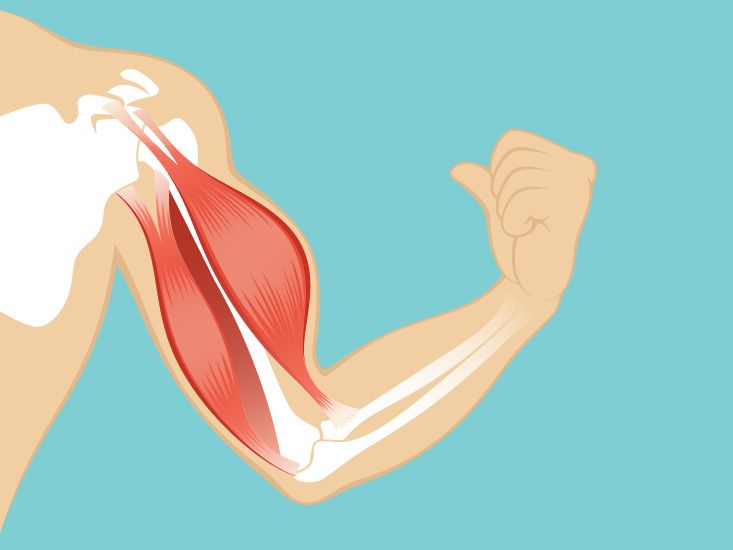
Elbow Muscles Diagram: A Simple Text Guide
A full medical diagram uses labels, arrows, and beautiful anatomical artwork. Since we are working in text, imagine the elbow as a busy intersection where several muscle groups cross from different directions.
This simplified elbow muscles diagram helps organize the joint into functional teams. The front team bends. The back team straightens. The forearm teams help position the wrist, fingers, and palm while also loading the elbow through their tendons.
Main Elbow Flexor Muscles
Elbow flexion is the movement that brings your forearm closer to your upper arm. It is the motion used when lifting a cup, curling a dumbbell, pulling a door, or dramatically checking your nonexistent biceps in a mirror. The main flexor muscles are the biceps brachii, brachialis, and brachioradialis.
Biceps Brachii
The biceps brachii is the famous muscle on the front of the upper arm. It has two heads, which is where the “bi” in biceps comes from. While most people think of it as the classic arm-curl muscle, its role is more interesting than that. The biceps helps bend the elbow, but it is especially powerful at supination, the movement that turns the palm upward.
A practical example: hold your elbow bent at 90 degrees and rotate your palm from facing down to facing up. That rotating action is where the biceps shines. This is why a simple task like tightening a screw or turning a bottle cap can involve the biceps more than people expect. The biceps attaches near the elbow through the distal biceps tendon, which connects to the radius.
Brachialis
The brachialis sits deeper than the biceps, closer to the humerus. It does not get the same gym-poster fame, but anatomically it is a star. The brachialis is often considered the strongest pure elbow flexor because it bends the elbow regardless of whether the palm faces up, down, or sideways.
Think of the brachialis as the dependable friend who shows up when the biceps is busy posing. Whether you lift a grocery bag, pull yourself closer to a desk, or carry a stack of books, the brachialis is doing serious behind-the-scenes work.
Brachioradialis
The brachioradialis runs along the thumb-side of the forearm and is most active when the forearm is in a neutral “handshake” position. If you perform a hammer curl, where your thumb points upward, you are giving the brachioradialis a starring role.
This muscle helps connect upper-arm movement with forearm control. It is also visible on many people when they bend the elbow against resistance. In everyday life, it helps with lifting a suitcase, carrying a water bottle, using a hammer, or pulling open a stubborn drawer that appears to have developed a personal grudge.
Main Elbow Extensor Muscles
Extension is the movement that straightens the elbow. The main extensor muscle is the triceps brachii, assisted by the smaller anconeus. Without these muscles, pushing movements would be weak and awkward.
Triceps Brachii
The triceps brachii is located on the back of the upper arm. It has three heads: long, lateral, and medial. These heads join into a common tendon that attaches to the olecranon of the ulna, the bony point of the elbow.
The triceps straightens the arm during pushing actions. Push-ups, getting out of a chair, throwing a ball, shooting a basketball, and pushing a heavy door all require triceps activity. When the triceps contracts, it pulls on the ulna and extends the elbow. It is the muscle that says, “We are done bending now.”
Anconeus
The anconeus is a small triangular muscle located near the back and outer side of the elbow. It assists the triceps with extension and helps stabilize the elbow joint. It may not be famous, but small stabilizing muscles often matter more than people realize. They help keep movement smooth instead of wobbly, like tiny stagehands making sure the main actor does not trip over the scenery.
Muscles That Rotate the Forearm
The elbow region is closely tied to forearm rotation. Two key rotational movements are pronation and supination. Pronation turns the palm downward. Supination turns the palm upward. These actions are essential for writing, eating, typing, carrying objects, and using tools.
Pronator Teres
The pronator teres begins near the medial side of the elbow and crosses diagonally into the forearm. Its main job is pronation. When you turn your palm down to place your hand flat on a desk, the pronator teres helps make that happen. It also assists slightly with elbow flexion.
This muscle is important because it sits near the median nerve. In some people, tightness or compression in this area may contribute to symptoms such as forearm discomfort, tingling, or weakness. That does not mean every ache is a nerve problem, but it does show how crowded and carefully arranged the elbow area is.
Supinator
The supinator is located deeper in the posterior forearm near the elbow. It wraps around the upper part of the radius and helps rotate the forearm so the palm faces upward. The biceps is the stronger supinator when the elbow is bent, but the supinator provides steady assistance, especially during lighter movements.
For example, slowly turning your palm upward while your arm is relaxed uses the supinator. Opening a jar may involve both supination and elbow stabilization, although the jar usually wins at least once before surrendering.
Common Flexor and Extensor Tendon Groups
Not every muscle that affects the elbow is a major elbow mover. Many forearm muscles begin near the elbow and control the wrist and fingers. These muscles share tendon origins at the epicondyles of the humerus.
Common Flexor Tendon
The common flexor tendon attaches near the medial epicondyle, the bony bump on the inner side of the elbow. Several wrist and finger flexor muscles originate here. These muscles help bend the wrist, grip objects, and assist with palm-down movements.
Overuse of this area may contribute to medial epicondylitis, often called golfer’s elbow. Despite the name, you do not need to play golf to experience it. Repetitive gripping, lifting, throwing, or tool use can irritate the tendons on the inner elbow.
Common Extensor Tendon
The common extensor tendon attaches near the lateral epicondyle, the bony bump on the outer side of the elbow. It anchors muscles that extend the wrist and fingers. These muscles are heavily involved in typing, gripping, lifting, racquet sports, and repeated wrist extension.
When this tendon area becomes irritated, the result may be lateral epicondylitis, better known as tennis elbow. The name is a little unfair because plenty of people get tennis elbow from painting, typing, gardening, cooking, or using hand tools. Tennis is not always guilty, though it has accepted the branding.
How the Elbow Muscles Work Together
The elbow rarely uses one muscle at a time. Most movements require cooperation. When you pick up a coffee mug, flexors bend the elbow, forearm muscles stabilize the wrist, and shoulder muscles position the arm. When you push a door open, the triceps extends the elbow while stabilizers keep the joint aligned.
Muscles also work in opposing pairs. The biceps and brachialis bend the elbow, while the triceps straightens it. The pronator teres turns the palm downward, while the supinator and biceps turn it upward. This balance allows smooth control instead of jerky movement. If one side becomes overworked, weak, or irritated, the whole system can feel off.
Why Elbow Muscle Anatomy Matters
Learning the function of elbow muscles is useful for athletes, students, office workers, artists, musicians, and anyone who owns at least one arm. Anatomy explains why elbow pain may appear during tasks that seem unrelated. For example, wrist extensor strain can cause pain at the outer elbow. Weak shoulder control may increase stress at the elbow during throwing. Poor lifting mechanics can overload tendons that attach near the joint.
It also helps explain why rest alone does not always solve recurring discomfort. If a tendon is irritated because of repeated gripping, awkward wrist position, or sudden training increases, the cause may need to be addressed. The elbow is not dramatic; it is usually just reporting bad workplace ergonomics, rushed workouts, or too many “one quick tasks” that were not quick at all.
Common Elbow Muscle and Tendon Problems
Tennis Elbow
Tennis elbow usually affects the tendons on the outer side of the elbow, especially those connected to wrist extension. Pain may increase when gripping, lifting, or extending the wrist. It is common in racquet sports, but it also appears in people who use tools, keyboards, kitchen knives, or paintbrushes repeatedly.
Golfer’s Elbow
Golfer’s elbow affects the inner side of the elbow. It involves tendons connected to wrist flexion and forearm pronation. Activities that involve repeated gripping, throwing, or wrist bending can contribute to irritation. Again, golf is optional. Your elbow does not check your country club membership before complaining.
Biceps Tendon Strain
The distal biceps tendon attaches near the elbow to the radius. Sudden heavy lifting or forceful pulling can strain this area. Pain, bruising, weakness, or a noticeable change in arm shape after injury should be evaluated by a clinician.
Triceps Tendon Irritation
The triceps tendon attaches to the back of the elbow. Repeated pushing, heavy pressing, or direct trauma may irritate it. Symptoms may include tenderness at the back of the elbow or discomfort when straightening the arm against resistance.
Healthy Movement Tips for Elbow Muscles
Good elbow care starts with respecting the entire arm chain. Warm up before sports or strength training. Increase activity gradually instead of going from “couch philosopher” to “weekend warrior” in one heroic afternoon. Keep the wrist neutral during lifting when possible, and avoid death-gripping every object as if it owes you money.
For desk work, keep the keyboard and mouse close enough that the elbows can rest comfortably near the body. Take breaks from repetitive gripping or typing. Stretch gently, strengthen progressively, and stop activities that cause sharp pain. Mild muscle fatigue after exercise can be normal; persistent pain, numbness, swelling, or weakness deserves medical attention.
Experience-Based Notes: Understanding Elbow Muscles in Real Life
One of the easiest ways to understand elbow muscles anatomy, diagram, and function is to pay attention to ordinary activities. The elbow teaches anatomy all day long, though it rarely announces the lesson. Pick up a backpack by the handle. The brachialis and biceps help bend the elbow, the brachioradialis supports the forearm, and the wrist flexors and extensors keep the hand steady. The movement feels simple because the nervous system coordinates it instantly.
Now imagine carrying several grocery bags from the car to the kitchen. At first, everything feels fine. After a minute, the forearm begins to work harder. The fingers grip, the wrist stabilizes, and the elbow flexors hold the joint in a partly bent position. If the bags are heavy, the tendons near the elbow carry more load. This is why people sometimes feel elbow soreness after chores even when they did not “exercise.” The elbow does not care whether the resistance came from dumbbells or a heroic number of soup cans.
Typing offers another real-world example. The elbow may stay relatively still, but the forearm muscles that attach near it are active for wrist and finger control. If the keyboard is too far away, the shoulders reach, the wrists extend, and the elbows may remain under low-level tension for a long time. That quiet tension can add up. Many people blame the elbow first, but the real trouble may involve desk height, wrist angle, mouse position, or skipped breaks.
Sports make the elbow’s teamwork even clearer. In a baseball throw or tennis swing, power does not begin at the elbow. It starts with the legs and trunk, travels through the shoulder, and finally reaches the elbow, forearm, wrist, and hand. If timing is poor or one area is weak, the elbow may absorb extra stress. That is why training programs often strengthen the shoulder, core, and wrist along with the elbow. The elbow is important, but it should not be forced to play superhero for the entire body.
Strength training also reveals the difference between elbow muscles. A regular curl emphasizes the biceps, especially when the palm turns upward. A hammer curl brings the brachioradialis into the spotlight. A reverse curl challenges the forearm extensors and brachialis differently. A triceps pushdown or push-up highlights elbow extension. These exercises show that small changes in hand position can shift muscular demand. Anatomy is not just something in textbooks; it is built into every grip, angle, and repetition.
The best personal lesson is this: elbow comfort usually depends on balance. Strong flexors need strong extensors. Mobile wrists need stable forearms. Powerful biceps need cooperative triceps. Repetitive tasks need recovery. When the elbow feels irritated, the smartest response is not panic; it is curiosity. What changed recently? More typing? New workout? Extra yardwork? A marathon gaming session with the posture of a wilted houseplant? The answer often points toward the solution.
Understanding elbow anatomy makes the joint less mysterious. Instead of seeing pain or stiffness as random, you can connect symptoms to movement patterns, tendon load, muscle function, and daily habits. That knowledge helps you train smarter, work more comfortably, and appreciate the elbow for what it is: a compact, hardworking, slightly underappreciated engineering masterpiece.
Conclusion
The elbow is more than a bendy middle piece between the shoulder and wrist. It is a coordinated system of bones, muscles, tendons, ligaments, and nerves. The biceps brachii, brachialis, and brachioradialis bend the elbow. The triceps brachii and anconeus straighten it. The pronator teres, supinator, and biceps help rotate the forearm. Meanwhile, the common flexor and extensor tendon groups connect wrist and finger function to the elbow region.
By understanding elbow muscles anatomy, you can better appreciate how everyday movement works and why discomfort may develop from repetitive strain, poor mechanics, or sudden overload. Treat the elbow well, and it will keep helping you lift, reach, rotate, push, pull, type, cook, throw, and wave like a champion.


