
Wood pallets are the scruffy underdogs of home decorating. They begin life hauling boxes around warehouses, yet with a little sanding, imagination, and resistance to buying another mass-produced shelf, they can become surprisingly attractive furniture and decor.
The best pallet decor ideas combine rustic character with practical purpose. A pallet can become a coffee table, vertical garden, headboard, holiday sign, pet bed, or storage station. You can preserve the weathered grain for farmhouse charm, whitewash it for a coastal look, paint it a bold color, or dismantle it and arrange the boards in a polished geometric pattern.
Before introducing reclaimed wood into your home, however, inspect it carefully. Use only pallets with a clean, traceable history and permission from the owner. Reject wood with chemical odors, oily stains, mold, severe cracks, insect damage, or unknown contamination. Sand every surface, remove or drive in exposed nails, and use an appropriate finish for the project location.
How to Prepare Pallet Wood for Decorating
A good pallet project starts before the first dramatic power-tool moment. Look for straight boards with minimal splitting and no suspicious residue. Shipping markings may provide information about the pallet’s origin and treatment, but a stamp does not erase an unknown or dirty handling history. When in doubt, leave the pallet behind. Free lumber is less exciting when it arrives with a mysterious smell and its own ecosystem.
Basic Pallet Project Checklist
- Ask before taking pallets from a store, warehouse, or jobsite.
- Choose dry, clean wood without spills, mold, or strong odors.
- Wear gloves and eye protection while dismantling boards.
- Remove hidden nails, staples, and metal fragments before cutting.
- Sand rough areas progressively until they are safe to touch.
- Predrill near board ends because dry pallet wood splits easily.
- Use screws and suitable framing for furniture that must bear weight.
- Seal outdoor pieces against moisture and raise them above wet ground.
65 Creative Pallet Decor Ideas for Your Home and Yard
Living Room Pallet Decor
- Rolling coffee table: Stack two prepared pallets, secure them together, and add locking casters. A fitted glass or smooth wood top makes drinks less adventurous.
- Lift-top coffee table: Add hinges and a framed lid to create hidden storage for blankets, games, and remote controls that otherwise migrate between sofa cushions.
- Compact end table: Cut pallet boards into a narrow cube or C-shaped table that can slide beside a chair without crowding a small room.
- Sofa-back console: Build a slim table behind the couch for lamps, plants, and charging cables. Include a lower stretcher to prevent wobbling.
- Reclaimed wood accent wall: Arrange cleaned boards in staggered rows to add texture behind a television, fireplace, or reading corner.
- Floating display shelves: Use the best pallet planks to create shallow ledges for framed photos, small plants, and lightweight collectibles.
- Rustic media console: Combine pallet boards with a sturdy lumber frame, leaving open compartments for electronics and ventilation.
- Blanket ladder: Attach smooth horizontal rungs between two rails for throws. Anchor the ladder or design it strictly as a leaning decorative piece.
- Magazine rack: Preserve a narrow pallet section, add a bottom lip, and mount it securely for magazines, newspapers, or oversized art books.
- Geometric wall art: Cut boards into short pieces and arrange them in chevrons, diamonds, or a mountain pattern using several stain tones.
Entryway, Kitchen, and Dining Ideas
- Entryway coat rack: Mount a finished plank with sturdy hooks for jackets, hats, reusable bags, and the keys you promised not to lose again.
- Shoe storage bench: Build cubbies beneath a reinforced seat, then add a washable cushion for a hardworking mudroom station.
- Wall-mounted key organizer: Pair small hooks with a narrow mail pocket and chalkboard label to control daily clutter near the door.
- Full-length mirror frame: Border a plain mirror with mitered or straight-cut pallet boards for an affordable rustic focal point.
- Entryway welcome sign: Paint a tall plank with a greeting, house number, or seasonal message and lean it beneath a covered porch.
- Countertop wine rack: Form angled bottle supports from smooth boards and include slots below for stemmed glasses.
- Coffee mug display: Add evenly spaced hooks to a framed pallet panel and stencil labels such as “coffee,” “tea,” or “emergency fuel.”
- Kitchen island accent: Apply thin pallet boards as decorative cladding over a sound existing island rather than relying on them for structural support.
- Wall plate rack: Create shallow rails with front stops for displaying decorative plates, cutting boards, or cookbooks.
- Dining table centerpiece tray: Join several boards into a low tray with handles for candles, greenery, fruit, or rotating seasonal arrangements.
Bedroom and Bathroom Pallet Projects
- Rustic headboard: Fasten pallet boards to a stable backing panel, smooth every edge, and mount the finished headboard securely behind the bed.
- Decorative bed-frame fascia: Cover a properly constructed platform frame with reclaimed planks to achieve the pallet look without depending on questionable boards for support.
- Wall-mounted nightstand: Build a small floating box with room for a book, phone, and lamp while keeping the floor visually open.
- Bedside crate table: Assemble a cube-shaped table with an open front for bedtime reading and a solid top for everyday essentials.
- Picture ledge headboard: Add a shallow shelf above a board-panel headboard for lightweight frames and decorative objects.
- Jewelry organizer: Install small hooks, knobs, and wire mesh on a framed plank to separate necklaces, bracelets, and earrings.
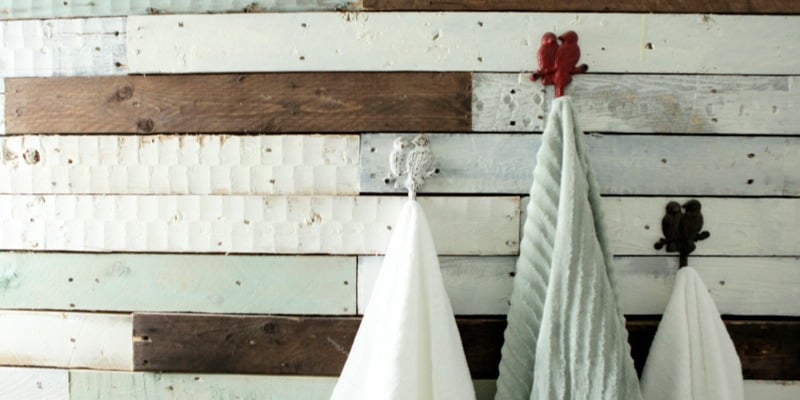
- Bathroom towel rack: Combine a sealed wood panel with hooks or a metal bar, keeping it away from constant splashing.
- Over-the-toilet shelf: Build a narrow wall-mounted shelf for rolled towels, baskets, and extra toiletries.
- Vanity mirror shelf: Add a slim ledge beneath a pallet-framed mirror to hold small containers without taking over the countertop.
- Laundry room sign: Paint a humorous reminder such as “Check Your Pockets” on a reclaimed board. Coins found later are considered the artist’s fee.
Garden, Patio, and Backyard Pallet Decor
- Vertical herb garden: Line suitable planting pockets, secure the pallet upright, and grow compact herbs where sunlight and drainage are adequate.
- Wall-mounted flower planter: Add narrow planter boxes between pallet slats for trailing annuals and colorful seasonal displays.
- Succulent frame: Convert a shallow pallet-wood box into living wall art using appropriate growing medium and drought-tolerant plants.
- Potting bench: Build a reinforced workstation with a shelf, hooks, and a removable soil pan for easier planting and repotting.
- Patio sofa: Use sound structural framing beneath pallet-style cladding, then add weather-resistant cushions with removable covers.
- Outdoor lounge chair: Create a low seat with an angled back, wide armrests, and durable exterior hardware.
- Patio coffee table: Add a smooth top and locking casters to a low pallet base for flexible outdoor entertaining.
- Outdoor bar: Stand prepared pallets around a sturdy frame and top the structure with a level, weather-resistant counter.
- Cooler surround: Build a decorative enclosure around an existing cooler while preserving drainage, ventilation, and access to the lid.
- Privacy screen: Join upright pallet panels to properly anchored posts, then soften the wall with planters or outdoor lighting.
- Decorative fence accent: Attach painted boards or pallet sections to a stable fence for added texture rather than using damaged pallets as structural fencing.
- Three-sided compost bin: Connect upright pallets to form ventilated walls and add a removable front section for easier turning and collection.
- Garden tool organizer: Secure a pallet to a garage or shed wall, then add hooks for hand tools, hoses, and protective gear.
- Hose storage station: Install a rounded hose holder and a small shelf for nozzles, gloves, and watering accessories.
- Birdhouse display wall: Mount several decorative birdhouses on a finished pallet panel to create cheerful garden art.
- Porch plant stand: Stack graduated wood boxes or shelves to display containers at different heights.
- Garden gate insert: Use pallet boards as decorative infill inside a properly braced gate frame with outdoor-rated hinges.
- Raised planter box: Reuse clean pallet boards as exterior cladding around a lined planter made from suitable, durable materials.
Seasonal and Entertaining Decorations
- Wooden Christmas tree: Cut boards into gradually shorter lengths, stack them into a tree silhouette, and decorate with ornaments or battery-powered lights.
- Stocking display board: Add labeled hooks to a painted plank for stockings when the fireplace mantel has already filed a capacity complaint.
- Rustic advent calendar: Attach numbered envelopes, mini bags, or boxes to a framed pallet panel for daily treats and activities.
- Halloween character signs: Paint tall boards as ghosts, pumpkins, monsters, or friendly scarecrows for covered outdoor display.
- Fall pumpkin centerpiece: Build a miniature pallet riser for pumpkins, leaves, candles, and other autumn table decorations.
- Wedding ceremony backdrop: Join finished panels into a stable freestanding wall and decorate it with flowers, fabric, lettering, or string lights.
- Dessert display risers: Make small pallet-style platforms to vary the height of wrapped treats, flowers, or decorative serving pieces.
- Photo booth wall: Create a sealed panel backdrop with removable signs, garlands, and props for parties and family celebrations.
- Lantern centerpiece box: Build an open rectangular box for flameless candles, greenery, pinecones, or seasonal flowers.
Home Office, Kids’ Rooms, and Pet Projects
- Compact writing desk: Top a sturdy base with carefully joined pallet boards, filling deep gaps to create a smooth work surface.
- Monitor riser: Build a low desktop shelf that raises the screen and creates storage underneath for notebooks and small accessories.
- Memo and inspiration board: Combine wood slats with clips, cork tiles, or wire mesh for reminders, photographs, and project ideas.
- Craft supply organizer: Attach jars, baskets, dowels, and hooks to a wall panel for ribbon, scissors, brushes, and other supplies.
- Rolling toy crate: Construct a smooth-sided storage box with recessed handles and locking casters, avoiding pinch points and sharp hardware.
- Children’s book ledges: Use narrow boards with front rails to display favorite books face-forward at an accessible height.
- Pet bed frame: Build a low platform around a washable cushion, rounding corners and checking that no fasteners are exposed.
- Leash and pet-care station: Add labeled hooks, a small treat shelf, and a basket for waste bags, brushes, and walking accessories.
Finishing Ideas for Different Decorating Styles
The finish determines whether pallet wood looks intentionally rustic or simply unfinished. For modern farmhouse decor, try a warm medium stain with matte hardware. A diluted white paint creates an airy, weathered effect suited to coastal rooms. Charcoal, black, or deep green can make rough-grained boards feel more contemporary, while clear matte sealer preserves natural variation.
Test every product on an offcut because reclaimed boards absorb color unevenly. That irregularity is often part of the charm, but “pleasant variation” and “accidental zebra furniture” are separated by one small test board. Outdoor pieces need exterior-rated coatings and periodic inspection. Indoor shelves and wall decor usually require less protection, although smooth, cleanable surfaces are still easier to live with.
Common Pallet Decorating Mistakes to Avoid
Do not assume that every discarded pallet is available, clean, or safe. Avoid unknown industrial pallets, heavily stained boards, and wood with chemical smells. Do not use weak or split pallet boards as substitutes for properly rated structural lumber. Beds, swings, elevated play equipment, railings, and weight-bearing furniture require dependable construction methods and suitable materials.
Another common mistake is stopping the sanding process too early. Rustic texture should look interesting, not attack anyone wearing shorts. Pay extra attention to corners, hand-contact areas, seating surfaces, and board ends. Finally, measure each board individually. Pallet lumber is rarely uniform, and building from assumed dimensions can turn a square table into an abstract conversation piece.
Conclusion
These 65 pallet decor ideas show how reclaimed wood can bring storage, personality, and handmade character to nearly every part of a home. Beginners can start with a sign, tray, or key rack, while more experienced builders can attempt potting benches, patio tables, privacy panels, and storage furniture.
The smartest projects are not necessarily the biggest. They begin with carefully sourced wood, thoughtful preparation, suitable fasteners, and a design that respects the limitations of reclaimed material. Choose one idea that solves a real decorating or organization problem, prepare the boards properly, and let the wood’s dents, grain, and color variations become part of the finished story.
Experience-Based Lessons From Pallet Decor Projects
The following field notes reflect the recurring experiences of DIY builders who work with reclaimed pallet wood. One of the first lessons is that finding a usable pallet often takes longer than building the glamorous project shown in the finished photograph. Some pallets are technically free but require so much nail removal, cleaning, and repair that purchasing reclaimed boards would be more practical. Experienced builders learn to inspect first and become comfortable walking away.
Dismantling is usually the least photogenic and most demanding stage. Pulling boards aggressively with a pry bar can split the ends, especially when the wood is dry or held by ring-shank nails. Working gradually, supporting the board near each fastener, and cutting stubborn nails when appropriate can save more usable lumber. Builders also learn to check every board with a magnet or careful visual inspection before running it through a saw. One forgotten nail can damage a blade and instantly convert a relaxing Saturday project into a louder, more expensive Saturday project.
Another common experience is discovering that pallet boards are not standardized finish lumber. Thickness can vary from one end to the other, edges may not be square, and two boards that look identical may behave very differently when sanded or stained. Successful projects embrace some irregularity while creating reference lines and stable frames where precision matters. A decorative wall can tolerate small gaps. A table leg arrangement cannot.
Sanding also takes more time than newcomers expect. A board may look smooth until side lighting reveals raised grain, splinters, and old saw marks. Builders generally obtain better results by cleaning the wood, allowing it to dry completely, and sanding in stages rather than trying to erase every flaw with one aggressive pass. The goal is not to make reclaimed wood look factory-new. It is to make the surface safe, pleasant to touch, and visually intentional.
Finishing introduces its own surprises. Different pallet boards absorb stain at different rates, sometimes producing dramatic color changes. Testing stain, paint, or sealer on leftover pieces prevents disappointment. Many DIYers also find that a light wash or clear finish works better than a heavy stain because it preserves the grain variations that made the wood appealing in the first place.
Outdoor projects provide the clearest long-term lesson: water always wins eventually. Feet or spacers that lift furniture above wet patios can extend its useful life. Sealed end grain, drainage gaps, exterior screws, and breathable covers also help. Even then, pallet decor should be checked periodically for loose joints, rot, and splinters.
Perhaps the most useful experience is learning when not to use pallet wood. It excels as decorative cladding, wall art, organizers, planters, and light-duty furniture components. It is less suitable when structural reliability, food contact, constant moisture, or child safety is the primary concern. Pairing reclaimed boards with a sound new-lumber frame often produces the best combination of rustic appearance and dependable construction.
Finally, pallet projects tend to look better when the builder exercises restraint. One accent wall or coffee table adds texture; an entire room of pallet surfaces can begin to resemble a very ambitious shipping department. Mixing reclaimed wood with clean textiles, painted walls, metal accents, and simple modern shapes keeps the finished space warm rather than overwhelmingly rustic.


