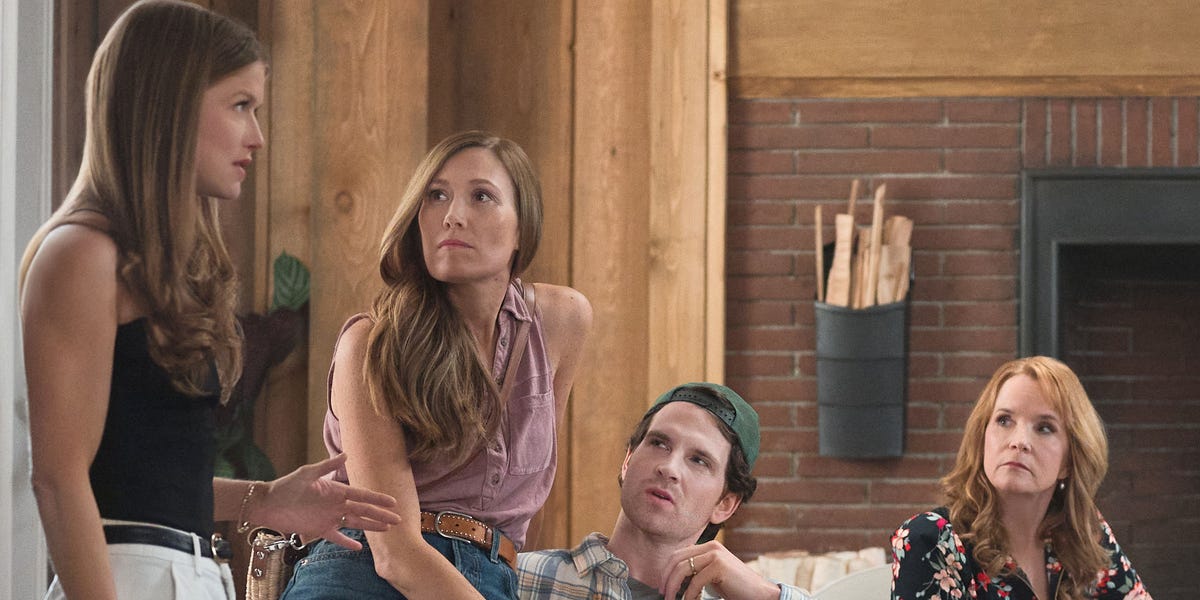
‘The Chicken Sisters’ Is the First Hallmark+ Drama Series to Debut on the Streamer

Hallmark has spent years perfecting the art of warm blankets in TV form. Cozy towns? Check. Big feelings? Check. Baked goods and family complications arriving at exactly the same moment? Absolutely. But with The Chicken Sisters, Hallmark+ did something a little bolder than its usual comfort-food formula. It launched a character-driven family drama with a sharper edge, a deeper emotional center, and enough fried-chicken rivalry to make Thanksgiving dinner look tame.
Based on KJ Dell’Antonia’s bestselling novel, The Chicken Sisters arrived as a milestone title for Hallmark+ because it was not just another pleasant watch for a rainy evening. It was the streamer’s chance to say, “Yes, we still know how to do heart, but we can also do layered women, family wounds, community politics, and messy reconciliation without dropping the biscuit basket.” The result is a series that feels bigger than a standard small-town dramedy and smarter than anyone expecting “just a Hallmark show” might assume.
That matters. In a crowded streaming market where every platform wants a signature identity, The Chicken Sisters gave Hallmark+ a scripted calling card. It delivered a recognizable Hallmark warmth while widening the emotional lane. In other words, it kept the gravy but added a little heat.
Why This Debut Was a Big Deal for Hallmark+
When a new or rebranded streamer launches, it needs a title that explains the entire mission in one bite. For Hallmark+, The Chicken Sisters was that dish. The platform launched with lifestyle and unscripted programming too, but this series stood out because it positioned Hallmark+ as a place for original drama, not just a digital shelf for holiday movies and familiar reruns.
That distinction is important for both viewers and the brand itself. Hallmark’s audience is loyal, but loyalty alone does not automatically convert into streaming subscriptions. A platform needs exclusivity, personality, and a reason for fans to try something new. The Chicken Sisters offered all three. It came with built-in literary recognition thanks to the novel, a cast full of familiar and beloved faces, and a premise that sounds delightfully simple until you realize it is carrying themes about grief, resentment, identity, womanhood, class, and family memory.
In branding terms, the show worked like a flag planted in fresh ground. It told existing Hallmark fans that the company was serious about premium original storytelling, and it signaled to potential new viewers that Hallmark+ might have more range than its greeting-card reputation suggests.
What The Chicken Sisters Is Actually About
At the center of the story are two rival fried-chicken restaurants, Mimi’s and Frannie’s, whose feud has divided a small town for generations. That setup is already delicious enough, but the series knows the chicken is really just the crispy outer shell. Inside is a family saga.
The emotional core belongs to sisters Amanda and Mae, whose relationship has been fractured by years of pain, distance, and choices that never fully healed. Amanda stayed close to home and became entangled with the rival side of the family through marriage. Mae left town and built a new life, carefully polishing herself into someone who seemed far removed from her roots. Then comes a reality cooking competition show, Kitchen Clash, which pulls the old tensions into public view and turns private dysfunction into prime-time spectacle.
It is a juicy setup because the series understands something timeless: family conflict gets even louder when the whole town is picking sides. Add cameras, money, pride, and inherited resentment, and suddenly every dinner table conversation feels one badly timed comment away from becoming a season finale.
The Restaurants Are the Hook, but the Women Are the Story
One of the smartest things about The Chicken Sisters is that it never mistakes gimmick for substance. The idea of dueling chicken restaurants could have easily turned into a quirky one-note premise. Instead, the show uses that rivalry to explore how women carry tradition, absorb damage, perform strength, and sometimes confuse survival with healing.
Gus, the tough owner of Mimi’s, is not written as a cuddly matriarch with one good speech and a casserole. She is thorny, proud, wounded, and difficult. Nancy, on the Frannie’s side, is no soft-focus counterweight either. Amanda and Mae are similarly complicated: one rooted, one restless; one seemingly dutiful, one seemingly liberated; both more emotionally tangled than they first appear.
This is where the series quietly levels up. It gives each woman enough humanity to be frustrating and sympathetic at the same time. Nobody is stuck playing the saint, the villain, or the quirky aunt whose only job is comic relief. That richer characterization helps explain why the show felt like an important first drama for Hallmark+: it has the emotional accessibility the brand is known for, but it trusts viewers to handle contradiction.
The Cast Gives the Series Its Flavor
A show like this lives or dies on casting. If viewers do not believe the history between these women, the whole thing collapses faster than a soggy biscuit. Thankfully, The Chicken Sisters assembled a cast that can sell both the comedy and the ache.
Schuyler Fisk brings warmth and quiet tension to Amanda, making her feel like a woman who has spent years trying to hold everyone together while secretly coming apart at the seams. Genevieve Angelson gives Mae a sharper, more polished energy, but she never turns the character into a cliché of the big-city daughter returning home in expensive boots and emotional denial. Lea Thompson and Wendie Malick, meanwhile, provide the veteran presence that gives the series its backbone. They know how to play women who have lived with history for so long that it has hardened into posture.
Then there is Margo Martindale as narrator, which is one of those casting decisions that makes you want to slow-clap at your laptop. Her voice adds texture and authority, helping the series feel literary without becoming precious. It is a small but clever touch, especially for an adaptation of a popular novel.
From Bestselling Novel to Streaming Drama
Book adaptations often wobble because they cannot decide whether to worship the source material or reinvent it beyond recognition. The Chicken Sisters takes a smarter route. It keeps the novel’s emotional architecture while making adjustments that suit television. That is exactly what a healthy adaptation should do.
The original novel earned attention for its blend of humor, family rivalry, and heart, and it also benefited from book-club buzz that gave the story a wider cultural footprint. Hallmark+ clearly understood that adapting a recognizable title gave the streamer credibility from day one. But the show’s real advantage is that the material already had built-in themes television loves: sisters with unfinished business, inherited conflict, old secrets, romantic complications, and a small community that functions like a pressure cooker with decorative porch swings.
The adaptation also works because it understands the visual pleasure of the story. Fried chicken may not sound like prestige-TV symbolism on paper, but on screen it becomes shorthand for memory, loyalty, labor, competition, and belonging. Food in this series is not just food. It is inheritance with a side of grease and emotional baggage.
Why the Premise Feels So Watchable
There is a reason viewers keep returning to stories about hometowns, family businesses, and rival traditions. These stories make conflict legible. You can see it in the kitchen, in the recipes, in who sits where, in which family name still carries a sting. The Chicken Sisters knows how to make emotional stakes feel tangible.
Even the reality-show angle is a smart update. Instead of making the series feel more artificial, it adds pressure and pace. Reality TV turns ordinary tension into performance, and that is exactly what the characters are already doing with each other. Everyone in Merinac is performing something: loyalty, resentment, independence, forgiveness, confidence, superiority, maybe even adulthood itself.
That layered performance is what gives the show a modern edge. It feels rooted in familiar Hallmark values, but it also reflects the current media landscape, where private life is constantly being framed, judged, posted, packaged, and replayed.
How the Series Expands the Hallmark Brand
For years, Hallmark has been extraordinarily good at knowing its lane. The danger of that kind of clarity, however, is becoming predictable. The Chicken Sisters suggests Hallmark+ wants to stretch without snapping its identity in half.
This series still offers comfort, community, and emotional payoff. It is not trying to become a bleak antihero saga where everyone glares in expensive coats and nobody hugs for eight episodes. But it is more textured than the classic movie-of-the-week model. The women feel more lived-in. The resentment lasts longer. The healing is slower. The humor comes from character, not just cute setup. That evolution gives Hallmark+ room to attract viewers who want heart without sugar overload.
In that sense, The Chicken Sisters was a savvy first drama because it did not abandon the brand. It refined it. It proved Hallmark could still be earnest without being simplistic, warm without being weightless, and family-friendly without sanding every rough edge into dust.
Why Audiences Connected With It
The appeal of The Chicken Sisters is not hard to understand. It taps into several audience pleasures at once: small-town immersion, food-centered storytelling, intergenerational conflict, female relationships, romantic tension, and the irresistible thrill of choosing a side in a long-running local feud. Team Mimi’s or Team Frannie’s? Congratulations, you are now emotionally invested in fictional fried chicken. There are worse ways to spend a Thursday.
But beyond the fun premise, the show lands because it treats emotional estrangement seriously. It understands that family reconciliation is rarely one magical conversation away. People return home carrying old versions of themselves. Parents and children remember the same history differently. Siblings compete, protect, wound, and mirror one another all at once. The Chicken Sisters brings those truths into a glossy, accessible format, and that balance is not easy to pull off.
That is also why the show felt important as a streamer launch title. It was not disposable background noise. It gave viewers characters to argue about, root for, and revisit. In streaming terms, that kind of investment is gold.
Related Viewing Experiences: Why This Kind of Show Hits So Well
Watching The Chicken Sisters feels a lot like going back to a hometown festival you swore you had outgrown, only to realize five minutes after arriving that the place still knows exactly which buttons to push. That is part of the show’s power. It recreates the strangely specific experience of returning to familiar people, familiar food, and familiar conflicts, only to find that nothing is exactly the same and yet somehow everything still smells like memory.
For viewers who grew up around family-owned businesses, church suppers, local grudges, or communities where everybody knows who dated whom in 2009 and is somehow still discussing it, the series has a special kind of emotional accuracy. It understands that small towns can be both comforting and claustrophobic. They remember your triumphs, but they also keep a scrapbook of your mistakes. That duality gives the show its bite.
There is also something deeply relatable in the Amanda-and-Mae dynamic. Plenty of people will recognize the split between the sibling who stayed and the sibling who left. One becomes the keeper of duty. The other becomes the symbol of escape. Each quietly resents the other for the role they never agreed to play. The Chicken Sisters dramatizes that tension in a heightened way, but the emotion underneath it is familiar to anyone who has ever sat through a holiday meal while mentally preparing for one loaded comment from across the table.
The viewing experience is especially satisfying because the show pairs emotional mess with visual comfort. You get pretty Southern-coded settings, mouthwatering food imagery, cozy interiors, and camera work that invites you to sink in. Meanwhile, the characters are carrying around enough unresolved conflict to fuel three therapy podcasts and a dramatic front-porch monologue. That combination makes the show easy to watch but not empty. It is comfort TV with an actual pulse.
Book fans may have an extra layer of enjoyment because adaptations like this create a two-part experience: first, recognizing what has been preserved from the page, and second, noticing what television changes to sharpen the drama. That process can be fun in itself. It becomes less about nitpicking every difference and more about watching a story evolve into a new form with new rhythms, faces, and textures.
And then there is the Hallmark+ factor. For longtime Hallmark viewers, watching The Chicken Sisters on the streamer likely felt like a preview of where the company wants to go next. It was familiar enough not to alienate the core audience, but fresh enough to suggest a broader ambition. For newer viewers, it may have felt like a pleasant surprise: a Hallmark title with more complexity, stronger serialization, and a little more spice than expected. Either way, the experience carried a sense of transition. You were not just watching a new show; you were watching a brand test a new chapter in real time.
That is what makes the series memorable. It is not merely about fried chicken, sisters, or a reality competition gimmick. It captures the experience of returning to unresolved feelings in a place that still knows your name. It reminds viewers that family can be nourishing, maddening, embarrassing, and comforting all at once. Like the best comfort food, it goes down easy, but it sticks with you longer than you expected.
Conclusion
The Chicken Sisters was a smart first drama for Hallmark+ because it managed to introduce the streamer and expand the brand at the same time. It offered the comfort viewers expect from Hallmark, but it wrapped that comfort around more layered writing, stronger female characterization, and a premise that could support both humor and hurt.
In a media landscape crowded with prestige gloom and algorithm-friendly sameness, this series found a useful middle path. It is warm, but not weightless. Dramatic, but not grim. Familiar, but not lazy. And for Hallmark+, that is exactly the kind of debut you want: a show that feels true to the brand while proving the brand can grow.
So yes, The Chicken Sisters may be built around a fried-chicken feud. But beneath the crispy marketing hook is a thoughtful family drama about identity, forgiveness, ambition, and the long shadow of the stories families tell about themselves. That is a strong recipe for any streamer. For Hallmark+, it was an especially meaningful first serving.


