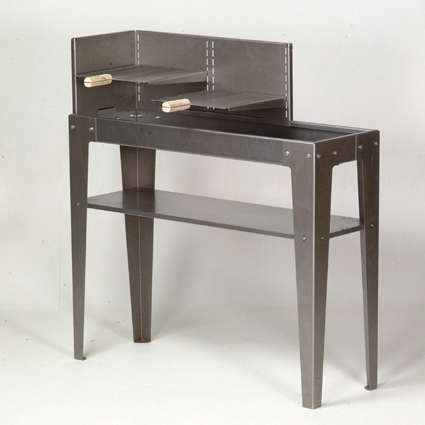

Editorial note: The Piet Hein Eek Steel Grill has appeared primarily in archived design catalogs. Specifications, pricing, production status, and availability should be confirmed directly with the designer or an authorized gallery before purchase.
Most charcoal grills are designed to disappear into the background once the burgers arrive. The Piet Hein Eek Steel Grill has other plans. It looks less like a suburban appliance and more like a piece of industrial sculpture that has politely agreed to cook dinner.
Created by Dutch designer Piet Hein Eek, the grill brings together lacquered steel, charcoal cooking, minimalist geometry, and the designer’s long-standing fascination with materials that reveal how objects are made. It is functional, certainly, but it is also meant to occupy visual space. Place it on a modern patio and it does not whisper, “There is a grill over here.” It announces, “Fire has hired an architect.”
Archived product descriptions identify the Piet Hein Eek Steel Grill as a charcoal barbecue constructed from lacquered steel. That sounds simple, but simplicity is the point. Instead of disguising the structure beneath molded plastic, oversized controls, decorative trim, or enough chrome to signal passing aircraft, the design lets steel, proportion, and fire do the talking.
Who Is Piet Hein Eek?
Piet Hein Eek is a Dutch designer known internationally for transforming ordinary, discarded, and industrial materials into carefully constructed furniture, lighting, art, and architectural interiors. He graduated from the Academy for Industrial Design in Eindhoven, now Design Academy Eindhoven, in 1990.
His graduation project, a cabinet made from scrap wood, helped establish the visual language that would define much of his career. Rather than hiding knots, nail holes, mismatched colors, and previous layers of paint, Eek treated those characteristics as valuable evidence. The material was not an anonymous ingredient. It was part of the story.
That approach eventually expanded beyond reclaimed timber. Industrial pipes, steel remnants, glass components, ceramics, aluminum, and other materials entered his work. Across these projects, Eek repeatedly challenges the idea that luxury must be spotless, uniform, and produced without visible human effort.
His Eindhoven complex reflects the same philosophy. It combines workshops, showrooms, hospitality spaces, galleries, studios, and production facilities in a former industrial setting. The environment makes manufacturing visible rather than hiding it behind a velvet curtain and a suspiciously expensive bowl of mints.
What Makes the Piet Hein Eek Steel Grill Different?
A Grill Designed as an Object
The Steel Grill belongs to a category sometimes described as functional sculpture. It performs an everyday task, but its form carries enough visual intention to stand on its own even when no food is cooking.
Many conventional grills are shaped by mass-market expectations. They often have rounded lids, folding shelves, plastic wheels, tool hooks, temperature gauges, storage cabinets, and branding large enough to be read from a neighboring county. Eek’s approach is more restrained. The grill emphasizes the physical presence of steel and the elemental relationship between fuel, heat, food, and cook.
That restraint makes it especially compatible with contemporary landscapes, concrete terraces, industrial courtyards, minimalist gardens, and outdoor spaces where every permanent object must earn its place visually.
Lacquered Steel Construction
Archived descriptions specify lacquered steel rather than stainless steel. The distinction matters. Stainless steel is formulated to resist corrosion, while ordinary steel generally depends more heavily on protective finishes and proper maintenance.
A lacquered surface can provide a barrier against moisture and oxidation while giving the grill a more refined appearance. However, coatings exposed to outdoor weather, abrasion, grease, ash, and high temperatures may require inspection over time. Chips and scratches should not be ignored, particularly in damp or coastal environments.
This is not necessarily a weakness. It is part of owning an object made from honest material. Steel is strong, repairable, recyclable, and capable of aging attractively when cared for. It simply prefers that its owner not leave it uncovered in three months of rain and then act personally betrayed by chemistry.
Charcoal as the Heat Source
The Piet Hein Eek Steel Grill is documented as a charcoal barbecue. Charcoal brings a particular rhythm to outdoor cooking. It requires lighting, waiting, arranging fuel, reading heat, and adjusting food placement. There is no instant dial that transforms “off” into “surface of the sun.”
For many cooks, that ritual is the attraction. Charcoal can produce strong radiant heat for searing while contributing the aroma associated with traditional outdoor grilling. It also encourages the creation of multiple temperature zones. Coals can be concentrated on one side for direct cooking while the other side remains cooler for gentler heat.
This style of cooking suits steaks, burgers, sausages, kebabs, eggplant, peppers, corn, flatbreads, mushrooms, and countless other foods. The grill may be a collectible design object, but it still has a very practical assignment: make dinner taste as though dinner had an adventure.
Design Philosophy Behind the Steel Grill
Material Comes First
Eek’s work is frequently guided by the possibilities and limitations of available materials. Instead of drawing an idealized shape and forcing a material to obey it, he often allows construction, supply, waste, texture, and fabrication methods to influence the final form.
That material-first thinking is visible in projects involving reclaimed pipes, scrap wood, industrial steel, reused textiles, and leftover glass. The Steel Grill fits naturally into this body of work because a barbecue is fundamentally a heat-resistant structure. Steel is not decorative camouflage here. It is doing the difficult job.
A Response to Disposable Products
Modern outdoor products can be surprisingly temporary. Thin panels rust, plastic handles crack, replacement parts vanish, and entire appliances are discarded because one minor component fails. Eek’s broader practice offers a counterargument: objects can be substantial, understandable, and worth maintaining.
The Steel Grill’s appeal comes partly from this sense of permanence. It resembles something built rather than assembled from anonymous modules. The visual weight suggests that the grill is intended to remain in the landscape, gather signs of use, and become associated with repeated meals.
Imperfection as Character
Industrial design often chases perfect repetition. Eek’s work is more comfortable with variation, marks, seams, repairs, and aging. For an outdoor steel grill, this philosophy is particularly relevant. Fire leaves evidence. Ash collects. Tools scrape. Oil spatters. Weather tests every exposed surface.
A pristine showroom finish may gradually develop the appearance of a working object. Owners who expect eternal perfection could find that frustrating. Owners who appreciate patina may see the changes as an increasingly personal record of use.
Cooking on a Designer Charcoal Grill
Build Two Heat Zones
A two-zone charcoal fire is one of the most useful arrangements for live-fire cooking. Pile most of the hot coals on one side and leave the opposite side relatively clear. The hot area becomes the direct zone for browning and searing. The cooler area provides more controlled cooking and a place to move food when flames become enthusiastic.
This method is useful for thick steaks, bone-in chicken, sausages, and vegetables that need both color and time. Sear the food over concentrated heat, then move it to the cooler side to finish without turning the exterior into archaeology.
Preheat the Cooking Surface
Allow the grill and grate to heat thoroughly before adding food. A properly preheated surface promotes browning and reduces sticking. Once the grate is hot, clean it using a safe grill-cleaning tool, then apply a light coating of cooking oil when appropriate.
Avoid loose or damaged wire-bristle brushes. Stray metal bristles can detach and become embedded in food. Nylon tools, wooden scrapers, purpose-made bristle-free cleaners, or carefully handled aluminum foil are safer alternatives.
Use a Food Thermometer
A designer grill does not give anyone designer immunity from foodborne illness. Use a reliable food thermometer rather than judging doneness entirely by color, firmness, or confidence.
Keep raw meat and poultry separate from cooked food. Use clean plates and utensils for finished items, wash hands after handling raw ingredients, and refrigerate leftovers promptly. Charcoal smoke may be atmospheric, but bacteria remain unimpressed by atmosphere.
Safety Considerations
Charcoal grills must be used outdoors in an open, well-ventilated location. Burning charcoal produces carbon monoxide, an odorless gas that can accumulate to deadly levels in enclosed and partially enclosed spaces.
Never operate the Piet Hein Eek Steel Grill inside a home, garage, tent, vehicle, shed, breezeway, or enclosed porch. An open garage door does not make indoor charcoal grilling safe. Keep the grill away from doors, windows, air intakes, overhanging structures, dry plants, fencing, and combustible surfaces.
Place it on stable, level, noncombustible ground. Keep children and pets away from the cooking area, and never leave an active fire unattended. Use only appropriate charcoal starters before ignition. Never pour lighter fluid or another liquid fuel onto burning or smoldering coals.
After cooking, allow the fuel and ash to cool completely. Coals can retain enough heat to start a fire long after they appear inactive. Dispose of cold ash in accordance with local fire-safety recommendations, preferably using a suitable metal container.
Cleaning and Maintaining Lacquered Steel
Remove Ash After Each Use
Ash attracts and holds moisture, which can accelerate corrosion. Once everything is completely cold, remove accumulated ash rather than leaving it in the grill between cooking sessions.
Clean Without Attacking the Finish
Use mild soap, warm water, and a soft cloth on exterior lacquered surfaces unless the manufacturer provides different instructions. Harsh abrasives, metal scouring pads, or aggressive chemicals can damage the coating.
Grease should be removed before it hardens into an outdoor art installation of its own. Dry cleaned surfaces thoroughly, especially around joints, corners, seams, and areas where water may collect.
Inspect for Chips and Rust
Check the finish periodically. If bare steel becomes visible, contact the manufacturer or a qualified metal-finishing professional for guidance on compatible repair products. Applying an unsuitable coating near a high-heat cooking area may create fumes, discoloration, or adhesion problems.
Do not assume ordinary household spray paint is appropriate. Heat zones and food-contact surfaces require materials specifically rated for their intended temperatures and uses.
Use a Breathable Cover
A fitted outdoor cover can reduce exposure to rain, pollen, leaves, bird droppings, and ultraviolet light. However, the grill should be dry and completely cool before it is covered. Trapping moisture beneath a waterproof cover can produce a tiny private weather system, and steel rarely enjoys tropical humidity as much as vacation brochures suggest.
Who Is the Piet Hein Eek Steel Grill For?
This grill is best suited to buyers who value design history, material authenticity, European contemporary design, and charcoal cooking. It may appeal to architects, collectors, landscape designers, gallery clients, and homeowners who view an outdoor grill as a permanent part of the setting rather than a seasonal appliance.
It may be less suitable for shoppers primarily seeking digital temperature controls, push-button ignition, large storage cabinets, extensive warranties, readily available replacement parts, or the lowest possible cost per square inch of cooking surface.
Before buying an example from a gallery, dealer, auction, or private seller, request detailed information about:
- Overall dimensions and weight
- Cooking-surface dimensions and grate material
- Condition of the lacquered finish
- Signs of rust, warping, or heat damage
- Included components and removable parts
- Assembly, freight, and installation requirements
- Replacement-grate and repair options
- Clearance and operating instructions
Archived catalogs have shown the grill at different euro prices over time. Those figures should be treated strictly as historical references. A rare or discontinued example may be priced according to condition, provenance, shipping complexity, and collector demand rather than its original retail value.
Extended Ownership Experience: Living With the Piet Hein Eek Steel Grill
The experience of owning a Piet Hein Eek Steel Grill begins before the charcoal is lit. Unlike a portable kettle grill that can be rolled behind the shed after dinner, this design asks to become part of the landscape. Choosing its position therefore feels closer to placing outdoor furniture or sculpture than parking an appliance. It needs a safe, level cooking location, but it also deserves enough visual space for its form to be appreciated.
The First Cook
A sensible first meal would be deliberately simple: perhaps burgers, zucchini, corn, and thick slices of bread. This is not the evening to invite 28 guests, attempt a whole brisket, and discover that the charcoal chimney was left at the store.
The first firing allows the owner to learn how the steel body responds to heat, where the strongest cooking zones develop, how quickly the grate preheats, and how much charcoal produces a manageable fire. Every charcoal grill has a personality. Some run hot and impatient; others require a little courtship.
As the coals develop a light layer of ash, the grill changes visually. The clean industrial structure becomes animated by orange light, smoke, and sound. This is where the design makes sense. The object is no longer merely occupying the patio. It is performing.
A Weeknight Dinner
On an ordinary evening, the grill encourages a slower transition from work to dinner. Lighting charcoal creates a natural pause. While the coals heat, vegetables can be cut, drinks poured, and sauces mixed. The process does not reward frantic multitasking, which may be inconvenient but is probably good for the nervous system.
A two-zone fire makes the cooking session flexible. Chicken thighs can begin over moderate heat while peppers and onions char over the hotter section. Bread can warm after the main food is removed. The steel structure retains a visual seriousness even when the menu is basically “whatever was in the refrigerator.”
Hosting a Gathering
During a party, the grill naturally becomes a social center. Guests gather near live fire in a way they rarely gather around an electric oven. The Piet Hein Eek name and sculptural construction add another conversation starter, although the owner should resist delivering a 40-minute lecture on Dutch design while everyone’s sausages burn.
For larger meals, organization matters. Ingredients should be prepared in advance, raw and cooked foods separated, and serving platters kept away from the work area. Charcoal cooking is most enjoyable when the cook can focus on heat rather than searching for tongs beneath a bowl of potato salad.
Cleaning the Next Morning
The less glamorous side of ownership arrives after the guests leave. Once the grill is fully cold, ash must be removed, the grate cleaned, and grease wiped from exposed surfaces. This routine is especially important with lacquered steel because neglected residue and retained moisture can undermine the finish.
Fortunately, the straightforward material language encourages maintenance. There is no illusion that the grill will care for itself. A few minutes of cleaning after each use are easier than negotiating with a rust patch six months later.
Watching the Grill Age
Over several seasons, subtle changes are likely to become part of the ownership experience. Small marks may appear. The finish may develop minor variations. Areas close to intense heat may show more evidence of use than cooler exterior panels.
The central question is whether the owner sees these changes as damage or history. Piet Hein Eek’s broader design philosophy strongly favors the second interpretation, provided the object remains structurally sound and properly maintained. The goal is not careless neglect. It is graceful use.
For the right owner, the Piet Hein Eek Steel Grill becomes more than equipment. It records summer dinners, experimental recipes, surprise rainstorms, successful steaks, unsuccessful onions, and the annual discovery that someone forgot to buy charcoal. It earns its place not by remaining untouched, but by being used thoughtfully.
Conclusion
The Piet Hein Eek Steel Grill represents a compelling intersection of contemporary Dutch design and traditional charcoal cooking. Its lacquered-steel construction, industrial presence, and straightforward function reflect a designer who consistently places materials, craftsmanship, and visible construction at the center of his work.
It will not be the ideal grill for every backyard. Buyers seeking maximum convenience or an extensive list of integrated features may prefer a mainstream charcoal or gas model. But for someone who wants outdoor cooking equipment with genuine design character, the Steel Grill offers something increasingly rare: a useful object that remains interesting even after dinner is over.
Just remember that sculptural status does not cancel the practical rules. Keep it outdoors, control the fire carefully, use a thermometer, remove cold ash, protect the lacquered steel, and give the grill room to breathe. Great design deserves good maintenanceand your neighbors deserve burgers that are cooked all the way through.


