
Note: This article is written as original SEO content based on real product history, public manufacturer information, and reputable design/audio coverage.
Introduction: The Speaker That Refused to Hide in a Corner
Most speakers are designed like shy furniture. They sit in the corner, dress in black, and hope nobody asks them about their feelings. The People People Transparent Speaker did the opposite. It showed up in tempered glass and aluminum, exposed its drivers, revealed its cables, and said, “Yes, I am a speaker. Please admire my internal organs.”
Originally developed by the Stockholm design studio People People, the Transparent Speaker became one of those rare audio products that appealed to both design lovers and music fans. It was not just another Bluetooth speaker with a shiny logo and a motivational product video. It was a clear, modular, repairable, upgrade-friendly sound system built around a big idea: technology should age gracefully instead of becoming electronic junk after the next app update.
Today, the concept lives on through the brand Transparent, which has expanded the original vision into a family of speakers and audio products. Still, the People People Transparent Speaker remains the design-world origin story: a see-through box that made home audio feel less like equipment and more like architecture.
What Is the People People Transparent Speaker?
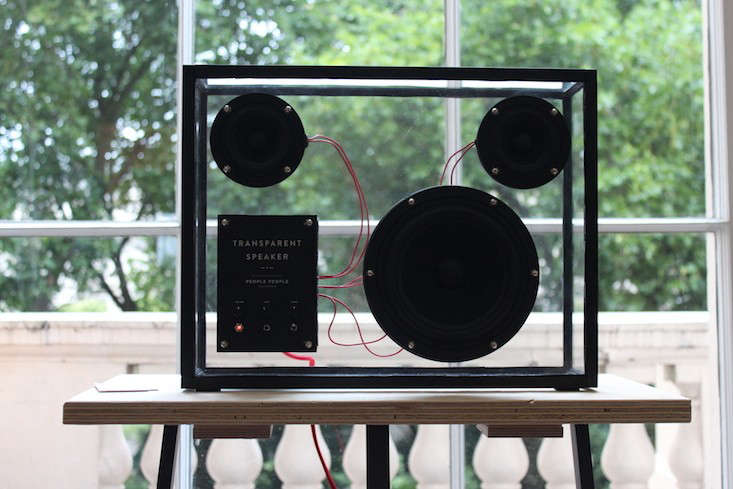
The People People Transparent Speaker is a minimalist home speaker known for its glass enclosure, aluminum frame, visible components, and modular construction. Instead of hiding the mechanics behind fabric or plastic, it turns the speaker’s inner structure into the visual identity. The result is both industrial and strangely elegant, like a tiny recording studio moved into a glass apartment.
The original full-size version used two 3-inch full-range drivers and a 6.5-inch woofer, creating a compact but capable active speaker system. Later versions under the Transparent brand continued the formula with Bluetooth connectivity, line-in options, DSP tuning, front controls for volume, bass, and treble, and compatibility with wireless modules for multiroom audio.
In plain English: it is a speaker you can place in a living room without apologizing to your interior designer.
The People People Story: From Design Studio Idea to Cult Audio Object
People People was not trying to create a speaker that looked like every other speaker. The studio’s approach was rooted in Scandinavian design principles: simplicity, function, honest materials, and long-term usability. The Transparent Speaker began as a design concept that attracted attention because it solved a common problem in a refreshingly obvious way.
Most home electronics age badly. A glossy black speaker may look modern for three years, then suddenly it resembles a cable box from a forgotten civilization. People People wanted a product that could visually survive trends. Glass and aluminum were smart choices because they feel familiar across many environments: modern apartments, creative studios, boutique hotels, record rooms, and minimalist homes where even the coffee table seems to meditate.
The concept eventually moved from design-blog fascination to crowdfunding reality. Its appeal was simple: a speaker that looked different, sounded serious, and could be upgraded or repaired rather than discarded. That combination helped turn the Transparent Speaker into a recognizable object in design-conscious audio culture.
Design: Why Transparency Works So Well
A Speaker That Blends In by Standing Out
The magic of the People People Transparent Speaker is contradiction. It is visually bold, but because you can see through it, it also feels light. A traditional speaker can block a room’s visual flow. This one lets shelves, walls, plants, and daylight remain part of the scene.
The transparent speaker design works especially well in homes where technology usually feels intrusive. Put it beside books, vinyl records, a ceramic lamp, or a clean white wall, and it does not scream “gadget.” It whispers, “I have excellent taste and probably know what cold brew is.”
Tempered Glass and Aluminum
The speaker’s enclosure typically combines tempered glass panels with an aluminum frame. This gives the product its signature architectural look while helping create a sealed cabinet. A sealed enclosure matters because speaker cabinets are not just boxes; they shape how air moves, how bass behaves, and how much vibration interferes with the music.
Transparent design is not easy in audio. Internal parts cannot look messy, because the mess is visible. Every screw, cable, driver, and control becomes part of the composition. That is why the People People Transparent Speaker feels more designed than decorated. It does not simply wear transparency as a gimmick; it organizes the product around it.
Sound Quality: Pretty Face, Real Speaker
Let’s address the obvious question: does the Transparent Speaker sound good, or is it just a glass box with confidence?
The answer is that it was designed to be more than a visual conversation piece. The larger Transparent Speaker includes a woofer for deeper low-end response and full-range drivers for mids and highs. Built-in amplification and digital signal processing help balance the sound, while physical controls allow listeners to adjust bass and treble without opening an app that demands a password, a firmware update, and possibly your birth certificate.
The speaker is not meant to replace a giant audiophile tower system in a dedicated listening room. It is better understood as a premium lifestyle speaker: powerful enough for apartments, living rooms, studios, and social listening, while attractive enough to remain on display all day. For many buyers, that balance is exactly the point.
Large Transparent Speaker vs. Small Transparent Speaker
The larger Transparent Speaker is the more serious room-filling option. It commonly features two 3-inch full-range drivers, a 6.5-inch woofer, Class D amplification, and a frequency response reaching deeper into the bass range than the smaller model.
The Small Transparent Speaker keeps the same visual language but in a more compact form. It is easier to place on a desk, shelf, bedside table, or kitchen counter. With Bluetooth 5.0, true wireless pairing, line-in connectivity, and a compact sealed cabinet, it is designed for people who want the Transparent look without giving up half the furniture plan.
If the larger model is the living-room centerpiece, the small model is the stylish roommate who pays rent on time and knows how to make a playlist.
Connectivity and Upgradeability
One of the smartest parts of the People People Transparent Speaker concept is its relationship with changing technology. Wireless standards evolve. Streaming platforms come and go. Voice assistants appear, disappear, and occasionally misunderstand everyone in the room. A closed speaker system can become outdated quickly.
The Transparent approach is different. The speaker is designed to host upgrade modules, allowing owners to add or change wireless functionality over time. Bluetooth handles everyday streaming, while optional Wi-Fi or third-party modules can expand compatibility with multiroom systems, AirPlay-style streaming, Spotify Connect, Tidal Connect, and other modern audio workflows depending on the setup.
This modular philosophy is one of the reasons the product still feels relevant. It treats the speaker less like a sealed gadget and more like a platform. That matters because audio hardware can physically last much longer than the wireless technology inside it.
Sustainability: A Speaker With a Longer Attention Span
The Transparent Speaker is often discussed in the context of sustainable audio design. That is not just because it uses recyclable materials like glass and aluminum. The bigger idea is longevity.
Modern consumer electronics often fail the moment one component becomes outdated or impossible to repair. A battery dies. A wireless chip ages. A port no longer fits anything made after 2019. Suddenly, a perfectly good object becomes waste. The People People Transparent Speaker challenges that pattern by emphasizing repairability, modularity, and replaceable parts.
That does not make it magically waste-free. No product earns a halo just because it has nice screws. But compared with sealed plastic speakers that are difficult to open and nearly impossible to upgrade, the Transparent Speaker offers a more thoughtful model. It asks a useful question: what if beautiful technology could be maintained instead of replaced?
Who Should Buy a People People Transparent Speaker?
Design Lovers
This speaker makes the most sense for people who care deeply about how objects live in a room. If you have ever moved a lamp three inches to the left and called it “spatial balance,” this product understands you.
Apartment and Studio Owners
The Transparent Speaker works well in modern apartments, creative studios, home offices, and compact living spaces. It has enough personality to anchor a room but does not visually dominate like traditional black speaker towers.
Music Fans Who Value Simplicity
The physical controls are a quiet luxury. Volume, bass, and treble can be adjusted directly. No need to dig through a settings menu named something like “Advanced Sonic Lifestyle Environment.” Sometimes a knob is civilization at its finest.
Sustainability-Minded Buyers
If you dislike disposable electronics, the modular design is a major reason to consider this speaker. It is built around the idea that products should be opened, repaired, and upgraded.
Who Might Not Love It?
The People People Transparent Speaker is not for everyone. If your top priority is maximum performance per dollar, traditional hi-fi speakers may offer more raw acoustic value. If you want a rugged outdoor speaker for beach trips, camping, or being dropped near a grill by someone named Brad, this is not the right tool.
It is also a premium design object, and premium design usually brings premium pricing. You are paying for materials, engineering, aesthetics, modularity, and brand philosophynot just decibels.
Finally, glass requires care. It looks incredible when clean and slightly less incredible when decorated with fingerprints, dust, and the mysterious smudge that appears on every transparent object within six minutes of ownership.
How It Compares With Other Premium Speakers
Compared with brands like Sonos, Bang & Olufsen, Bose, Marshall, and Apple, the Transparent Speaker occupies a distinct lane. Sonos focuses heavily on multiroom software convenience. Bose emphasizes easy listening and compact performance. Marshall leans into rock-and-roll nostalgia. Bang & Olufsen often treats audio gear like luxury sculpture. Apple builds polished smart-home audio around its ecosystem.
The People People Transparent Speaker is different because its main promise is visual honesty and long-term adaptability. It does not pretend to disappear completely. It becomes part of the room. It also gives owners a stronger sense that the object can evolve with them, rather than becoming obsolete the moment a new wireless feature becomes fashionable.
Placement Tips for the Best Experience
Like any speaker, placement matters. For the larger Transparent Speaker, a sturdy surface is important because the unit has real weight. A low cabinet, media console, or dedicated shelf works well. Avoid placing it directly against unstable furniture or near edges where an excited dog, child, or dramatic dance move could create an expensive tragedy.
Give the speaker some breathing room. Although its sealed design helps manage bass response, placing it too tightly into a cluttered shelf can reduce clarity. For visual impact, let light pass around it. A neutral wall, wood surface, or clean shelving unit can make the transparent design stand out beautifully.
For the Small Transparent Speaker, desks and bedside tables are ideal. It can serve as a compact music system for focused work, casual listening, podcasts, or evening playlists. Pairing two units can create a wider stereo experience, which is especially useful in a bedroom, studio, or small living room.
Care and Maintenance
Cleaning the Transparent Speaker is simple but should be done gently. Use a soft microfiber cloth for glass and aluminum surfaces. Avoid abrasive cleaners, rough towels, or aggressive sprays. The goal is to remove fingerprints, not prepare the speaker for surgery.
Because the design exposes visual details, cable management also matters. Keep power and audio cables neat. The speaker looks best when the surrounding area is as intentional as the product itself. A beautiful transparent speaker surrounded by tangled cables is like wearing a tuxedo with spaghetti in the pocket.
Why the People People Transparent Speaker Still Matters
The lasting importance of the People People Transparent Speaker is not only that it looks good. Many products look good for a season. This one helped push a larger conversation about what home electronics could become.
It suggested that speakers do not need to be hidden. It showed that modularity can be elegant. It proved that sustainability does not have to look like a lecture printed on recycled cardboard. Most importantly, it reminded the audio industry that technology can be emotional, architectural, repairable, and fun at the same time.
That is why people still search for the People People Transparent Speaker years after its debut. It is more than a product name. It represents a design philosophy: make technology visible, make it understandable, and make it worth keeping.
Real-World Experience: Living With a People People Transparent Speaker
Using a People People Transparent Speaker in everyday life feels different from using a normal Bluetooth speaker. A typical speaker becomes background equipment. You place it somewhere, connect your phone, and forget about it until the battery dies or the bass rattles a spoon off the kitchen counter. The Transparent Speaker behaves more like a piece of functional decor. You notice it even when it is silent.
In a living room, it immediately becomes a conversation starter. Guests tend to look twice because the object is familiar and unfamiliar at the same time. Everyone understands what speaker drivers are, but seeing them floating behind glass creates a small moment of surprise. It feels technical without being intimidating. It has that rare quality of making people ask questions before the music even starts.
The best experience comes when the speaker is placed somewhere visible but not overly staged. On a media console beside a turntable, it looks natural. On a clean office shelf, it feels creative. In a bedroom, the Small Transparent Speaker adds a calm, modern touch without turning the room into a gadget showroom. The design is flexible enough to work with wood, concrete, white walls, colorful art, and plants. It even looks good near books, which is helpful because books make every audio setup look smarter.
Sound-wise, the experience is easygoing and satisfying. The larger model has enough body to make pop, jazz, electronic, indie rock, podcasts, and acoustic playlists feel full. The bass is present without turning the room into a nightclub unless you ask it to. The front controls make daily listening more pleasant because you can quickly lower bass at night, add brightness to spoken-word content, or adjust volume without reaching for a phone.
The small model is especially enjoyable for close listening. On a desk, it gives music more presence than a laptop speaker and much more style than a plastic portable unit. It is great for morning playlists, work sessions, cooking videos, and relaxed evening listening. It is not trying to be a party monster. It is trying to be the tasteful friend who brings good snacks and knows when to leave.
The transparent design does require a little discipline. Dust and fingerprints are more visible than on fabric-covered speakers, so occasional cleaning becomes part of ownership. Cable clutter also becomes harder to ignore. But that is partly the point. The speaker encourages a cleaner, more intentional setup. It makes the owner care about the environment around it.
The most memorable part of living with a Transparent Speaker is how it changes the relationship between technology and space. It does not feel disposable. It does not feel like an anonymous black box waiting to be replaced. It feels like an object with a reason to stay. For anyone tired of electronics that look outdated before the warranty expires, that feeling is surprisingly refreshing.
Conclusion: A Clear Winner for Design-First Audio Fans
The People People Transparent Speaker remains one of the most distinctive speaker designs of the modern era. It combines Scandinavian minimalism, visible engineering, modular thinking, and real audio capability in a way that still feels fresh. It is not the cheapest speaker, the toughest outdoor speaker, or the most invisible smart speaker. That is fine. It was never trying to be ordinary.
Its real strength is balance. It offers respectable sound, strong visual identity, repairable design principles, and a level of interior compatibility that most speakers can only dream about while hiding behind black mesh. For homes, studios, offices, and design-conscious music lovers, the Transparent Speaker is proof that audio gear can be both useful and beautiful.
If you want a speaker that disappears completely, choose something else. If you want one that earns its place in the room, the People People Transparent Speaker is still wonderfully clear about what it does best.


