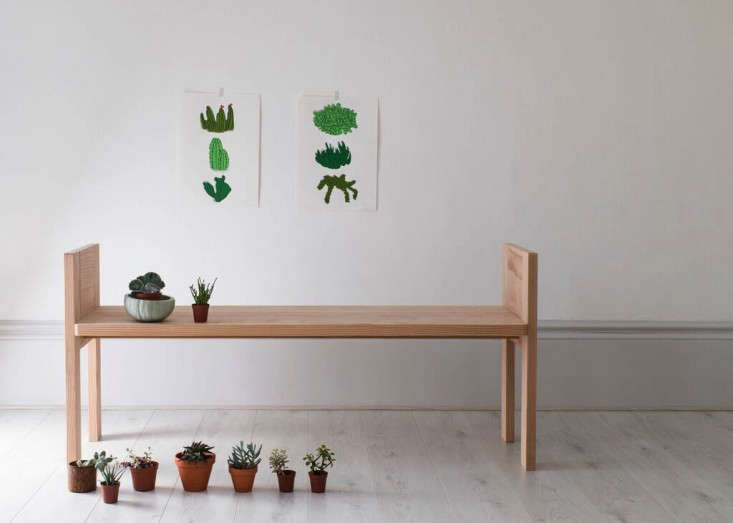

The Baines & Fricker Pew Bench is one of those rare pieces of furniture that looks simple at first glance, then quietly starts bosthout being shouty, and rooted in a very old seating idea: the church pew. But instead of feeling heavy, ceremonial, or like it may ask you to confess something before sitting down, this bench brings the form into the modern home with a lighter, fresher attitude.
Designed by Brighton-based studio Baines & Fricker, the Pew Bench reflects the duo’s love of utility, craft, British materials, everyday visual references, and furniture made to last longer than a trending hashtag. Made from Douglas fir and often shown in vivid stains such as yellow, red, or blue, the bench is compact enough for a hallway yet handsome enough for a dining table, kitchen nook, boot room, studio, or living space.
In a design world crowded with overstuffed chairs, temporary flat-pack fixes, and benches that seem to apologize for existing, the Baines and Fricker bench has backboneliterally and stylistically. It is not fussy. It is not trying to be a sofa. It is a pew bench reimagined for homes that appreciate charm, purpose, and a little bit of architectural mischief.
What Is the Baines & Fricker Pew Bench?
The Baines & Fricker Pew Bench is a three-seat wooden bench inspired by traditional church pew seating. The best-known version measures approximately 140 cm wide, 42.5 cm deep, and 65 cm tall, or roughly 55 inches wide, 16.7 inches deep, and 25.6 inches high. That makes it noticeably slimmer than many upholstered benches or banquettes, which is exactly why it works so well in narrow interiors.
The bench has been listed in stained Douglas fir, with earlier product descriptions highlighting its ability to maximize space while providing versatile seating. It has appeared in design-focused shops and editorial roundups as a hallway bench, dining bench, and standalone accent piece. Optional cushions or tapestry-style kneelers have also been associated with the design, adding comfort and color while nodding again to the church-pew inspiration.
At its core, this is a modern wooden bench with old bones. The silhouette borrows from ecclesiastical seating, but the proportions, color, and finish move it into the present. Think less “Sunday service” and more “smart entryway moment with very good shoes underneath.”
Who Are Baines & Fricker?
Baines & Fricker is associated with Steve Baines and Eliza Fricker, a creative partnership known for furniture, interiors, illustration, print, and a distinctly British approach to design. Their work has often been described as pared-down, playful, robust, and utilitarian. Steve’s background in furniture making and Eliza’s work as an illustrator and printmaker come together in pieces that feel practical but never dull.
The studio’s broader design language draws from everyday British life: utility furniture, industrial buildings, street signs, fruit crates, rooflines, old churches, and ordinary objects that most people pass without noticing. That is part of the charm. Baines & Fricker designs often say, “Look again. The mundane has excellent bone structure.”
The Pew Bench fits perfectly within that philosophy. It takes a familiar public objectthe pewand translates it into domestic scale. The result is furniture that feels nostalgic without being antique, modern without being cold, and colorful without requiring sunglasses.
Design Details That Make the Pew Bench Stand Out
1. A Slim Profile for Real Homes
One of the bench’s smartest features is its narrow depth. At around 42.5 cm deep, it can tuck into a hallway, against a kitchen wall, or along one side of a dining table without eating up precious floor space. This matters in real homes, where “spacious entryway” often means “a rectangle of floor where everyone drops bags, keys, and emotional baggage.”
The Pew Bench offers seating without creating bulk. It gives you a place to sit while putting on shoes, a perch for guests, or an elegant landing zone for daily life. In small-space design, furniture that does more than one job is gold. This bench earns its keep.
2. Church Pew Inspiration Without the Gloom
Traditional church pews can be beautiful, but they are often long, heavy, dark, and built for serious stillness. The Baines & Fricker Pew Bench keeps the recognizable back-and-seat structure but changes the emotional temperature. The use of Douglas fir and bright stained finishes creates a fresher, more relaxed character.
That contrast is the point. The bench references history but does not get trapped in it. It has the upright clarity of a pew, yet the color and scale make it friendly enough for a family hallway, breakfast corner, or creative studio.
3. Douglas Fir Warmth
Douglas fir is valued for its visible grain, strength, and warm tone. In the Pew Bench, the material gives the piece a sense of honesty. It looks like wood, behaves like wood, and carries the natural texture that makes simple furniture feel alive. Even when stained, the bench avoids the plastic-smooth look of mass-produced pieces.
Wooden furniture also ages in a way that many synthetic materials do not. Minor knocks, polish changes, and softened edges can become part of the story rather than immediate reasons to panic-search “how to hide furniture scratches at 2 a.m.”
4. Color With Confidence
The yellow version of the Baines & Fricker Pew Bench is especially memorable. Yellow can be risky in furnituredone badly, it feels like a warning sign; done well, it feels like sunshine with joinery skills. On this bench, the color works because the form is restrained. The shape is simple enough to carry a bold finish without looking chaotic.
Red and blue versions also suit the design’s graphic personality. A stained color lets the bench become a focal point while still preserving the material character of the wood. It is cheerful, but not childish. Playful, but not gimmicky.
Where the Baines & Fricker Pew Bench Works Best
Entryway or Hallway
The hallway is arguably the bench’s natural habitat. Its narrow frame makes it ideal for tight spaces, and its upright back gives it more presence than a basic backless bench. Add wall hooks above it, a runner beneath it, and a basket nearby for shoes or scarves. Suddenly the entryway looks intentional instead of like a mail-sorting accident.
Dining Table Seating
The Pew Bench can also work beautifully along one side of a dining table. Compared with individual chairs, a bench creates a cleaner line and can make a small dining area feel less crowded. It is especially useful in kitchens, breakfast nooks, or casual dining rooms where flexibility matters.
Because the bench has a back, it offers more support than many dining benches. That said, seat height and table height should always be checked before pairing any bench with a table. Beautiful furniture is wonderful; knees jammed into a table apron are less poetic.
Living Room Accent Seating
In a living room, the bench can act as accent seating along a wall, near a bookcase, or beneath artwork. It is not a lounge chair, and it does not pretend to be. Instead, it brings structure. It gives the room a clean horizontal line and a useful extra seat for gatherings.
Kitchen or Boot Room
For homes with a boot room, mudroom, or side entrance, the Baines and Fricker Pew Bench makes practical sense. It is sturdy, compact, and visually strong. A colored finish can brighten utility spaces that often get stuck with leftover furniture and one exhausted umbrella.
How to Style the Baines & Fricker Pew Bench
Keep the Wall Simple
Because the bench has a strong outline, it benefits from breathing room. A plain wall, subtle paneling, or a single framed print can work better than a crowded gallery wall. Let the silhouette do some of the talking.
Add Texture, Not Clutter
A slim cushion, folded wool blanket, or one patterned pillow can soften the bench without hiding its design. If using tapestry-style cushions or kneelers, choose colors that either echo the bench finish or contrast deliberately. Randomly adding every pillow in the house may create comfort, but it also risks turning the bench into a decorative laundry pile.
Pair It With Honest Materials
This bench looks especially good with natural materials: wood floors, stone tiles, linen, wool, clay, brass, iron, and matte-painted walls. Its utilitarian character also pairs well with peg rails, shaker-style storage, simple lighting, and handmade ceramics.
Use It as a Color Anchor
If you choose a yellow, red, or blue version, repeat that color once or twice elsewhere in the room. A small artwork, lampshade, vase, or rug detail can connect the bench to the rest of the space. The trick is restraint. You want rhythm, not a room that looks like it was decorated by a box of crayons with a mortgage.
Baines & Fricker Pew Bench vs. Vintage Church Pew
A vintage church pew can be magnificent, but it comes with challenges. Many are very long, very heavy, and sometimes awkwardly proportioned for modern homes. They may also need refinishing, structural repairs, or serious cleaning. A vintage pew can tell a story, but occasionally that story includes dust, old varnish, and a mysterious wobble.
The Baines & Fricker Pew Bench offers the spirit of a pew in a more manageable package. It is smaller, fresher, and designed specifically for domestic use. The color options also make it easier to fit into contemporary interiors. Rather than importing an actual church pew into a hallway, this design translates the idea into something lighter and more flexible.
Why Designers Like Pew-Style Benches
Pew-style benches appeal to designers because they combine function, history, and strong form. A bench can seat more people than a chair in less visual space. A backed bench adds comfort and architectural presence. A pew-inspired bench also carries cultural memory, even when the design is completely secular.
The Baines & Fricker version succeeds because it edits the form. It removes heaviness, shortens the scale, introduces color, and keeps the structure clean. The result is not a reproduction. It is a reinterpretation.
Buying Considerations Before Choosing One
Measure Carefully
Before buying a Baines & Fricker Pew Bench or a similar piece, measure the intended space. Check width, depth, and clearance around doors, drawers, radiators, and walkways. In a hallway, leave enough room for people to pass comfortably, especially if bags, shoes, or pets are part of the daily traffic pattern.
Think About Comfort
The bench is structured and upright. That is part of its beauty, but it also means it is not a sink-in-and-watch-three-movies seat. For longer use at a dining table, cushions may help. For quick hallway seating, the wooden seat is usually the point: simple, direct, and ready for action.
Confirm Finish and Availability
Because design listings can change over time, buyers should confirm current availability, finish options, lead times, and dimensions directly with the seller or studio. Earlier listings showed the bench in stained Douglas fir and in bright color options, but handmade and small-studio furniture can evolve.
Consider Long-Term Style
This is not a disposable trend piece. Its appeal comes from strong proportions, historical reference, and material honesty. If your home leans modern rustic, colorful minimal, British utilitarian, cottage contemporary, or design-led family living, the bench can fit beautifully.
Experience Notes: Living With a Pew Bench in Real Life
Living with a pew-style bench like the Baines & Fricker Pew Bench is a different experience from living with a standard entryway bench. A typical bench is often just a flat surface with legs. Useful? Yes. Memorable? Only if someone trips over it. A pew bench, on the other hand, behaves more like a small architectural feature. It creates a destination in the room. People notice it, sit on it, place things on it, and somehow begin treating that little area as more organized than it was before.
In an entryway, the biggest everyday advantage is psychological. A bench tells people what to do. Sit here. Put on shoes here. Drop your bag here, but please do not build a mountain of tote bags that can be seen from space. Because the Baines & Fricker design has a back, it feels more complete than a stool or backless bench. It turns a narrow wall into a proper zone, especially when paired with hooks, a small shelf, or a mirror.
At a dining table, the experience is more communal. Benches naturally make seating feel casual and flexible. Children can slide in easily, guests can squeeze together when needed, and the visual line is calmer than a row of separate chairs. The Pew Bench adds extra personality because it does not look like ordinary dining seating. It brings a slight chapel-meets-kitchen poetry to the table, which sounds dramatic until you realize it simply means breakfast feels a little more designed.
The upright shape can also improve posture. Unlike a soft upholstered bench that invites slouching, a pew bench encourages you to sit with some dignity. Not too much dignitythis is still a place where someone may eat cereal in pajama pantsbut enough to feel supported. If used for long dinners, a cushion makes sense. For short meals, hallway use, or occasional seating, the fir construction and compact scale are part of the appeal.
One of the most enjoyable experiences is styling the bench through the seasons. In spring, it works with a vase of branches or a fresh cotton cushion. In summer, the yellow version can look fantastic against white walls, terracotta pots, and woven baskets. In fall, add wool, darker artwork, or leather accessories. In winter, a folded blanket and warm lighting make it feel inviting without turning the room into a holiday catalog explosion.
The bench also teaches restraint. Because its form is clear and its color can be bold, it does not need much decoration. One cushion may be enough. A single print above it may be enough. This is refreshing in a world where every surface is constantly pressured to host candles, trays, books, bowls, beads, tiny sculptures, and at least one object described as “curated.” The Pew Bench looks best when allowed to be itself.
For families, the practical experience is equally strong. It gives children a place to sit while shoes are negotiated. It gives adults a place to pause when carrying groceries, bags, or the emotional weight of forgetting where the keys went again. It can hold coats briefly, welcome guests, and make an awkward wall feel useful. That is the quiet genius of the Baines & Fricker Pew Bench: it is beautiful, but it is not precious. It is designed to participate in daily life.
Final Thoughts
The Baines & Fricker Pew Bench is a thoughtful modern interpretation of a classic seating form. With its Douglas fir construction, compact proportions, church-pew influence, and lively color options, it offers far more than a place to sit. It brings character, structure, and a sense of craft to hallways, dining areas, kitchens, boot rooms, and living spaces.
Its strength lies in balance. It is traditional but not old-fashioned, playful but not silly, practical but not plain. For anyone drawn to handmade wooden furniture, modern pew bench design, or entryway seating with personality, the Baines and Fricker bench remains a standout example of how a familiar form can be redesigned for contemporary life.
Note: Product details, finishes, pricing, and availability may vary by seller and production period. Always verify current specifications before purchasing or commissioning a similar bench.
SEO Tags


