
Note: This article is written for publication and synthesized from current public information about SaaStr speaker submissions, SaaStr-style editorial standards, SaaS conference programming, and practical conference proposal best practices. Please verify the latest event date and submission window on the official SaaStr application page before publishing time-sensitive details.
Good news for founders, operators, executives, and SaaS builders with a story worth sharing: speaking submissions for SaaStr Europa are open, and that means the European B2B SaaS stage is once again calling for practical lessons, sharp opinions, and the kind of real-world playbooks that make attendees put down their coffee and whisper, “Okay, I actually needed that.”
SaaStr has built its reputation around tactical content for SaaS and B2B leaders. This is not the place for a 30-minute product commercial disguised as “thought leadership,” wearing a blazer and hoping nobody notices. SaaStr audiences expect substance. They want to hear what worked, what failed, what nearly set the dashboard on fire, and what another founder or executive can copy, adapt, or avoid by Monday morning.
That is why the opening of SaaStr Europa speaking submissions matters. It is more than a call for speakers. It is an invitation to contribute to one of the most focused conversations in B2B SaaS: how companies scale, sell, retain, fundraise, build teams, deploy AI, and survive the strange emotional sport known as annual recurring revenue.
Why SaaStr Europa Is a Big Deal for B2B SaaS Leaders
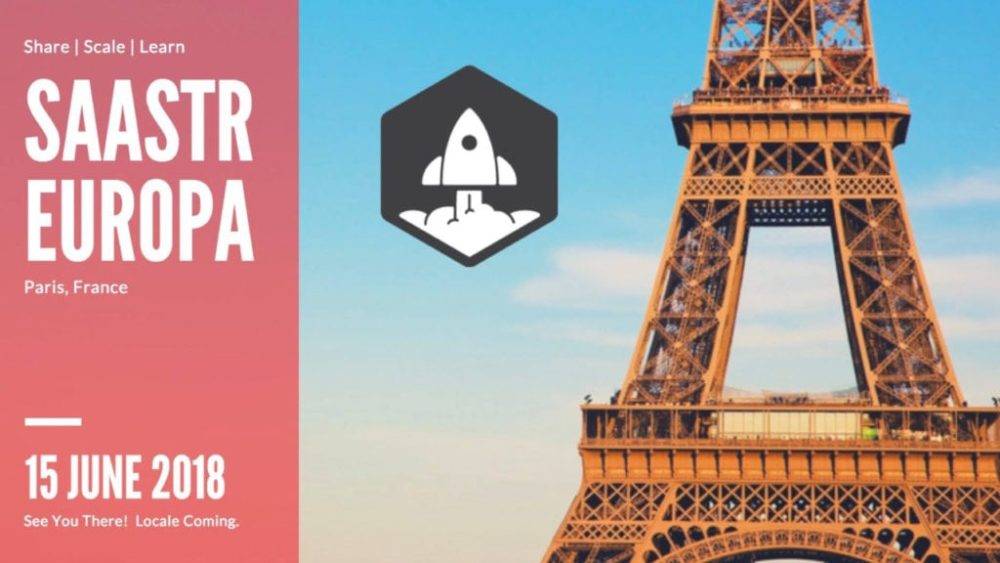
SaaStr Europa brings the SaaStr experience to the European market, connecting SaaS founders, revenue leaders, customer success executives, product builders, investors, and AI-first operators. The event has historically focused on practical sessions, networking, workshops, mentorship, and founder-to-founder learning. In plain English: it is where people who build software companies go to learn from people who have already stepped on the rake.
The timing is especially important because the SaaS industry is moving through a major reset. Artificial intelligence is no longer a shiny side quest. It is becoming part of product architecture, customer support, engineering workflows, go-to-market operations, and board-level strategy. At the same time, founders are still dealing with the classic SaaS headaches: customer acquisition costs, churn, expansion revenue, hiring, pricing, fundraising, and the eternal mystery of why one enterprise deal can take nine months and seven “final” security reviews.
For SaaStr Europa, that creates a powerful content opportunity. Attendees do not need vague inspiration. They need examples. They need frameworks. They need honest numbers, operational lessons, and specific strategies from people who have built, broken, fixed, and scaled real companies.
Who Should Apply to Speak at SaaStr Europa?
The best SaaStr Europa speaker is not necessarily the loudest person in the room. In fact, if your main qualification is “I enjoy panels because microphones make me feel powerful,” please take one gentle step backward. SaaStr-style programming favors people with practical experience and useful lessons for founders and operators.
Strong applicants may include SaaS founders who have navigated the journey from early revenue to scale, CEOs who have rebuilt their go-to-market model, CROs who have learned what actually moves pipeline, CMOs who can explain demand generation without summoning a fog machine, CCOs who have improved retention, product leaders who have shipped AI features customers actually use, and engineering leaders who have transformed delivery without turning sprint planning into a hostage situation.
Investors, board members, and advisors may also have valuable perspectives, especially when they bring pattern recognition across multiple companies. However, the strongest submissions usually avoid generic market commentary. “The future of SaaS is AI” is not enough. Everyone knows that. The better angle is, “How we cut onboarding time by 40% using AI-assisted implementation without damaging customer trust.” See the difference? One is a headline. The other is a session people would skip lunch for.
What SaaStr Is Looking For in Speaker Submissions
SaaStr has a clear editorial personality. It wants sessions that help the next generation of founders and executives. That means the content should be tactical, original, inclusive, and useful. It should not be a vendor pitch. It should not be a recycled webinar from six months ago with the logo swapped out. It should not be a panel where four people agree that “alignment is important” while the audience quietly checks email.
The best submissions usually share several traits. First, they are specific. A session titled “How to Scale Sales” is too broad. A session titled “The Three Sales Motions We Killed Before Reaching $25M ARR” is sharper, more honest, and far more clickable. Second, they promise clear takeaways. Attendees should know what they will learn before they walk into the room. Third, they come from direct experience. SaaStr audiences can smell theory from across the exhibit hall.
Another important factor is freshness. SaaStr has historically emphasized new perspectives and avoids repeated content. If a talk has already appeared at several other events, it is less compelling. The goal is not to perform a greatest-hits album. The goal is to bring the audience something they have not already heard on three podcasts and a LinkedIn carousel.
Session Topics That Could Stand Out
Because SaaStr Europa sits at the intersection of SaaS, AI, venture capital, product strategy, and go-to-market execution, applicants should consider topics that reflect the urgent questions operators are asking right now.
AI in B2B SaaS
AI is the obvious category, but obvious does not have to mean boring. The strongest AI sessions will focus on deployment, measurement, customer value, pricing, security, data readiness, and internal adoption. Instead of pitching “AI transformation,” speakers should explain what changed in their company because of AI. Did support resolution time drop? Did sales development become more efficient? Did engineering velocity improve? Did customers actually pay more? Did the first implementation go sideways in a way that still makes the team twitch? Excellent. Tell that story.
Revenue Growth and Go-to-Market Strategy
SaaS revenue teams are under pressure to do more with less, prove pipeline quality, and adapt to changing buyer behavior. Strong sessions might explore outbound performance, partner-led growth, founder-led sales, enterprise expansion, pricing experiments, sales compensation, AI-assisted prospecting, or the shift from growth-at-all-costs to efficient growth. Bonus points for speakers who can share mistakes. Audiences trust a scar more than a slogan.
Customer Success and Retention
Retention remains one of the most important SaaS growth levers. A great SaaStr Europa proposal could explain how a company improved onboarding, reduced churn, created expansion playbooks, redesigned customer health scoring, or aligned product and customer success teams. “How We Saved $3M in ARR by Changing the First 30 Days of Onboarding” is much stronger than “Customer Success Best Practices.” One sounds useful. The other sounds like a slide deck that escaped from 2018.
Fundraising, Capital Efficiency, and Board Management
The fundraising environment has changed, and founders want honest guidance. Good topics may cover raising in a tighter market, managing investor expectations, preparing metrics for a Series A or B, extending runway, improving burn multiple, or deciding when not to raise. The best fundraising talks combine financial discipline with founder empathy. Nobody needs another speech that says “just grow faster.” That is not advice. That is a fortune cookie with a vest.
Product, Engineering, and AI-Native Operations
Product and engineering leaders can offer powerful sessions on roadmap prioritization, technical debt, AI-assisted development, security, reliability, platform migration, and product-led growth. SaaStr audiences appreciate details: team structure, decision frameworks, trade-offs, metrics, and what the speaker would do differently next time.
How to Write a Strong SaaStr Europa Speaker Proposal
A winning proposal starts with a strong title. The title should be specific, useful, and memorable. It should signal the audience, the problem, and the promise. “Lessons From Scaling” is soft. “From 12 to 120 Enterprise Customers: Five Pricing Mistakes We Had to Undo” is much better. It gives the reader a movie trailer instead of a weather report.
The session description should answer three questions quickly. What problem will the talk solve? Why is the speaker credible? What will attendees learn? Keep it clear and concrete. Avoid buzzword soup. If your abstract contains “synergistic transformation across the customer-centric innovation lifecycle,” please step away from the keyboard and drink water.
Include numbers where possible. SaaS people love numbers because numbers are harder to hide behind than adjectives. Mention ARR range, growth stage, team size, conversion lift, churn reduction, payback period, onboarding time, implementation volume, or other meaningful context if you can share it. You do not need to reveal confidential details, but useful specificity makes a proposal more credible.
Also make sure the session is audience-first. The proposal should not say, “We want to promote our platform.” It should say, “Founders will learn how to evaluate whether AI belongs in their onboarding workflow, how to measure success, and what mistakes to avoid during rollout.” That is the difference between a pitch and a contribution.
Common Mistakes to Avoid
The first mistake is submitting a product demo. SaaStr is known for protecting the quality of its editorial content, and commercial sessions are not the goal. If the audience wanted a sales pitch, they would have stayed in their inbox, where seventeen of them arrived before breakfast.
The second mistake is going too broad. Broad topics sound safe, but they are often forgettable. A narrow topic with a clear lesson is more useful than a giant theme with no operational depth. Think “how we rebuilt our renewal process after churn hit 18%” instead of “the importance of customer retention.”
The third mistake is hiding the takeaway. A reviewer should not need a detective board and red string to understand what attendees will learn. Spell it out. Give three to five practical outcomes. Make the value obvious.
The fourth mistake is submitting content that feels generic or AI-generated. AI tools can help brainstorm and polish, but the strongest proposals still sound human. They include judgment, specificity, opinion, and lived experience. If the proposal reads like it was assembled from a box of conference clichés, it will struggle.
Why Speaking at SaaStr Europa Can Help Your Brand
Speaking at SaaStr Europa can create meaningful visibility, but the real value goes deeper than logo exposure. For founders and executives, a strong session builds credibility with peers, investors, partners, customers, and future employees. It shows that you are not just building in the market; you are contributing to the market.
Conference speaking can also sharpen company positioning. When you explain your strategy to a sophisticated audience, you quickly discover whether your message is clear. A great talk forces you to separate what sounds impressive from what is actually useful. That discipline can improve sales narratives, investor conversations, recruiting, customer education, and internal alignment.
There is also the relationship factor. SaaStr events are known for bringing together founders, operators, executives, and VCs in high-density networking environments. A strong session can lead to conversations that do not happen through cold outreach. After all, “I saw your talk and wanted to compare notes” is a much warmer opening than “circling back on my previous email,” which is the business equivalent of tapping on someone’s window during dinner.
What Makes a SaaStr Europa Talk Memorable?
Memorable talks usually have three ingredients: a clear point of view, a real story, and practical takeaways. A clear point of view gives the session energy. It tells the audience why this topic matters now. A real story gives the talk credibility. It shows the speaker has lived the challenge, not merely admired it from a safe distance. Practical takeaways give attendees something to use when they return to work.
For example, a founder might explain how their company moved from founder-led sales to a repeatable sales team, including the hiring mistakes, pipeline definitions, CRM rules, and compensation changes that made the transition work. A CCO might explain how the company identified churn risk earlier by combining usage data with customer sentiment. A product leader might explain how AI features failed when treated as add-ons but succeeded when rebuilt into the core workflow.
These are the sessions that travel. People quote them in Slack. They bring them up in board meetings. They forward the recording to teammates with a message like, “Watch this before we redesign onboarding.” That is the goal.
How to Prepare After Your Submission Is Accepted
If your SaaStr Europa proposal is accepted, the work is not finished. In fact, congratulations: you have now earned the right to panic productively. Start by tightening the session into one strong thesis. Do not try to cover everything you know. A great conference talk is not a storage unit. It is a guided journey.
Build the talk around examples. Use stories, metrics, before-and-after comparisons, and decision points. Make the structure easy to follow. A simple format often works best: problem, context, wrong attempts, turning point, system that worked, results, and lessons for the audience.
Practice out loud. Reading silently does not count. Your brain will lie and say, “We know this.” Then your mouth will reach slide seven and introduce a brand-new dialect of panic. Practice helps you find awkward transitions, timing problems, and sentences that looked elegant on the page but sound like legal disclaimers when spoken.
Finally, remember the audience. SaaStr attendees are busy, ambitious, and allergic to fluff. Respect their time. Teach them something specific. Give them a few lines they will remember. If you do that, you will not just fill a speaking slot. You will add real value to the community.
Experience Notes: What It Feels Like to Submit, Speak, and Learn at a SaaS Event
Anyone who has submitted a conference speaking proposal knows the emotional journey. First comes confidence. You think, “I have a great story. People need to hear this.” Then comes the blank submission form, which immediately turns your brain into an abandoned spreadsheet. Suddenly your brilliant session idea becomes a suspiciously vague title, three bullet points, and a bio that either sounds too humble or like you personally invented cloud computing.
The best way through that moment is to start with the audience. Imagine a founder sitting in the room after a long morning of meetings, coffee, investor chats, and polite badge-scanning. What problem are they hoping your session will solve? Maybe they are trying to hire their first VP of Sales. Maybe they are wondering whether AI will actually reduce support costs. Maybe they are losing expansion revenue because customers are not adopting the second product. Write for that person.
From experience, the strongest conference sessions often come from painful lessons. The talk that begins, “Here is the perfect framework we designed in a workshop,” may be useful. But the talk that begins, “We lost six months because we measured the wrong metric,” usually gets everyone leaning forward. SaaS operators respect honesty because every company has a private museum of bad assumptions. The trick is turning those mistakes into lessons others can use.
Preparing for a SaaS event also teaches speakers how to simplify. Inside a company, teams use shorthand, acronyms, dashboards, and context that outsiders do not have. On stage, that context disappears. A good speaker translates internal experience into a universal lesson. Instead of saying, “Our enterprise motion improved after cross-functional enablement,” say, “Sales stopped promising features product had not built, and renewals got easier.” Much better. Also, somewhere, a customer success manager just shed a single tear of gratitude.
The networking experience around a SaaStr-style event can be just as valuable as the session itself. Speakers often find that the best conversations happen after the talk, when someone approaches with a specific question. “We are at $8M ARR and facing the same onboarding issue. What would you do first?” That is where the real exchange begins. It is not about being treated like a celebrity. It is about becoming useful to the right people at the right moment.
There is also a personal benefit. Speaking forces you to understand your own story. You may discover that the impressive part of your company journey is not the funding round or the customer logo, but the operating system you built under pressure. You may realize that the lesson other founders need is not “we grew fast,” but “we stopped chasing the wrong customers.” That clarity is valuable long after the event ends.
For first-time speakers, the advice is simple: do not wait until you feel famous enough. If you have done something real, learned something useful, and can explain it generously, you may have a worthy session. SaaStr Europa speaking submissions are an opportunity to share that experience with a serious audience. Bring the numbers, bring the lessons, bring the humility, and, if possible, bring one story that makes people laugh because it is painfully familiar.
Conclusion
Speaking submissions for SaaStr Europa being open is exciting because great SaaS communities are built by people willing to share what they have learned. The best sessions are not polished commercials. They are useful, specific, honest, and grounded in real operating experience.
For founders and executives, applying to speak is a chance to contribute to the European SaaS conversation at a moment when AI, efficient growth, retention, and go-to-market reinvention are reshaping the industry. For attendees, it means access to sharper lessons from people building in the arena. And for the broader SaaS ecosystem, it keeps the knowledge loop moving: one company’s hard-won lesson becomes another company’s shortcut.
If you have a strong point of view, a practical story, and lessons that can help the next generation of founders scale with less confusion and fewer expensive bruises, this is the moment to shape your proposal. Keep it tactical. Keep it honest. Keep it vendor-neutral. And please, for the sake of every conference audience everywhere, do not title your session “Unlocking the Future of Innovation.” The future deserves better. So does SaaStr Europa.


