
Some people attend a technology conference to learn about microcontrollers, soldering tricks, and embedded systems. Others go because they suspect the coffee machine in the corner is secretly a Linux computer wearing a stainless-steel costume. At Hackaday Supercon 2023, that second group had its moment of glory.
The talk “Supercon 2023: Reverse Engineering Commercial Coffee Machines” pulled back the drip tray on a surprisingly modern piece of food-service technology. Presented by Kuba Tyszko, the session explored what happens when a high-end commercial coffee machine is treated not as a mysterious appliance, but as a computer-controlled system full of boards, ports, software, logs, and delightful engineering breadcrumbs.
And yes, there is a joke here that the software was Java-powered. Coffee. Java. The machine practically wrote the punchline itself.
Why a Coffee Machine Became a Supercon-Worthy Target
Hackaday Supercon is not a typical trade show where everyone politely nods at slides and collects branded pens. It is a hardware hacker gathering where attendees bring curiosity, tools, and a healthy disrespect for black boxes. The 2023 event took place in Pasadena, California, and brought together makers, engineers, reverse engineers, firmware explorers, and the kind of people who see a sealed device and whisper, “Challenge accepted.”
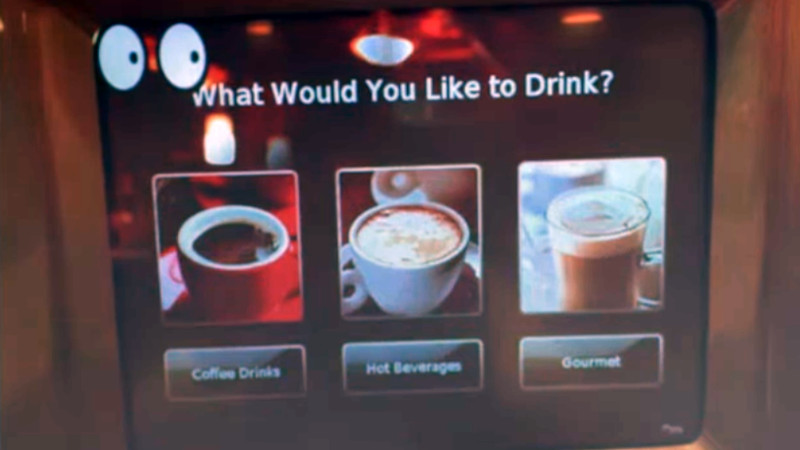
A commercial coffee machine fits this culture perfectly. It looks ordinary from the outside: buttons, touchscreen, cup tray, maybe a cheerful icon of a cappuccino pretending life is simple. But inside, modern machines can include embedded PCs, touch interfaces, payment integrations, service menus, telemetry, pumps, heaters, grinders, sensors, serial communications, and safety controls. In other words, the machine is not just brewing coffee. It is running a small industrial process while dressed like office furniture.
That makes it a wonderful reverse engineering subject. It is mechanical, electrical, software-driven, and familiar enough that the audience immediately understands why the mystery matters. A robot arm is cool, but a coffee machine is personal. If it fails at 8:15 a.m., civilization trembles.
From Simple Vending Machine to Embedded Computer
Older coffee vending machines were often much simpler. A basic microcontroller could manage timing, relays, motors, valves, and a few status lights. The job was mostly sequencing: dispense water, move product, heat, stir, stop, repeat. That kind of design is still engineering, but it is closer to a control appliance than a full computing platform.
Modern commercial coffee machines, especially high-end dispensing and bean-to-cup systems, are different. Many are built for high-volume environments such as offices, convenience stores, airports, quick-service restaurants, and hotels. They must deliver consistent drinks, survive heavy use, guide untrained users, report faults, support maintenance, and sometimes communicate with back-office systems.
That complexity changes the reverse engineering story. Instead of asking, “Which relay turns on the heater?” you may ask: What operating system is running? Where is the application stored? How does the user interface communicate with the machine hardware? Are service logs saved locally? Does the machine call home? Is the serial protocol readable? Is the device secure, maintainable, and repairable?
The answer, in this case, was pleasantly strange: beneath the polished commercial exterior was a PC-like system running Linux from a CompactFlash card, with a Java application talking to the machine hardware over a serial connection. It is the sort of discovery that makes embedded engineers grin and café managers clutch their maintenance contracts.
What Kuba Tyszko Found Inside
The public recap of the talk notes several memorable findings. The machine was not merely a sealed appliance with a tiny controller. It used a PC running Linux, and the distributions involved included Slax and Lubuntu. The main coffee-machine software was a Java application. Communication with the coffee hardware happened through a serial port, a wonderfully old-school detail hiding inside a very modern-looking machine.
That architecture is not as unusual as it may sound. Industrial and commercial devices often combine familiar PC components with specialized control boards. A PC-based user interface can handle graphics, menus, configuration, logs, network behavior, and operator workflows. Meanwhile, lower-level hardware manages pumps, heaters, grinders, valves, switches, sensors, and safety routines.
This split makes practical sense. A touchscreen menu wants a rich software environment. A boiler safety circuit wants reliability and predictable control. Put both jobs on the same tiny chip and everyone has a bad morning. Separate them, and the design becomes easier to update, diagnose, and manufacture.
Of course, it also becomes easier for a reverse engineer to start asking questions. If there is removable storage, what files are on it? If there is Linux, what services are running? If the app is Java, can its structure be understood? If there is RS-232 or another serial link, what messages pass between the interface and the control system?
The Serial Port: Where the Machine Starts Talking
Serial communication is one of the great recurring characters in reverse engineering. It never really leaves the stage. RS-232 and related serial interfaces may seem ancient next to cloud dashboards and mobile apps, but they remain common because they are simple, robust, and easy to debug.
In a commercial coffee machine, a serial link can act like a narrow bridge between the “computer” side and the “machine” side. The user interface says, in effect, “Make drink number 7,” and the controller board handles the messy physical ballet: grind beans, dose powder, run water, monitor temperature, move valves, detect errors, and avoid turning the break room into a steam-powered swamp.
For reverse engineers, observing a serial conversation can reveal the machine’s vocabulary. Commands, responses, status reports, error codes, and timing patterns all tell a story. The important point is not to recklessly change values or bypass safety systems. The responsible approach is to observe, document, and understand before touching anything that could affect heat, pressure, water, motors, or food safety.
Was the Coffee Machine Spying?
One of the most interesting findings from the talk was what the machine apparently did not do. According to Hackaday’s recap, the machine’s communication with its “mothership” was limited to an XML status report. That is much less dramatic than “your espresso is leaking state secrets,” but it is still useful.
Many connected commercial devices report service information. A machine operator may want to know when supplies are low, when errors occur, how many drinks were served, or whether preventive maintenance is due. For a business, downtime is expensive. For a customer, downtime is tragic, especially before caffeine.
The key lesson is that reverse engineering can replace suspicion with evidence. People often assume connected devices are either harmless or terrifying. The truth is usually more specific. A device may send status reports, logs, usage counters, or diagnostic events. Whether that is acceptable depends on transparency, data minimization, security, and the expectations of the owner or operator.
Commercial Coffee Machines Are Now Software Products
The coffee industry increasingly sells machines that promise consistency, automation, high throughput, modular service, and digital control. Modern systems can automate milk handling, extraction timing, grinder management, cleaning cycles, and operator guidance. Some machines are designed so major components can be serviced quickly, because a café does not make money by telling customers, “Sorry, the latte robot is contemplating its firmware.”
This shift means the machine is no longer just a plumbing-and-pressure device. It is a software product with pumps attached. That creates huge benefits. Operators can train staff faster. Drinks can be more consistent. Faults can be logged. Maintenance can be scheduled. Interfaces can be localized. Configuration can be standardized across locations.
But software also creates new dependencies. If diagnostics are locked away, independent repair becomes harder. If firmware is poorly documented, owners may be stuck waiting for authorized service. If security updates are neglected, connected machines can become weak points on a network. If the device stores useful logs but hides them behind proprietary tools, troubleshooting becomes a guessing game with a very expensive espresso machine.
Reverse Engineering as a Repair Skill
Reverse engineering often gets portrayed as something shadowy, but in many real-world contexts it is simply how people understand machines they lawfully own, maintain, or repair. The practical goals are usually boring in the best possible way: identify a failed board, recover configuration, understand an error, replace a storage device, document a protocol, or keep equipment out of the scrap pile.
For commercial food-service equipment, this matters. A high-end coffee machine can cost thousands of dollars. A small business may depend on it every day. When software controls critical functions, repair is no longer limited to wrenches and gaskets. Diagnosis may require logs, service menus, firmware images, configuration files, or access to the communication path between modules.
That is why the broader right-to-repair conversation is relevant. U.S. policy discussions have increasingly recognized that software-enabled devices can create repair barriers when owners cannot access needed diagnostics or maintenance functions. Recent DMCA rulemaking even recognized an exemption related to diagnosis, maintenance, and repair of retail-level commercial food preparation equipment, while still limiting misuse and unauthorized access to unrelated copyrighted works.
In plain English: fixing the machine you own should not require pretending software does not exist.
Security Still Matters, Especially Around Heat and Pressure
A responsible article about reverse engineering commercial coffee machines should not turn into a treasure map for unsafe tinkering. These machines involve electricity, heating elements, water lines, boilers, pumps, grinders, pressure, and food-contact surfaces. A careless modification can create safety risks, ruin the machine, void agreements, or produce coffee that tastes like regret in a paper cup.
That is why good reverse engineering starts with boundaries. Read-only inspection is safer than modification. Documentation is safer than improvisation. Working on disconnected equipment is safer than probing a live system. Understanding the software architecture is safer than sending random commands to a controller that manages hot water.
Modern IoT security guidance also points to practical expectations: devices should have identifiable components, secure update paths, access control, data protection, and support information. A connected coffee machine may not feel like a security device, but it sits on networks, processes operational data, and may be maintained by multiple parties. That is enough to deserve adult supervision from security engineers, even if the machine’s main job is making a cappuccino with foam art that looks vaguely like a cloud.
Why This Talk Resonated with Hackers
The charm of the Supercon coffee-machine talk is that it sits at the intersection of the familiar and the hidden. Everyone understands coffee. Fewer people realize that a commercial dispenser may contain a Linux system, Java software, removable storage, and serial communication. The reveal turns an everyday object into a layered engineering puzzle.
That is the best kind of hardware hacking story. It does not require science fiction. It begins with an object people walk past every day and asks, “What is really happening in there?” The answer is not magic. It is design decisions, cost tradeoffs, legacy interfaces, software choices, service requirements, and the occasional engineering joke brewed at full strength.
It also reminds us that reverse engineering is not only about defeating locks. It is about literacy. When devices become computers, owners, technicians, and security researchers need ways to understand them. Otherwise, society fills up with sealed boxes that can heat water, take payments, phone home, and refuse to explain why they are blinking red.
Specific Lessons from the Coffee Machine Case
1. Commercial appliances may use surprisingly ordinary computing
The discovery of Linux distributions and a Java application shows that commercial appliances often use familiar software stacks. That can make analysis more approachable, especially when storage is accessible and standard filesystems are involved.
2. Old interfaces remain useful
Serial communication continues to appear in industrial devices because it is dependable and simple. Reverse engineers should never underestimate the diagnostic value of a plain old serial line quietly carrying the truth.
3. Telemetry is not automatically evil
The XML status report finding is a useful reminder that connected-device behavior should be evaluated based on evidence. Reporting machine status is different from collecting excessive personal data. The right question is: what is sent, why, how often, and with what safeguards?
4. Repair culture needs software access
When a machine’s behavior is controlled by software, repair requires more than spare parts. It may require logs, documentation, configuration access, and an understanding of how software talks to hardware.
5. Humor helps technical education
A coffee machine running Java is funny. That matters. Humor makes dense topics memorable, and Supercon thrives because serious engineering can still have a personality.
Experience Notes: What Reverse Engineering a Commercial Coffee Machine Teaches in Practice
If you have ever stood in front of a commercial coffee machine while it displays an error code that looks like a tiny ransom note, you already understand the emotional side of this topic. The machine is expensive, the line is forming, and everyone suddenly becomes an expert in “just unplug it and plug it back in.” Reverse engineering offers a calmer path. Instead of guessing, you learn to observe.
The first practical experience is patience. Commercial appliances are layered systems. The touchscreen is only the visible face. Behind it are configuration files, service counters, logs, controller boards, power supplies, sensors, and mechanical assemblies. A beginner might want to jump straight to the exciting part, but the best first move is usually documentation: photograph connectors, label cables, identify boards, note storage media, and record boot behavior. The humble notebook is still undefeated.
The second experience is humility. Machines that look simple often contain years of engineering compromises. A coffee machine must deal with heat, moisture, vibration, cleaning chemicals, impatient users, and ingredients that behave differently depending on humidity and age. If a manufacturer made a strange design choice, there may be a reason. Reverse engineering is not about laughing at engineers. It is about reconstructing the decisions they had to make while deadlines, budgets, and service departments circled overhead like caffeinated hawks.
The third experience is the joy of recognizing patterns. A boot screen appears. A filesystem mounts. A log file records errors. A serial line emits readable status messages. Suddenly the sealed appliance becomes a conversation partner. You are no longer staring at a black box. You are listening to a machine describe itself in fragments.
The fourth experience is restraint. Just because you can change a value does not mean you should. In a coffee machine, bad commands can affect motors, heaters, pumps, calibration, cleaning cycles, or safety states. The responsible reverse engineer treats control pathways with respect. Read first. Copy before editing. Preserve originals. Avoid live experiments that could damage equipment or create hazards. The goal is understanding, not turning the espresso system into a countertop volcano.
The fifth experience is appreciation for repair technicians. A field technician who can diagnose a machine quickly is part electrician, part plumber, part software operator, and part therapist for frustrated café staff. Reverse engineering can support that work by making systems more understandable. Clear logs, accessible diagnostics, replaceable modules, and documented error codes are not luxuries. They are the difference between a ten-minute fix and a lost morning of sales.
The final experience is philosophical. Coffee machines show where everyday technology is headed. More products are becoming computers with specialized physical bodies. Refrigerators, ovens, tractors, medical devices, cars, vending machines, and espresso systems all blend software with real-world action. Understanding them requires curiosity and responsibility in equal amounts. Supercon 2023 captured that perfectly: a commercial coffee machine was not just a beverage dispenser. It was a case study in modern embedded design, repair access, telemetry, and the right to understand the tools we depend on.
Also, let us be honest: if a machine is going to run Linux, Java, and serial communication just to produce coffee, the least we can do is admire the drama. Your morning cup may be a beverage, but behind the panel it might also be a tiny industrial computer muttering status reports into the void. That is beautiful, slightly absurd, and exactly why hardware people keep bringing screwdrivers to conferences.
Conclusion
“Supercon 2023: Reverse Engineering Commercial Coffee Machines” is more than a quirky conference story. It is a window into the reality of modern commercial appliances. The coffee machine on the counter may contain a PC-like system, a Linux distribution, a Java interface, serial communication, service telemetry, and enough embedded logic to make an old vending machine feel like a wind-up toy.
The bigger lesson is not that every appliance should be opened for fun. It is that the devices surrounding us are increasingly software-defined, and understanding them matters. Reverse engineering, when done ethically and safely, helps owners, technicians, researchers, and engineers learn how systems work, how they fail, and how they can be repaired. In the age of smart everything, even coffee has firmware.


