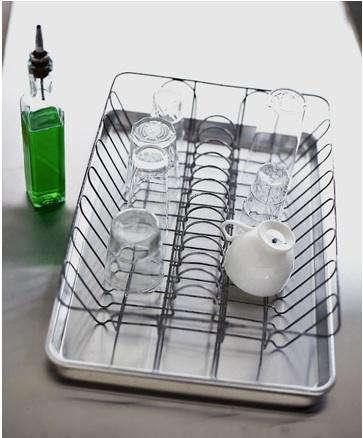

Some household discoveries arrive with fireworks, dramatic music, and a celebrity chef holding a copper saucepan. Others arrive quietly, usually when you are standing in your kitchen with wet hands, a stack of rinsed mugs, and no patience left for a puddle forming under the dish rack. That is where today’s tiny domestic miracle enters the room: using a jelly roll pan as a dish drainer tray.
Yes, the same rimmed baking pan that has bravely handled brownies, roasted vegetables, sheet cakes, and suspiciously ambitious holiday desserts can also become a smart, low-cost dish drying solution. This is not a gadget with twelve attachments and an instruction manual written by someone who has never seen a sink. It is simple domestic science: water runs down, rims hold water in, airflow helps dishes dry, and a flat metal tray is easier to clean than a swampy counter corner.
The idea is beautifully practical. Place a clean jelly roll pan beside the sink, set a wire cooling rack or compact dish rack inside it, and let washed dishes drip into the pan instead of onto your countertop. The rim catches runoff. The rack lifts dishes above standing water. The whole setup can be washed, dried, moved, stored, and reused. In a small kitchen, rental apartment, RV, dorm, office kitchenette, or busy family kitchen, that level of flexibility deserves applause. A polite golf clap at minimum.
What Is a Jelly Roll Pan, Exactly?
A jelly roll pan is a rimmed baking sheet traditionally used for thin sponge cakes that are rolled with filling. Most jelly roll pans are smaller than a standard half-sheet pan and larger than a quarter-sheet pan. Common sizes are around 15 by 10 inches or 15.5 by 10.5 inches, with a shallow rim of about one inch. That rim is the secret ingredient in this dish-draining hack.
Unlike a flat cookie sheet, a jelly roll pan has edges on all sides. Those edges keep cake batter from escaping in the oven, but near the sink they perform a different heroic job: they contain water. A regular dish towel absorbs moisture, but it can stay damp. A bulky plastic drainboard channels water, but it may not fit your counter or your design preferences. A jelly roll pan sits in the happy middle. It is sturdy, washable, stackable, and already familiar to many home cooks.
Why Use a Jelly Roll Pan as a Dish Drainer Tray?
The biggest benefit is control. Dish drying is really a small water-management problem. Plates, cups, cutting boards, knives, baby bottles, travel mugs, and delicate cookware all release drips at different speeds. Without a tray, that water spreads across the counter, sneaks under appliances, or collects beneath a rack where nobody notices until the area begins to look like a tiny indoor pond.
A jelly roll pan gives the water somewhere to go. The raised rim keeps drips contained. If you place a wire cooling rack inside the pan, dishes stay lifted above the collected water, which helps air circulate around them. Better airflow means faster drying and less of that “why does this bowl still feel damp three hours later?” frustration.
It Saves Counter Space
Traditional dish racks can be bulky. Some are excellent, of course, but many claim permanent real estate beside the sink like they signed a lease. A jelly roll pan setup can be temporary. Use it after dinner, dry it, slide it into a cabinet, and reclaim your counter. For small kitchens, that is not just convenient; it is emotional support.
It Is Easy to Clean
A flat metal pan is easier to scrub than a complicated plastic drainboard with grooves, corners, and mysterious beige residue. After use, pour out collected water, wash the pan with warm soapy water, rinse it, and dry it thoroughly. If the pan is dishwasher-safe according to the manufacturer, you may be able to run it through the dishwasher, but hand washing often protects the finish and extends the life of the pan.
It Is Budget-Friendly
If you already own a jelly roll pan, the cost is zero. If you need to buy one, it can still be less expensive than many specialty dish-drying systems. Even better, the pan remains useful for baking and cooking. A single-purpose kitchen item must earn its keep; a jelly roll pan is already doing overtime.
The Best Setup: Pan Plus Rack
The most effective version of this hack uses two pieces: a jelly roll pan and a wire cooling rack that fits inside it. The pan catches water. The rack elevates dishes. Together, they create a mini drying station that looks almost too sensible to be exciting. But sensible is exciting when your counter is dry.
Choose a rack that sits securely inside the pan without wobbling. If the rack is too large, it will perch awkwardly on the rim. If it is too small, it may slide around. A snug fit is best. Many cooling racks are designed to fit sheet pans, so check measurements before pairing them. Stainless steel racks are a strong choice because they resist rust and clean easily.
How to Arrange Dishes
Place heavier items, such as mugs and small pots, toward the center of the rack. Lean plates at a slight angle if your rack design allows it. Avoid stacking bowls tightly together, because trapped moisture slows drying. The goal is not to build a ceramic skyscraper. The goal is airflow.
For knives, dry them separately and carefully. Do not bury sharp blades in a crowded rack, especially if children or other people use the kitchen. Wooden cutting boards should be dried upright when possible, since long exposure to moisture can encourage warping or cracking. Cast iron should not sit wet at all; wash it, dry it promptly, and care for the seasoning.
What Kind of Jelly Roll Pan Works Best?
A sturdy rimmed pan is ideal. Aluminum pans are common because they are lightweight and conduct heat well for baking, but they may discolor over time, especially when exposed to certain foods or dishwasher detergents. Stainless steel is durable and attractive, though it can be heavier and sometimes more expensive. Nonstick pans are easy to rinse, but the coating requires gentle handling. Avoid abrasive scrubbers that can scratch the surface.
If the pan has deep scratches, rust, flaking coating, or sticky residue that never fully washes away, retire it from dish-draining duty. The tray will be holding clean dishes, so it should be clean, smooth, and in good condition. Domestic science has standards. They may be humble standards, but they are standards.
Size Matters
A classic jelly roll pan is compact enough for tight counters but large enough for a small load of dishes. For a family dinner cleanup, a half-sheet pan may offer more room. For a single person, a quarter-sheet pan might be enough for one cup, one bowl, one spoon, and the noble optimism of cooking at home. Match the pan to your kitchen habits.
Safety and Cleanliness Tips
Any dish-drying setup can become unpleasant if it stays wet all day. Water plus food residue plus neglect is not a charming recipe. After the dishes are put away, empty the jelly roll pan, wash it, and dry it. Also clean the rack regularly. If your kitchen is humid, store the pan upright after drying so air can move around it.
Good kitchen hygiene starts with removing visible grime using soap and water. For deeper cleaning on hard, nonporous surfaces, follow safe disinfecting guidance and never mix bleach with ammonia or other cleaners. In everyday use, warm soapy water and thorough drying will usually be enough for the pan and rack. The key is consistency. A clean drying station should not become the place where clean dishes go to question their life choices.
Do Not Let Water Sit
The rim that makes the pan useful can also hold water longer than you expect. That is the point, but it also means you should empty the pan after use. Standing water can leave mineral spots and may encourage buildup. If you live in an area with hard water, wipe the pan dry with a clean towel after each use.
Separate Food Prep From Dish Drying
If you use the same pan for baking and dish draining, clean it thoroughly between jobs. Many people prefer assigning one older but still clean pan to sink-side duty and keeping their best baking pan for cookies, cakes, and roasted potatoes. Labeling is not required, but if your household includes enthusiastic helpers, a little clarity can prevent someone from roasting carrots in the “dish tray pan.”
When This Hack Works Best
The jelly roll pan dish drainer tray is perfect for small loads, delicate items, and kitchens where counter space is precious. It is especially useful for things that do not belong in the dishwasher: insulated mugs, wood-handled tools, chef’s knives, nonstick pans, baby bottle parts, blender blades, reusable straws, and oddly shaped lids that seem designed by someone with a grudge against storage.
It also works well as a backup drying zone during holidays and parties. When the main dish rack is full, pull out a jelly roll pan and cooling rack. Suddenly the dessert plates have somewhere to land. No panic. No soggy towel mountain. No uncle balancing wine glasses on the toaster.
For Apartment Kitchens
Apartment counters can be narrow, and many rentals come with sinks that appear to have been designed for dolls with very serious dishwashing routines. A jelly roll pan can fit beside the sink, across part of the sink, or on a nearby counter. When not in use, it slides vertically into a cabinet with baking sheets.
For RVs, Cabins, and Tiny Homes
In compact living spaces, every item should perform more than one job. A jelly roll pan can bake biscuits, roast vegetables, catch dishwater, organize condiments, hold coffee supplies, or act as a tray for carrying lunch outside. That kind of versatility is exactly what tiny kitchens need.
When a Real Dish Rack Is Still Better
This hack is clever, but it is not magic. If you wash dishes for a large household every day, a full-size dish rack with a sloped drainboard may be more efficient. If you regularly dry many plates, choose a rack with slots designed to hold them upright. If you need water to drain directly into the sink, a dedicated drainboard with a spout may beat a flat pan.
The jelly roll pan method shines as a flexible, affordable, easy-to-store solution. It is not meant to defeat every dishwashing challenge in the known universe. It is meant to make ordinary kitchen cleanup simpler, tidier, and less puddle-prone.
Creative Variations
Once you see the pan as a water-catching tray, other uses appear quickly. Place it under a drying mat to protect wood countertops. Use it beneath houseplants while watering them. Set it under a coffee station to catch drips from mugs and spoons. Put it below a defrosting rack in the refrigerator to contain condensation. Use it as a landing zone for freshly washed produce before drying and storing.
For dish drying, you can add a microfiber towel under the rack if you want extra absorption, but change and wash the towel often. You can also place a silicone mat inside the pan for cushioning delicate glassware. Just remember that mats need cleaning and drying too. A drying tool that never dries is just a wet rectangle with ambition.
Common Mistakes to Avoid
Using a Flat Cookie Sheet
A cookie sheet with one raised edge is not the same as a rimmed jelly roll pan. Water can escape from the flat sides. Use a pan with raised edges all the way around.
Overloading the Rack
If dishes are stacked too tightly, air cannot circulate. Items may stay wet, and the rack can become unstable. Dry in batches if needed.
Forgetting to Empty the Pan
The pan catches water beautifully, but you still have to pour the water out. This is the tiny maintenance step that makes the whole system work.
Ignoring the Pan’s Finish
Nonstick coatings, aluminum surfaces, and decorative finishes need gentle cleaning. Use mild dish soap, a soft sponge, and thorough drying unless the manufacturer says otherwise.
Personal Experiences: Living With the Jelly Roll Pan Dish Drainer Tray
The first time I tried a jelly roll pan as a dish drainer tray, it was not because I was feeling innovative. It was because the old plastic drainboard had developed a personality, and that personality was “damp basement.” No amount of scrubbing made it feel fresh. The grooves collected water, the corners collected mystery, and the whole thing occupied valuable counter space like a tiny plastic parking lot. So I pulled out a rimmed jelly roll pan, placed a cooling rack inside it, and gave it a trial run.
The immediate difference was visual. The counter looked cleaner because the setup was lower and simpler. Instead of a bulky rack shouting for attention, the pan-and-rack combination sat quietly beside the sink. A few mugs, a cereal bowl, two plates, and a chef’s knife fit without drama. Water dripped into the pan instead of spreading across the counter. After the dishes dried, I poured the water into the sink, washed the pan, dried it, and slid both pieces into a cabinet. The counter was empty again. This felt wildly luxurious for something involving a baking sheet.
Over time, I learned that the trick works best when treated as a routine, not a dumping ground. A jelly roll pan is excellent for the “extras” that appear even in homes with dishwashers: the wooden spoon, the insulated tumbler, the lid that refuses to dry, the small saucepan used for oatmeal, the wine glass that everyone is too nervous to put in the machine. It is less ideal when someone attempts to balance an entire dinner party’s worth of plates on it. That is not dish drying; that is kitchen engineering with consequences.
One practical lesson is to dry the pan every time. At first, I occasionally left water sitting in it, thinking, “It is only water.” Then mineral spots appeared, because water loves leaving evidence. A quick wipe with a towel solved the problem. Another lesson is to use a rack with feet or enough height to keep dishes above the water. Without elevation, cups and bowls can sit in their own drips, which defeats the purpose and makes the pan feel like a very shallow bathtub for forks.
The setup also changed how I thought about kitchen tools. A jelly roll pan is not just a baking item; it is a flat, rimmed, washable platform. That description is useful all over the house. I have used the same concept for draining washed herbs, catching spills under a coffee grinder, holding messy craft supplies, and transporting condiments outside for a cookout. But the dish drainer version remains the most satisfying because it solves a daily annoyance with something already in the cabinet.
There is also a small psychological benefit. A permanent dish rack can make a kitchen look unfinished, even when it is technically clean. The jelly roll pan method encourages completion. Wash the dishes, let them dry, put them away, clean the tray, and clear the counter. It creates a beginning, middle, and end to cleanup. That may sound dramatic, but anyone who has lived with a counter full of “drying” dishes for two days understands the emotional power of a clear surface.
For households trying to reduce clutter, this hack is a quiet winner. It does not require buying a trendy organizer or redesigning the sink area. It asks a simple question: what do you already own that can do the job? In this case, the answer may be hiding between the muffin tin and the pizza pan. Domestic science is sometimes just common sense wearing an apron.
Conclusion
Using a jelly roll pan as a dish drainer tray is one of those practical household ideas that feels obvious after you try it. The rim contains water, the rack improves airflow, and the whole setup cleans and stores easily. It is affordable, flexible, and especially helpful in small kitchens where every inch of counter space matters.
Will it replace every dish rack for every household? No. A large family may still need a full-size drying system. But for small loads, delicate items, temporary overflow, and clutter-free living, this simple kitchen hack performs beautifully. It turns a humble baking pan into a neat little water-management station. That is domestic science at its best: practical, tidy, and just clever enough to make you feel like you have outsmarted your sink.