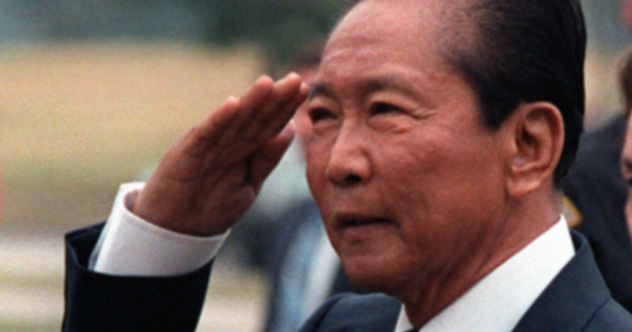

History has a way of turning some dictators into shorthand. Say “Hitler,” “Stalin,” or “Mao,” and most readers immediately picture the scale of the damage. Ferdinand Marcos, the long-ruling president of the Philippines, is trickier. Outside Southeast Asia, his name often floats around as a half-remembered footnote: Imelda’s shoes, martial law, maybe a dramatic escape to Hawaii. But the full story is far more disturbing, and much more useful to remember.
Marcos ruled the Philippines from 1965 to 1986. What began as a polished political career turned into a textbook case of authoritarian control, crony capitalism, propaganda, and historical revisionism. His regime wrapped repression in patriotic language, sold debt-funded infrastructure as national greatness, and treated public office like a family business with unusually fancy curtains.
This article looks at 10 dark stories from the Marcos eranot as a cheap horror show, but as a warning. Dictators rarely arrive wearing a name tag that says “future problem.” They arrive with speeches, medals, family branding, promises of order, and just enough glitter to distract from the machinery being built behind the curtain.
1. The Young Law Student Who Escaped a Murder Conviction
Long before Ferdinand Marcos became president, his name was tied to one of the most dramatic political murder cases in Philippine history. In 1935, Julio Nalundasan, a political rival of Marcos’s father, was shot and killed after defeating the elder Marcos in an election. Ferdinand Marcos, then a young law student, was later accused along with family members in connection with the killing.
A lower court convicted Marcos, but the conviction was overturned on appeal. He later turned this episode into part of his legend: the brilliant young man who studied law under pressure, topped the bar, and argued his way out of ruin. It was a remarkable comeback story, but also an early glimpse of a lifelong pattern. Marcos had a gift for transforming scandal into mythology. Where others saw smoke, he installed a fog machine and charged admission.
The Nalundasan case matters because it reveals how Marcos understood power early: law was not only a system of justice; it was a stage. If he could dominate the narrative, survive the courtroom, and emerge looking larger than life, he could turn danger into political capital.
2. The War Hero Story That Was Too Perfect
Marcos built much of his political image on World War II heroism. He claimed to have led a guerrilla unit called Maharlika and presented himself as one of the Philippines’ great anti-Japanese fighters. The story was cinematic: brave commander, secret operations, medals, sacrifice, destiny. It had everything except one inconvenient ingredientsolid evidence.
U.S. military records and later reporting cast serious doubt on many of Marcos’s wartime claims. The problem was not that he had no wartime experience at all, but that the legend appears to have been inflated into something far grander. In politics, a little exaggeration can become a ladder. Marcos used the war hero image to climb fast.
This was not just vanity. In a country recovering from war and negotiating its identity after colonial rule, heroic credentials carried enormous emotional power. Marcos understood that a decorated uniform could do what a campaign brochure could not: make ambition look like service.
3. Martial Law Sold as National Rescue
In September 1972, Marcos placed the Philippines under martial law through Proclamation No. 1081. The official justification centered on threats from communists, separatists, disorder, and national instability. To supporters, it sounded like emergency management. To critics and victims, it became the door through which democracy was dragged into a locked room.
Martial law allowed Marcos to rule by decree, silence opponents, control the press, and extend his grip beyond normal constitutional limits. Opposition figures were arrested. Media outlets were shut down or brought under tight control. Institutions that should have checked presidential power were weakened, bypassed, or turned into decorative furniture.
The fiendish part was the packaging. Marcos did not announce, “I am cancelling democracy because I enjoy unlimited authority.” He framed authoritarian rule as discipline, order, and national renewal. It is an old trick: first create or magnify fear, then present concentrated power as the medicine. Side effects may include censorship, arrests, corruption, and a leader who suddenly finds elections very inconvenient.
4. A Constitution Rewritten Around One Man
Authoritarian systems rarely rely only on soldiers. They also need paperwork. Under Marcos, legal and constitutional changes helped create a new political structure that preserved the appearance of legitimacy while concentrating real authority in his hands.
The Philippines shifted under a new constitutional framework during the martial law period. Marcos retained sweeping powers, and even after martial law was officially lifted in 1981, he continued to dominate the political system. This is one of the most important lessons of the Marcos era: dictatorship does not always look like a permanent emergency. Sometimes it looks like a referendum, a decree, a reorganized legislature, and a very official-looking document with very unofficial consequences.
Marcos understood that people are easier to govern if the cage has a legal label on it. By turning extraordinary authority into routine governance, he made repression feel bureaucratic. That is not less dangerous. It is more efficient.
5. The Human Cost Behind the “New Society”
Marcos promoted his martial law project as the “New Society,” a phrase polished enough to sound like a civic improvement campaign. Behind the slogan were arrests, intimidation, and severe human rights abuses. Amnesty International and other human rights organizations have documented tens of thousands of arrests and thousands of victims of torture, disappearance, or killing during the martial law years.
These numbers should not be treated like abstract statistics. Each one points to a person, a family, a workplace, a school, a village, a church, a newspaper office, or a student group forced to live under fear. Political repression is not only what happens in prison cells. It also happens when neighbors stop talking openly, newspapers learn to self-censor, professors avoid certain topics, and families warn teenagers not to ask dangerous questions at dinner.
The Marcos regime’s cruelty was not accidental chaos. It was part of a system designed to discourage dissent. A society does not need every citizen behind bars to become unfree. It only needs enough people punished publicly enough that everyone else learns the script.
6. Crony Capitalism With a Presidential Smile
Marcos did not merely centralize political power. He helped build an economic order in which loyal friends, relatives, and allies could benefit from state favor. This system is often described as crony capitalism: private wealth grows not mainly through innovation or competition, but through proximity to power.
Key industries and major business opportunities were linked to Marcos allies. Monopolies, special privileges, and political protection distorted the economy. Meanwhile, the country took on heavy debt, and ordinary Filipinos were left dealing with inflation, inequality, and economic vulnerability.
Dictatorships often love ribbon-cutting ceremonies. A bridge, a cultural center, a road, a grand public buildingthese are easy to photograph. Less photogenic are the loans, kickbacks, sweetheart deals, and public sacrifices that may sit underneath. Marcos-era infrastructure was real, but so were the debts and distortions. A shiny building does not automatically prove a healthy economy. Sometimes it proves only that someone found a very expensive way to pose for history.
7. The Marcos Fortune and the Mystery of the Missing Billions
After Marcos was forced from power, investigators chased a global maze of assets, bank accounts, jewelry, real estate, and shell arrangements. Estimates of alleged ill-gotten wealth connected to the Marcos family have often ranged in the billions of dollars. The exact total remains contested, partly because hidden wealth is, by professional habit, not eager to introduce itself.
The scale of the allegations turned the Marcos name into a global symbol of kleptocracy. The issue was not simply that a leader became rich. It was that a public office appeared to function like a private extraction machine while many citizens struggled with poverty and economic uncertainty.
One reason the story still matters is that stolen public wealth does not disappear from history when it enters a bank account. It disappears from hospitals, schools, roads, wages, disaster preparation, and public trust. Corruption is often discussed like an accounting problem, but it is also a moral injury. It teaches citizens that the rules are for the small, while the powerful use the state as an ATM with flags.
8. Imelda’s Shoes and the Theater of Excess
No symbol of the Marcos era traveled farther than Imelda Marcos’s shoes. After the family fled Malacañang Palace, the discovery of her enormous collection became international shorthand for extravagance. The shoes were not the whole story, of course, but symbols become powerful because they compress complicated truths into one unforgettable image.
In this case, the image was devastating: luxury lined up in pairs while millions of Filipinos faced hardship. Imelda’s style, spending, and public persona became part of the regime’s theater. She projected glamour, culture, and elegance, while critics saw excess built on public suffering.
The shoe story can be overused, but it should not be dismissed. It reminds us that authoritarian politics is often aesthetic. Palaces, gowns, ceremonies, portraits, parades, and designer labels are not random decorations. They help create distance between rulers and the ruled. When power becomes a costume drama, citizens are expected to applaud from the cheap seats.
9. The 1986 Election That Backfired
By the mid-1980s, Marcos faced mounting pressure. The assassination of opposition leader Benigno “Ninoy” Aquino Jr. in 1983 had intensified public anger. Economic problems deepened. The regime’s legitimacy weakened. Marcos called a snap election in 1986, likely expecting to reassert control. Instead, the election became a national breaking point.
Corazon Aquino, widow of Ninoy Aquino, emerged as the opposition’s central figure. Reports of fraud and manipulation fueled outrage. When parts of the military defected and civilians gathered in huge numbers along Epifanio de los Santos Avenue, the movement became known as the People Power Revolution.
For several tense days in February 1986, Filipinos faced tanks, uncertainty, and the possibility of violence. But mass civilian resistance, religious leadership, military splits, and international pressure converged. Marcos fled to Hawaii. The dictator who had spent years manufacturing inevitability discovered that people, once they stop believing the performance, can bring down the stage.
10. The Comeback of a Name Many Thought History Had Buried
One of the most unsettling parts of the Marcos story happened after Ferdinand Marcos died in exile in 1989. His family returned to Philippine politics. Over time, the Marcos name was rebuilt, repackaged, and promoted to younger generations who had no living memory of martial law.
In 2022, Ferdinand “Bongbong” Marcos Jr., the dictator’s son, won the Philippine presidency. His rise showed how political memory can be contested, softened, and rewritten. Supporters emphasized unity, nostalgia, and development. Critics warned of historical denial, disinformation, and the unfinished work of accountability.
This is why the phrase “forgotten dictator” is not merely a catchy title. Forgetting is not passive. It can be encouraged, monetized, algorithmically boosted, and turned into campaign strategy. When history becomes content, the side with better editing can sometimes outrun the side with better evidence.
Why Ferdinand Marcos Still Matters
Ferdinand Marcos matters because his story is not trapped in the past. It touches issues that remain painfully current: democratic backsliding, strongman nostalgia, online misinformation, elite impunity, and the seductive promise that one tough leader can fix everything if only people stop asking so many annoying constitutional questions.
He also matters because his rule shows how authoritarianism adapts to local culture. Marcos did not govern like a cartoon villain. He governed as a lawyer, veteran-politician, nationalist performer, Cold War ally, family patriarch, and master storyteller. His regime mixed fear with ceremony, repression with development language, and corruption with patriotic branding.
That combination is exactly why his legacy is dangerous to simplify. If we reduce Marcos to shoes and slogans, we miss the machinery. If we reduce him to villainy alone, we miss how many institutions, allies, incentives, and international relationships helped sustain him. Dictators are not magic. They are built by systems, protected by beneficiaries, and rememberedor misrememberedby societies still arguing over what the past means.
Experience-Based Reflections: How to Read Stories Like This Without Getting Fooled
Reading about “10 fiendish stories” from a dictatorship can feel strangely entertaining at first. The scandals are dramatic. The numbers are huge. The personalities are almost too vivid: the ambitious young lawyer, the glamorous first lady, the loyal cronies, the nervous generals, the crowds in the streets. It has the ingredients of a political thriller. But the experience becomes more meaningful when we stop treating the past like a museum of outrageous behavior and start asking what it teaches us about ordinary civic life.
One useful experience is to compare official language with lived reality. Authoritarian governments almost never describe themselves as authoritarian. They speak of discipline, national salvation, emergency powers, unity, security, modernization, and moral renewal. Those words are not automatically false, but they should make readers alert. Whenever a leader says freedoms must be paused for the people’s own good, the next question should be: Who decides when the pause ends?
Another important habit is to look past spectacle. Imelda Marcos’s shoes are unforgettable, but they are not the whole regime. A reader who stops at the shoes may remember extravagance while missing the deeper system of money, fear, legal manipulation, and propaganda. Symbols matter, but they should open the door to investigation, not replace it.
It also helps to listen for the voices that dictatorships try to shrink. Survivors, journalists, students, religious workers, labor organizers, lawyers, and ordinary families often preserve the truth long before official institutions are ready to admit it. Their stories may not be as polished as state propaganda, but they carry the texture of reality. A government can rename a policy; it cannot easily erase what people remember losing.
For modern readers, the Marcos story is also a media literacy lesson. Online platforms can turn nostalgia into a political product. A short video can make a dictatorship look clean, prosperous, and stylish if it leaves out arrests, debt, censorship, and stolen wealth. That does not mean every nostalgic person is dishonest. It means nostalgia is emotionally powerful and historically selective. Memory needs evidence the way a house needs beams; otherwise, it collapses into vibes.
Finally, this topic teaches humility. Democracies do not fail only because bad leaders appear. They fail when enough people excuse small abuses, when institutions bend too easily, when courts and media are pressured into obedience, when citizens get tired of complexity, and when “at least he gets things done” becomes a substitute for accountability. The Marcos era is not just a Philippine story. It is a global warning label written in very expensive ink.
Conclusion
Ferdinand Marcos remains one of Asia’s most important authoritarian figures, not because he was forgotten everywhere, but because his legacy has been repeatedly blurred, polished, and contested. His life moved from courtroom drama to wartime mythology, from elected office to martial law, from palace luxury to exile, and from disgrace to dynastic revival through his family’s political comeback.
The 10 stories above reveal a leader who understood performance as well as power. He knew how to turn fear into obedience, ceremony into legitimacy, and memory into a battlefield. That is why studying Marcos is not only about understanding the Philippines. It is about understanding how democracies can be weakened while still using the language of law, patriotism, and progress.
The lesson is simple, but not comfortable: history does not stay remembered by itself. It has to be taught, checked, argued over, and protected from those who would rather sell a prettier version. Marcos’s story reminds us that forgetting is not harmless. Sometimes it is the first draft of repetition.
Note: This article is written as original web content based on real historical information and synthesized from reputable historical, legal, human rights, academic, and news sources. No source links or machine-generated content references are included in the article body.


