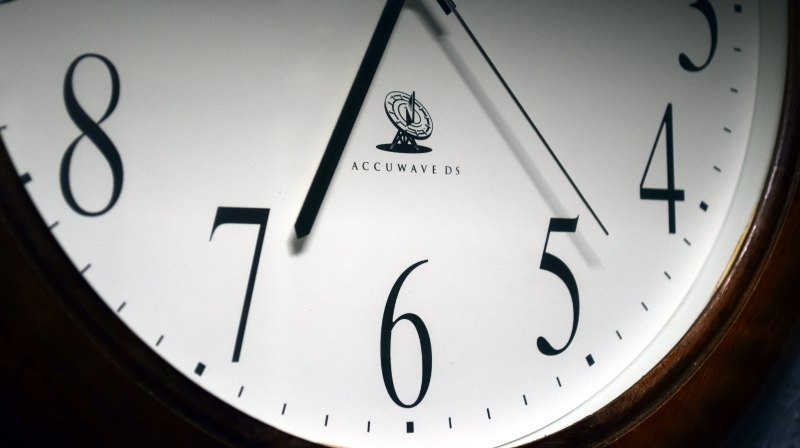

Some technologies are so dependable that we forget they exist. Then one day, they cough politely from the basement of civilization, and everyone suddenly remembers they were holding up half the furniture. WWVB, the low-frequency time signal broadcast by the National Institute of Standards and Technology from near Fort Collins, Colorado, is one of those quiet heroes. It does not sing, trend, flash, or ask you to update its privacy settings. It simply broadcasts precise time on 60 kHz so millions of radio-controlled clocks, watches, weather stations, appliances, irrigation controllers, and timing devices can know what time it is without bothering you.
But what happens if WWVB goes silent? Will your “atomic clock” become a dramatic wall ornament? Will your watch wander into next Tuesday? Will your coffee maker rebel and start brewing at 3:17 a.m.? Probably not. But the question is more interesting than it sounds, because WWVB is not just about convenience. It is about redundancy, public infrastructure, resilience, and the strange comfort of knowing that somewhere in Colorado, a government radio signal is whispering the time into the night.
What Is WWVB, and Why Should Anyone Care?
WWVB is a NIST radio station that broadcasts official U.S. time information using a 60 kHz low-frequency signal. Unlike internet time, which travels through routers, servers, cables, and your Wi-Fi password that nobody remembers, WWVB travels through the air. Radio-controlled clocks receive the signal, decode the time code, and automatically adjust themselvesoften at night, when reception is better.
The magic is not that your clock contains an atomic clock. It does not. That “atomic clock” on your wall is usually a quartz clock with a tiny radio receiver. The atomic part lives upstream, in the national timekeeping system that WWVB follows. Your clock listens, corrects itself, and then spends the rest of the day pretending it is naturally punctual. Honestly, that is more discipline than many of us manage before coffee.
WWVB matters because it solves a common problem elegantly: keeping everyday timepieces synchronized without internet access, subscriptions, Bluetooth pairing, phone apps, or manual fiddling with buttons so tiny they were clearly designed by a committee of ants. It is old-school, but old-school is not the same as obsolete.
Why People Started Asking: “What If WWVB Goes Silent?”
The concern became especially visible when a federal budget proposal in 2018 raised the possibility of discontinuing NIST radio time and frequency broadcasts from Hawaii and Fort Collins. The proposal stirred up amateur radio operators, watch collectors, engineers, emergency-preparedness fans, and ordinary people who suddenly realized their kitchen clock had been living its best synchronized life thanks to a 60 kHz signal from Colorado.
The funding threat did not end WWVB. The station continued, and NIST has continued to maintain public information about WWVB operation, outages, antenna configuration, and radiated power. Still, the episode exposed a real anxiety: modern society depends on time synchronization in more ways than people think, and some of the best backup systems are not glamorous. WWVB is not a shiny app. It is more like a reliable neighbor with jumper cables, a flashlight, and strong opinions about daylight saving time.
What Would Actually Happen to Your Clocks?
If WWVB went silent permanently, most radio-controlled clocks would not instantly fail. They would simply stop receiving updates. After that, they would behave like normal quartz clocks. Some would drift by a few seconds per month. Others might drift faster, depending on temperature, battery condition, component quality, and the mood of the tiny timing crystal inside.
Your Wall Clocks
Wall clocks that sync to WWVB would keep ticking. They would just stop self-correcting. You would need to set them manually from time to time, especially after daylight saving time changes. For many homes, that is annoying but survivable. Humanity has set clocks manually before. We can do it again, though we may complain theatrically.
Your “Atomic” Wristwatches
Radio-controlled watches, including many popular multi-band models, would also keep running as quartz watches. If they support other time signals in other countries, that will not help much unless you travel within range of those transmitters. If the watch also supports Bluetooth or GPS, you have backup options. If it is WWVB-only, congratulations: you now own a handsome quartz watch with a nostalgic superpower that no longer has a signal to listen to.
Your Weather Stations and Appliances
Some home weather stations, alarm clocks, clock radios, and specialized devices use WWVB for timekeeping. Without the signal, they may require manual setup. For most consumers, the biggest inconvenience would be seasonal clock changes and slow drift. The device would still function; it would just lose the invisible assistant that corrected it while you slept.
Would Phones, Computers, and Smart Devices Notice?
Most phones, computers, tablets, routers, and smart speakers do not rely on WWVB. They usually synchronize through cellular networks, internet time servers, GPS, or platform-specific timing services. Your laptop is not sitting near the window at midnight trying to hear Colorado. It is asking the internet what time it is, probably while also asking whether it needs a 2 GB update at the worst possible moment.
For everyday digital life, NTPthe Network Time Protocolis the big player. NIST operates public Internet Time Service servers, and many devices also use time services provided by operating systems, cloud companies, or network administrators. In a normal home, WWVB disappearing would affect dedicated radio-controlled clocks more than laptops or smartphones.
However, relying only on the internet is not always ideal. Internet time depends on connectivity and network paths. GPS time depends on satellite reception and a healthy receiver. Cellular time depends on the carrier and the device. WWVB adds another independent path. That is the real value: not that it is the only way to get the time, but that it is a different way.
Why Redundancy Matters More Than Convenience
Precise time is essential in finance, telecommunications, electric grids, transportation, scientific research, cybersecurity, broadcasting, and data centers. A few seconds may not matter when you are late to brunch, but milliseconds and microseconds can matter when systems need to order transactions, coordinate radio networks, timestamp logs, or detect security incidents.
WWVB is not the backbone of every high-precision system, and many professional environments use GPS-disciplined oscillators, local time servers, atomic references, PTP, NTP, or multiple independent sources. But WWVB represents a broader principle: resilient timing should not depend on one pipe. If all timing roads lead to one provider, one satellite constellation, or one network connection, the system is more fragile than it looks.
Think of time synchronization like backing up a hard drive. One backup is better than none. Two backups are better. One local, one off-site, one offline? Now you are speaking the language of people who sleep peacefully. WWVB is part of that same mentality: different medium, different failure mode, different kind of backup.
What Should Consumers Do If WWVB Goes Silent?
The average household does not need a bunker-grade timekeeping plan. Still, it helps to know your options before your wall clock spends six months confidently lying to you.
1. Learn How to Set Your Radio-Controlled Clock Manually
This sounds obvious until you are standing on a chair, holding a clock, pressing “Mode” with a toothpick, and wondering whether the instructions were translated by a sleepy raccoon. Find the manual now. Save a PDF. Learn how to set the time zone, daylight saving option, and date. Your future self will thank you, possibly in standard time.
2. Use Time.gov or Another Trusted Time Source
For manual setting, use an official or trusted time source. Time.gov is a public-facing official U.S. time display. NIST Internet Time Service servers also support automated synchronization for devices and networks. For most households, setting a clock from a phone or computer that is already synchronized is accurate enough.
3. Move Problem Clocks Before Blaming the Signal
If WWVB is not silent but your clock refuses to sync, location matters. Low-frequency reception can be affected by building materials, electronics, monitors, LED power supplies, metal siding, basements, and urban interference. Place the clock near a window overnight, rotate it, and keep it away from noisy electronics. Sometimes the clock is not broken; it is just trying to hear a whisper through a blender.
4. Replace Critical Clocks With Multi-Source Devices
If you truly care about automatic accuracy, buy devices with more than one synchronization path. A clock that supports radio time plus Bluetooth or Wi-Fi has more options. A watch with GPS or phone sync is less dependent on WWVB. For home use, multi-source timing is not required, but it is convenient.
5. Keep One Simple Manual Clock
There is a humble beauty in a clock that does exactly one thing and lets you set it yourself. In a house full of smart devices, a basic quartz clock can be refreshingly honest. It may drift, but at least it will not ask you to create an account.
What Should Businesses and Technical Users Do?
Businesses should treat a possible WWVB shutdown as a reminder to review timing architecture. The question is not, “Do we use WWVB?” The better question is, “How many independent time sources do we have, and what happens when one disappears?”
Audit Your Time Sources
Identify every place your organization depends on time: servers, access control systems, surveillance cameras, transaction logs, industrial controllers, test equipment, radio systems, compliance tools, and backup systems. Many organizations discover that time synchronization grew organically, which is a polite way of saying nobody remembers who configured it.
Use Multiple NTP Servers
Configure systems to use multiple trustworthy NTP sources rather than one hard-coded server. A single server is a single point of confusion. Use monitoring to detect offset, jitter, reachability, and source disagreement. Time problems are sneaky; they often look like application bugs until someone checks the clocks.
Consider GPS, PTP, and Local Holdover
For higher-precision environments, GPS-disciplined clocks, Precision Time Protocol, local stratum servers, and oscillators with good holdover performance may be appropriate. The right solution depends on accuracy requirements, budget, physical environment, cybersecurity policy, and tolerance for outages. A small office does not need a cesium standard. A financial trading platform probably should not rely on a dusty router and hope.
Document Manual Recovery Procedures
If time sync fails, who notices? Who responds? What source becomes authoritative? How much clock offset is acceptable? How are logs interpreted during a time event? These questions are boring until they are urgent. Then they become very exciting in the worst possible way.
Can Hobbyists Create a Local WWVB Replacement?
Hobbyists have built small WWVB-style simulators to sync clocks over very short distances. Some use microcontrollers, GPS modules, Raspberry Pi boards, or audio-based tricks to produce a signal a nearby watch or clock can decode. These projects are clever and educational. They are also a reminder to stay within the law.
In the United States, radio transmitters are regulated by the FCC. Very low-power devices may operate under Part 15 rules if they meet technical requirements and do not cause harmful interference. That does not mean anyone should build a neighborhood “pirate time station” and blast 60 kHz from the garage. Keep experiments tiny, shielded, short-range, and compliant. Your wall clock does not need a villain origin story.
The Bigger Lesson: Old Infrastructure Can Still Be Smart
WWVB feels old because it is radio. But “old” technologies often survive because they solve hard problems simply. Broadcast radio does not require every receiver to log in. It scales beautifully. One transmitter can serve millions of passive devices. The clocks do not need IP addresses, cloud accounts, firmware updates, or a monthly plan called TimePlus Premium. They just listen.
That kind of simplicity is worth respecting. Modern systems are powerful, but they can be brittle. A radio time signal is not perfect. It can suffer outages, interference, maintenance interruptions, antenna damage, or funding risk. Still, it offers a kind of public utility that feels increasingly rare: quiet, open, broadly useful, and available without asking who you are.
Practical Checklist: If WWVB Goes Silent Tomorrow
- Check whether your clocks still run accurately as quartz clocks.
- Set important clocks manually using a trusted time source.
- Disable automatic daylight saving settings if they become wrong.
- Replace critical radio-controlled devices with Wi-Fi, Bluetooth, GPS, or manual alternatives.
- For businesses, audit NTP, GPS, PTP, and local timing dependencies.
- Monitor time offset instead of assuming every device agrees.
- Avoid unauthorized radio transmitters; keep hobby projects compliant and short-range.
Experiences and Real-World Lessons: Living With a Weak or Missing WWVB Signal
Anyone who has owned a radio-controlled clock long enough has probably had at least one “WWVB mystery night.” The clock sits by the window, the little antenna icon blinks bravely, and by morning it has either synchronized perfectly or given up like a cat asked to fetch. This is where the human experience of WWVB becomes surprisingly relatable. The technology is precise, but the environment is messy. Homes are full of switching power supplies, LED bulbs, computer monitors, phone chargers, metal appliances, and walls that seem personally offended by radio waves.
A common experience is the clock that works beautifully in one room and fails completely in another. Move it from a basement office to an upstairs bedroom and suddenly it becomes a punctual genius. Rotate it ninety degrees and it may hear the signal better. Place it near a large television, and it sulks. This teaches a useful lesson: radio-controlled time is not just about the transmitter; it is also about the receiving environment. If WWVB ever went silent, many people would first assume their clock had simply entered one of these normal bad-reception phases. The difference would become obvious only after several nights of failed synchronization.
Another experience comes during daylight saving time changes. When WWVB works, the transition feels magical. You wake up, glance at the clock, and it has already handled the job. No ladder, no buttons, no family debate about whether “spring forward” means the oven is now an hour late or an hour early. Without WWVB, the twice-a-year clock patrol returns. Suddenly, the microwave, stove, car dashboard, guest room clock, and mysterious device in the garage all demand attention. It is not difficult, but it is a small reminder of how much invisible automation we enjoy.
Watch collectors feel the issue differently. A radio-controlled solar watch can feel almost immortal: powered by light, corrected by radio, and ready without fuss. Losing WWVB would not make such a watch useless, but it would remove part of its charm. The watch would still keep good quartz time, yet owners would lose the quiet satisfaction of seeing “RCVD” on the display after an overnight sync. That tiny confirmation is a little handshake with national infrastructure. Nerdy? Absolutely. But civilization is built by people who enjoy tiny confirmations.
For preparedness-minded households, WWVB also raises a bigger question: how many basic services do we assume will always be there? Time is easy to overlook because it is everywherephones, computers, cars, ovens, thermostats. But those sources often depend on networks. A battery-powered radio-controlled clock is independent in a way that feels modest but useful. If the power flickers, the internet goes down, or a router fails, the clock can still correct itself from the air. If WWVB vanished, that layer of independence would disappear for many devices.
The best personal response is balanced, not panicked. Keep using radio-controlled clocks if you like them. Learn how to set them manually. Have at least one trusted digital source for official time. If you depend on accurate time for work, do not rely on one consumer clock on the wall. And if WWVB keeps broadcasting, appreciate it. Not everything valuable announces itself loudly. Some of the best infrastructure simply ticks along, one second at a time, asking for nothing except maintenance, funding, and maybe a little respect from the people who never had to set the clock in the hallway.
Conclusion
If WWVB goes silent, life will continue. Your phone will still know the time. Your computer will still sync online. Your radio-controlled clock will probably become a regular quartz clock with a slightly disappointed personality. For most consumers, the change would be inconvenient rather than catastrophic.
But the deeper issue is not whether we can survive without automatic wall clocks. We can. The real question is whether we value resilient public infrastructure before it disappears. WWVB is a reminder that useful technology does not always look modern. Sometimes it looks like a low-frequency signal from Colorado, quietly helping millions of devices agree on the same minute.
So what will you do if WWVB goes silent? You will set a few clocks, update your timing plan, maybe buy smarter backup devices, and perhaps develop a new appreciation for the invisible systems that make ordinary life feel effortless. And if the signal stays on? Maybe give that little “atomic clock” on your wall a respectful nod. It has been listening carefully while the rest of us were busy being late.


