
Los Angeles has a particular talent for making old houses feel newly cool without forcing them to wear sunglasses indoors. In the hills, canyons, flats, and sun-struck neighborhoods of the city, midcentury modern design still feels less like a nostalgic costume and more like a practical response to daily life: sunlight, views, open rooms, casual entertaining, and the eternal question of where to put the record player without making the room look like a museum gift shop.
A masculine midcentury revival in LA is not about turning a home into a dark bachelor cave with one heroic leather chair and a suspicious number of whiskey bottles. The best version is sharper, warmer, and more livable. It uses strong lines, honest materials, tailored furniture, restrained color, and dramatic natural light to create a space that feels confident without shouting. Think walnut instead of glitter, blackened metal instead of chrome overload, linen instead of fuss, and marble used with discipline rather than “look, I discovered Italy.”
The Remodelista-featured Los Angeles project by Simo Design captures this idea beautifully: a midcentury house taken back to its architectural bones, reworked for modern living, and rebuilt around panoramic LA views, custom woodwork, open spaces, layered rugs, stone surfaces, and a mood that is trim, slightly rugged, and full of light. It is a reminder that midcentury revival succeeds when it respects the original structure but refuses to live in the past.
Why Midcentury Modern Still Belongs in Los Angeles
Midcentury modern architecture did not simply land in Los Angeles like a fashionable sofa dropped from a helicopter. It grew naturally out of Southern California’s climate, postwar optimism, experimental building culture, and obsession with indoor-outdoor living. The city became a laboratory for open plans, glass walls, low rooflines, simple structures, and homes that treated the landscape as part of the floor plan.
The Case Study House Program, launched by Arts & Architecture magazine in 1945, gave Los Angeles some of its most influential modern houses. The Eames House in Pacific Palisades, also known as Case Study House No. 8, remains one of the clearest examples of the movement’s genius: prefabricated materials, steel, glass, modular planning, and a deep connection to site. Charles and Ray Eames built a home that was practical, creative, and intensely human. It was not sterile modernism. It had books, textiles, objects, work, play, and personality.
That is exactly why today’s best LA midcentury revival interiors avoid the showroom trap. They do not simply collect famous chairs and call it a day. They understand why the style worked in the first place: it made life easier, brighter, more flexible, and more connected to nature. In Los Angeles, where a room can borrow drama from a canyon view or a sunset, design should know when to step back and let the windows earn their rent.
What Makes a Midcentury Revival Feel Masculine?
In interior design, “masculine” should not mean cold, heavy, or humorless. Nobody wants to live inside a luxury cigar box with plumbing. In this context, masculine design refers to visual strength: grounded proportions, darker accents, clean geometry, tactile materials, and furniture with a sculptural backbone. It is less about gender and more about energy.
A masculine midcentury space often uses a controlled palette: walnut brown, charcoal, cream, black, olive, camel, tobacco leather, deep green, warm gray, and stone white. The colors feel rooted. They do not beg for attention; they lean against the wall calmly and make the room look expensive even when someone just left sneakers by the door.
The shapes matter too. Long horizontal cabinetry, slab-front doors, low sofas, angular lounge chairs, rectangular fireplaces, and built-in benches create a sense of order. Curves can still appear, especially in lighting, stools, ceramics, and accent chairs, but they work best when balanced against stronger lines. That tension keeps the room from feeling like an airport lounge from 1962 or a furniture catalog pretending to have a soul.
The LA Renovation Formula: Keep the Bones, Upgrade the Life
The smartest midcentury revival projects in Los Angeles begin with editing. Before choosing tile, lighting, or the perfect walnut stain, the designer asks what the house already does well. Does it have views? Preserve them. Does it have original doors or hardware? Refinish them. Does the floor plan feel chopped up by later remodels? Open it carefully. Does the kitchen look like it has survived three decades of appliance trends and one regrettable Tuscan phase? Be brave. Start over.
In the Simo Design project that inspired this title, the house was taken down to the studs while the original architectural frame remained. That approach is not cosmetic decorating; it is architectural triage. The designers reorganized the plan for contemporary buyers while keeping the soul of the midcentury structure alive. This is a crucial lesson for any LA homeowner: restoration and reinvention can share the same coffee table.
Open Plans Need Definition
Midcentury houses often have open, flowing spaces, which can be wonderful until the living room, dining area, entry, and “where do I drop my keys?” zone become one giant furniture puddle. A masculine revival solves that with built-ins, rugs, lighting, and material shifts.
A built-in bench can create a mudroom effect without building a separate room. A layered rug arrangement can define a conversation area inside a larger living space. Pendant lights over an island can visually anchor the kitchen. A low storage wall can separate functions while preserving openness. The magic trick is to create zones without ruining the airy quality that made the house attractive in the first place.
Wood Is the Main Character
If midcentury modern design had a love language, it would probably be walnut. Or teak. Or oak. Honestly, it was a very committed relationship. Wood brings warmth to clean architecture and prevents minimal spaces from feeling like they were designed by a calculator with commitment issues.
In a masculine LA revival, wood often appears as custom cabinetry, wall-to-wall headboards, floating vanities, slab doors, shelving, ceiling details, and sculptural coffee tables. The finish is everything. Too orange, and the house starts humming 1970s game-show music. Too gray, and it drifts into generic flip-house territory. The best stains keep the grain visible and the tone natural, rich, and calm.
The Kitchen: Where Simplicity Gets Complicated
A midcentury-inspired kitchen may look effortless, but that is usually because someone spent many hours arguing with millwork tolerances, appliance clearances, stone slabs, and the emotional complexity of drawer pulls. Simple design is rarely simple to execute. Clean lines expose every mistake. A crooked seam has nowhere to hide. A bad cabinet finish cannot distract you with decorative trim because there is no decorative trim. It just stands there, guilty.
For a masculine midcentury kitchen in LA, the strongest combination is warm custom wood cabinetry, a dramatic but controlled stone backsplash, black or dark stone counters, understated lighting, and integrated storage. Bookmatched marble can bring luxury, but it should be used with confidence and restraint. A brushed black granite island, for example, adds texture and depth without turning the kitchen into a jewelry store.
Lighting should feel architectural. Schoolhouse-style fixtures, globe pendants, slim sconces, and recessed lighting can all work, but the goal is not to recreate a vintage set. The goal is to support the lines of the room. Good lighting in a midcentury revival is like a good editor: present, intelligent, and not trying to become the story.
The Living Room: Low, Layered, and View-Friendly
The ideal LA midcentury living room respects the view. If the house has panoramic city lights, canyon drama, or even a handsome courtyard, furniture should not block the show. Low-profile seating, slim-legged chairs, glass or wood tables, and simple shelving allow the eye to travel outward.
A masculine revival living room might include a walnut slab coffee table, vintage-inspired stools, a tailored sofa in textured neutral fabric, black metal floor lamps, and one serious lounge chair. The Eames Lounge Chair and Ottoman, introduced in 1956, remains the famous example: molded plywood, leather cushions, and a silhouette that manages to look both luxurious and relaxed. But authenticity matters more than brand worship. A room can honor the Eames spirit without turning into a shrine where guests are afraid to sit down.
Layered rugs are especially useful in open-plan rooms. A larger natural fiber rug can define the footprint, while a smaller vintage rug adds age, color, and pattern. This technique gives the space depth without clutter. It also says, “Yes, I understand texture,” which is more charming than saying it out loud at dinner.
The Bedroom: Calm, Trim, and Full of Light
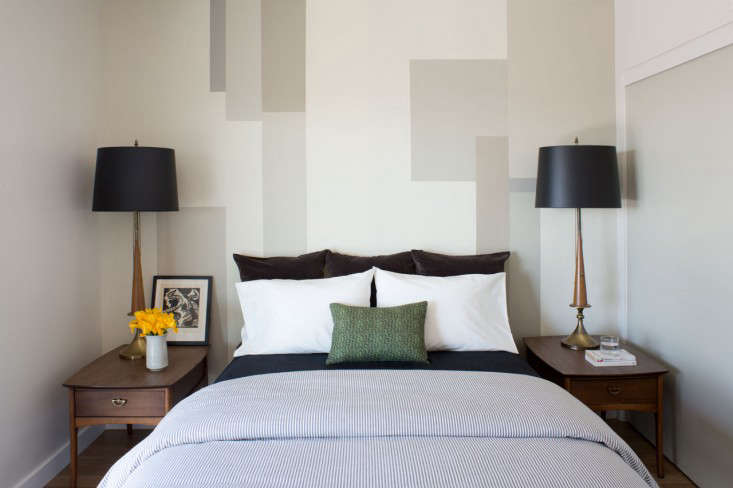
A masculine midcentury bedroom should feel restful, not theatrical. The best examples use built-in headboards, natural wood, linen bedding, simple side tables, shaded sconces, and access to light or outdoor space. In the LA project that inspired this article, a secondary living room was converted into a primary bedroom, proving that good design sometimes means ignoring the original label on a room and asking what the house actually needs.
A wall-to-wall headboard is a smart move in this style. It creates architecture behind the bed, hides awkward conditions, and makes the room feel custom. Red oak, walnut, or maple can work beautifully depending on the palette. Add sliding glass doors to a balcony or patio, and suddenly the bedroom becomes a quiet retreat rather than just the place where laundry goes to become a sculpture.
The Bathroom: Stone, Maple, and No Drama Queens
Midcentury bathrooms can go wrong quickly when designers chase retro too literally. Too much pattern, too much color, and suddenly the room feels like a time capsule with better water pressure. A masculine revival bathroom should be quieter: natural maple cabinets, limestone counters, large-format tile, simple mirrors, matte black or brushed nickel fixtures, and warm lighting.
Stone is especially effective when it has subtle movement rather than loud veining. Limestone, honed marble, terrazzo, and concrete-inspired surfaces all fit the language. The goal is touchable luxury. Nothing should look so precious that a toothpaste cap becomes a design emergency.
Exterior Details: Original Character, Modern Privacy
The exterior of a midcentury LA home often benefits from restraint. Original front doors, hardware, rooflines, and window rhythms should be preserved whenever possible. Fresh stain, repaired wood, improved landscaping, and updated lighting can do more than a dramatic redesign.
Privacy fences, garage doors, and gates can be added in a way that feels period-sensitive. Tongue-and-groove wood, horizontal slats, simple black hardware, and low landscaping all support the architecture without pretending to be original. In Los Angeles, where outdoor space is part of daily living, the exterior should feel like a continuation of the interior: structured, warm, private, and relaxed.
How to Create the Look Without Overdoing It
The easiest mistake in midcentury revival design is buying too many recognizable pieces. One iconic chair is elegant. Five iconic chairs in one room can feel like a design auction got trapped in a house. The better approach is to mix vintage, custom, and contemporary pieces with similar values: clean lines, durable materials, human scale, and visual balance.
Start With the Architecture
Before choosing furniture, study the house. Follow the roofline. Notice where light enters. Identify the best view. Look for original details worth saving. A successful revival is built from the structure outward, not from a Pinterest board inward.
Use Fewer, Better Materials
Walnut, oak, maple, leather, linen, stone, glass, and metal can carry an entire house when used well. Limit the palette and invest in details. A beautifully stained cabinet panel will outperform a dozen decorative accessories doing cardio on a shelf.
Balance Hard and Soft
Masculine midcentury interiors need softness to feel livable. Add woven rugs, textured upholstery, curtains, ceramics, books, art, and plants. The contrast between hard architecture and soft layers is what makes the room feel alive.
Let Light Do Some Work
Los Angeles light is free, dramatic, and occasionally rude at 4 p.m. Use it. Choose window treatments that filter rather than smother. Keep major furniture low. Use mirrors carefully. Let the changing light become part of the design.
Experience Notes: Living With a Masculine Midcentury Revival in LA
There is a particular feeling that happens when you step into a well-revived midcentury house in Los Angeles. The front door opens, the ceiling seems to stretch sideways, and the view appears before anyone has had the chance to explain the square footage. You do not feel impressed in a formal way. You feel invited. The house does not perform luxury with chandeliers and marble shouting from every corner. It simply gives you space, light, wood grain, and a place to set down your keys like a civilized person.
The most memorable experience is often the movement through the home. A good midcentury plan does not force a grand procession. It lets you drift from entry to kitchen to living room to terrace almost without noticing the transitions. One moment you are standing beside custom cabinetry; the next, you are looking across Los Angeles as if the city volunteered to become wall art. In a masculine revival, that movement feels especially grounded because the materials have weight. The stone island feels solid. The wood panels feel warm. The black metal details sharpen the edges. Nothing is flimsy, but nothing feels overbuilt.
Entertaining in this kind of space is also different. Guests naturally gather around the kitchen island, then move toward the living room, then somehow end up outside. Nobody needs a formal announcement. The architecture handles the social choreography. Low seating keeps conversation relaxed. Layered rugs absorb sound. A long bench near the entry quietly saves the room from bags, jackets, and the tragic pile of shoes that appears at every party no matter how elegant the invitations were.
Morning may be the best time to appreciate the style. Light slides across wood cabinetry, catches the edge of a stone counter, and makes a simple room feel cinematic. A cup of coffee on a walnut table looks more intentional than it has any right to. Even ordinary routines feel upgraded: opening the sliding door, watering a plant, choosing a record, folding a blanket over a lounge chair. The house makes daily life look edited, but not fake.
The challenge, of course, is discipline. A masculine midcentury revival rewards restraint. Add too much decor and the architecture loses its voice. Choose finishes that are too trendy and the timeless mood disappears. But when the balance is right, the home becomes more than a style statement. It becomes a calm, flexible, deeply LA way of living: sunlit, open, slightly dramatic, and just polished enough to make you clean the coffee table before guests arrive.
Conclusion
A masculine midcentury revival in LA works because it understands both history and lifestyle. It respects the postwar modernist ideas that shaped Southern California designopen plans, indoor-outdoor living, efficient materials, and honest structurewhile updating the home for how people live now. The result is not a museum piece or a moody stereotype. It is a warm, tailored, view-conscious interior with strong lines, natural textures, and just enough drama to remind you that Los Angeles has never been shy about good lighting.
Whether renovating a hillside home, refreshing a ranch-style property, or simply borrowing the look for a modern apartment, the lesson is the same: keep the bones, simplify the palette, invest in materials, and let the light do its job. A good midcentury revival does not chase the past. It gives the past a better floor plan, a sharper kitchen, and a much more comfortable place to sit.
Note: This article is written as original, publishable content and synthesizes real design context from reputable U.S.-focused architecture, preservation, and interior design references, including Remodelista, LA Conservancy, Eames Foundation, Getty, Architectural Digest, Herman Miller, and related modern design sources.


