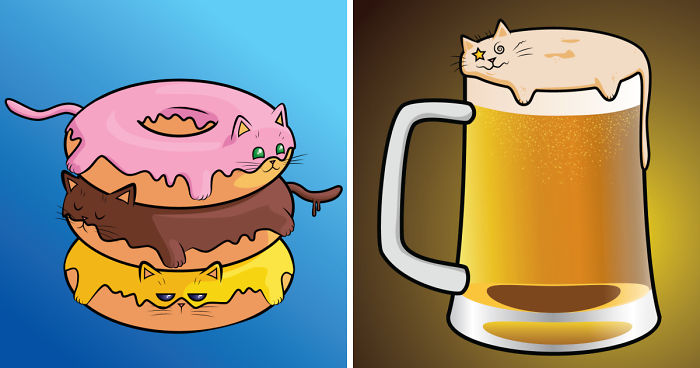

Some people collect stamps. Some people run marathons. Some people wake up at 6 a.m. to make sourdough bread with the emotional seriousness of a NASA launch. I, however, have chosen a far more important mission: combining cats and food into new illustrations that are cute, ridiculous, and dangerously capable of making people say, “Aww,” in public.
At first, the idea sounds simple. Draw a cat. Add food. Sprinkle in a pun. Done, right? Not exactly. The magic of cat food illustrations is that they sit right in the sweet spot between internet humor, pet obsession, pop art, and cozy visual storytelling. A taco becomes a tabby. A croissant curls like a sleeping kitten. A sushi roll suddenly has ears, whiskers, and the unmistakable expression of a cat who has judged your entire life and found it under-seasoned.
This series is not about realistic pet nutrition. Please do not look at an avocado cat and assume your real cat needs guacamole. Real cats have specific dietary needs, and many human foods are unsafe for them. These illustrations are fantasy, comedy, and designbasically the visual version of putting tiny sunglasses on a cat and pretending it is your accountant.
In this article, we will explore why cats and food work so well together, what makes these new illustrations charming, how the concept connects to internet culture, and why a simple mashup can become a surprisingly rich creative playground.
Why Cats and Food Are a Perfect Creative Pair
Cats and food already dominate two major corners of the internet. On one side, we have cats: dramatic, mysterious, liquid-shaped creatures who can fit inside a cereal box but still act like ancient royalty. On the other side, we have food: colorful, emotional, nostalgic, and endlessly shareable. Put them together, and you get a visual snack that feeds the eyes, the funny bone, and possibly your urge to buy stickers.
Food has shape, color, texture, and personality. Cats also have shape, color, texture, and personalityplus an extra layer of chaos. A round dumpling can become a chubby kitten. A slice of toast can become a loaf-cat. A cup of bubble tea can turn into a sleepy feline floating among tapioca pearls like it has found the world’s most comfortable jacuzzi.
The appeal comes from recognition. Viewers understand the food instantly, then notice the cat details: ears, paws, tail, whiskers, tiny toe beans, or that classic “I meant to knock this over” expression. The brain gets two pleasures at once: familiarity and surprise. That tiny moment of surprise is where the smile happens.
The Internet Was Built for Cat-Food Mashups
Cat content has been part of online life for years because cats are naturally meme-shaped. They are expressive but unreadable, elegant but clumsy, affectionate but suspicious. A dog may look thrilled to see you. A cat looks like it has been reviewing your tax documents and has concerns.
Food content is just as powerful. People share recipes, restaurant photos, snack reviews, cake decorating videos, ramen bowls, cheese pulls, and coffee art because food is emotional. It reminds us of comfort, culture, family, celebration, and late-night decisions that begin with “I deserve this.”
When cat illustrations borrow from food culture, they become instantly friendly. A “sushi cat” needs almost no explanation. A “purrito” is funny before the drawing even appears. A “meowcaron” sounds like a dessert sold in a bakery run by tiny French cats wearing berets, and honestly, that bakery should exist.
New Illustration Ideas That Make the Concept Shine
The best cat and food illustrations do more than paste whiskers on a snack. They merge the personality of the cat with the personality of the food. A spicy pepper cat should look fiery and dramatic. A marshmallow cat should look soft, sleepy, and emotionally unavailable until properly toasted. A ramen cat should feel warm, tangled, and slightly chaotic, like it woke up in a noodle bowl and decided this was now its apartment.
1. The Croissant Cat
A croissant already has the curved shape of a curled-up cat. Add a tiny tail tucked near the buttery layers, a soft golden face, and sleepy eyes, and suddenly breakfast becomes a pet. This illustration works because the food shape naturally matches feline body language. Cats love curling into crescents, and croissants look like they were invented by someone who wanted bread to nap.
2. The Sushi Cat
Sushi cat is a classic because the roll shape gives the artist a perfect stage. The seaweed wrap can become fur markings. The rice can become fluffy cheeks. A salmon topping can resemble a blanket. Tiny paws can peek out like the cat is pretending not to be the main course of cuteness.
The trick is to keep it playful, not literal. The goal is not “cat as food” in a weird way. The goal is “cat disguised as food,” as if the cat chose the costume and expects applause.
3. The Taco Tabby
A taco shell makes a perfect cozy cat bed. Lettuce becomes fur fluff. Cheese becomes stripes. A little tail can curl out from one side like the cat is trying to escape dinner but got too comfortable halfway through. Taco cats are especially fun because tacos are already expressive: crunchy, layered, messy, and proud of it.
4. The Ice Cream Kitten
An ice cream kitten can be sweet, pastel, and mildly chaotic. Imagine a scoop-shaped cat perched on a cone, with chocolate drizzle as stripes and sprinkles scattered like confetti after a tiny birthday party. The key detail is expression. Ice cream is cheerful, but cats are complicated. A bored-looking strawberry scoop cat is much funnier than one that looks too eager.
5. The Pizza Cat
Pizza cat practically draws itself. The triangular slice becomes the body. Melted cheese becomes soft fur. Pepperoni can become spots. A tail can curl around the crust. Add a tiny look of guilty satisfaction, and you have the spirit of every cat who has ever sat beside a plate pretending not to want human food while absolutely wanting human food.
What Makes a Cat-Food Illustration Memorable?
A memorable illustration usually has three ingredients: a strong silhouette, a clear joke, and a tiny emotional hook. The silhouette helps people understand the image quickly. The joke makes them stop scrolling. The emotional hook makes them want to share it, save it, or send it to the friend who owns three cats and uses the phrase “my children” without irony.
For example, a cupcake cat can be cute, but a cupcake cat with frosting shaped like a dramatic long-haired Persian is better. A hot dog cat can be funny, but a dachshund-shaped hot dog cat would be confusing because now we have crossed species and may need a committee meeting. A good cat-food mashup keeps the joke clean and the visual idea instantly readable.
The Role of Puns in Cat and Food Art
Puns are the secret sauce. Without puns, a food cat is cute. With puns, it becomes shareable. “Purrito” is easy. “Meowchi” is adorable. “Catpuccino” sounds like a coffee drink served with judgment. “Pawffle” is breakfast with toe beans. “Clawssant” is slightly dangerous but deliciously on-theme.
Good puns work because they make the viewer feel included in the joke. The viewer sees the image, reads the name, and gets a tiny reward: “Ah, I see what you did there.” That reward is small, but on the internet, small delights travel fast.
Color, Texture, and Personality
Food illustration thrives on color. Cats bring pattern. Together, they allow endless combinations. A calico cat can become a fruit tart with orange, black, and cream details. A black cat can become a licorice macaron, a sesame bun, or a midnight cupcake. A ginger cat can become a pumpkin pie, a cheese puff, or a cinnamon roll with opinions.
Texture matters too. A fluffy cat can match whipped cream, cotton candy, or steamed buns. A sleek cat can match dark chocolate or glossy espresso. A grumpy cat can become a sour lemon tart. A chaotic kitten can become popcorn, because both are small, unpredictable, and likely to end up under the sofa.
Why Viewers Love Cute Mashup Art
Cute art gives people a low-pressure emotional break. It does not ask for deep analysis before breakfast. It simply says, “Here is a cat shaped like a donut. Please enjoy your tiny serotonin pastry.”
That does not mean cute art is shallow. In many ways, it is highly strategic. The best cute illustrations rely on shape language, emotional exaggeration, humor, cultural recognition, and design balance. The artist has to decide how much cat to show, how much food to preserve, and how to make the hybrid feel intentional rather than random.
Too little cat, and the viewer sees only a snack. Too much cat, and the food idea disappears. The sweet spot is where the viewer sees both at once, like a visual magic trick performed by a kitten with frosting on its whiskers.
A Gentle Reminder: Illustration Food Is Not Cat Food
Because this topic involves food and cats, it is worth saying clearly: these illustrations are not feeding advice. Real cats are obligate carnivores, and their bodies are not designed to handle every human treat that looks cute in a drawing. Chocolate, onions, garlic, alcohol, caffeine, and several other common foods can be dangerous for cats. Even foods that seem harmless may upset a cat’s stomach or create unhealthy habits.
That contrast is part of the humor. A sushi cat is adorable on paper, but your real cat should not be handed a spicy tuna roll and a tiny soy sauce dish. A latte cat is charming as a sticker, but caffeine is not a feline beverage. A cupcake kitten belongs on a notebook, not in a food bowl. Art lets us play with impossible ideas safely, which is one reason this concept works so well.
How to Create Your Own Cat and Food Illustration Concept
If you want to make your own cat-food mashup, start with the shape. Choose a food with a strong outline: taco, donut, dumpling, burger, waffle, croissant, cupcake, sushi roll, or noodle bowl. Then ask yourself which cat pose fits that shape. Is the cat curled up? Loafing? Stretching? Sitting like a tiny loaf of judgment?
Next, pick the personality. A dumpling kitten might be shy and soft. A chili pepper cat might be dramatic and fiery. A pancake cat might be sleepy, stacked, and wearing butter like a crown. Finally, add one or two details that make the joke unmistakable: whiskers, ears, paws, tail, stripes, or a tiny unimpressed face.
The most important rule is restraint. Do not overload the design with too many toppings, patterns, or expressions. The viewer should understand the concept in one glance. If the illustration requires a three-paragraph explanation, it may be less “adorable sticker” and more “graduate thesis with whiskers.”
Why These New Illustrations Feel So Shareable
Cat-food illustrations are highly shareable because they fit many online moods. They are cute enough for pet lovers, clever enough for pun lovers, colorful enough for design fans, and food-themed enough for anyone who has ever photographed brunch before eating it.
They also make excellent merchandise concepts. Stickers, pins, greeting cards, prints, mugs, tote bags, phone cases, recipe cards, and kitchen wall art all benefit from compact, cheerful designs. A “purrito” sticker on a laptop says, “I am friendly, but I may also hide under a blanket for six hours.” A “catpuccino” mug says, “I need coffee and emotional support from a creature that ignores me.”
of Personal Experience: Living With Cats, Food, and Ridiculous Inspiration
The funniest thing about creating cat and food illustrations is that the inspiration often comes from real life, usually at the least convenient moment. You might be making breakfast, see a croissant on the plate, and suddenly think, “That looks exactly like my cat when she pretends she cannot hear me.” From there, the idea grows legs, ears, whiskers, and probably a tail that knocks over your coffee.
Anyone who has lived with cats knows they have a suspicious relationship with food. They may ignore the expensive meal you carefully selected for them, then become deeply interested in a plain cardboard box that once contained crackers. They may sniff your dinner like a restaurant critic, walk away, return dramatically, and then sit close enough to your plate to create legal ambiguity. This behavior makes them perfect subjects for food-based humor.
One of the most relatable experiences is the “cat loaf” moment. A cat tucks all four paws underneath its body and becomes a warm, silent rectangle. Once you see that, it is impossible not to compare the cat to bread. Suddenly, every loaf of bread looks a little feline, and every loafing cat looks like it should come with butter. That visual overlap is exactly what makes food-cat illustration so satisfying.
Another common moment happens with round cats and round foods. A curled-up cat resembles a cinnamon roll. A sleeping kitten looks like mochi. A fluffy white cat can resemble whipped cream, mashed potatoes, or a suspiciously judgmental marshmallow. The artist’s job is to catch those everyday similarities and exaggerate them just enough to make people laugh.
There is also a comfort factor. Food is tied to memory, and cats are tied to companionship. A drawing of a ramen cat may remind someone of late-night noodles, rainy evenings, and a pet curled beside them on the couch. A pancake cat may feel like a slow Sunday morning. A strawberry cat may feel bright, cheerful, and a little silly. These illustrations work because they are not just jokes; they are tiny emotional postcards.
From a creative point of view, the series is a reminder that art does not always have to begin with a grand statement. Sometimes it begins with two simple loves. You like cats. You like food. You combine them. Then suddenly you have a whole universe of taco tabbies, donut kittens, sushi loafs, waffle paws, and espresso cats who look like they have seen too much.
The more you explore the theme, the more possibilities appear. Seasonal ideas are especially fun: pumpkin spice cats in fall, peppermint cocoa cats in winter, watermelon kittens in summer, and pastel macaron cats in spring. Cultural foods can add even more variety when handled respectfully and thoughtfully. A bao cat, tamale cat, pretzel cat, or bagel cat can celebrate recognizable food shapes while giving each design a unique personality.
In the end, the joy of cat and food illustrations is not only in the finished artwork. It is in the playful way they change how you look at the world. A sandwich becomes a sleeping pet. A muffin gets ears. A bowl of noodles starts looking suspiciously alive. That is the best kind of creativity: the kind that turns ordinary things into little reasons to smile.
Conclusion
Combining cats and food works because it brings together two things people already love and turns them into something fresh, funny, and visually irresistible. These new illustrations are charming because they are simple at first glance but full of smart design choices: strong silhouettes, clever puns, expressive faces, and just enough absurdity to make the internet purr.
Whether it is a croissant cat, sushi kitten, taco tabby, pizza cat, or catpuccino, each idea proves that creativity does not need to be complicated to be memorable. Sometimes the best art starts with a question as silly as, “What if this snack had whiskers?” And honestly, that is a question worth asking more often.


