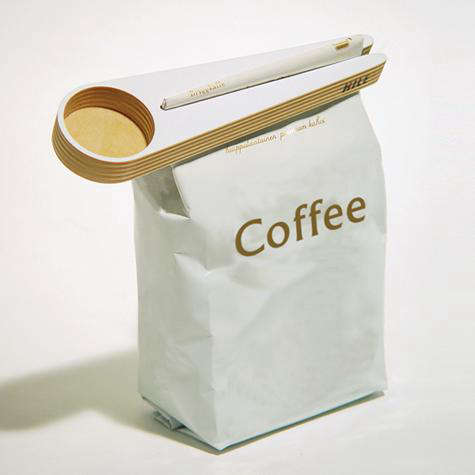

Some kitchen tools shout for attention. Others quietly make your morning better before you have had enough caffeine to remember your own Wi-Fi password. The Kapu Coffee Scoop and Bag Closer belongs to the second group. It is small, handsome, clever, and oddly satisfying: a coffee scoop on one end and a bag closer on the other, designed to help measure coffee and seal the bag in one neat motion.
At first glance, it looks like a minimalist wooden scoop with Scandinavian confidence. Look closer, and you see the trick: a long slot that slides over a folded coffee bag, turning the same tool you used to scoop your grounds into a tidy closure. No rummaging through the junk drawer for a clip. No folding the bag six different ways like you are preparing it for a tiny origami competition. Just scoop, fold, slide, seal, and brew.
The Kapu Coffee Scoop and Bag Closer is especially appealing for people who love practical design. It is not a gadget with batteries, an app, or a blinking blue light. It is a simple kitchen accessory made to solve two everyday coffee problems: measuring and storage. That is its charm. It respects the ritual of coffee without making the ritual feel like a lab assignment.
What Is the Kapu Coffee Scoop and Bag Closer?
The Kapu is a dual-purpose coffee tool designed by Finnish designer Teemu Karhunen. It combines a measuring scoop with a bag-closing mechanism, allowing coffee drinkers to keep the scoop attached to the coffee bag after use. The result is a tool that feels both practical and decorative, a small object that earns its place on the counter instead of hiding in a drawer.
The original Kapu is made from Finnish birch plywood, with a thin polypropylene layer for durability. Its clean lines, pale wood edge, and white top surface give it a modern Nordic look. The design is simple enough to blend into most kitchens, from minimalist apartments to cozy breakfast nooks where the toaster has seen things.
How the Two-in-One Design Works
Using the Kapu is straightforward. First, you scoop your coffee. Then you fold the top of the coffee bag down to push out extra air and create a clean edge. Finally, you slide the slotted handle of the Kapu over the folded bag. The scoop stays with the bag, the bag stays closed, and your morning routine loses one tiny annoyance.
This may sound like a small improvement, but kitchen happiness often comes from small improvements. A drawer that closes smoothly. A mug that fits perfectly in your hand. A coffee scoop that is always exactly where the coffee is. These details do not change your life dramatically, but they do make daily life feel less chaotic.
Why Coffee Storage Matters More Than People Think
Coffee is wonderfully aromatic, but those aromas are fragile. Once roasted coffee is exposed to air, light, moisture, and heat, its flavor begins to fade. Oxygen is one of the biggest enemies of roasted coffee because it encourages oxidation, which can dull bright flavors and create stale, flat notes. Moisture and temperature changes can also speed up the aging process.
This is why coffee experts often recommend storing coffee in a cool, dark, dry place in an airtight or tightly sealed container. For many households, that means a pantry cabinet away from the stove, sink, dishwasher, or sunny windowsill. The Kapu does not replace a vacuum canister, but it does improve the way you use the original coffee bag by helping keep it folded and closed between brews.
Whole Beans vs. Ground Coffee
If freshness is your priority, whole beans usually win. Ground coffee has much more exposed surface area, which means it can lose aroma faster. That does not mean pre-ground coffee is bad. It means it deserves good storage habits. If you use ground coffee, closing the bag carefully after every use matters even more.
The Kapu Coffee Scoop and Bag Closer is useful for both whole-bean and ground coffee, but it feels especially handy with ground coffee because the scoop is always nearby. When your brain is operating at 24 percent capacity before breakfast, “nearby” is a luxury.
Design Analysis: Small Tool, Big Personality
The Kapu is a good example of functional kitchen design because it removes a step without adding complexity. Many coffee accessories promise precision, but they also demand attention. Digital scales, timers, grinders, kettles, and brewers all have their place, but the Kapu lives in the quieter zone of coffee culture: everyday convenience.
Its Scandinavian design influence is easy to see. The shape is clean, the material is natural, and the function is obvious once you use it. It does not look like something engineered by a committee that also designs spaceship cupholders. It looks like something made by a person who drinks coffee and dislikes clutter.
Material and Feel
Birch plywood gives the Kapu warmth and structure. Unlike a plastic scoop, it feels more like a crafted object. Unlike a metal scoop, it does not clang around in the drawer or give off a cold industrial vibe. The white surface adds a crisp, clean appearance, while the exposed plywood edge gives it a layered, organic look.
Because it is made from wood-based material, it should be treated with basic care. Wipe it with a damp cloth when needed, dry it right away, and avoid the dishwasher. Dishwashers are basically tiny weather systems for kitchen tools: hot water, steam, detergent, and chaos. The Kapu prefers a gentler life.
How to Use the Kapu Coffee Scoop and Bag Closer
Step 1: Measure Your Coffee
Use the scoop to measure your coffee into your brewer. The exact amount can vary depending on grind size, roast level, and personal taste. Many home brewers start with a general coffee-to-water ratio around 1:16 to 1:18 by weight, then adjust from there. If you prefer measuring by volume, a scoop gives you a repeatable starting point.
Step 2: Fold the Bag Properly
After scooping, press excess air from the top of the bag without crushing the coffee. Fold the top edge down once or twice, making a firm, flat band. This helps the Kapu slide on cleanly and keeps the opening tighter.
Step 3: Slide the Kapu Over the Fold
Use the long slot in the Kapu to clamp over the folded bag. The tool should sit horizontally across the top, holding the fold in place. Now the scoop is stored with the coffee, not in a drawer next to mystery batteries and a takeout soy sauce packet from 2019.
Step 4: Store the Bag in a Cool, Dark Place
Place the sealed bag in a cabinet or pantry. Keep it away from heat sources, direct sunlight, and moisture. A coffee bag sealed with the Kapu is great for everyday use, especially when you finish coffee within a reasonable time. For longer storage, an opaque airtight canister or vacuum-style coffee container may offer stronger protection.
Who Should Buy the Kapu Coffee Scoop and Bag Closer?
The Kapu is ideal for coffee drinkers who appreciate simple, beautiful tools. It is not the cheapest coffee scoop you can buy, and it is not meant to be. Its value comes from the combination of usefulness, craftsmanship, and design. If your kitchen style leans modern, Nordic, natural, or minimalist, it will fit right in.
It is also a smart gift for coffee lovers. Many people already own mugs, grinders, and bags of beans, but fewer have a coffee scoop that doubles as a bag closer. It feels thoughtful without being overly personal. You are not guessing someone’s roast preference or buying them a novelty mug that says “Espresso Yourself.” You are giving them a tool they can actually use.
Best For
The Kapu works best for people who buy coffee in bags, brew coffee regularly, like tidy counters, and enjoy well-designed kitchen accessories. It is also great for small kitchens because it combines two functions in one object.
Not Ideal For
It may not be ideal for people who store all coffee in rigid airtight canisters immediately after opening. If your coffee never stays in its original bag, the bag-closing feature may not matter as much. It is also not for dishwasher-only households. This tool needs a quick wipe, not a hot-water roller coaster.
Kapu vs. Regular Coffee Scoops
A regular coffee scoop measures coffee. That is useful. The Kapu measures coffee and then stays attached to the bag as a closure. That is more useful. The difference is not dramatic, but it is meaningful in daily use.
Regular scoops often disappear. They migrate to drawers, canisters, dish racks, or the mysterious area behind the coffee maker where crumbs go to retire. The Kapu solves that by giving the scoop a parking spot on the coffee bag itself.
Compared with a separate bag clip, the Kapu also reduces clutter. Instead of needing a scoop and clip, you need one object. This matters in compact kitchens, office coffee stations, RVs, dorm rooms, and any home where the kitchen drawers are already negotiating for more space.
Practical Coffee Tips When Using the Kapu
Buy Coffee in Smaller Amounts
Freshness is easier to protect when you buy only what you can use within a reasonable period. A giant bag may seem economical, but if it takes months to finish, the final cups may taste tired. Coffee is not immortal. It is more like a houseplant with better aroma.
Keep the Bag Away From Heat
Do not store coffee next to the oven, stovetop, microwave vent, or sunny window. Heat speeds up flavor loss. A cabinet away from moisture and temperature swings is usually better than a decorative countertop display.
Use a Consistent Scoop Routine
Because coffee density varies, a scoop is less precise than a scale. Still, consistency helps. Use the same scoop, level it the same way, and adjust based on taste. If your coffee tastes weak, use a little more coffee or grind finer. If it tastes bitter or heavy, use slightly less coffee or grind coarser.
Clean the Scoop Gently
Wipe away coffee oils and grounds with a damp cloth, then dry the Kapu immediately. Avoid soaking it. Avoid abrasive scrubbers. Treat it like a wooden cutting board’s elegant little cousin.
Real Kitchen Experience: Living With a Scoop That Also Closes the Bag
The best way to understand the Kapu Coffee Scoop and Bag Closer is to imagine a normal weekday morning. You are half-awake. The coffee bag is open. The paper top is crumpled. The clip you usually use has vanished, probably because someone used it to close a bag of tortilla chips. You reach for a spoon, guess the amount, spill a little coffee, and promise yourself you will organize the coffee area someday. Someday, of course, is a magical land where all spice jars match and nobody leaves crumbs in the butter.
Now imagine the same morning with the Kapu. The scoop is already attached to the bag. You slide it off, measure your coffee, fold the bag, and slide it back on. The difference is small, but it feels smooth. There is no searching. No extra clip. No random tablespoon from the silverware drawer. The process becomes a tiny ritual: open, scoop, fold, close.
In daily use, that convenience matters most. The Kapu is not trying to turn you into a competition barista. It is trying to make your existing coffee routine neater. For people who brew drip coffee before work, it saves a few seconds and a little frustration. For pour-over fans, it keeps the coffee station visually clean. For office kitchens, it helps prevent the classic communal coffee disaster: an open bag slowly losing aroma while everyone pretends not to notice.
One pleasant experience is how naturally the tool belongs with the bag. Many coffee accessories feel separate from the coffee itself. A grinder sits in one place, filters in another, clips in a drawer, and the scoop wherever fate decides. The Kapu reduces that scattered feeling. Because it remains on the bag, it creates a dedicated coffee unit: bag plus scoop plus closure.
Another experience is visual. The Kapu looks good enough to leave out. That may sound shallow, but kitchen design is partly about what you enjoy seeing every day. A bright plastic scoop may work, but it rarely makes your coffee corner look more intentional. The Kapu adds a crafted, minimalist detail. It says, “This person cares about coffee,” without also saying, “This person has converted the kitchen into a laboratory.”
There are a few practical lessons. First, the bag fold matters. If the fold is bulky or uneven, the Kapu may not slide on as cleanly. A neat double fold usually works better. Second, it is best for standard coffee bags with flexible tops. Very thick, stiff, or unusually shaped packaging may require a little adjustment. Third, because the scoop is wood-based, it rewards gentle handling. Wipe it clean and dry it. Do not toss it into the sink like a stainless-steel spoon that owes you money.
The Kapu also encourages better coffee habits. When the scoop is visible and attached, you are more likely to measure consistently. When the bag is neatly folded, you are more likely to store it properly. When the coffee station looks organized, you are less likely to abandon the area in a storm of grounds, filters, and sleepy regret.
For gifting, the experience is equally strong. It feels premium without being extravagant, useful without being boring, and stylish without being fragile. It is the kind of gift that makes someone say, “Oh, that is clever,” and then actually use it the next morning. In the world of kitchen gifts, that is a victory parade.
After living with the idea of the Kapu, the main takeaway is simple: good design does not always need to be complicated. Sometimes it is just a coffee scoop with a slot in the right place. Sometimes the smartest kitchen tool is the one that solves a problem so quietly you forget the problem used to annoy you.
Conclusion
The Kapu Coffee Scoop and Bag Closer is a small kitchen accessory with a smart purpose. It combines measuring and storage in one elegant tool, helping coffee drinkers keep their scoop nearby and their coffee bag neatly closed. Made with a warm, minimalist design, it fits beautifully into modern kitchens and coffee corners.
It will not replace every coffee storage method, especially for people who prefer vacuum canisters or airtight jars. But for everyday coffee drinkers who keep beans or grounds in the original bag, it offers a charming and practical upgrade. The Kapu proves that useful design does not need to be loud. Sometimes it just needs to make your morning coffee a little easier, a little fresher, and a lot less cluttered.


