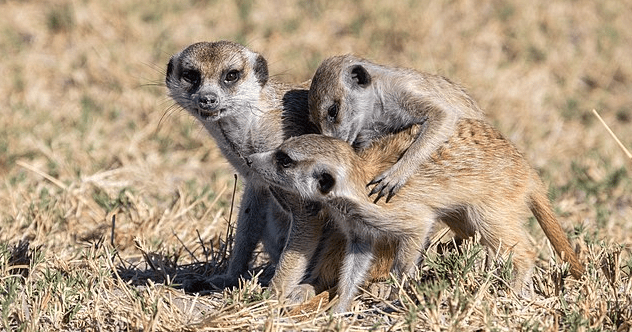

Zoo animals are supposed to stay in their carefully designed habitats, enjoy their enrichment toys, nibble their expertly prepared meals, and occasionally pose like celebrities for delighted visitors. But every now and then, one animal looks at the fence, wall, moat, lock, wire, or suspiciously climbable tree and seems to think: “Interesting. Very interesting.”
Welcome to the wonderfully weird world of mischievous zoo animals and their cheeky escapades. These are the furry, feathered, scaly, and slippery characters who became famous not for roaring on cue or napping in adorable positions, but for outsmarting barriers, baffling keepers, and turning ordinary zoo days into breaking-news events.
To be clear, animal escapes are serious for zoos. Modern accredited zoos invest heavily in animal welfare, enrichment, training, habitat design, and safety. When an animal leaves an enclosure, trained staff respond quickly to protect both the animal and the public. But some of these stories have become legendary because they reveal something fascinating: animals are observant, curious, opportunistic, and sometimes hilariously determined. In other words, nature has a sense of humorand occasionally, it has thumbs.
Why Zoo Animals Get Into Mischief
Animal mischief often begins with intelligence and curiosity. Orangutans solve problems. Otters investigate everything. Red pandas climb like tiny masked ninjas. Penguins may look formal, but some have the travel ambitions of backpackers. When animals explore, test boundaries, or interact with their environment in unexpected ways, it is not simply “being naughty.” It is behavior driven by instinct, intelligence, boredom, opportunity, or the irresistible appeal of whatever is just beyond the fence.
That is why enrichment matters so much in modern zoos. Puzzle feeders, climbing structures, scent trails, training sessions, rotating toys, and naturalistic habitats give animals healthy ways to use their minds and bodies. Still, even the best-designed setting can meet a truly motivated animal with a very personal agenda.
1. Ken Allen the Orangutan: San Diego’s Hairy Houdini
The escape artist with a fan club
Few mischievous zoo animals have achieved the celebrity status of Ken Allen, the Bornean orangutan from the San Diego Zoo. In the 1980s, Ken became famous for repeatedly escaping from his enclosure, earning the nickname “Hairy Houdini.” Unlike the average fugitive, Ken did not seem interested in causing chaos. His preferred activity was strolling around the zoo, calmly checking out other animals, and generally behaving like a visitor who had misplaced his map.
Keepers reportedly worked hard to figure out how he was getting out. Ken seemed to adapt to their surveillance, which made the whole situation feel less like routine animal care and more like a primate spy thriller. At one point, zoo staff even studied the habitat from a climber’s perspective to identify possible escape routes. Ken’s outings made him a local legend, inspiring fan clubs, T-shirts, and stories that still circulate today.
The lesson from Ken Allen is simple: never underestimate an orangutan. Behind that thoughtful stare may be a complete site inspection, a mental blueprint, and a quiet plan for an afternoon walk.
2. Fu Manchu the Orangutan: The Lock-Picking Mastermind
A tiny tool, a big mystery
Before Ken Allen became famous, another orangutan had already raised the bar for zoo mischief. Fu Manchu, a Sumatran orangutan at Omaha’s Henry Doorly Zoo, became legendary for repeatedly escaping with a hidden piece of wire. According to widely shared accounts, keepers were puzzled when Fu Manchu and other orangutans were found outside their enclosure. The door appeared secure, yet the apes were somehow getting out.
The suspected trick? Fu Manchu had allegedly fashioned or used a piece of wire as a tool and kept it hidden, reportedly in his mouth or cheek area, until the coast was clear. Then he could use it to manipulate the lock. If true, this was not random monkey business. It suggested planning, tool use, timing, and the kind of patience usually associated with heist movies.
What makes the story so memorable is not just the escape itself, but the strategy. Fu Manchu did not burst through a wall. He did not throw a tantrum. He treated the lock like a puzzle, solved it, and apparently kept his solution secret. Somewhere, a locksmith is still taking notes.
3. Rusty the Red Panda: Washington, D.C.’s Fluffy Fugitive
The tiny climber who launched a citywide search
Rusty the red panda became an internet sensation in 2013 after escaping from the Smithsonian’s National Zoo in Washington, D.C. Red pandas are expert climbers, and Rusty, less than a year old at the time, used those skills to turn himself into the most adorable missing-person alert in the capital.
When keepers discovered he was gone, the zoo launched a search and asked the public for help. Soon, social media joined the effort. Rusty was eventually spotted in a nearby neighborhood and safely returned. His little adventure transformed him from a zoo resident into a local celebrity. For a while, Washington had a new unofficial mascot: small, red, ring-tailed, and apparently interested in real estate outside zoo boundaries.
Rusty’s escape showed how quickly a zoo animal can capture public attention. Part of the fascination came from his looksred pandas are practically designed to make people say “awww”but another part came from the sheer cheekiness of it. He did not stomp away dramatically. He simply climbed, slipped out, and briefly upgraded his address.
4. Ollie the Bobcat: The National Zoo’s Quiet Explorer
A low-key adventure close to home
In 2017, the Smithsonian’s National Zoo had another famous escape when Ollie, a female bobcat, left her enclosure. Zoo officials advised the public not to approach her, though bobcats are generally shy and avoid people. The search drew plenty of attention, and nearby residents kept watch for a stealthy spotted cat moving through the area.
In the end, Ollie was found on zoo property near the Bird House, which feels very on-brand for a curious cat. She had not embarked on a cross-country journey or attempted to start a new life under an assumed name. She had simply taken a short, secretive tour of familiar surroundings before being safely recovered.
Ollie’s story is funny in hindsight because it has the energy of a house cat slipping into the garage and acting mysterious for three days. The difference, of course, is that Ollie was a wild-born bobcat, and the zoo’s response had to be careful, professional, and fast. Still, her brief outing earned her a permanent place in the hall of cheeky zoo escapades.
5. MIA the Bronx Zoo Cobra: The Snake That Became a Meme
Small snake, enormous internet fame
In 2011, a young Egyptian cobra disappeared from an off-exhibit enclosure at the Bronx Zoo. The Reptile House was closed while staff searched, and officials believed the snake was still somewhere inside the building. That did not stop the public imagination from taking over. Soon, the missing cobra became an online celebrity, inspiring jokes, parody accounts, and the kind of citywide nervous laughter only New York can produce.
The cobra was eventually found inside the Reptile House and later named MIA, short for “Missing In Action.” While the incident was handled seriously because the species is venomous, the cultural reaction became oddly playful. People imagined the cobra touring landmarks, taking in Broadway, or enjoying a very tiny latte.
MIA’s escapade proves that not every mischievous zoo animal needs fur, paws, or expressive eyebrows. Sometimes all it takes is a pencil-thin snake, a closed exhibit, and a city ready to turn anxiety into comedy.
6. Louie and Ophelia the Otters: Snow-Day Specialists
The winter escape with belly slides
In 2025, two North American river otters named Louie and Ophelia escaped from the NEW Zoo & Adventure Park in Wisconsin during a winter storm. According to reports, the otters enlarged a small hole in buried fencing and slipped out. Security footage showed otter behavior at its most delightfully otter-ish: moving through snow, exploring, and belly-sliding like they had discovered a secret water park made of winter.
Ophelia was later safely returned, while Louie remained elusive for much longer. Because river otters are native to the area, officials noted that Louie had the skills to survive in local waterways. The zoo continued to monitor sightings and encouraged the public not to approach him.
This story feels mischievous because otters already have a reputation as nature’s playful troublemakers. They are sleek, clever, curious, and energetic. Give them snow and a tiny opening, and apparently they may interpret it as an invitation to launch “Operation Slip-and-Slide.”
7. Evelyn the Gorilla: The Los Angeles Zoo’s Opportunist
Big strength, bigger curiosity
Evelyn, a western lowland gorilla at the Los Angeles Zoo, became known for multiple escapes from her habitat. Reports described her as opportunistic, using whatever the environment provided. In one famous account, she used another gorilla’s back as a boost. In another, she took advantage of vines that helped her get beyond the barrier.
During one escape, the zoo was evacuated while staff worked to return her safely. Evelyn’s wanderings became legendary partly because she did not behave like a movie monster. She was described more like an enormous, curious explorerpoking around, observing, and taking in the zoo from a visitor’s perspective.
Gorillas are powerful animals, so any escape is treated with maximum seriousness. But Evelyn’s reputation as a clever opportunist also reminds us that animals notice details. A dangling vine, a helpful slope, a companion standing in just the right placethese are not background scenery to an intelligent animal. They are possibilities.
8. Zimm the Macaque: Memphis Zoo’s Tiny Rebel
Small body, big escape energy
Zimm, a Celebes crested macaque at the Memphis Zoo, made headlines in 2015 after escaping from her enclosure. She was small, reportedly around 10 pounds, but she had the determination of a much larger animal. Zimm scaled barriers and evaded capture for days before being found within zoo grounds and safely returned.
Her escape inspired plenty of public interest, including social media attention. There is something irresistible about a small primate on the loosenot because the situation is easy for keepers, but because the image feels like a cartoon that has accidentally become real. One minute, visitors are enjoying a normal zoo day. The next, a macaque has become the main character.
Zimm’s adventure also highlights how size can be deceiving. Small animals can squeeze, climb, leap, hide, and move quickly through spaces that larger animals would never attempt. In the world of zoo mischief, being tiny is not a limitation. It is a superpower.
9. Penguin Number 337: The Tokyo Bay Traveler
A penguin with vacation plans
Penguins may look like they are dressed for a formal dinner, but Penguin Number 337 from Tokyo Sea Life Park had other plans. In 2012, the young Humboldt penguin escaped by getting over a barrier and making it to Tokyo Bay. For weeks, keepers received sightings while the penguin swam through the area, apparently doing surprisingly well.
After 82 days, the bird was safely recaptured. The story became famous because it challenged expectations. Penguins do not fly, and they do not look like expert escape artists. Yet this determined bird managed to navigate from aquarium life into open water and survive for nearly three months.
Number 337’s tale is one of the cheekiest because it feels less like a panicked escape and more like an unauthorized gap year. While keepers worried, the penguin seemed to be living out a travel documentary: “Today on Feathered Nomad, we explore Tokyo Bay.”
10. Flaco the Eurasian Eagle-Owl: New York’s Accidental Celebrity
A serious escape that became a city story
Flaco, a Eurasian eagle-owl from the Central Park Zoo, became one of New York City’s most famous birds after his enclosure was vandalized in 2023 and he escaped. Unlike many animals on this list, Flaco did not engineer his own getaway. Still, what happened afterward turned into one of the most widely followed zoo animal stories in recent memory.
At first, experts worried about whether Flaco could survive outside after years in human care. Over time, however, he learned to fly strongly through the city and hunt. New Yorkers spotted him in trees, on rooftops, and around Central Park. He became a symbol of wildness in the middle of Manhattan, admired by birders, photographers, and everyday residents who suddenly found themselves looking up more often.
Flaco’s story is bittersweet because city life came with serious risks. But his year outside the zoo also showed the public how deeply one animal can affect an entire community. He was not mischievous in the comic sense like Ken Allen or Rusty, but his unexpected urban chapter became a powerful reminder that zoo animals are individuals, not exhibits with fur and feathers.
What These Cheeky Escapades Teach Us About Animal Intelligence
These stories are entertaining, but they also point toward something deeper. Animals are not passive decorations in a habitat. They observe routines, test materials, remember patterns, and respond to opportunities. Orangutans may use tools and strategy. Otters may investigate structural weaknesses. Birds may adapt quickly to new environments. Small mammals may use agility to exploit gaps that humans overlook.
For zoos, these moments become learning opportunities. After an escape, staff review barriers, animal behavior, weather conditions, maintenance procedures, enrichment schedules, and emergency response plans. A funny headline may make the public laugh, but behind the scenes, zoo professionals are asking serious questions: How did this happen? How can the animal be protected? How can the habitat be improved?
That balance matters. We can enjoy the humor of a red panda going on a neighborhood stroll or an otter belly-sliding through snow while still respecting the fact that animal care is complicated. The best zoo stories are not about animals “defeating” humans. They are about humans learning more about the animals they care forand animals reminding us that curiosity is a powerful force.
How Modern Zoos Keep Mischief Safe and Healthy
Today, many accredited zoos use enrichment as a core part of animal care. Enrichment gives animals choices, challenges, and variety. A tiger may follow a scent trail. A parrot may work through a puzzle feeder. An elephant may interact with a giant toy. A primate may use climbing structures, ropes, or hidden treats that encourage natural foraging and problem-solving.
Good enrichment does not eliminate curiosity; it channels it. Instead of trying to make animals less clever, keepers design activities that let animals use their cleverness safely. That is especially important for highly intelligent species such as apes, corvids, elephants, otters, and many carnivores.
Habitat design has also evolved. Modern zoo spaces often include layered barriers, backup gates, visual buffers, shift areas, and materials chosen for durability and animal behavior. Staff training is just as important. Keepers learn each animal’s habits, preferences, moods, and favorite tricks. In many cases, the people who care for animals know exactly which resident is most likely to inspect a latch, climb a suspicious branch, or turn a feeder into a construction project.
Visitor Experiences: What These Stories Feel Like From the Zoo Path
Anyone who has spent a full day at a zoo knows the best moments are often unscripted. You arrive expecting to see lions napping, giraffes chewing, and flamingos balancing on one leg as if they are practicing yoga. Then something unexpected happens: an otter performs a dramatic roll, a monkey steals the spotlight, a penguin waddles with shocking confidence, or an orangutan makes direct eye contact that says, “I understand more than you think.”
That sense of surprise is part of why mischievous zoo animal stories stay with us. They turn a visit into a memory. A family may forget what they bought at the gift shop, but they will remember the red panda climbing higher than expected or the gorilla who seemed to study the visitors as carefully as they studied her. Animals have personalities, and good zoo experiences make those personalities visible.
For writers, bloggers, parents, educators, and animal lovers, these escapades also create wonderful teaching moments. Children may laugh at the idea of a penguin taking a solo trip, but that laughter can lead to questions: How do penguins swim so well? Why are orangutans so smart? What do otters eat? Why should people never approach an escaped animal? A funny story becomes a doorway into biology, conservation, and responsible behavior around wildlife.
Zoo visits are also a lesson in patience. The most memorable animal behavior rarely happens on command. You may stand at an exhibit for ten minutes and see absolutely nothing but a suspiciously shaped rock. Then, just as you are about to leave, the “rock” blinks, stretches, and becomes the most interesting creature you have seen all day. Mischief rewards the patient observer.
There is also a special kind of connection that happens when an animal appears to make a choice. A sea lion deciding to splash visitors, a meerkat standing guard like a tiny security officer, a raven solving a puzzle, or an ape calmly examining a tool reminds us that animals experience the world actively. They are not props in our day out. They are living beings with preferences, habits, intelligence, and moods.
Of course, visitors should always respect zoo rules. Never tap glass, feed animals, cross barriers, shout to provoke a reaction, or try to interact with an animal outside official programs. If an animal is ever outside its enclosure, the safest response is simple: move away calmly, follow staff instructions, and report what you saw. The best animal story is one where everyone, especially the animal, ends up safe.
In the end, these cheeky escapades make zoos feel less like static displays and more like places full of unfolding stories. The animals may not be trying to entertain us, but they often do. A red panda becomes a neighborhood celebrity. An otter turns snow into a playground. An orangutan transforms a habitat into a puzzle. A penguin proves that formalwear is no obstacle to adventure. And we, watching from the path, get a glimpse of the intelligence and curiosity that make the animal kingdom endlessly fascinating.
Conclusion: The Wild Charm of Mischievous Zoo Animals
The best mischievous zoo animal stories are funny because they feel so human: curiosity, problem-solving, impatience, clever timing, and the occasional urge to see what is on the other side of the fence. But they are also reminders that animals are complex individuals. Their cheeky escapades are not just cute headlines; they are evidence of intelligence, adaptability, instinct, and personality.
From Ken Allen’s legendary strolls to Rusty’s red panda adventure, from MIA the cobra’s meme-worthy disappearance to Louie and Ophelia’s snowy otter outing, these animals captured public imagination because they broke the routine. They made people laugh, worry, search, share updates, and think more deeply about the creatures living in zoos.
Modern zoos continue to learn from animal behavior, improving habitats, enrichment, and care practices to keep animals mentally stimulated and physically safe. And visitors continue to show up hoping for that magical moment when an animal does something unexpectednot dangerous, not forced, just wonderfully alive.
Note: These stories are presented for educational and entertainment purposes. If you ever see a zoo animal outside its habitat, do not approach it. Alert zoo staff immediately and follow official safety instructions.