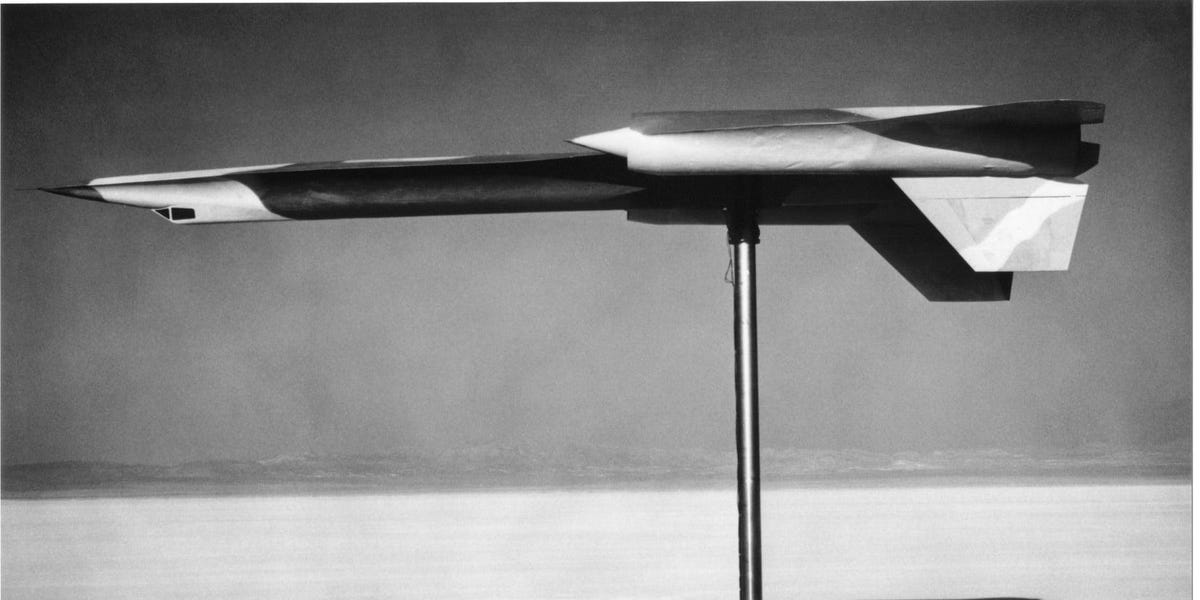

Editor’s Note: This article is based on publicly available declassified records, official aviation history, and museum documentation about the CIA’s A-12 Oxcart program.
The Spy Plane That Looked Like It Arrived From Tomorrow
Few aircraft can make aviation fans stop mid-scroll like the A-12 Oxcart. Long, black, razor-edged, and built to fly higher and faster than almost anything in the sky, the A-12 looks less like a Cold War aircraft and more like a prop department accidentally borrowed it from a sci-fi movie. Yet the declassified A-12 Oxcart photos now available to the public show something even more fascinating than futuristic design: they reveal how the Central Intelligence Agency, Lockheed’s Skunk Works, and a small group of test pilots created one of the most secret reconnaissance aircraft in American history.
The A-12 was developed as a successor to the U-2 spy plane. After the U-2 became vulnerable to improving Soviet air defenses, the United States needed a new reconnaissance platform that could outrun, outclimb, and outthink enemy threats. The answer was Project Oxcart, a classified CIA program that pushed aircraft design into the Mach 3 era. Today, declassified images of the CIA’s secret spy plane offer a rare look at the aircraft’s sharp chines, titanium skin, unusual proportions, cockpit details, camera bays, test flights, and museum-preserved survivors.
These photos are not just cool pictures for military aviation enthusiasts. They are historical documents. Each image captures a moment when engineers were solving problems that did not yet have textbooks: how to build with titanium, how to survive extreme heat, how to photograph targets from the edge of space, and how to keep an airplane secret when it looked like a flying lightning bolt.
What Was the A-12 Oxcart?
The A-12 Oxcart was a high-altitude, high-speed reconnaissance aircraft built for the CIA by Lockheed’s Skunk Works division under the leadership of Clarence “Kelly” Johnson. It was designed to fly at sustained speeds around Mach 3 and at altitudes near 90,000 feet. In simple language: it could cruise faster than a rifle bullet and fly so high that the sky above the pilot looked black.
The aircraft began as part of the “Archangel” design series, a set of Lockheed concepts intended to create a replacement for the U-2. The “A” in A-12 came from that Archangel development line, and “12” marked the twelfth major design iteration. That means this sleek beast was not a first draft. It was the result of repeated redesigns, engineering arguments, wind tunnel lessons, and probably more coffee than any project office should legally admit.
Lockheed built 15 aircraft under the Oxcart program, including specialized variants. The CIA’s operational A-12 fleet was smaller, lighter, and in some ways faster and higher-flying than the later SR-71 Blackbird. The SR-71 became famous because it served openly with the U.S. Air Force, while the A-12 stayed in the shadows for years. That secrecy is exactly why declassified A-12 Oxcart photos feel so valuable today: they pull the curtain back on the aircraft that helped shape the entire Blackbird family.
Why Declassified A-12 Oxcart Photos Matter
Declassified images of the A-12 are more than dramatic glamour shots of a black aircraft parked on desert concrete. They help researchers, historians, model builders, veterans, students, and aviation fans understand how the program actually worked. Some photos show the aircraft during assembly. Others show the A-12 at Groom Lake, better known to the public as Area 51. Some capture test crews, hangars, ladders, pressure suits, fuel trucks, and the everyday machinery behind an extraordinary machine.
The CIA’s declassified Oxcart documentation includes hundreds of records, maps, diagrams, and photographs. These materials help explain how the aircraft was designed, tested, deployed, and eventually retired. For decades, the public mainly knew the SR-71 Blackbird. The A-12 was the quieter older siblingthe one that did incredible things but rarely showed up in family photos. Declassification changed that.
Looking at A-12 Oxcart photos also changes how we understand Cold War intelligence. The aircraft was not simply a fast plane. It was a flying camera platform built for strategic reconnaissance. Its purpose was to gather images from places where ordinary aircraft could not safely go. When you see the A-12’s long nose, narrow cockpit, and smooth black finish, you are looking at a machine shaped by one mission: collect intelligence and come home.
The Design: Titanium, Heat, Speed, and Nerves of Steel
One of the first things people notice in A-12 Oxcart photos is the aircraft’s shape. The fuselage blends into wide chines that run along the sides of the nose and body. These chines improved lift, helped stability at extreme speed, and contributed to radar-signature reduction. The twin vertical tails were canted inward, giving the aircraft its unmistakable silhouette.
The A-12 had to survive temperatures that would punish ordinary aircraft materials. At Mach 3, air friction heats the skin dramatically. Aluminum was not enough. Lockheed relied heavily on titanium, a metal that was strong, light for its strength, and heat-resistant, but also notoriously difficult to work with at the time. Engineers had to invent new manufacturing methods, tools, lubricants, sealants, and inspection practices. The airplane was not just advanced; it forced the aerospace industry to grow up fast.
Then there were the engines. The Pratt & Whitney J58 engines helped the A-12 reach its legendary speed range. At high speed, the propulsion system behaved partly like a turbojet and partly like a ramjet-style airflow system. That is one reason the A-12 remains such a technical icon. It was not merely powerful; it was clever. Very clever. The kind of clever that makes engineers stare quietly for a minute and then ask for a bigger whiteboard.
What the Photos Reveal About the A-12’s Secret World
1. The Aircraft Was Bigger Than It Looks
In many photos, the A-12 appears sleek and almost delicate because of its narrow lines. But museum displays and ramp photographs reveal its true size. The aircraft stretched more than 100 feet in length with a wingspan of roughly 55 feet. Place a person beside it, and suddenly the “sleek dart” becomes a large, intimidating machine that seems ready to slice the horizon in half.
2. The Cockpit Was Built for One Pilot
Unlike the two-seat SR-71, the CIA’s A-12 was a single-seat aircraft. Declassified cockpit images show a compact, instrument-heavy environment designed for pilots who had to manage speed, altitude, navigation, fuel, systems, and mission demands under extreme conditions. The cockpit was not a luxury suite. It was more like a pressure-sealed office for someone whose commute involved the edge of space.
3. The Camera Systems Were the Real Mission
The A-12 existed to take photographs. Its camera systems were central to the program, and declassified documents describe different camera approaches developed for the aircraft. These systems aimed to capture high-resolution imagery from extreme altitude while the aircraft moved at extraordinary speed. That combination created huge technical challenges. Imagine trying to take a crisp photo from a speeding carnow make the car fly three times the speed of sound at 90,000 feet. Easy, right? Absolutely not.
4. Groom Lake Was Essential
Many A-12 Oxcart images are tied to testing at Groom Lake in Nevada. The remote desert location gave the CIA and Lockheed room to test a classified aircraft away from public view. Photos from this environment show hangars, runways, support equipment, and a landscape that became famous because so much secret aviation history happened there.
From Secret Development to Operation Black Shield
After years of design and testing, the A-12 became operational in the mid-1960s. Its major operational deployment was Operation Black Shield, flown from Kadena Air Base in Okinawa. During these missions, A-12 aircraft conducted reconnaissance over areas including North Vietnam and North Korea.
One of the A-12’s most notable missions helped locate the USS Pueblo after North Korea captured the U.S. Navy intelligence ship in 1968. The aircraft’s speed and camera capability made it valuable for urgent intelligence collection. While satellites were becoming increasingly important, aircraft like the A-12 could provide more timely imagery for certain missions.
Still, the Oxcart program faced political and strategic challenges. Aircraft overflights were sensitive, especially after the 1960 U-2 incident involving Francis Gary Powers. Satellites were safer politically because they did not put a pilot over hostile territory. Meanwhile, the Air Force’s SR-71 was entering service. Maintaining both the covert A-12 and the overt SR-71 became hard to justify. The A-12 was retired in 1968, ending a brief but spectacular operational career.
A-12 Oxcart vs. SR-71 Blackbird: Why People Confuse Them
The A-12 and SR-71 look so similar that confusion is understandable. Both came from Lockheed’s Blackbird family. Both were black, fast, titanium-rich, and designed for high-altitude reconnaissance. But the A-12 came first, was built for the CIA, and had one seat. The SR-71 was developed for the U.S. Air Force, had two seats, carried different sensor packages, and became the more publicly famous aircraft.
In simple terms, the A-12 was the classified specialist; the SR-71 was the public legend. The A-12 flew covert missions and remained hidden from public understanding for years. The SR-71 went on to set records, appear at airshows, enter museums, and become a poster child for speed. But behind the Blackbird fame sits the A-12, the sharp-nosed original that proved the concept could work.
Where Can You See A-12 Oxcart Aircraft Today?
Several surviving A-12 aircraft are preserved in museums and public displays across the United States. The CIA Museum has Article 128 displayed at CIA Headquarters in Langley, Virginia. This aircraft, serial number 60-6931, was the eighth of 15 built and logged hundreds of hours in test and training flights before retirement.
Another A-12 can be seen at the San Diego Air & Space Museum, where the aircraft stands as a dramatic reminder of Cold War engineering. The U.S. Space & Rocket Center also displays an A-12, helping visitors understand the connection between aerospace innovation, intelligence gathering, and the broader race to master high-speed flight.
Seeing an A-12 in person is different from seeing it in photos. Pictures show the shape. Museums reveal the scale. Standing near one, you understand why the aircraft still feels futuristic decades after retirement. It has the strange quality of looking both historic and not yet fully invented.
How to Read A-12 Oxcart Photos Like a Historian
When viewing declassified A-12 Oxcart photos, look beyond the aircraft itself. Notice the background. Is the aircraft inside a hangar, on a desert ramp, or displayed at a museum? Are there technicians nearby? What kind of ladder, tow vehicle, or protective cover appears in the frame? These details help date the image and explain what stage of the program it may represent.
Pay attention to the finish of the aircraft. Early test images may show subtle differences in surface treatment, panel lines, or markings. Operational aircraft often appear plain, because secrecy was part of the job. Unlike modern military aircraft covered in visible unit markings, the A-12 preferred the fashion style known as “mysterious black triangle with engines.”
Also look at the nose and fuselage. The A-12’s single cockpit and reconnaissance equipment arrangement distinguish it from the SR-71. If you see a two-seat cockpit, you are probably looking at an SR-71 or trainer variant, not a standard CIA A-12. This is one of the easiest ways to avoid mislabeling Blackbird-family photos.
The Human Side Behind the Declassified Images
It is easy to focus on the machine and forget the people. The A-12 program depended on engineers, machinists, pilots, camera specialists, fuel experts, pressure-suit designers, intelligence officers, and maintenance crews. Every declassified photo is also a record of human risk.
Flying the A-12 was dangerous. Test pilots operated in a regime where small errors could become serious quickly. At Mach 3, the aircraft covered miles in seconds. Temperatures, fuel behavior, engine performance, and navigation all demanded careful attention. Pilots wore specialized pressure suits because at extreme altitude, the environment outside the cockpit was unforgiving.
Some A-12 aircraft were lost in accidents, and CIA pilots made real sacrifices during the program. That is why restored aircraft and declassified images carry a memorial quality. They are beautiful, yes, but they also represent people who accepted unusual risks in an unusually secret world.
Why the A-12 Still Captures the Imagination
The A-12 Oxcart continues to fascinate because it sits at the crossroads of secrecy, speed, photography, and design. It was built when slide rules still mattered, computer modeling was primitive by modern standards, and engineers often had to test ideas the hard way. Yet the result still looks advanced today.
Declassified A-12 Oxcart photos give the public a chance to study an aircraft that was once hidden from view. They allow us to see not only the sleek exterior but also the reality of Cold War innovation: messy, risky, expensive, brilliant, and sometimes a little wild. The A-12 was not created because it was easy. It was created because intelligence leaders believed they needed a camera platform that could survive where other aircraft could not.
In the end, the A-12’s career was short, but its legacy was huge. It influenced the SR-71, expanded knowledge of titanium aircraft construction, advanced high-speed flight systems, and proved that reconnaissance aircraft could operate at speeds and altitudes once considered nearly impossible.
Personal Experience: What It Feels Like to Explore A-12 Oxcart Photos
Exploring A-12 Oxcart photos is a different experience from browsing ordinary aircraft pictures. With most planes, you can admire the lines, read the specs, and move on. With the A-12, every image seems to ask a question. Why is the nose shaped like that? Why does the skin look almost liquid in some lighting? How did anyone build this in the early 1960s? And why does it look like it might quietly leave the museum at midnight and fly back to Nevada?
The first thing that stands out is the silence inside the images. Many declassified A-12 photos are not dramatic action shots. They show the aircraft parked, being serviced, or sitting in stark desert light. Yet that stillness makes them more powerful. You know the machine was designed for incredible speed, but the photo freezes it in a moment of calm. It is like seeing a racehorse asleep or a thunderstorm waiting politely in a chair.
For aviation enthusiasts, the fun is in the details. The chines along the fuselage are not just styling. They are aerodynamic and radar-related features. The black finish is not just intimidating; it connects to heat management and operational needs. The cockpit is not roomy because comfort was not the assignment. The aircraft looks clean because every surface had a job. The A-12 is one of those rare machines where form and function shake hands and then immediately sprint past Mach 3.
For history-minded readers, the photos create a bridge between secrecy and public memory. During the aircraft’s active life, most people had no idea it existed. Today, anyone can study declassified images, compare museum aircraft, and read about the program’s development. That shift feels important. It reminds us that history is not always released all at once. Sometimes it arrives years later in scanned documents, restored aircraft, and black-and-white photos that finally get to tell their story.
The most memorable experience is realizing that the A-12 was both a technical object and a human achievement. It is tempting to describe it only with numbers: Mach 3, 90,000 feet, 100-plus feet long, 15 built. But the photos show something numbers cannot fully capture. They show people working around the aircraft, climbing ladders, checking panels, preparing systems, and trusting that a chain of engineering decisions would hold together at the edge of the atmosphere.
That is why A-12 Oxcart photos remain so compelling for web readers today. They combine mystery with proof. They show a secret program that became visible. They show a spy plane that looks mythical but was absolutely real. And they show that sometimes the most astonishing images are not fictional at allthey are declassified.
Conclusion
The A-12 Oxcart was one of the most remarkable aircraft of the Cold War: a CIA spy plane built for extreme speed, extreme altitude, and extreme secrecy. Declassified A-12 Oxcart photos allow modern readers to see the aircraft not as a rumor or a shadow, but as a real machine shaped by titanium, courage, engineering genius, and intelligence demands.
From Groom Lake testing to Operation Black Shield, from advanced camera systems to museum preservation, the A-12 tells a story that still feels ahead of its time. Its operational life was brief, but its influence on reconnaissance aviation was enormous. The next time you see a declassified photo of this sleek black aircraft, look closely. You are not just looking at a plane. You are looking at a secret that learned how to fly.


