
Note: This article is written for public education and web publishing. It discusses battlefield trends at a high level and does not provide tactical instructions.
The war in Ukraine has become a brutal classroom for modern warfare. Unfortunately, nobody gets to skip the homework, and the final exam appears to involve drones, electronic warfare, satellite imagery, artillery duels, and a lot of expensive equipment learning that “because we have always done it this way” is not a defense plan.
To be clear, “obsolete” does not always mean “useless.” A tank is not suddenly a museum piece because a drone can spot it. Artillery has not packed its bags and moved to a retirement community. Helicopters still matter. Warships still project power. But Ukraine has shown that certain weapons, when used in old-fashioned ways, are becoming dangerously outdated. The real lesson is not that classic platforms are dead; it is that exposed, predictable, slow-to-adapt weapons are having a very bad decade.
The Ukraine war has proved that survival now depends on sensors, speed, dispersion, electronic protection, layered air defense, cheap unmanned systems, and the ability to update tactics faster than a teenager updates phone apps. Here are four weapons the war in Ukraine is proving obsoleteor at least forcing into a serious midlife crisis.
1. Unsupported Main Battle Tanks
For more than a century, the main battle tank has been the heavyweight champion of land warfare. It brought armor, firepower, mobility, and psychological shock to the battlefield. Tanks were the steel fists of modern armies, the machines that could break lines and turn defensive positions into bad memories.
Ukraine has not proved that tanks are useless. It has proved that unsupported tanks are in trouble. A tank rolling forward without infantry, engineers, electronic warfare support, drone reconnaissance, air defense coverage, and logistics is not a breakthrough weapon. It is a very expensive object waiting to be filmed from above.
Why Tanks Are Struggling
The modern battlefield in Ukraine is transparent in a way older commanders could barely imagine. Small drones can spot armor from above. Loitering munitions can circle until a target appears. Anti-tank guided missiles can punish vehicles from long distances. Mines, artillery, and cheap first-person-view drones have made armored movement slow, risky, and highly visible.
This creates a nasty cost problem. A tank may cost millions of dollars. A small attack drone may cost a few hundred or a few thousand. When a low-cost system can damage or destroy a high-value platform, accountants begin sweating into their coffee.
The result is not the death of the tank, but the death of tank arrogance. A tank cannot simply charge across open ground and expect armor thickness to solve every problem. Armor now needs an ecosystem: drone screens, counter-drone systems, active protection, smoke, concealment, infantry, jammers, and smart route planning. Without that ecosystem, tanks can become slow-moving billboards that say, “Please notice me.”
What Replaces the Old Tank Mindset?
The new model is combined arms with a digital nervous system. Tanks still have value when used carefully: direct fire, protected movement, supporting infantry, and exploiting openings. But they must move as part of a network. The most important upgrade may not be thicker steel; it may be better information.
In Ukraine, both sides have learned that armor must hide, move quickly, disperse, and coordinate with drones. A tank crew that sees first may survive. A tank crew that is seen first may become a cautionary tale with tracks.
2. Towed Artillery Sitting in One Place Too Long
Artillery remains one of the defining weapons of the war in Ukraine. In fact, calling artillery obsolete would be wildly wrong. Shells, rockets, and guns still shape the battlefield every day. But one type of artillery employment is looking increasingly outdated: slow, static, exposed firing positions that linger after shooting.
In older wars, artillery could fire from behind the front and rely on distance, camouflage, and the confusion of battle. In Ukraine, that comfort zone has shrunk. Counter-battery radars, drones, acoustic sensors, satellite imagery, and rapid targeting loops make it much easier to find guns after they fire.
The Shoot-and-Scoot Problem
The phrase “shoot and scoot” has become more than a catchy military slogan. It is a survival rule. Artillery units that fire and then remain in place risk being detected and struck. Towed artillery, by design, can be slower to reposition than self-propelled systems. Crews must hitch the gun, move vehicles, manage ammunition, and escape before the enemy’s response arrives.
This does not mean towed artillery has no role. It can still be useful, especially when ammunition supply, terrain, and defensive missions support it. But the war in Ukraine has made one thing obvious: artillery that cannot move quickly, hide effectively, or integrate with modern sensing networks becomes vulnerable.
Drones Changed the Artillery Game
Drones have made artillery both more powerful and more vulnerable. On one hand, drones help locate targets and correct fire, making artillery more accurate. On the other hand, drones help locate the artillery itself. This is the battlefield equivalent of giving everyone night vision, binoculars, and a group chat.
The old model of massed guns firing from known positions is giving way to smaller, dispersed, mobile units. Modern artillery needs mobility, digital fire control, camouflage, decoys, electronic protection, and rapid logistics. The gun still matters, but the system around the gun matters even more.
Ukraine is proving that artillery is not obsolete; lazy artillery is obsolete. Static positions, predictable firing patterns, and slow movement are invitations to disaster. In modern warfare, even the big guns need to learn cardio.
3. Low-Flying Attack Helicopters in Dense Air Defenses
Attack helicopters once looked like the perfect battlefield predator. They could fly low, appear suddenly, fire powerful weapons, and vanish behind terrain. During the Cold War and later conflicts, helicopters became symbols of fast, flexible firepower. They were the flying cavalry, except louder and much harder to park.
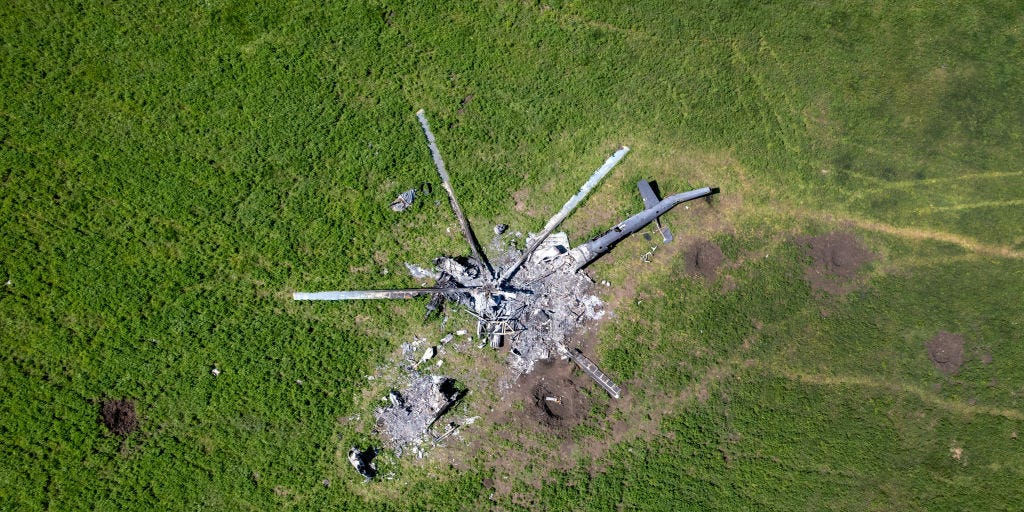
The war in Ukraine has shown that helicopters remain useful but are far more vulnerable than many expected. Dense air defenses, portable missiles, radar systems, drones, and electronic warfare have made low-altitude flight extremely dangerous. A helicopter operating near a front line packed with sensors and missiles faces a sky full of bad options.
Why the Helicopter Is Being Reconsidered
Helicopters are expensive. Pilots are difficult to train. Maintenance is demanding. When losses occur, the cost is not only financial; it is human and operational. In Ukraine, both sides have had to adapt helicopter operations because flying close to enemy positions can be extremely risky.
One major problem is that many missions once performed by helicopters can now be performed, partly or fully, by drones. Reconnaissance, targeting, harassment, and some strike missions can be handled by unmanned systems that are cheaper and do not risk a pilot. A drone may not carry the same payload or flexibility as an attack helicopter, but it can be produced in large numbers and replaced without a national tragedy every time one is lost.
That cost comparison is painful. A helicopter is a complex flying machine with a crew, engines, avionics, weapons systems, and a maintenance tail. A drone is often closer to “flying electronics with attitude.” When the battlefield is saturated with threats, commanders naturally ask: why send a crewed aircraft when an unmanned system can do part of the job?
The Future Is Not Helicopter-Free
Helicopters will not disappear. They can transport troops, evacuate wounded personnel, move supplies, and provide fire support under the right conditions. But Ukraine suggests that attack helicopters cannot operate as freely in high-threat environments as older doctrine imagined.
The future helicopter will need better stand-off weapons, stronger electronic protection, better coordination with drones, and smarter mission planning. It may become less of a front-line duelist and more of a carefully protected networked platform. The helicopter is not dead; the helicopter swagger is what needs a funeral.
4. Large Surface Warships Without Drone Defense
Perhaps the most dramatic lesson from Ukraine has come at sea. Ukraine began the full-scale war with limited conventional naval power, yet it found ways to challenge Russia’s Black Sea Fleet using missiles, intelligence, and uncrewed surface vessels. In plain English: sea drones helped make large warships look surprisingly nervous.
For decades, major surface combatants projected strength. A large warship was a floating symbol of national power, bristling with sensors, missiles, guns, and command systems. But the Black Sea has shown that even impressive ships can be vulnerable when they face persistent surveillance, coastal missiles, unmanned boats, aerial drones, and clever targeting.
The Rise of the Cheap Naval Threat
Uncrewed surface vessels are not magic. They have limitations. Weather, communications, navigation, and defenses all matter. But they create a serious problem for traditional navies because they are comparatively cheap, hard to spot, and can be used in swarms or repeated attacks. A warship worth hundreds of millions or billions of dollars cannot casually absorb repeated threats from systems that cost far less.
This is the same cost asymmetry seen on land. If a low-cost drone forces a high-value ship to retreat, hide, burn expensive interceptors, or remain in port, the drone has achieved more than its price tag suggests. That is the kind of math that makes admirals stare quietly at spreadsheets.
What Ukraine Has Taught Navies
The lesson is not that ships are obsolete. The lesson is that ships without layered drone defense are in trouble. Modern navies must defend against threats above, below, and on the surface. They need electronic warfare, rapid-fire close defense, better sensors, autonomous countermeasures, decoys, and tactics designed for a world where the enemy may attack with machines that do not need to come home.
Large surface warships still matter for sea control, air defense, strike missions, logistics, and deterrence. But the old assumption that size equals safety has taken a torpedo-sized hit. In the drone age, a ship must be not only powerful but alert, networked, and protected against small things with very rude intentions.
The Bigger Lesson: Platforms Are Becoming Less Important Than Networks
The war in Ukraine is not simply proving that one weapon beats another. It is proving that networks beat isolated platforms. A tank by itself is vulnerable. A gun by itself is vulnerable. A helicopter by itself is vulnerable. A ship by itself is vulnerable. But a force connected by sensors, communications, electronic warfare, drones, air defense, logistics, and trained operators becomes much harder to defeat.
This is the biggest shift in modern warfare. The question is no longer, “How powerful is this weapon?” The better question is, “How well does this weapon fit into a system that can find, decide, strike, move, and adapt?”
A simple drone connected to a fast targeting network can be more influential than a sophisticated platform operating blindly. A cheap sensor can make an expensive weapon more effective. A decoy can save a real asset. A jammer can be as important as a cannon. The battlefield is becoming an ecosystem, and every lonely dinosaur should be concerned.
What “Obsolete” Really Means in Ukraine
The word “obsolete” can be misleading. Muskets are obsolete. Horse cavalry as a battlefield shock force is obsolete. Fax machines should be obsolete, though some offices apparently did not receive the memo. Tanks, artillery, helicopters, and warships are not in that category yet.
What Ukraine is proving obsolete is the old way of using them. Unsupported armor, static artillery, exposed helicopters, and large ships without drone protection are all examples of weapons being overtaken by changes in technology and tactics.
The winners in future wars will not simply be the countries with the biggest platforms. They will be the countries that can adapt quickly, produce affordably, integrate new technology, train people well, and learn faster than the enemy. Ukraine has shown that innovation is not a luxury. It is armor, ammunition, and survival rolled into one.
Experience-Based Lessons from the Ukraine War
The experience of the war in Ukraine offers a practical warning for militaries, policymakers, defense companies, and even ordinary readers trying to understand modern conflict: yesterday’s impressive weapon can become tomorrow’s expensive liability if it is not protected, connected, and constantly updated.
One major experience is that visibility has become deadly. In past wars, a unit might hide behind distance, darkness, trees, terrain, or confusion. In Ukraine, drones and digital surveillance have made hiding much harder. Soldiers, vehicles, artillery positions, supply depots, and ships can be observed from multiple sources. That means movement must be shorter, faster, and better planned. Camouflage is no longer just paint and netting; it includes heat discipline, electronic silence, decoys, and deception.
Another experience is that cheap systems can create expensive problems. This is one of the most important lessons of the war. A low-cost drone may not look impressive beside a tank or fighter aircraft, but it can locate targets, guide fire, disrupt movement, or force an enemy to spend costly defensive weapons. The side that can produce and replace large numbers of affordable systems gains endurance. In a long war, endurance can matter as much as elegance.
The war has also shown that adaptation speed is a weapon. Both Ukraine and Russia have changed drone designs, electronic warfare methods, armor protection, and field tactics repeatedly. A solution that works in March may be less effective by May. This rapid cycle makes traditional procurement look painfully slow. Modern militaries need ways to test, modify, produce, and distribute equipment quickly. Otherwise, they risk showing up to a drone war with a committee-approved brochure and a very confident PowerPoint.
A fourth experience is that people still matter enormously. Technology gets the headlines, but trained operators, mechanics, logisticians, commanders, engineers, and infantry remain essential. Drones do not replace judgment. Sensors do not replace discipline. Artificial intelligence does not carry ammunition through mud. The human side of war remains central, but humans now need better tools and better protection.
Finally, Ukraine teaches that no weapon should be treated as a celebrity. Tanks, artillery, helicopters, ships, missiles, drones, and electronic warfare all have strengths and weaknesses. The smartest forces do not worship platforms. They build balanced systems. They ask what a weapon can do, what can defeat it, how it can be protected, and whether it can be replaced if losses mount.
The future of warfare will not be clean, simple, or polite. It will be crowded with drones, sensors, jammers, missiles, decoys, cyber tools, and old-fashioned mud. The weapons that survive will be the ones that adapt to that reality. The ones that do not may still look impressive in parades, but on the battlefield, looking impressive is not the same as staying alive.
Conclusion
The war in Ukraine is not saying that tanks, artillery, helicopters, and warships should be thrown into history’s junk drawer. It is saying that these weapons must evolve or become dangerously outdated. Unsupported tanks, static towed artillery, exposed attack helicopters, and large ships without drone defense are all being challenged by a battlefield filled with cheap sensors, unmanned systems, precision weapons, and rapid adaptation.
The central message is simple: modern warfare punishes anything that is visible, predictable, slow, or isolated. The winners will be those who combine old firepower with new intelligence, mobility, protection, and production speed. In Ukraine, the future did not arrive wearing a shiny uniform. It arrived buzzing overhead, floating across the sea, jamming signals, correcting artillery fire, and reminding everyone that even the toughest weapons need to keep up.


