
Anemia can make an ordinary staircase feel like Moin enough healthy red blood cells or hemoglobin, the body may struggle to deliver sufficient oxygen to the brain, muscles, heart, and other tissues. The result can be fatigue, weakness, dizziness, shortness of breath, headaches, a rapid heartbeat, or chest discomfort.
For many people, anemia improves after its underlying cause is treated with iron, vitamin B12, folate, medication, or control of bleeding. In more serious situations, however, a blood transfusion may be the fastest way to restore the blood’s oxygen-carrying capacity. A red blood cell transfusion can be lifesaving, but it is not a universal cure or an automatic response to every low hemoglobin result. guide explains when a blood transfusion for anemia may be recommended, how the procedure works, what patients commonly experience, possible transfusion side effects, and what recovery may look like afterward.
How anemia affects the body
Red blood cells contain hemoglobin, an iron-rich protein that picks up oxygen in the lungs and carries it throughout the body. Anemia develops when the body does not make enough red blood cells, loses them through bleeding, or destroys them faster than they can be replaced.
Common causes include iron deficiency, vitamin B12 or folate deficiency, heavy menstrual bleeding, gastrointestinal bleeding, chronic kidney disease, cancer treatment, inflammation, inherited blood disorders, and bone marrow diseases. Because the causes differ, effective anemia treatment must address more than the laboratory number. d versus severe anemia
Mild anemia may cause no noticeable symptoms, especially when it develops gradually. The body can be surprisingly good at adapting, rather like someone continuing to work with a phone battery permanently stuck at 14%.
When anemia becomes more severe, symptoms may include:
- Extreme fatigue or weakness
- Shortness of breath at rest or with minimal activity
- Dizziness, lightheadedness, or fainting
- A fast or irregular heartbeat
- Pale skin
- Headaches or difficulty concentrating
- Chest pain, particularly in people with heart disease
The speed of the hemoglobin decline matters. A person whose hemoglobin decreases suddenly because of major bleeding may become critically ill even if the final number would be tolerated by someone whose anemia developed slowly over several months.
When is a blood transfusion used for anemia?
A red blood cell transfusion may be considered when anemia is severe, causing significant symptoms, threatening organ function, or associated with active blood loss. It may also be part of ongoing treatment for certain inherited or bone marrow disorders.
Situations in which transfusion may be appropriate include:
- Major blood loss following trauma, surgery, childbirth, or internal bleeding
- Severe anemia with shortness of breath, fainting, chest pain, or unstable vital signs
- Bone marrow failure, aplastic anemia, leukemia, or myelodysplastic syndromes
- Anemia caused by chemotherapy or other cancer treatments
- Severe complications of sickle cell disease
- Moderate or severe thalassemia requiring scheduled transfusions
- Severe anemia associated with chronic kidney disease when other treatments are insufficient
In cancer care, for example, transfusion decisions commonly consider both the red blood cell count and symptoms such as severe fatigue or breathlessness. In sickle cell disease, transfusions may also be used to prevent or treat complications such as stroke or acute chest syndrome. there a specific hemoglobin level for transfusion?
There is no single hemoglobin level that automatically means every patient needs blood. For most hemodynamically stable hospitalized adults, modern guidelines support a restrictive transfusion strategy, with clinicians commonly considering transfusion when hemoglobin falls below approximately 7 grams per deciliter.
A different threshold may be appropriate for someone with active bleeding, heart disease, lung disease, symptoms of poor oxygen delivery, or an upcoming operation. Certain patients undergoing cardiac or orthopedic surgery may be managed using a somewhat higher threshold. People with acute coronary syndromes require especially individualized decisions because the heart may be vulnerable to reduced oxygen delivery. ther words, hemoglobin is an important part of the decision, but it is not the entire decision. Doctors also assess blood pressure, heart rate, breathing, ongoing blood loss, medical history, symptoms, and whether the anemia is improving or worsening.
Why transfusion is not always the first treatment
A transfusion supplies functioning red blood cells quickly, but it usually does not correct the reason anemia developed. If iron deficiency is the problem, the body still needs iron. If an ulcer is bleeding, the bleeding still needs to be stopped. If the kidneys are producing too little erythropoietin, that problem remains after the donated cells arrive.
Whenever the situation allows, clinicians treat the underlying cause with oral or intravenous iron, vitamin replacement, medication, control of bleeding, or treatment of the responsible disease. Transfusion is generally reserved for cases in which its expected benefit outweighs its risks. t happens before a blood transfusion?
Blood tests and compatibility checks
Before a nonemergency transfusion, the healthcare team usually performs a complete blood count and reviews the patient’s symptoms and medical history. A blood sample is then used for ABO and Rh typing, an antibody screen, and crossmatching.
Crossmatching helps confirm that the donated red blood cells are compatible with the recipient’s blood. Patients should tell the care team about previous transfusions, pregnancies, known antibodies, or past transfusion reactions because these details can affect blood selection. sent and preparation
A clinician will normally explain why the transfusion is being recommended, its expected benefits, possible alternatives, and known risks. The patient may be asked to sign a consent form unless emergency circumstances make advance consent impossible.
Patients can usually eat, drink, and take routine medications unless their medical team gives different instructions. Wearing comfortable clothes and bringing entertainment is sensible because transfusions involve a fair amount of sitting. A charged phone, headphones, or a book can make the IV pole feel slightly less like an unwanted roommate.
What to expect during a red blood cell transfusion
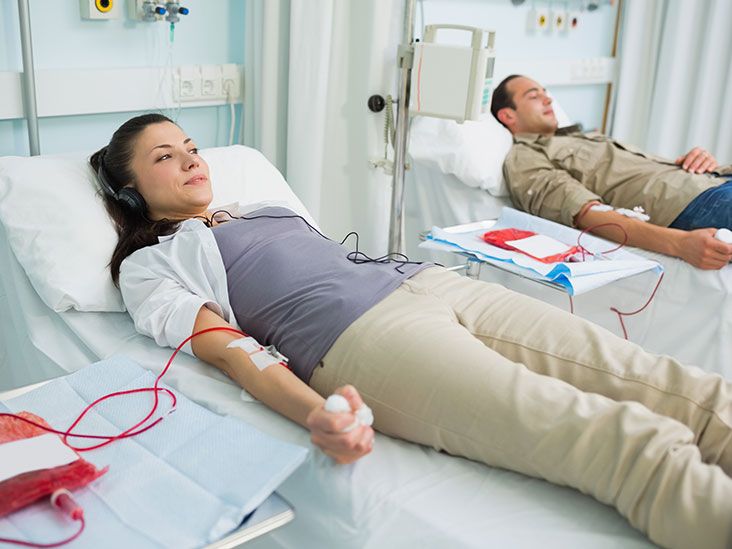
The transfusion usually takes place in a hospital, infusion center, emergency department, surgical area, or specialized outpatient clinic. The general process includes the following steps:
- A nurse checks the patient’s identity, blood product, blood type, and prescription.
- Baseline temperature, blood pressure, pulse, and breathing rate are recorded.
- An intravenous line is placed into a vein, unless the patient already has a suitable IV or central line.
- The blood is started slowly while the patient is closely observed.
- Vital signs are checked again during and after the transfusion.
- The infusion rate may be increased when no signs of a reaction appear.
A transfusion may take one to four hours, depending on the amount of blood needed, the patient’s condition, and how quickly the fluid can be safely administered. People at risk of fluid overload may receive blood more slowly or be given medication to help remove excess fluid. t does a transfusion feel like?
Most people do not feel the blood entering the vein. The main physical sensation is usually the IV insertion, which may feel like a brief pinch. Some patients notice coolness around the IV site, while others feel nothing unusual at all.
The nursing team pays particularly close attention during the early part of the transfusion because certain reactions can begin soon after blood administration starts. Patients should report any new symptom immediately rather than waiting to see whether it disappears.
How quickly can a transfusion improve anemia symptoms?
Red blood cell transfusions begin increasing oxygen-carrying capacity as the cells enter circulation. Some people notice less dizziness, improved breathing, or better energy within hours. Others feel improvement gradually over the next day or two, especially when illness, infection, cancer treatment, or another medical condition is also contributing to fatigue.
The healthcare team may repeat a complete blood count after the transfusion. Many hospitals use a “one unit, then reassess” approach for stable patients. This helps provide enough blood to achieve the clinical goal without exposing the patient to more donor blood than necessary.
A transfusion’s benefit may be temporary when the body continues losing blood, destroying red blood cells, or producing too few new cells. Follow-up treatment is therefore important even when the patient feels dramatically better.
Blood transfusion side effects and risks
Blood transfusions are common and generally safe, but no medical treatment is completely risk-free. Donated blood in the United States passes through donor screening, infectious-disease testing, processing, and compatibility procedures before it is released for use. These overlapping safeguards make transmission of serious infections very uncommon. mon or relatively mild reactions
Fever and mild allergic reactions are among the more common transfusion problems. Possible symptoms include:
- Fever or chills
- Headache
- Itching, hives, or a rash
- Mild nausea
- Shivering
If these symptoms develop, the transfusion is usually paused while the patient is evaluated. Medication may be given when appropriate, and the blood bank may perform additional testing. A mild reaction does not automatically mean the patient can never receive blood again. ious reactions requiring urgent attention
Serious transfusion reactions are uncommon, but they require immediate treatment. Warning signs during or shortly after a transfusion include:
- Trouble breathing or sudden coughing
- Chest, back, or abdominal pain
- A rapid heartbeat or sudden blood pressure change
- Severe chills or a high fever
- Swelling of the face or throat
- Dark or red urine
- Severe weakness, confusion, or a sense that something is seriously wrong
Rare complications include acute hemolytic reactions, severe allergic reactions, transfusion-related acute lung injury, bacterial contamination, and transfusion-associated circulatory overload. Fluid overload is more likely in people with heart failure, kidney disease, advanced age, or difficulty handling additional fluid. ks associated with repeated transfusions
People who receive transfusions regularly may develop antibodies against donor red blood cell antigens, a process called alloimmunization. These antibodies can make compatible blood harder to find in the future.
Repeated transfusions may also cause excess iron to accumulate because the body has no efficient way to remove large amounts of transfusion-derived iron. Patients with thalassemia or other transfusion-dependent conditions may need iron chelation medicine and regular monitoring of the heart, liver, and other organs. t happens after the transfusion?
After the blood has been administered, the IV may be removed unless it is needed for another treatment. The care team checks vital signs and may order another blood test. Some outpatients can go home soon afterward, while hospitalized patients continue receiving care for the condition that caused their anemia.
Follow any discharge instructions and keep scheduled laboratory appointments. Seek urgent medical care for trouble breathing, chest pain, fainting, severe weakness, facial swelling, dark urine, high fever, or rapidly worsening symptoms. A delayed reaction can occasionally appear days or weeks later, so patients should mention the recent transfusion when contacting a healthcare professional.
Alternatives and treatments used with transfusion
Depending on the type of anemia, treatments that may prevent, delay, or supplement a transfusion include:
- Oral iron for uncomplicated iron-deficiency anemia
- Intravenous iron when oral treatment is ineffective, poorly tolerated, or too slow
- Vitamin B12 injections or supplements
- Folate replacement
- Erythropoiesis-stimulating agents for selected patients with kidney disease, cancer-related anemia, or certain marrow disorders
- Medication to control inflammation or immune destruction of red blood cells
- Procedures or surgery to stop ongoing blood loss
- Disease-specific treatment for cancer, sickle cell disease, thalassemia, or bone marrow failure
These options are not interchangeable. Taking iron without confirmed iron deficiency, for example, may be ineffective and can sometimes be harmful. Laboratory testing helps identify which treatment the body actually needs rather than choosing supplements through medical guesswork. stions to ask before receiving blood
Patients and caregivers may find it helpful to ask:
- What is causing the anemia?
- What is my current hemoglobin level?
- Which symptoms or risks make transfusion appropriate?
- How many units are being recommended?
- Will my condition be reassessed after each unit?
- Are iron, vitamin replacement, medication, or other alternatives appropriate?
- Have any unusual antibodies been found in my blood?
- What symptoms should I report during and after the procedure?
- Will I need additional transfusions in the future?
A realistic transfusion experience: What the day may feel like
Imagine a patient named Jordan arriving at an outpatient infusion center after several weeks of worsening anemia. Jordan has been tired enough to need a break after showering and has started becoming breathless while walking across a parking lot. A recent blood test showed a very low hemoglobin level, and the healthcare team recommended a red blood cell transfusion while continuing to investigate the cause.
Jordan checks in, confirms basic medical information, and sits in a reclining chair. The nurse asks about previous transfusions, allergies, fever, breathing problems, and any earlier reactions to blood products. Another blood sample may be collected if the type-and-screen testing is not already current. Waiting for compatible blood can take time, especially when a patient has uncommon antibodies. This delay can feel frustrating, but it is part of the safety process rather than evidence that the staff forgot the patient behind a potted plant.
The first few minutes
After checking Jordan’s identity and the blood product with another qualified staff member, the nurse connects the blood to the IV. The infusion begins slowly. Jordan feels no dramatic surge of energy and hears no heroic movie soundtrack. Mostly, there is a quiet room, an IV pump, and repeated questions about itching, chills, chest discomfort, or shortness of breath.
The nurse records vital signs again after the transfusion begins. Jordan notices that the attention is more intensive during the early stage and then becomes less intrusive once everything remains stable. Reading, watching a movie, working on a laptop, or taking a nap can help pass the time.
Halfway through the transfusion
The blood bag gradually empties. Jordan may visit the restroom with help managing the IV pole. Patients should not disconnect equipment or silence alarms themselves, even when the machine seems determined to announce every minor inconvenience to the entire building.
If Jordan suddenly develops itching or chills, the correct response is to alert the nurse immediately. The staff may stop the transfusion, assess symptoms, check vital signs, notify the prescribing clinician, and contact the blood bank. Reporting a possible reaction is never “making a fuss.” It is exactly what patients are supposed to do.
Going home
Once the transfusion is complete, Jordan’s vital signs are checked again. Depending on the reason for treatment, the care team may order a follow-up blood count immediately or schedule one later. Jordan receives instructions describing which symptoms require a phone call and which require emergency care.
Some people leave feeling noticeably less dizzy or breathless. Others are still tired because anemia was only one part of the problem. A transfusion does not instantly reverse sleep loss, infection, inflammation, chemotherapy side effects, or the emotional strain of illness. Improvement can be real without feeling like a complete reset button.
The following days
Jordan may gradually notice that climbing stairs is easier and the heart no longer races during minor activities. However, the next appointment remains essential. The medical team still needs to determine whether the anemia came from iron deficiency, hidden bleeding, kidney disease, a medication, bone marrow dysfunction, or another cause.
This is the most important lesson from the experience: a blood transfusion can stabilize the immediate problem, but long-term recovery depends on understanding why the red blood cell count fell. The transfusion provides reinforcements. The rest of the treatment plan figures out why the original troops disappeared.
Conclusion
A blood transfusion for anemia can quickly replace red blood cells and improve oxygen delivery when anemia is severe, symptomatic, or associated with dangerous blood loss. The procedure is carefully controlled through blood typing, antibody screening, crossmatching, donor testing, identity checks, and continuous observation.
Most transfusions are completed without serious complications. Nevertheless, patients should understand potential reactions and report fever, chills, itching, chest pain, breathing difficulty, back pain, dark urine, or sudden illness immediately.
Most importantly, transfusion is only one part of anemia treatment. The best long-term plan identifies and addresses the underlying cause, whether that means replacing iron or vitamins, controlling bleeding, treating kidney disease, managing cancer therapy, or providing specialized care for an inherited blood disorder.


