
Diversification is usually summarized as “don’t put all your eggs in one basket.” Useful advicebut incomplete. What if all the baskets are riding in the same speeding truck?
A portfolio can hold dozens of investments and still be concentrated. Several technology funds may own the same giant companies. A stock fund, a real estate fund, and a high-yield bond fund may all struggle when investors suddenly flee risk. Diversification works only when the pieces of a portfolio respond differently enough to economic surprises, changing interest rates, inflation, and market stress.
Used correctly, portfolio diversification can reduce avoidable risk, smooth the investing experience, and make it easier to remain invested during ugly markets. It cannot guarantee profits or prevent every loss. Its practical purpose is to stop one company, sector, country, or forecast from deciding an investor’s entire financial future.
What Diversification Is Designed to Do
Diversification combines investments that are not perfectly synchronized. When one holding falls, another may decline less, remain stable, or rise. The goal is not to own something that wins every day. The goal is to build a portfolio in which one disappointment cannot burn down the whole house.
Reduce Specific Risk
Specific risk belongs to an individual company, issuer, industry, or country. A product failure, accounting scandal, lawsuit, factory shutdown, or regulatory decision can crush one investment without damaging the entire market. Broad mutual funds and exchange-traded funds can spread that risk across hundreds or thousands of securities.
Manage, Not Erase, Market Risk
Recessions, inflation shocks, credit crises, wars, and abrupt interest-rate changes can push many assets down together. Diversification may soften the damage, but it is not an invisible force field. Money needed soon should not depend on a stock-market recovery.
Improve the Range of Possible Outcomes
A concentrated portfolio may produce spectacular gains, but it also carries a wider range of outcomes, including catastrophic ones. A diversified portfolio gives up the fantasy of always owning the hottest winner in exchange for a better chance of reaching a real-world goal.
When Diversification Works Best
1. The Holdings Face Genuinely Different Risks
Stocks depend heavily on corporate profits and investor confidence. High-quality government bonds respond more to interest rates, inflation expectations, and demand for safety. Cash provides liquidity. International equities add exposure to different currencies, business cycles, valuations, and industry mixes. Real assets may react differently to inflation or supply constraints.
The labels do not matter as much as the economic drivers. Two funds with different names may be financial twins wearing different hats.
2. Correlations Remain Below Perfect Lockstep
Correlation measures how closely investments move together. A value near positive one means they tend to rise and fall in the same direction. Lower or negative correlation creates more potential for risk reduction.
However, correlations change. Assets that behave differently in normal markets may suddenly fall together in a panic. Diversification should therefore be judged across multiple environments rather than one convenient historical period.
3. The Portfolio Diversifies Within and Across Asset Classes
Owning only U.S. large-company stocks is broader than owning one company, but it remains one slice of the investment world. Effective diversification may include large-, mid-, and small-cap stocks; growth and value companies; domestic and international markets; government and corporate bonds; several maturities; and a reserve of cash.
Within bonds, issuer quality and maturity matter. Within stocks, sector and geographic exposure matter. A portfolio should be diversified in layers, not merely decorated with a long list of ticker symbols.
4. The Allocation Matches the Time Horizon
A diversified portfolio works only if the investor can hold it long enough. Money needed for next year’s tuition, a home purchase, or an emergency fund should not depend on a rebound in stocks. Long-term retirement assets can usually tolerate more short-term volatility than money assigned to next month’s mortgage payment.
This is why asset allocation should begin with the purpose of the money. The appropriate mixture depends on the goal, withdrawal schedule, financial flexibility, and ability to tolerate temporary losses without panic selling.
5. The Portfolio Is Rebalanced
Markets continuously rearrange a portfolio. If stocks surge while bonds lag, a balanced account can quietly become an aggressive stock portfolio. Rebalancing restores the intended weights by trimming assets above target and adding to those below target.
This is not magic market timing. It is risk maintenance. Rebalancing may be performed annually or when allocations cross predetermined bands, while accounting for taxes and trading costs.
6. Costs Stay Low
Broad index funds and diversified ETFs can make diversification inexpensive. Complexity, however, can become costly. Management fees, performance fees, tax bills, trading costs, and illiquidity may consume the theoretical benefit of adding another asset.
A new holding should improve expected portfolio behavior, not merely make the account statement look sophisticated enough to require its own leather briefcase.
7. The Investor Remains Disciplined
Diversification often feels disappointing because something is almost always underperforming. That is not necessarily a defect; it may be evidence that the holdings are not moving in unison.
Investors sabotage diversification when they sell recent losers and chase recent winners. A sensible allocation works best with automatic contributions, written rebalancing rules, and the humility to accept that the portfolio will not lead every calendar year.
Real-World Examples of Diversification at Work
A Single Stock Versus a Broad Equity Fund
Imagine an employee with most retirement savings invested in the employer’s stock. Salary, benefits, career prospects, and investment wealth all depend on one company. If the business stumbles, several parts of the employee’s financial life can suffer at once.
Reducing that position and adding a broad market fund lowers company-specific risk while preserving exposure to the overall stock market. The employee may still experience market declines, but one disappointing earnings report is less likely to wreck both a career and a retirement account.
Stocks and High-Quality Bonds During a Growth Scare
When economic growth weakens and inflation is contained, stocks may fall as profit forecasts decline. High-quality bonds may rise or fall less as interest rates move lower. In that environment, bonds can provide ballast and a source of funds for rebalancing into cheaper equities.
This relationship does not work during every downturn, but it demonstrates how assets with different economic drivers can improve portfolio stability.
Global Exposure When Leadership Changes
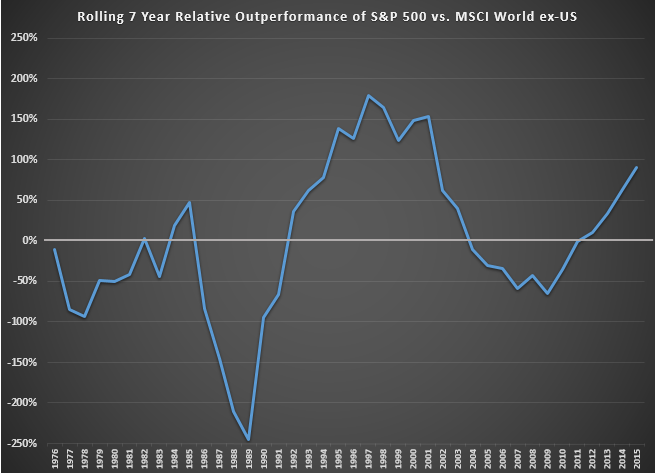
No country, sector, or investment style leads forever. U.S. stocks may dominate for a period, while international markets, smaller companies, or value stocks lead in another.
Global diversification avoids an all-or-nothing prediction about the next winner. It also reduces dependence on one country’s valuations, currency, economic policy, and market structure.
Cash During a Market Decline
Cash is not exciting, and that is precisely its job. A properly sized emergency reserve can prevent an investor from selling stocks after a sharp decline to cover an unexpected medical bill, home repair, or temporary loss of income.
Here, diversification works through behavior as much as return. Liquidity protects the long-term portfolio from a badly timed withdrawal.
When Diversification Failsor Only Pretends to Work
Everything Is Tied to the Same Factor
A portfolio may own a technology ETF, a growth fund, a communications fund, and several famous individual stocks. It looks busy, but its results may still depend mainly on large growth companies and investor enthusiasm for future earnings.
This is concentration disguised as variety. Counting funds is not the same as counting independent sources of risk.
Inflation Hurts Both Stocks and Bonds
The traditional stock-bond relationship is not permanent. During an inflation shock, central banks may raise rates while companies face higher costs and slower demand. Bond prices can fall as yields rise, while stocks decline as valuations and earnings expectations weaken.
The difficult market of 2022 demonstrated that both major asset classes can struggle together. A standard stock-and-bond portfolio was still more diversified than a single-stock account, but its usual cushioning effect was considerably weaker.
Liquidity Disappears During a Crisis
During severe market stress, investors often sell whatever they can. Correlations may rise, bid-ask spreads may widen, and supposedly independent assets can decline together.
Diversification still matters, but its short-term protection may weaken precisely when everyone is checking account balances before breakfast.
More Funds Create Duplication
Owning ten funds does not guarantee broader exposure than owning three. Several funds may hold the same largest companies, use similar factor screens, or track overlapping indexes. Fund clutter creates paperwork and false confidence without meaningfully changing portfolio risk.
Investors should inspect underlying holdings rather than trusting fund names. A “technology innovators” fund and a “future growth leaders” fund may be serving the same meal on different plates.
Assets Are Added Without a Defined Role
Commodities, private investments, real estate, managed futures, and other alternatives may help in certain portfolios. They may also introduce high fees, leverage, tax complexity, uncertain valuations, or limited liquidity.
Diversification becomes “diworsification” when an asset is added because it sounds different rather than because it solves a clearly identified problem.
How to Build Diversification That Actually Works
Start With the Job of the Money
Separate short-term spending needs from long-term growth capital. Emergency savings, upcoming purchases, and near-term withdrawals need stability. Retirement assets with decades to grow can accept more volatility.
A portfolio should be built around when the money will be used, not around whichever asset recently produced the prettiest chart.
Create a Simple Core Allocation
A hypothetical moderate portfolio might hold 55% U.S. stocks, 20% international stocks, 20% high-quality bonds, and 5% cash. This is an illustration, not a universal recommendation.
Each component has a job. U.S. equities provide long-term growth exposure. International stocks broaden the opportunity set. Bonds may provide income and reduce volatility. Cash supplies immediate liquidity.
Check Overlap and Hidden Concentration
Review the largest underlying holdings, sector weights, country exposure, credit quality, bond duration, and currency exposure. Investors should also count risks outside the investment account.
Someone whose income, home value, and employer stock all depend on one local industry may need more diversification elsewhere. A portfolio does not live in a vacuum, no matter how tidy the pie chart looks.
Use Rules Instead of Predictions
Choose target weights and reasonable tolerance bands. Direct new contributions, dividends, and interest toward underweight assets before selling. This may reduce taxes and trading.
The objective is not to forecast next quarter. It is to keep the portfolio aligned with the original risk plan.
Stress-Test the Plan
Ask practical questions. What happens if stocks fall 35%? What if inflation remains high and bonds decline? What if income stops for six months? What if the domestic currency weakens? What if a private investment cannot be sold?
A portfolio is meaningfully diversified only if the investor remains financially and emotionally capable of following the plan across several unpleasant scenarios.
Keep the Strategy Understandable
A strategy that requires a 42-page instruction manual may be difficult to maintain during a crisis. Broad, low-cost funds, global exposure, adequate cash, a sensible stock-bond mix, and periodic rebalancing can accomplish more than an investment zoo assembled from every fashionable idea on financial television.
The Most Important Test: Can You Stick With It?
The mathematically elegant portfolio is useless if its owner abandons it during the first frightening decline. Risk should be considered in dollars, not merely percentages. A 20% loss sounds academic until it represents several years of salary.
The best diversified portfolio is not necessarily the one with the highest projected return. It is the one that offers a credible path to the goal, survives bad markets, preserves liquidity, controls costs, and remains emotionally holdable.
Conclusion: Every Holding Needs a Purpose
Diversification is not about owning more things. It is about owning a thoughtful mix of investments that react differently to the forces moving markets. It works when exposures are broad, correlations are imperfect, costs are controlled, the allocation matches the time horizon, and the investor rebalances instead of chasing performance.
It works less reliably when multiple funds share the same underlying risks, inflation pushes stocks and bonds down together, liquidity vanishes, or complex assets are added without a clear role.
Diversification cannot guarantee a profit. Its value is more practical: it reduces the chance that one company, one country, one forecast, or one emotional decision determines the outcome.
Think of diversification less as collecting lottery tickets and more as building a sturdy bridge. No single beam makes it indestructible, but several well-chosen supports make reaching the other side far more likely.
Practical Experience: What Investors Learn Across Market Cycles
The most useful lessons about diversification rarely arrive during calm markets. They appear when one investment is soaring, another looks embarrassingly dull, and every headline insists that the old rules have stopped working.
Consider a composite investor named Daniel, based on patterns familiar to many long-term savers. Early in his career, Daniel bought shares of a fast-growing company he understood through work. The stock doubled, then doubled again. His diversified retirement fund looked painfully slow. Encouraged by success, he added more company stock and began treating diversification as something cautious people used when they lacked conviction.
Then the company missed expectations, a competitor released a stronger product, and the stock fell sharply. Daniel did not lose everything, but he discovered that confidence and concentration had quietly become the same thing. His salary and portfolio were exposed to one business. The lesson was not that individual stocks are forbidden. It was that a promising idea should not become a financial monarchy.
Daniel rebuilt around broad U.S. and international equity funds, high-quality bonds, and cash. For years, one piece always seemed unnecessary. When stocks rallied, bonds looked like furniture wrapped in plastic. When U.S. companies led, international funds appeared to have missed the flight. When cash yields were low, the emergency reserve seemed lazy.
Eventually, each “disappointing” asset performed its assigned job. Bonds reduced swings during some growth scares. Cash paid for a major home repair without forcing a stock sale. International holdings provided exposure to companies and industries less represented in the U.S. market. Rebalancing encouraged Daniel to buy after declines instead of waiting for the emotional comfort of higher prices.
The experience also exposed diversification’s limitations. During a broad panic, nearly every risky asset fell together. During an inflation shock, stocks and bonds both struggled. Daniel learned that diversification does not promise positive returns every year. It aims to improve resilience across many years and many possible futures.
Another lesson involved overlap. At one point, Daniel owned six equity funds and assumed he had achieved elite-level diversification. A holdings review showed that several were dominated by the same large companies. He had more statements, more ticker symbols, and more complexity, but not much more protection. Simplifying the lineup made the risks easier to see.
The final lesson was behavioral. Daniel’s best decisions were not brilliant forecasts. They were boring systems: automatic monthly contributions, an annual review, target allocation bands, and a rule against changing strategy because of one frightening week. Those habits kept diversification intact when emotion wanted to replace it with improvisation.
That is how diversification often works in real life. It rarely feels optimal in the moment. It feels like owning yesterday’s loser beside today’s winner. Its payoff becomes visible later, when no single mistake, disappointment, or market regime was large enough to destroy the plan.
SEO Metadata
Note: This article is for general educational purposes and does not provide personalized investment, tax, or legal advice. Diversification does not ensure a profit or protect against every loss.