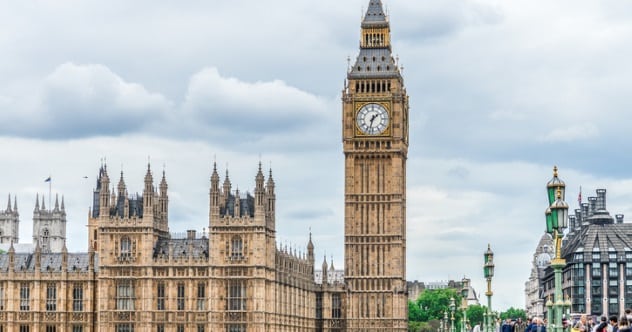

The phrase “going down the tubes” sounds like something shouted by a furious pub regular after discovering that his pint now costs more than a small appliance. Yet behind the melodrama lies a serious question: Is the United Kingdom experiencing temporary turbulence, or has national decline become a long-term condition?
Britain is not a failed state. It remains a wealthy democracy with respected universities, major financial markets, innovative companies, powerful cultural exports, and institutions that many countries would happily borrow. London has not turned into a medieval swamp, despite what certain social-media accounts may imply.
However, prosperity is not measured only by skyscrapers, royal ceremonies, and the ability to produce internationally successful crime dramas. It is also measured by whether ordinary people can afford homes, receive timely medical care, travel on functioning roads, trust public institutions, and believe their children will enjoy better lives.
On those everyday measures, the warning lights are flashing. Weak productivity, expensive housing, strained public services, political instability, regional inequality, and crumbling infrastructure have combined to create a persistent sense of British decline. Here are ten signs that the UK may indeed be heading down the proverbial tubesalthough, considering the state of some water systems, the tubes may already be overflowing.
1. Economic Growth Has Become Painfully Sluggish
A healthy economy does not need to roar every year, but it should occasionally do more than clear its throat. Britain has spent much of the period since the 2008 financial crisis struggling with weak investment, slow productivity growth, and disappointing increases in income per person.
International Monetary Fund research found that British labor-productivity growth fell to roughly 0.5% after the financial crisis, while the comparable American rate remained around 1%. OECD forecasts have also continued to describe the UK outlook in terms such as “sluggish productivity,” “weak growth,” and “fiscal headwinds”phrases that economists use when “this is not going brilliantly” would sound insufficiently professional.
The central problem is not simply an occasional recession. It is the long-term failure to produce substantially more value for every hour worked. When productivity barely improves, wages struggle to rise, tax revenue disappoints, and governments have less money to improve public services.
Britain remains one of the world’s largest economies, but a large economy can still feel stagnant to the people living inside it. If national output rises mainly because the population grows, while output per person barely moves, the average household is unlikely to celebrate with champagneor even supermarket prosecco.
2. Living Standards Feel Stuck in Neutral
Economic statistics become politically explosive when they reach the kitchen table. British households have endured sharp increases in food, housing, transportation, and energy costs. Even after headline inflation falls, prices generally do not return to their previous levels. They simply rise more slowly, which is rather like being told that the leaking roof is now dripping at a more sustainable rate.
Many workers have received nominal pay raises, but those gains have often been consumed by higher rent, mortgage payments, utility bills, taxes, and grocery costs. Younger adults face an especially awkward bargain: work hard, pay more, save less, and perhaps inherit a portion of a house sometime around their seventy-third birthday.
The frustration is intensified by comparison. People see advanced economies attracting investment, expanding high-value industries, and delivering stronger income growth. Meanwhile, Britain’s public conversation repeatedly returns to fiscal restraint, limited room for spending, and another difficult budget.
Living-standard stagnation also changes behavior. Families delay having children, renters postpone buying homes, workers remain in unsuitable jobs, and small businesses avoid investing. The economy then becomes even less dynamic, creating a cycle in which national caution produces more reasons to be cautious.
3. The NHS Backlog Has Become a National Symbol
The National Health Service remains one of Britain’s most admired institutions. Its founding promisethat necessary medical care should not depend on personal wealthis a genuine national achievement. Unfortunately, admiration does not shorten a waiting list.
By May 2026, the NHS elective-care waiting list in England had climbed to approximately 7.28 million cases. About 2.51 million cases had been waiting longer than 18 weeks, while roughly 105,000 had been waiting more than a year.
Behind every figure is a person waiting for a diagnosis, operation, specialist appointment, or treatment that could restore mobility and independence. Delays can turn manageable illnesses into emergencies. They also push patients who can afford it toward private care, gradually creating a two-tier experience inside a system founded on universal access.
The challenge is not merely a lack of money. Staffing shortages, aging facilities, limited social-care capacity, cumbersome administration, and declining public-sector productivity all contribute. Reuters reported that healthcare productivity remained substantially below its pre-pandemic level even after resources increased.
When a country spends more but struggles to deliver more appointments and procedures, the problem is structural. The NHS is not collapsing everywhere, but patients should not need the patience of a Buddhist monk simply to see a specialist.
4. Housing Has Become a Generational Obstacle Course
For many younger Britons, the property ladder now resembles a ladder whose bottom three rungs have been removed and whose owner charges monthly rent for looking at it.
Britain has failed for decades to build enough homes in places where people need them. Restrictive planning processes, local opposition, infrastructure constraints, expensive land, construction costs, financing problems, and shortages of skilled workers all limit supply.
Private rents across Britain were 8.7% higher in January 2025 than a year earlier, while average London rents rose by 11%. The national government has promised large numbers of new homes, but actual completions have remained far below the pace needed to meet its ambitions.
High housing costs damage more than household budgets. Workers cannot easily move to productive cities. Businesses struggle to recruit. Families live in overcrowded properties. Young adults delay independence. Councils spend enormous sums placing homeless families in temporary accommodations.
Existing homeowners may enjoy rising paper wealth, but a country cannot become broadly prosperous by making one generation’s home increasingly unaffordable to the next. Eventually, the housing market stops functioning as a path to security and becomes a machine for transferring wealth according to birth year and parental property ownership.
5. Infrastructure Is Aging Faster Than It Is Repaired
Infrastructure decline rarely arrives with dramatic music. It appears one pothole, canceled train, leaking pipe, delayed project, and unreliable bus route at a time.
The British government announced £1.6 billion for local-road maintenance in England for 2025–2026, saying the funding could help repair millions of additional potholes and begin reversing a decade of deterioration. The scale of that promise reveals the scale of the backlog.
Rail passengers regularly encounter high fares, overcrowding, disruptions, and confusing ticket systems. Major infrastructure projects become trapped in planning disputes, budget revisions, political reversals, and consultant reports that appear capable of reproducing without human assistance.
Poor infrastructure quietly reduces productivity. A delayed commuter loses working time. A damaged road raises vehicle costs. An unreliable power connection delays construction. Slow planning discourages investment. None of these failures alone destroys a country, but together they make almost everything more expensive and frustrating.
The UK was the birthplace of the Industrial Revolution. It should not require an industrial archaeologist to determine when a local road was last resurfaced.
6. The Sewage Crisis Has Become Almost Too Literal
Few metaphors are as obliging as a country “going down the tubes” while its water companies discharge untreated sewage into rivers and coastal waters.
Official data showed that English water companies released untreated sewage for more than 3.6 million hours during 2024, a record total. Aging systems can become overwhelmed during heavy rain, but the frequency and duration of discharges have fueled public anger about underinvestment, regulation, executive compensation, dividends, and environmental damage.
The scandal matters because it combines several sources of national frustration in one foul-smelling package. Consumers face rising bills. Infrastructure requires enormous investment. Some companies carry significant debt. Regulators are accused of acting too slowly. Swimmers, anglers, tourism businesses, and wildlife absorb the consequences.
A wealthy island nation should be able to prevent its rivers and beaches from serving as emergency plumbing. The fact that ordinary citizens now consult pollution alerts before swimming is not exactly the victory over nature promised by modern civilization.
7. Local Government Is Being Asked to Do More With Less
National politics receives most of the attention, but citizens experience government locally. Councils maintain roads, collect waste, protect vulnerable children, support older residents, operate libraries, manage planning, and provide emergency housing.
Years of budget pressure, rising social-care demand, inflation, housing costs, and risky financial decisions have pushed several councils into severe distress. When local finances deteriorate, authorities increase fees, raise local taxes, reduce services, postpone maintenance, close facilities, or sell public assets.
The consequences are visible: shorter library hours, fewer youth programs, neglected parks, delayed repairs, reduced bus routes, and longer waits for basic administrative services. These may sound minor compared with national economic policy, but they shape how a place feels.
A community begins to sense decline when every public space appears slightly more neglected than it did five years earlier. The bins are collected less frequently, the leisure center closes, the high street loses another shop, and the council explains that difficult choices must be made. Curiously, the difficult choices always seem to arrive on schedule even when the bus does not.
8. Political Stability Has Been Replaced by Permanent Drama
Britain once marketed itself as a model of institutional continuity. In recent years, leadership contests, resignations, policy reversals, scandals, Brexit disputes, fiscal shocks, and factional battles have made Westminster resemble a television series whose writers are running out of plausible plotlines.
Frequent changes in leadership do more than provide employment for political commentators. They weaken long-term planning. New ministers abandon their predecessors’ initiatives, reorganize departments, announce fresh strategies, and spend months discovering that the underlying problems remain exactly where they were left.
Investors value consistency. Infrastructure, energy, housing, education, and industrial policy require decisions that survive beyond one political season. When policy repeatedly changes direction, companies delay projects and civil servants become cautious.
Public dissatisfaction with democratic performance is also widespread across advanced nations, including the United Kingdom. That does not mean British democracy is disappearing, but it does indicate that voters increasingly doubt whether traditional institutions can solve practical problems.
The danger is not simply that one party loses support. It is that citizens conclude the entire political system is excellent at producing speeches and strangely less effective at producing homes, doctors, trains, or measurable progress.
9. Brexit Has Added Friction Without Settling the Argument
Brexit was sold through several different promises: sovereignty, immigration control, regulatory freedom, democratic accountability, trade opportunities, and greater national confidence. Supporters can reasonably argue that leaving the European Union restored powers to the British government. The economic price of exercising those powers, however, remains difficult to ignore.
Leaving the EU’s single market and customs union introduced additional paperwork, border checks, regulatory barriers, and uncertainty for businesses trading with Britain’s largest neighboring market. The Office for Budget Responsibility has estimated that Brexit will leave UK trade substantially lower in the long run than it otherwise would have been, while American analyses have emphasized Britain’s weak post-referendum growth compared with the United States.
Brexit did not cause every British problem. Weak productivity, housing shortages, regional inequality, and public-service pressures existed beforehand. The pandemic and global energy shock also caused major damage.
Nevertheless, adding trade friction to an already low-investment economy was an unusual form of self-improvement. Worse, Brexit has not ended the argument about Britain’s relationship with Europe. The country continues debating alignment, migration, trade, and sovereigntyonly now with additional customs forms.
10. Too Many People No Longer Expect the Future to Improve
The most troubling sign of national decline is psychological. Countries can recover from recessions, rebuild infrastructure, reform institutions, and increase housing supply. Recovery becomes harder when citizens stop believing improvement is possible.
Britain’s national mood increasingly contains resignation rather than urgency. Younger adults assume homeownership may be unreachable. Patients expect delays. Commuters anticipate cancellations. Businesses prepare for policy changes. Taxpayers expect to pay more while receiving less.
This pessimism can become self-fulfilling. People save defensively rather than invest. Skilled workers move abroad. Entrepreneurs choose safer opportunities. Communities resist construction because they distrust authorities to provide the required infrastructure. Governments offer small, low-risk policies because voters no longer believe large programs will work.
A declining country is not necessarily one with empty banks or ruined buildings. It can be a country that still possesses enormous resources but has forgotten how to turn them into visible progress.
Britain’s greatest danger is not that everything suddenly falls apart. It is that slow deterioration becomes normal, managed, measured, and politely accepted with a sigh, a cup of tea, and an online complaint form that promises a response within twenty-eight working days.
What the UK’s Decline Feels Like in Everyday Life
The national-decline debate can sound abstract when expressed through productivity charts and fiscal forecasts. Daily experience makes it more concrete. The following is a composite illustration based on widely reported conditions rather than the story of one specific person.
The Morning Commute
Imagine a worker living outside a major British city. The day begins with an alert announcing that the usual train has been canceled because of a staffing problem. The next service arrives late and already crowded. The ticket was expensive, but standing beside the restroom for forty minutes apparently counts as the premium transportation experience.
After reaching the city, the worker walks past shuttered storefronts and a construction site that has displayed the same “exciting new development” sign for three years. At lunch, a sandwich, drink, and bag of chips cost enough to provoke a brief examination of the receipt for hidden legal fees.
The Housing Calculation
Our hypothetical worker earns more than five years ago but feels no richer. Rent has risen, energy remains expensive, and saving for a down payment is painfully slow. Every increase in savings is chased by another increase in house prices, mortgage rates, or basic living costs.
Friends offer familiar advice: move farther away, find a smaller apartment, change jobs, skip vacations, stop buying coffee, or acquire wealthy parents. The last option is financially powerful but difficult to arrange retrospectively.
The worker checks property listings anyway. A compact home requiring “modernization” is priced like a small palace. “Modernization” appears to mean that the buyer must install heating, replace the roof, and persuade the mushrooms in the bathroom to relocate.
The Medical Wait
A persistent health problem leads to a doctor’s appointment and a specialist referral. The clinicians are professional and compassionate, but the system is overloaded. Weeks become months. The condition is not considered immediately dangerous, which is reassuring medically but unhelpful practically.
Private treatment would be faster but expensive. The worker begins comparing the cost of care with savings intended for housing. This is the uncomfortable reality of a strained universal system: the service remains available, but time itself becomes a form of rationing.
The Local Environment
At home, the local council announces another budget consultation. Residents are invited to choose which services should be reduced, producing the democratic thrill of deciding whether to lose the bus route or the public restroom.
The road contains several potholes. One has existed long enough to develop local character and could probably stand for election. The nearby library has shorter hours, the swimming pool faces closure, and the council tax bill continues rising.
During a warm weekend, the worker considers swimming at the coast but checks a pollution report first. A warning has been issued after a sewage discharge. The beach is still beautiful, provided nobody interacts too enthusiastically with the water.
The Political Conversation
At dinner with family, politics inevitably appears. One relative blames Brexit. Another blames immigration. Another blames austerity, poor management, excessive regulation, low taxes, high taxes, privatization, nationalization, or whichever prime minister occupied Downing Street when their patience expired.
Everyone disagrees about the cause, but they agree on the experience: ordinary systems feel less reliable, long-term planning seems absent, and each government announces change without making daily life noticeably easier.
The Quiet Decision
Eventually, the worker begins considering another country. The motivation is not hatred of Britain. It is affection mixed with frustration. The UK offers family, humor, history, music, community, beautiful landscapes, and a culture capable of making even administrative misery entertaining.
But affection cannot eliminate the housing bill, shorten the medical wait, or repair the railway. When skilled people start asking whether their effort would be rewarded more generously elsewhere, national decline becomes more than a newspaper argument. It becomes a personal calculation.
This is how deterioration is experienced: not as one dramatic collapse, but as hundreds of small compromises. A delayed appointment here, an unaffordable home there, a canceled train, a closed service, an increased bill, and another political promise whose delivery date remains mysteriously flexible.
Conclusion: Britain Is Struggling, but Decline Is Not Destiny
These ten signs do not prove that the United Kingdom is doomed. Britain still possesses enormous strengths: stable legal institutions, globally respected universities, scientific expertise, financial depth, creative industries, advanced technology companies, diplomatic influence, and a population capable of both innovation and extraordinary patience.
The real concern is that these strengths are being used to manage stagnation rather than create renewal. Weak productivity limits wages. Housing shortages restrict opportunity. Poor infrastructure discourages investment. Public-service failures reduce trust. Political instability makes long-term reform harder. Each problem feeds the others.
Reversing the pattern requires more than slogans. Britain needs sustained investment, planning reform, increased homebuilding, modern infrastructure, better workforce training, improved public-sector management, a practical trading relationship with Europe, and policies that survive changes in leadership.
The UK is not yet down the tubes. It is standing beside the drain, arguing about who installed it, who should regulate it, and whether commissioning another review might persuade the water to flow uphill.
SEO Metadata
Note: “Going down the tubes” is used as a provocative metaphor. This article analyzes documented structural pressures and does not suggest that the United Kingdom has literally collapsed or lost its capacity for recovery.


