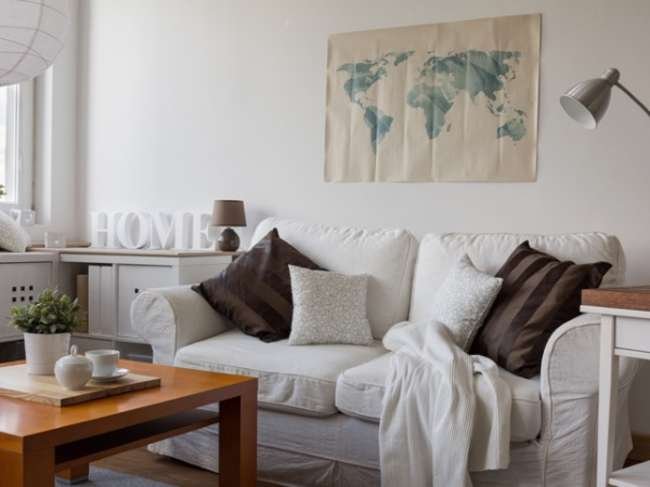

A small living room is not a design punishment. It is simply a room with a strict personality test. Every chair, table, lamp, basket, pillow, and suspiciously large souvenir mug must prove it deserves to live there. The good news? With the right small living room ideas, a compact space can feel polished, practical, cozy, and surprisingly spaciouswithout knocking down walls or pretending you do not own a television remote.
The secret is not buying smaller everything. In fact, that can make a room look like a furniture store for dolls. The real trick is choosing pieces with purpose, arranging them with breathing room, using vertical space, controlling clutter, and giving the eye a few clever places to travel. Inspired by practical home-improvement thinking and modern interior design advice, these 13 ideas will help you turn a cramped living room into a high-functioning, good-looking space that punches far above its square footage.
Why Small Living Rooms Need Smart Design
In a large living room, a bad furniture choice can hide in the corner and mind its business. In a small living room, it becomes the mayor. That oversized sectional, bulky coffee table, or random storage bin can affect traffic flow, natural light, comfort, and the overall mood of the room.
Smart small-space design focuses on three goals: making the room work better, making it feel more open, and making it look intentional. A small living room should support real lifemovie nights, reading, guests, kids, pets, snacks, and the occasional “where did I put my phone?” emergency. But it should also avoid visual chaos. When everything has a job and a place, the room feels calm instead of crowded.
13 Small Living Room Ideas That Make a Big Impact
1. Choose Furniture With Slim Profiles
Bulky furniture can swallow a small living room whole. Instead, look for sofas, chairs, and tables with slim arms, exposed legs, and clean lines. Raised legs show more floor, which tricks the eye into reading the room as larger and lighter. A tight-back sofa, apartment-size sectional, or loveseat with a tailored silhouette often works better than a deep, overstuffed couch.
This does not mean your furniture has to be uncomfortable. The goal is visual lightness, not punishment seating. A well-scaled sofa with firm cushions and narrow arms can provide plenty of comfort while saving precious inches on each side.
2. Float Furniture Instead of Pushing Everything Against the Wall
The instinct in a small living room is to shove every piece of furniture against the wall and hope the center of the room magically becomes spacious. Unfortunately, this often creates an awkward empty middle and makes the walls feel even more obvious. Try floating the sofa a few inches away from the wall or angling a chair slightly toward the conversation area.
Even a small gap behind the sofa can create a sense of depth. If space allows, place a narrow console table behind it for lamps, books, or baskets. Suddenly, the layout looks designed instead of panicked.
3. Pick One Clear Focal Point
A small living room cannot successfully worship five design gods at once. Choose one focal point and arrange the room around it. This might be a fireplace, a window, a media wall, a large piece of art, or a beautiful built-in bookcase.
Once the focal point is established, the room feels more organized. Seating can face the main feature, lighting can support the layout, and accessories can stop wandering around like confused tourists. If your television is the focal point, that is fine. Just frame it with shelves, art, or a low media console so it feels integrated rather than like a giant black rectangle judging your decorating skills.
4. Use Multi-Functional Furniture
In a small living room, furniture should not be allowed to have only one talent. A storage ottoman can hold blankets, serve as a coffee table, and become extra seating. Nesting tables can spread out when guests arrive and tuck away when they leave. A sleeper sofa can turn a compact apartment into a guest room when needed.
Look for lift-top coffee tables, benches with hidden compartments, side tables with shelves, and stools that can move around easily. Multi-functional furniture reduces clutter because it gives everyday items a place to disappear. That is not magic, but it feels close.
5. Go Vertical With Storage
When floor space is limited, walls become prime real estate. Tall bookcases, floating shelves, wall-mounted cabinets, and vertical storage units help keep items off the floor while drawing the eye upward. This makes the ceiling feel higher and the room feel more expansive.
Use vertical storage carefully. Open shelves look best when they are edited, not stuffed like a suitcase before a long vacation. Mix books with baskets, framed photos, plants, and a few decorative objects. Closed storage is ideal for less attractive necessities: cords, board games, paperwork, pet toys, and the mysterious pile of chargers that belongs to devices nobody remembers owning.
6. Hang Curtains High and Wide
Curtains can quietly change the entire scale of a room. Mount curtain rods close to the ceiling rather than directly above the window frame, and extend the rod several inches beyond the window on each side. This makes the window look taller and wider, allowing more daylight to show when the curtains are open.
Choose lightweight fabrics if you want an airy look, or use lined curtains if you need privacy and glare control. Either way, avoid short curtains that stop awkwardly above the floor. They can make the room feel chopped up. Floor-length panels create a cleaner, more elegant line.
7. Add Mirrors to Bounce Light
Mirrors are the old-school small-room trick that still works because physics has not gone out of style. A mirror placed across from or near a window reflects light and creates a sense of depth. In a dim living room, a large mirror can do more than several tiny accessories ever could.
For best results, choose a mirror large enough to matter. A small mirror floating alone on a big wall may look lonely. A tall leaning mirror, a round mirror above a console, or a grid-style mirror can add both function and style. Just be mindful of what it reflects. A mirror reflecting clutter doubles the clutter. Rude, but true.
8. Choose a Round or Nesting Coffee Table
Sharp corners and tight walkways are not friends. In a small living room, a round coffee table can improve circulation because people can move around it more easily. It also softens the visual lines of a room filled with rectangular sofas, rugs, windows, and media units.
Nesting tables are another excellent choice. They provide flexible surface space when needed and tuck neatly together when not in use. If your room is extremely narrow, skip the traditional coffee table and use small side tables instead. Your shins will thank you.
9. Layer the Lighting
A single overhead light can make a small living room feel flat, harsh, and slightly like an interrogation room. Layered lighting adds warmth and dimension. Combine ambient lighting, task lighting, and accent lighting to create a room that works at different times of day.
Use floor lamps in corners, table lamps on consoles, sconces near seating, and small accent lights on shelves. If floor space is tight, wall-mounted lighting is especially helpful. Warm bulbs can make the room feel inviting, while dimmers allow you to adjust the mood from “cleaning mode” to “cozy movie cave.”
10. Use a Rug to Define the Seating Area
A rug can make a small living room feel finished, but size matters. A tiny rug floating in the middle of the room can make the furniture look disconnected. Ideally, choose a rug large enough for at least the front legs of the sofa and chairs to sit on it. This visually ties the seating area together.
In open-concept spaces, a rug is also useful for creating a living zone without adding walls. Choose a pattern that hides everyday wear if the room gets heavy traffic. A subtle pattern can add depth without overwhelming the space.
11. Keep the Color Palette Cohesive
Light colors can help a small living room feel brighter, but white is not the only option. Soft neutrals, warm beige, pale gray, muted green, dusty blue, and creamy off-white can all create an open feeling. The key is cohesion. When walls, large furniture, rugs, and curtains relate to each other, the room feels less visually chopped up.
That said, a small room does not need to be boring. Add personality through pillows, art, a bold chair, patterned curtains, or a colorful lamp. A limited palette with a few confident accents usually works better than every color in the paint aisle having a meeting at once.
12. Edit Decor With Intention
Decor matters, but too many small accessories can make a compact living room feel busy. Instead of scattering little objects everywhere, group decor into thoughtful moments. Try one large piece of art instead of six tiny frames. Use a tray to organize remotes and candles. Style shelves with breathing room between objects.
Editing does not mean stripping the room of personality. It means giving your favorite things enough space to shine. If every surface is full, nothing stands out. A small living room benefits from a little restraint, even if your inner collector is dramatically clutching its pearls.
13. Add One Big Statement
It may sound backward, but one bold statement can make a small living room feel larger and more memorable. Oversized art, a dramatic light fixture, a patterned accent wall, a sculptural chair, or a beautiful gallery wall can draw attention to style rather than square footage.
The trick is choosing one major moment, not twelve. A single large piece of art can be calmer than many small decorations. A bold wallpaper behind built-ins can add depth. A striking floor lamp can lift the whole room. Small spaces often become more interesting when they stop apologizing for being small.
Small Living Room Mistakes to Avoid
The most common mistake is buying furniture without measuring. A sofa that looks “normal size” in a showroom can become a land yacht in an apartment living room. Always measure the room, doorways, stairwells, and elevator before ordering large pieces.
Another mistake is ignoring pathways. A beautiful layout is not successful if you have to turn sideways to reach the couch. Keep traffic routes clear, especially between entrances, seating, and storage. Also avoid relying only on open storage. Open shelves are attractive, but closed cabinets are what keep real life from looking like a yard sale.
Finally, do not decorate only for photos. A living room must work for actual living. If you need a place for charging cables, blankets, pet supplies, books, toys, or snacks, design for those needs. A room that supports your habits will stay tidy longer than a room that demands you become a completely different person by Tuesday.
Experience Notes: What Actually Works in Real Small Living Rooms
In real homes, small living rooms rarely have perfect conditions. There is usually an awkward window, a front door that swings into the seating area, a radiator in the worst possible location, or a TV outlet placed by someone who clearly enjoyed chaos. The best small living room makeovers start by accepting the room as it is, not as a fantasy floor plan from a design magazine.
One of the most effective real-world changes is removing furniture that “almost works.” Many small living rooms are crowded not because the owners have too much stuff, but because one or two pieces are the wrong scale. A coffee table that is six inches too wide can ruin circulation. A chair with oversized arms can block a walkway. A media console that is too deep can make the TV wall feel heavy. Swapping one bulky item for a slimmer version often creates more improvement than repainting the whole room.
Storage also matters more than people expect. A living room can look stylish in the morning and completely defeated by evening if there is nowhere to put blankets, laptops, mail, toys, and remotes. The most livable compact rooms usually combine hidden storage with a few attractive open displays. Baskets under a console, an ottoman with a lid, a cabinet under the TV, and a side table with a drawer can quietly handle the daily mess. The room does not need to be minimalist; it just needs a cleanup system that takes less than five minutes.
Lighting is another change that feels surprisingly powerful. Many small living rooms depend on a ceiling fixture and maybe one tired lamp in the corner. Adding a second or third light source changes the mood immediately. A floor lamp behind a chair creates a reading spot. A small lamp on a shelf adds glow. Wall sconces free up table space. When lighting is layered, the room feels more expensive, even if the budget was closer to “clearance aisle with ambition.”
Color choices work best when they support the room’s natural light. In a sunny living room, warm whites and soft neutrals can feel fresh and open. In a darker room, richer colors can sometimes feel cozier than fighting the shadows with cold white paint. The real lesson is to test paint samples at different times of day. A color that looks elegant at noon can turn strangely sad by 7 p.m.
The biggest experience-based takeaway is simple: small living rooms reward decisions. Decide what the room is for. Decide where clutter goes. Decide which wall gets attention. Decide what furniture earns the space. Once those choices are made, the room begins to feel intentional. And when a small living room feels intentional, it no longer feels like a compromise. It feels like a clever, comfortable, stylish little headquarters for everyday life.
Conclusion
A small living room can make a big impact when every design choice has a purpose. Slim furniture, vertical storage, smart lighting, mirrors, high curtains, multi-functional pieces, and a clear focal point can transform even the tightest space into a room that feels open, useful, and full of personality. The goal is not to make the room pretend to be huge. The goal is to make it feel balanced, comfortable, and beautifully planned.
Whether you are decorating a city apartment, a starter home, a studio, or a cozy family room, these small living room ideas prove that square footage is only part of the story. With the right layout and a few clever upgrades, your living room can look bigger, work harder, and finally stop fighting with your coffee table.
Note: This article is written as original, web-ready content based on practical small-space design principles, current home-decor guidance, and real-world living room layout strategies. It contains no copied source text, no unnecessary citation placeholders, and no duplicated AI-template wording.


