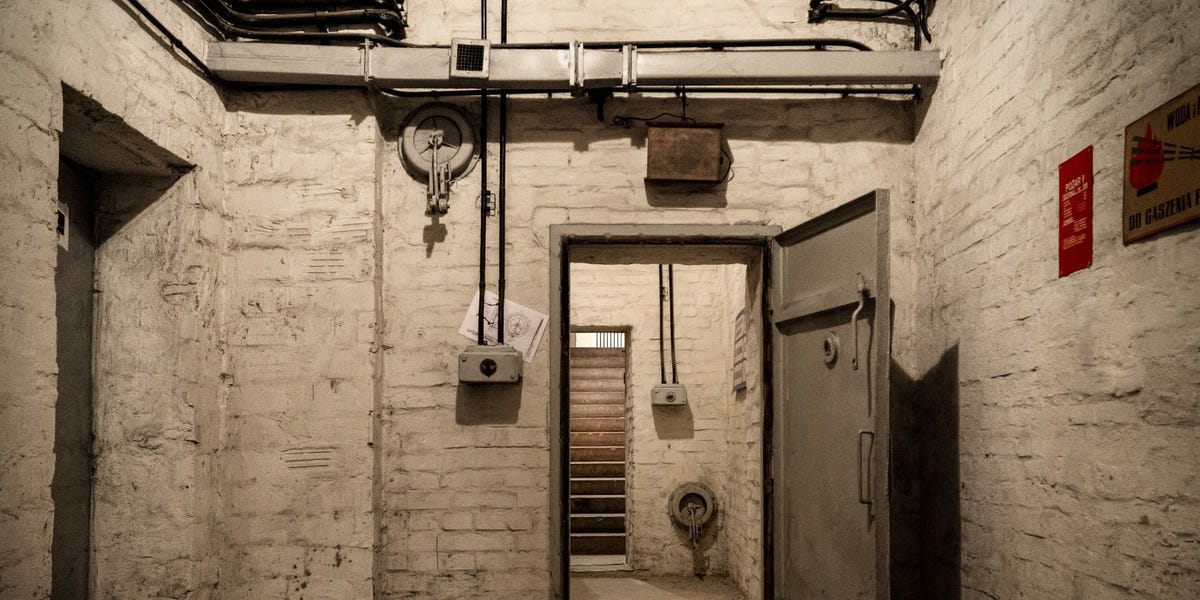

The DARPA Tunnel Challenge sounds like the kind of event where robots put on tiny helmets, grab flashlights, and bravely roll into the darkness while humans stand outside pretending not to be nervous. In reality, it was far more impressive. Officially part of DARPA’s Subterranean Challenge, often shortened to the SubT Challenge, the Tunnel Circuit was a landmark robotics competition designed to push autonomous systems into one of the hardest places on Earth to operate: underground.
Forget shiny lab floors, clean Wi-Fi, and polite obstacle courses. The DARPA Tunnel Challenge asked robots to explore mine tunnels, map unknown spaces, detect objects, survive dust and darkness, and keep working when GPS disappeared faster than a phone signal in an elevator. It was not just a robotics contest. It was a stress test for the future of underground search and rescue, disaster response, military reconnaissance, autonomous mapping, and field robotics.
What made the challenge fascinating was not only the technology, but the brutal honesty of the environment. Underground spaces do not care about your PhD, your polished algorithm, or your robot’s promotional video. Tunnels are narrow, damp, uneven, confusing, and occasionally rude. A robot that performs beautifully in a university hallway may suddenly become a very expensive paperweight when faced with loose gravel, a sloped passage, or a radio blackout. That was the point. DARPA wanted teams to solve real problems, not win a beauty contest for machines.
What Was the DARPA Tunnel Challenge?
The DARPA Tunnel Challenge was the first scored event of the larger DARPA Subterranean Challenge. The overall SubT Challenge focused on three underground environments: human-made tunnels, urban underground spaces, and natural cave networks. The Tunnel Circuit, held in August 2019 in the Pittsburgh area, tested how well robotic teams could operate in mine-like tunnel systems.
The mission was simple to explain and extremely difficult to execute: send robots into unknown underground passages, build useful maps, identify hidden artifacts, and report their locations accurately. These artifacts represented things a first responder or service member might need to find, such as equipment, signs of survivors, or hazardous conditions. In plain English, the robots were playing a very serious game of hide-and-seek in a place where hide-and-seek is usually a bad idea.
Teams deployed combinations of ground robots, drones, sensors, communications equipment, mapping software, and autonomy systems. Some robots rolled. Some flew. Some crawled. Some looked like rugged science-fiction vacuum cleaners with ambition. The most successful systems were not necessarily the flashiest; they were the ones that could keep moving, keep sensing, and keep reporting useful information when the underground environment did its best to ruin the party.
Why DARPA Built a Challenge Underground
DARPA has a long history of using grand challenges to accelerate technology. Earlier competitions helped push autonomous driving, humanoid robotics, and simulation tools forward. The Subterranean Challenge followed the same philosophy: create a difficult public goal, invite strong teams, and let competition compress years of slow progress into a focused sprint.
Underground environments are especially important because they are dangerous for humans. Mines can collapse. Subway tunnels can fill with smoke. Caves can twist into confusing networks. Disaster sites can block communication and visibility. Sending people first into those spaces may be necessary in emergencies, but it is also risky. A robot that can scout ahead, create a map, detect hazards, and locate survivors could help responders make faster and safer decisions.
The DARPA Tunnel Challenge therefore served a practical purpose. It was not robotics theater for people who enjoy watching machines struggle in the dark, although, to be fair, that part was oddly entertaining. It was an effort to develop autonomous systems capable of working where humans may not be able to go safely or quickly.
The Big Technical Problems: GPS, Darkness, Dust, and Bad Attitudes from Rocks
No GPS Underground
Most modern navigation depends on GPS, but tunnels are GPS-denied environments. Once a robot enters a mine or cave, satellite navigation is gone. That means robots need to estimate their own position using onboard sensors such as lidar, cameras, inertial measurement units, wheel odometry, radar, and mapping algorithms.
This is where SLAM, or simultaneous localization and mapping, becomes essential. SLAM allows a robot to build a map while also figuring out where it is inside that map. In a tunnel, that is harder than it sounds. Long corridors may look similar. Dust can confuse sensors. Low light can make cameras less reliable. A robot may travel several hundred meters and still need to report the location of an artifact with enough accuracy to score points.
Communication Breaks Quickly
Radio signals do not love underground tunnels. Stone, concrete, turns, elevation changes, and long distances weaken communications. Teams had to decide whether robots should remain close enough to communicate, drop network nodes as they traveled, or operate with higher autonomy when cut off from the human operator.
This trade-off shaped many strategies. A robot that waits for commands may become useless when radio contact disappears. A fully autonomous robot may explore better, but it must make smart decisions without constant supervision. The challenge rewarded systems that could balance independence with coordination.
Mobility Is a Monster
Robots do not get to choose smooth floors underground. They face mud, rails, rocks, stairs, slopes, puddles, tight corners, and random debris. Ground robots need traction and durability. Flying robots need obstacle avoidance and stable navigation without GPS. Legged robots can step over difficult terrain but may be slower and more mechanically complex.
The strongest teams often used heterogeneous robot fleets, meaning different types of robots working together. A wheeled or tracked robot might carry heavier sensors and communication equipment. A drone might quickly inspect a vertical shaft or fly over rough ground. A legged robot might handle uneven terrain that would make wheels question their career choices.
Team Explorer and the Tunnel Circuit Win
One of the standout stories from the DARPA Tunnel Challenge was Team Explorer, a collaboration involving Carnegie Mellon University and Oregon State University. Team Explorer won the Tunnel Circuit by deploying robots that could autonomously map and search underground mines. Their system included ground vehicles and drones, combining mobility, perception, and planning into a coordinated robotic team.
Team Explorer’s success showed that underground autonomy is not about one magic robot. It is about system design. The robots need sensors, but sensors alone are not enough. They need autonomy, but autonomy must be practical. They need maps, but maps must be created quickly. They need communication, but they must survive when communication fails. In other words, winning required engineering maturity, not just clever code written at 2 a.m. with coffee and optimism.
The Tunnel Circuit also helped reveal which ideas worked in the field and which ideas looked better in presentations. That is the beauty of DARPA-style competitions. Reality gets a vote, and reality is not afraid to reject your design with a pile of gravel.
From Tunnel Circuit to Urban and Cave Challenges
The Tunnel Circuit was only the beginning. After the tunnel-focused event, the SubT Challenge moved into the Urban Circuit, which involved complex underground infrastructure such as multi-level spaces, stairs, rooms, and corridors. Later, the Cave Circuit pushed teams toward natural underground environments with irregular shapes, rough surfaces, and unpredictable geometry.
Each stage forced teams to adapt. A robot that works in a mine may struggle in a subway-like environment. A drone that performs well in a wide tunnel may not enjoy a jagged cave passage. A mapping system that handles straight corridors may get confused when the world becomes a rocky maze. The full challenge was designed to prevent teams from overfitting to one type of underground space.
The Final Event brought together elements of tunnels, urban underground spaces, and caves at Louisville Mega Cavern in Kentucky. By then, teams had learned years of hard lessons about navigation, sensing, networking, autonomy, and field repairs. The final was not simply a bigger course; it was a grand exam for everything the teams had built.
Team CERBERUS, Team Dynamo, and the Final Results
At the 2021 Final Event, Team CERBERUS won the Systems Competition, while Team Dynamo won the Virtual Competition. CERBERUS used a system-of-systems approach involving legged and flying robots, robust autonomy, multi-robot perception, and strong mapping. The victory demonstrated how far underground robotics had advanced since the first tunnel event.
The Virtual Competition was equally important. Not every innovation needs to begin with expensive hardware. Simulation allowed teams to test algorithms in virtual underground environments, lowering the barrier for participation and accelerating software development. Open-source robotics tools, including simulation platforms connected to Gazebo and related ecosystems, played a major role in making the virtual track meaningful.
The combination of real-world systems and virtual competition made the DARPA SubT Challenge unusually powerful. Hardware teams exposed the messy truth of field robotics. Virtual teams explored autonomy at scale. Together, they created a feedback loop that helped the entire robotics community understand underground exploration more deeply.
What Technologies Came Out of the DARPA Tunnel Challenge?
Better Autonomous Mapping
The challenge advanced mapping systems that work without GPS. Robots had to create maps in real time while moving through unknown spaces. This pushed improvements in lidar-based mapping, visual-inertial odometry, multi-robot SLAM, and sensor fusion.
More Resilient Robot Teams
The most successful teams learned that one robot is useful, but a coordinated fleet is better. Multiple robots can divide the search area, relay communications, and handle different terrain types. This idea is now central to many field robotics applications, from disaster response to industrial inspection.
Smarter Human-Robot Interaction
In the challenge, one human operator often had to supervise multiple robots. That required interfaces that could summarize robot status, maps, artifact detections, and communication quality without overwhelming the operator. A good interface can be the difference between “we found the artifact” and “the robot found something, but nobody noticed because the screen looked like a spaceship dashboard sneezed.”
Improved Simulation Tools
The virtual side of the challenge strengthened robotics simulation. Teams could test navigation, mapping, and autonomy in complex digital underground worlds. Simulation does not replace field testing, but it helps teams fail faster, cheaper, and with fewer broken propellers.
Why the DARPA Tunnel Challenge Still Matters
Although the SubT Challenge ended in 2021, its influence continues. Underground autonomy remains important for mining, infrastructure inspection, emergency response, planetary exploration, and hazardous industrial environments. Robots that can handle tunnels may also help inspect sewers, pipelines, subway systems, collapsed buildings, and storage facilities.
The challenge also proved that autonomy must be judged in the real world. A robot cannot simply be “smart” in a lab. It must be useful when the floor is uneven, the map is unknown, the network is weak, and the lighting is terrible. That lesson applies far beyond tunnels.
The DARPA Tunnel Challenge also highlighted the importance of teamwork across universities, government labs, private companies, and open-source communities. Major teams involved organizations such as Carnegie Mellon, Oregon State, NASA JPL, MIT, Caltech, UC Berkeley, ETH Zurich, and others. The competition became a meeting point for people who understood that the future of robotics would not be built by one robot hero, but by ecosystems of machines, software, sensors, and humans.
Real-World Applications Beyond the Competition
One obvious application is search and rescue. After an earthquake, explosion, flood, or mine accident, responders may need to understand a dangerous underground space quickly. Robots can enter first, build maps, identify hazards, and search for signs of people. Even partial information can help human teams plan safer routes.
Another application is infrastructure inspection. Cities contain huge underground networks: utility tunnels, subway systems, storm drains, service corridors, and old infrastructure that may not be well documented. Autonomous robots could help inspect these spaces without requiring workers to enter risky areas as often.
Mining is another natural fit. Modern mines can be vast, complex, and dangerous. Robots that map tunnels, monitor conditions, and inspect equipment can improve safety and efficiency. The same technologies can also support environmental monitoring in caves and underground water systems.
Planetary exploration may benefit too. Lava tubes on the Moon or Mars are scientifically interesting and potentially useful as shelters from radiation and temperature extremes. A robot that can explore a dark terrestrial tunnel has skills that may someday matter far beyond Earth. Apparently, if you can survive a dusty mine in Pennsylvania, space caves start looking slightly less intimidating.
Lessons for Robotics Builders
The DARPA Tunnel Challenge taught several durable lessons. First, ruggedness matters. A brilliant algorithm cannot help if the robot gets stuck in the first ten minutes. Second, redundancy matters. Underground environments degrade sensors, so relying on only one sensing method is risky. Third, autonomy must be practical. Robots need to make decisions, but those decisions must support the mission, not create a dramatic side quest.
Fourth, testing in realistic environments is essential. Teams that spent time in mines, caves, tunnels, and messy industrial spaces gained a better understanding of what robots actually face. Finally, simple reliability often beats complicated elegance. In field robotics, boring systems that keep working are secretly glamorous.
Experience-Based Reflections on the DARPA Tunnel Challenge
Watching and studying the DARPA Tunnel Challenge feels like watching engineering meet nature in a dark hallway and politely lose the first round. The experience is valuable because it strips robotics down to the essentials. In a lab, a robot can look graceful. Underground, it has to be useful. That difference changes everything.
One of the most striking experiences related to the challenge is seeing how quickly assumptions break. A team might assume that a sensor will detect walls cleanly, only to discover that dust, moisture, or strange geometry creates noisy data. A drone might be excellent in an open testing space, then struggle in a narrow passage where airflow, darkness, and obstacles leave little room for mistakes. A ground robot may drive confidently on concrete but become slow and clumsy on loose rock. The tunnel does not negotiate.
Another lesson is that field robotics rewards calm problem-solving. During a competition like this, teams must handle hardware failures, software bugs, battery limits, communication dropouts, and time pressure. It is not enough to have a good robot. The team needs procedures, spare parts, debugging discipline, and the emotional strength to watch a machine ignore common sense in front of judges. Anyone who has worked with robots knows the feeling: the demo worked yesterday, which is exactly why it will choose today to become philosophical.
The challenge also shows how important human factors are. A single operator supervising multiple robots cannot process endless raw data. The interface must make decisions easier. Where are the robots? Which areas are mapped? Which artifact detections are reliable? Is communication fading? Which robot needs help? A strong autonomy system is not just about removing humans; it is about helping humans focus on judgment rather than micromanagement.
There is also a practical lesson about multi-robot teams. Sending one robot into a tunnel is useful, but sending several coordinated robots can be transformative. One robot can explore the main route while another checks branches. A drone can inspect areas a ground robot cannot reach. A larger robot can carry networking equipment or deploy smaller robots. This creates flexibility, but it also creates complexity. Coordination, communication, and map merging become major challenges.
For students, engineers, and robotics enthusiasts, the DARPA Tunnel Challenge is inspiring because it proves that robotics is not only about sleek humanoids or warehouse automation. Some of the most important robots of the future may be dirty, scratched, slow, and covered in dust. They may not look elegant, but they may save lives by going first into places people should not enter blindly.
The most human part of the DARPA Tunnel Challenge is that it celebrates persistence. Robots fail. Sensors lie. Batteries drain. Maps drift. Wheels slip. Propellers break. Yet teams learn, repair, improve, and try again. That cycle is the real story of robotics progress. The tunnel is not just an obstacle; it is a teacher with terrible lighting and excellent standards.
Conclusion
The DARPA Tunnel Challenge was more than a competition in underground robotics. It was a carefully designed pressure cooker for autonomy, perception, mobility, networking, and human-robot teamwork. As the first major stage of the DARPA Subterranean Challenge, it forced teams to confront the realities of GPS-denied, communication-limited, physically difficult environments.
Its legacy continues through better mapping systems, stronger robot fleets, improved simulation tools, and a deeper understanding of how autonomous systems behave outside controlled spaces. Whether the future application is disaster response, mine safety, infrastructure inspection, or planetary exploration, the lessons from the DARPA Tunnel Challenge remain highly relevant.
In the end, the challenge reminded the robotics world of a simple truth: if a robot can survive underground, stay useful, find what matters, and come back with a map, it has earned respect. Maybe not a medal with tiny robot arms engraved on it, but respect all the same.


