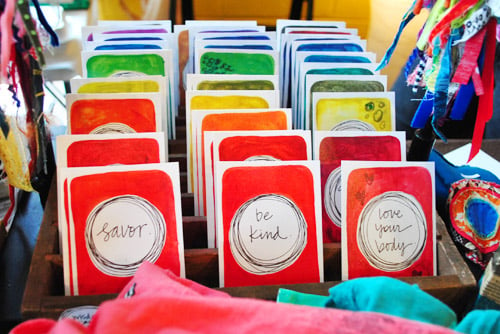

Some craft fairs feel like quiet school fundraisers where everyone politely admires a crocheted potholder. Richmond’s Spring Bada-Bing was not that kind of event. Created by the Richmond Craft Mafia and cheerfully promoted as “the boss of all craft shows,” this indie marketplace brought together serious craftsmanship, playful design, local personality, and enough clever merchandise to make even a committed minimalist whisper, “Well, maybe I do need three embroidered cacti.”
For years, Spring Bada-Bing gave Richmond residents an energetic alternative to mass-produced shopping. Visitors could meet artists, inspect handmade objects up close, discover small creative businesses, and buy gifts that did not arrive in a brown box with twelve feet of plastic air pillows. The fair featured makers from Richmond, the surrounding region, and other parts of the United States, creating a marketplace that felt local without becoming predictable.
This guide explores the history, character, products, people, and visitor experience associated with the Richmond craft fair. Because no new Spring Bada-Bing date should be assumed without confirmation from its organizers, the event is best understood here as an influential Richmond tradition and an excellent example of what an independent craft show can become when artists run the party.
What Was the Spring Bada-Bing Craft Fair?
Spring Bada-Bing was an annual juried indie craft show organized by the Richmond Craft Mafia, a collective of artists and creative entrepreneurs who shared business knowledge, promoted handmade work, and produced community shopping events. Earlier editions were held at venues such as the 17th Street Farmers’ Market and Plant Zero in Richmond’s Manchester arts district. A 2009 event listing described more than 60 participating artists and designers, while another historical announcement identified the 2010 show as the sixth annual edition.
The event later moved to Hardywood Park Craft Brewery on Ownby Lane. That location changed the atmosphere in a useful way: instead of shopping in a conventional exhibition hall, visitors wandered through an indoor-and-outdoor gathering built around makers, craft beverages, food, conversation, and Richmond’s relaxed social energy. A 2016 vendor announcement described the fair as a one-day event with regular shopping from 11 a.m. to 5 p.m. and an optional early-bird period.
By 2019, participating artists were advertising the event as Richmond Craft Mafia’s 14th annual Spring Bada-Bing. The 2020 physical show was subsequently postponed, and the organizers promoted a virtual craft show instead. Publicly available records do not establish a currently scheduled new edition, so visitors should verify any future event directly rather than relying on an old calendar listing that has been wandering around the internet like a confused tourist.
Why Spring Bada-Bing Stood Out
A Juried Selection of Independent Makers
Spring Bada-Bing was curated rather than assembled by simply accepting every vendor with a folding table. Richmond Craft Mafia members reviewed applications and selected artists whose work fit the show’s handmade, independent spirit. During the 2015 event cycle, organizers reportedly received about 100 applications while presenting roughly 50 local, regional, and national artists.
That selection process mattered. A strong juried craft fair offers variety without turning into a visual yard sale. Shoppers can move from ceramics to screen prints, jewelry, textiles, personal-care products, paper goods, toys, clothing, and home accessories while still feeling that every booth belongs in the same creative neighborhood.
Handmade Products with Actual Personalities
The merchandise was often useful, but it rarely settled for being merely practical. Historical coverage of the fair highlighted illustrated prints, organic soaps, jewelry, clothing, embroidered wall pieces, soft sculptures, pottery, accessories, and humorous home goods. One widely shared account from the 2012 show documented everything from bacon-themed artwork and naturally made soap to ceramic pieces and crocheted cacti.
This mixture of function and personality is one reason indie craft fairs can be so addictive. A factory-made soap dish performs a job. A handmade soap dish shaped, glazed, and signed by a Richmond-area ceramic artist performs the same job while quietly judging the boring toothbrush cup beside it.
Direct Contact with the Artist
At a craft show, the person behind the booth is often the person who designed the pattern, mixed the glaze, printed the poster, stitched the bag, photographed the image, or stayed up past midnight fixing a batch that refused to cooperate. Richmond Magazine’s coverage of Richmond Craft Mafia events emphasized that shoppers valued being able to meet the vendor responsible for the work.
That direct connection changes the purchase. Visitors can ask what inspired a design, how long a piece took to make, whether a material is locally sourced, or how to care for the product. The resulting object carries a story instead of just a barcode.
The Richmond Craft Mafia Effect
The Richmond Craft Mafia was more than a name designed to make crocheting sound mildly dangerous. Members used the group to network, exchange business ideas, promote one another, and organize major events such as Spring Bada-Bing and Handmade Holiday. That collaborative structure helped independent makers solve problems that are difficult to tackle alone, including marketing, event production, customer outreach, and finding reliable sales opportunities.
For small creative businesses, a successful fair can provide revenue, customer feedback, wholesale contacts, social-media exposure, and future online orders. A shopper who buys one print at the show may return months later for a wedding gift. Someone who discovers a soap maker may become a repeat customer. Another visitor may commission a custom piece after seeing the artist’s workmanship in person.
The show also benefited the broader creative community. Early-access periods were sometimes connected with nonprofit fundraising. At the 2015 edition, early admission supported ART 180, a Richmond nonprofit founded in 1998 that provides arts programming and creative opportunities for young people.
Why Hardywood Was a Natural Home
Hardywood Park Craft Brewery launched in Richmond in 2011 and developed its Ownby Lane property as a gathering place as well as a production brewery. Its combination of indoor space, outdoor areas, craft beverages, food, and community programming made it well suited to a modern maker market.
The pairing also made thematic sense. Craft brewing and independent making share a vocabulary: small batches, experimentation, distinctive ingredients, close attention to process, and a willingness to create something unusual because the creator thinks it should exist. Put screen printers beside ceramic artists, add a food truck and a brewery patio, and Richmond will generally understand the assignment.
At Hardywood editions, Spring Bada-Bing could operate as more than a shopping trip. Friends could browse, pause for refreshments, compare purchases, return to a booth they had been thinking about, and spend a substantial part of the day at the venue. The fair became a social outing rather than a race through fluorescent aisles.
What Shoppers Could Expect to Find
Art and Illustrated Prints
Printmakers and illustrators were an important part of the Spring Bada-Bing identity. Shoppers might encounter screen-printed posters, small art prints, humorous illustrations, regional imagery, or affordable pieces designed for everyday homes rather than guarded museum wings.
Buying small-format artwork at a craft fair is also a low-pressure way to begin collecting original or limited-edition work. You do not need a private gallery or a mysterious monocle. You need a wall, a frame, and the discipline to measure before hammering six unnecessary holes.
Jewelry, Clothing, and Accessories
Independent jewelry makers often work with metals, enamel, reclaimed materials, fibers, beads, clay, wood, or found objects. Their work can range from subtle everyday pieces to necklaces that enter the room approximately four seconds before the wearer.
Visitors could also shop handmade clothing, bags, scarves, fabric accessories, and wearable art. Because many creators produce limited runs, purchases were less likely to appear on three other people during the following weekend.
Home Goods and Ceramics
Spring Bada-Bing appealed strongly to shoppers interested in home décor. Historical visitor accounts featured pottery, embroidered hoops, small sculptures, functional vessels, textiles, and decorative objects. Handmade home goods are especially satisfying because they bring the character of the fair into ordinary routines. A mug becomes part of breakfast. A print brightens a hallway. A tiny plush creature takes over a bookshelf and begins making managerial decisions.
Bath, Body, and Giftable Goods
Soap, candles, botanical products, fragrances, and other small-batch goods made the event useful for gift shopping. These items often occupied an affordable price range, allowing visitors to support multiple vendors without requiring an emergency meeting with their bank.
They were also easy to personalize. A shopper could choose a scent that matched a friend, pair soap with a handmade dish, or combine several small products into a gift set that felt considerably more thoughtful than a generic card purchased beside the grocery-store checkout.
How to Shop an Indie Craft Fair Like a Professional
Walk the Entire Fair Before Making Major Decisions
On the first pass, note the booths that immediately attract you. Take photographs only when vendors allow it, collect business cards, and remember where favorite items are located. After seeing the full selection, return for larger purchases.
Do not wait too long on true one-of-a-kind pieces, however. Handmade inventory does not magically regenerate in a warehouse. If an artist has one perfect ceramic fox wearing a bow tie, that fox may find another family while you are debating whether your shelf is ready for such responsibility.
Ask Questions Respectfully
Makers generally enjoy discussing their techniques, materials, and inspiration. Ask whether an item is food-safe, washable, suitable for outdoor display, available in another size, or offered through an online store. Avoid beginning the conversation by asking for a discount. The price reflects materials, design work, production time, equipment, packaging, travel, booth fees, and the occasional creative crisis involving a kiln.
Bring Flexible Payment Options
Modern vendors commonly accept cards and digital payments, but mobile systems can become unreliable in crowded venues. Carrying some cash can keep a purchase simple. A reusable bag is also helpful, although fragile ceramics should remain in the protective wrapping provided by the artist.
Shop for Future Occasions
A spring craft fair is a convenient place to prepare for birthdays, graduations, weddings, housewarmings, Mother’s Day, and last-minute moments when you suddenly remember that another human being has done something gift-worthy.
Small prints, candles, jewelry, stationery, soaps, ornaments, and textile accessories store easily. Buying them in advance saves time and prevents desperate purchases from the “seasonal gifts and phone chargers” aisle of a pharmacy.
Spring Bada-Bing and Richmond’s Larger Maker Culture
Spring Bada-Bing belonged to a much larger Richmond tradition. The city continues to support artisan markets, visual arts organizations, independent retailers, breweries, studios, and community festivals. The Visual Arts Center of Richmond’s Craft + Design show, for example, has roots dating to 1964 and now presents more than 170 artists to thousands of visitors.
Richmond Region Tourism also regularly highlights markets featuring handmade décor, art, jewelry, apparel, ceramics, candles, woodwork, and locally produced goods. Its guides present artisan shopping as part of Richmond’s broader mixture of food, neighborhood culture, public art, music, and small business.
This ecosystem helps explain why Spring Bada-Bing became memorable. The fair did not attempt to manufacture a creative identity for Richmond. It gathered an identity that was already there, arranged it into booths, and invited everyone to come look.
A Spring Bada-Bing Visitor Experience
The following is a representative, firsthand-style description based on documented editions of the fair rather than a claim of personal attendance.
You arrive expecting to spend an hour. This is your first mistake.
Before you reach the main vendor area, you can already see shoppers carrying printed tote bags and carefully wrapped objects. Someone is holding a framed illustration under one arm and a beverage in the other, demonstrating the kind of balance normally associated with professional circus performers.
The first row of booths immediately destroys your original shopping plan. You intended to find one birthday present. Instead, you encounter a screen-printed Richmond scene, a collection of tiny ceramic animals, hand-poured candles, silver earrings, and a fabric bag featuring a pattern you did not know your life was missing.
The makers are not delivering scripted sales pitches. One artist explains how several layers of color are pulled by hand through a screen. A ceramicist points out the small variations produced by firing. A soap maker discusses ingredients and scent combinations without using the phrase “revolutionary moisture technology,” which is refreshing.
You begin noticing booth displays almost as much as the products. Wooden crates become shelves. Vintage suitcases hold jewelry. Tree slices display soap. Illustrations hang from clips, while handmade signs provide prices and short stories about the work. Every table functions as a miniature store, gallery, studio, and personality test.
After the first circuit, you stop for food or a drink and compare notes with your companions. One person is committed to a necklace. Another is emotionally attached to a plush sea creature. You are still thinking about the illustrated print from the first booth, which means you are definitely going back for it.
The second circuit is slower. You recognize details you missed earlier: the stitching inside a bag, the texture of a glazed bowl, the clever packaging around a candle, and the artist’s signature near the bottom of a print. Shopping begins to feel less like choosing products and more like discovering how people transform ideas into objects.
You buy the print. Naturally, you also buy a small ceramic piece because it looks lonely. At another booth, you pick up soap as a practical gift, then add one for yourself because generosity has limits.
The best part of the visit occurs during these small exchanges. An artist wraps your purchase and explains the inspiration behind it. You learn that a design began as a sketch made during a train ride, that a glaze required months of testing, or that the business started on a kitchen table before expanding into a studio. The object now has a biography.
Families move through the market, friends point excitedly across aisles, and longtime customers greet vendors they recognize from earlier shows. Some shoppers are searching seriously for home décor. Others appear to be conducting an informal competition to locate the strangest possible gift. Both approaches are valid.
Eventually, you leave with more than you planned to buy but less regret than expected. The purchases feel specific. You know who made them, why they caught your attention, and where you found them. Even the smallest item carries the memory of the display, the conversation, and the atmosphere of a Richmond spring market.
Later, the print goes on a wall. The ceramic piece occupies a shelf. The soap is used until only a tiny sliver remains. The fair itself lasts a day, but the objects continue appearing in ordinary moments. That is the quiet advantage of handmade work: it lets a temporary experience become part of a permanent place.
Why Events Like Spring Bada-Bing Matter
Independent craft fairs create a direct bridge between creativity and commerce. They give artists a place to test products, tell their stories, develop customers, and earn income without surrendering control of their work to a large retailer. They give shoppers access to distinctive goods and a clearer understanding of how those goods were made.
They also strengthen a city’s cultural identity. Richmond does not become more interesting because every visitor buys a handmade mug. It becomes more interesting because artists can build businesses, customers can discover them, nonprofits can participate, and public gathering places can support activity that feels genuinely connected to the region.
Spring Bada-Bing captured that relationship particularly well. Its playful name brought people through the door, but the quality and variety of the makers gave the show staying power. The result was not simply a place to shop. It was a recurring demonstration that independent design could be useful, funny, affordable, sophisticated, and community-minded at the same time.
Conclusion
The Richmond Craft Fair known as Spring Bada-Bing earned its reputation by combining juried handmade goods, approachable artists, local culture, and a lively social setting. From its earlier Plant Zero editions to later events at Hardywood Park Craft Brewery, it introduced visitors to artwork, ceramics, jewelry, textiles, body products, home décor, and wonderfully unnecessary objects that somehow became completely essential.
Its legacy can still be seen in Richmond’s active network of maker markets and arts organizations. Whether Spring Bada-Bing returns in its traditional form or remains part of the city’s craft-show history, it offers a useful model: select talented makers, give them an engaging venue, invite the community, and make enough room for people to fall in love with a ceramic animal they had absolutely no intention of buying.
Note: This article is a researched historical and experiential feature. The 2020 physical Spring Bada-Bing was postponed, and a current future date has not been independently confirmed. Readers should consult the organizer’s latest official channels before making travel plans.


