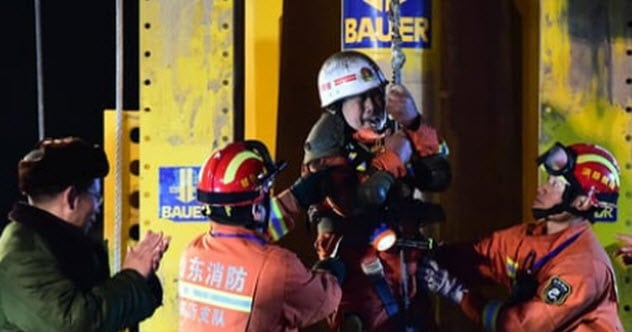

Some rescue stories begin with sirens, hard hats, and frantic calls for help. The unforgettable ones begin laterafter the news has gone quiet, after families have started bargaining with the impossible, and after experts begin using careful words like “unlikely,” “dangerous,” and “recovery.” That is when the ground sometimes answers back.
Underground rescues test every human system at once: engineering, medicine, logistics, patience, courage, and the ability to keep making coffee when nobody has slept properly in three days. Mines flood. Caves fill with monsoon water. Tunnels collapse. Wells become traps smaller than a laundry chute from a nightmare. And yet, again and again, rescuers have found ways to drill, dive, pump, listen, crawl, and improvise until hopelooking slightly muddy and very tiredwalked out alive.
This article explores ten real underground rescues that occurred after hope seemed lost. These are not fairy tales with helmets. They are hard-earned examples of survival, teamwork, and the stubborn refusal to let darkness have the final word.
1. The 33 Chilean Miners: 69 Days Beneath the Atacama Desert
In August 2010, a collapse at the San José copper-gold mine near Copiapó, Chile, trapped 33 miners about 2,300 feet underground. For 17 days, no one on the surface knew whether they were alive. Families camped nearby, rescue teams drilled exploratory holes, and the world waited for a sign.
Then came the note attached to a drill bit: the miners were alive. Underground, the men had organized food, water, routines, and leadership with remarkable discipline. Aboveground, engineers designed a rescue plan involving narrow boreholes, supplies, communication systems, and finally a custom-built capsule named Fénix.
When the miners were brought up one by one in October 2010, after 69 days underground, the operation became one of the most famous mine rescue stories in history. It was a triumph of international expertise, drilling technology, mental endurance, and a group of workers who rationed food like accountants during tax season.
2. The Thai Cave Soccer Team: 18 Days in a Flooded Maze
In June 2018, 12 boys from the Wild Boars soccer team and their assistant coach entered Tham Luang Nang Non cave in northern Thailand after practice. Monsoon rains flooded the cave system, cutting off their exit and trapping them deep inside.
For nine days, no one knew whether the group had survived. Cave divers searched in terrible conditions: darkness, narrow passages, muddy water, strong currents, and almost no room for error. When British divers finally found the boys alive on a muddy ledge, the relief was enormousbut the rescue problem had only begun.
Most of the boys could not swim, much less cave-dive through flooded tunnels. The final extraction required an international team, medical planning, sedation, and a level of calm that would make a Zen monk look fidgety. All 13 were rescued over three days. The operation remains a landmark in cave rescue because it combined elite diving, local support, military coordination, and astonishing nerve.
3. The Quecreek Mine Rescue: Nine Men in a Freezing Pennsylvania Flood
In July 2002, nine coal miners at the Quecreek Mine in Somerset County, Pennsylvania, accidentally breached a flooded abandoned mine. Icy water rushed in, trapping them about 240 feet underground. Their situation quickly became a race against drowning, hypothermia, and shrinking air.
The miners tied themselves together so their bodies would be found as a group if they died. That detail is almost unbearably human: practical, heartbreaking, and loyal. Aboveground, rescuers drilled down through a farm field, pumped air into the chamber, and worked to lower a rescue capsule into the flooded mine.
After more than 77 hours, all nine miners were lifted out alive. The Quecreek rescue showed the importance of accurate mine maps, rapid drilling, emergency communication, and keeping a rescue operation moving even when the odds look like they have packed up and gone home.
4. Beaconsfield Mine: Two Men Trapped Nearly a Kilometer Down
In April 2006, a rockfall at the Beaconsfield gold mine in Tasmania killed miner Larry Knight and trapped Brant Webb and Todd Russell nearly a kilometer underground. For days, many feared the missing men had also died.
Then rescuers heard them. Webb and Russell had survived inside a cramped cage-like space in the machinery where they had been working. They had little room to move, injuries to endure, and no easy path out. Rescuers had to drill carefully through hard rock while avoiding another collapse.
The men were eventually supplied with food, water, communication, dry clothing, and even music. After two weeks underground, they walked out alive. Their survival became a national moment in Australia, not only because they were rescued, but because they somehow kept joking, talking, and holding themselves together in conditions that would make most people reconsider every complaint they had ever made about office lighting.
5. Baby Jessica: 58 Hours in a Texas Well
In October 1987, 18-month-old Jessica McClure fell into an abandoned well in Midland, Texas. She was trapped about 22 feet underground in a shaft only about eight inches wide. The rescue captivated the United States as crews worked around the clock to reach her.
Rescuers could not simply pull her out. Instead, they dug a parallel shaft, then tunneled horizontally toward her. The work was slow, delicate, and dangerous. Cameras, microphones, medical teams, and drilling equipment turned one backyard into a national vigil.
After 58 hours, Jessica was freed. She survived with injuries, including damage to her foot, but the rescue became one of the most memorable televised rescue operations in American history. It also proved that underground rescue is not always about mines and machinery; sometimes it is about a tiny child, a narrow hole, and a community refusing to blink.
6. Uttarakhand Tunnel Rescue: 41 Workers Freed After 17 Days
In November 2023, part of a road tunnel under construction collapsed in Uttarakhand, India, trapping 41 workers behind a wall of debris. The men were alive, but blocked inside a mountain tunnel with no quick exit.
Rescuers supplied oxygen, food, medicine, and communication through pipes. Heavy drilling machines were brought in, but the unstable rubble repeatedly complicated the operation. When machinery failed, manual drilling specialists completed the final stretchan exhausting, high-risk effort that required steady hands and very little room for drama, despite the situation being extremely dramatic.
After 17 days, all 41 workers were brought out safely through a narrow escape pipe. Their rescue became a modern example of what happens when engineers, laborers, medical teams, local authorities, and specialist tunnel experts keep adjusting the plan instead of surrendering to the first failed method.
7. Wangjialing Coal Mine: 115 Miners Rescued After a Flood
In March 2010, water flooded the Wangjialing coal mine in Shanxi Province, China, trapping more than 150 workers. As days passed, hope for survivors weakened. Flooded mines are especially deadly because water blocks exits, lowers body temperature, ruins equipment, and steals time.
Yet after more than a week underground, rescuers pulled 115 miners out alive. Survivors had endured darkness, hunger, and rising water. Some reportedly used belts to keep themselves from slipping into floodwater while sleeping, an image that belongs in the museum of human stubbornness.
The rescue was enormous in scale. It required continuous pumping, probing, and evacuation planning. While many miners still died, the survival of 115 workers after eight days in a flooded mine remains one of the largest and most astonishing underground rescue outcomes ever recorded.
8. Qixia Gold Mine: Eleven Rescued After Two Weeks
In January 2021, an explosion trapped 22 miners at the Hushan gold mine near Qixia in Shandong Province, China. The blast blocked access and left rescuers struggling to determine who was alive and where they were located.
Rescue teams drilled supply holes, sent down food and medicine, and worked through severe blockages. Communication with some trapped miners brought hope, but officials warned that clearing the tunnels could take much longer. Then, in a sudden turn, debris conditions allowed rescuers to use a cleared shaft faster than expected.
After 14 days underground, 11 miners were brought to the surface. The rescue was bittersweet because others had died or remained missing, but the survival of those 11 men showed how quickly an operation can shift from despair to disbelief when a blocked path opens.
9. Hominy Falls: Six Men Found After Being Presumed Dead
In May 1968, miners at the Saxsewell No. 8 Mine in Hominy Falls, West Virginia, accidentally broke into an old flooded mine. Water surged through the workings, killing four miners and trapping others underground.
Fifteen miners were rescued after several days, but six men deeper inside had no contact with the surface. They were presumed dead. Still, rescue crews kept pumping water and searching. On May 16, ten days after the disaster, the final six survivors were found and brought out alive.
The Hominy Falls rescue is one of those stories that makes the phrase “presumed dead” feel dangerously premature. It reminds us that underground survival can depend on air pockets, local knowledge, relentless search work, and rescuers who keep moving even when the public story has shifted from rescue to mourning.
10. The Miracle of Lengede: Eleven Miners Saved After Funeral Plans Began
In 1963, flooding struck the Lengede-Broistedt iron mine in West Germany after a sedimentation pond failed. Many miners escaped, but dozens were trapped. Some were rescued in earlier operations, but eventually hope faded for the remaining missing men.
Then rescuers detected signs of life in an abandoned section of the mine. Eleven miners had survived in a pocket known as the “Old Man,” a disused area where they had taken refuge. They had endured darkness, hunger, falling rock, and the psychological weight of believing the world might already have written them off.
After two weeks underground, the 11 were brought up through a narrow rescue shaft using a capsule. The event became known as the “Miracle of Lengede.” It was a miracle in the human sense: not magic, but the unlikely meeting of survival instinct, drilling skill, persistence, and timing.
What These Underground Rescues Teach Us
Hope Is Not a Strategy, but It Keeps Strategy Alive
In every one of these underground rescue operations, hope alone was not enough. Hope did not drill through rock, pump floodwater, design rescue capsules, or guide cave divers through black water. But hope kept people working long enough for those things to happen.
The best rescue teams combine optimism with discipline. They do not say, “Everything will be fine,” because sometimes it will not. Instead, they ask, “What can we try next?” That question is the heartbeat of every successful underground rescue.
Communication Changes Everything
The moment rescuers make contact with trapped people, the entire situation changes. A trapped miner is no longer an unknown point on a map. A cave survivor is no longer a theory. They become a voice, a heartbeat, a person with needs, injuries, fears, and information.
Communication lets rescuers send supplies and receive guidance from the people who know the underground conditions firsthand. It also gives survivors the most powerful medicine available in darkness: proof that they have not been forgotten.
Training Saves Lives Before Heroes Arrive
Heroism gets the headlines, but training often saves the first lives. Miners who move to higher ground during floods, cave rescuers who understand rope systems and diving protocols, workers who conserve air, and leaders who maintain order underground all improve the odds before the main rescue begins.
In many of these cases, survival depended on ordinary people making disciplined choices in extraordinary conditions. That is not flashy, but neither is a seatbeltand seatbelts have a pretty good résumé.
Extra Experiences and Reflections: Why These Stories Stay With Us
There is a reason underground rescue stories grip people so tightly. They tap into one of the oldest human fears: being buried alive, unseen and unheard. The idea is terrifying because it removes the usual tools of comfort. There is no open sky, no easy exit, no casual walk to the refrigerator for emotional support cheese. Underground, time becomes strange. A minute can feel like a hallway. A day can feel like a lifetime with bad ventilation.
For survivors, the experience is often described as a battle against panic as much as against hunger, injury, or cold. Many trapped people create routines: rationing food, marking time, assigning roles, praying, singing, talking, or even joking. Humor might seem odd in a disaster, but it can be a life raft. A joke says, “I am still myself.” It pushes back against fear with a tiny, stubborn elbow.
For families aboveground, the experience is different but equally brutal. They wait in a place where every machine sound might mean progress, every official update might crush them, and every hour stretches thin. Families become experts in reading faces: the tired engineer, the cautious doctor, the official who says “challenging” when everyone knows he means “terrifying.” Their endurance is part of the rescue story too.
For rescuers, underground missions demand a rare blend of urgency and patience. Move too slowly and people may die. Move too fast and the tunnel may collapse, the water may surge, or the rescue path may become a trap for the rescuers themselves. The bravest rescue work is often methodical. It looks like measuring, waiting, drilling three inches, checking stability, and doing it again. Hollywood may prefer explosions, but real rescue often prefers careful math and a thermos of coffee.
These stories also reveal the importance of preparation. Accurate maps, emergency shafts, communication systems, breathing equipment, worker training, and strong safety rules are not boring paperwork. They are future miracles in disguise. When they are ignored, rescue becomes harder, riskier, and sometimes impossible.
Still, the greatest lesson may be this: people are astonishingly difficult to count out. Again and again, rescuers have returned to places where hope was supposed to be gone and found tapping, voices, footprints, notes, or light. Underground rescue stories endure because they remind us that despair can be wrong. Not always, not neatly, not without lossbut sometimes wrong enough for someone to emerge from the earth blinking, exhausted, alive, and ready to hug the entire planet.
Conclusion
Underground rescues are among the most difficult operations humans attempt. They require courage from survivors, restraint from engineers, stamina from rescuers, and faith from families who must wait while the earth itself becomes an obstacle.
The ten rescues above are unforgettable because they happened at the edge of possibility. They show that “lost hope” is not always the same as “lost life.” Sometimes a drill bit breaks through. Sometimes a diver’s flashlight finds faces in the dark. Sometimes a capsule rises from a mine shaft carrying someone the world had almost mourned.
And sometimes, after all the calculations, tears, tools, and mud, the ground gives people back.


