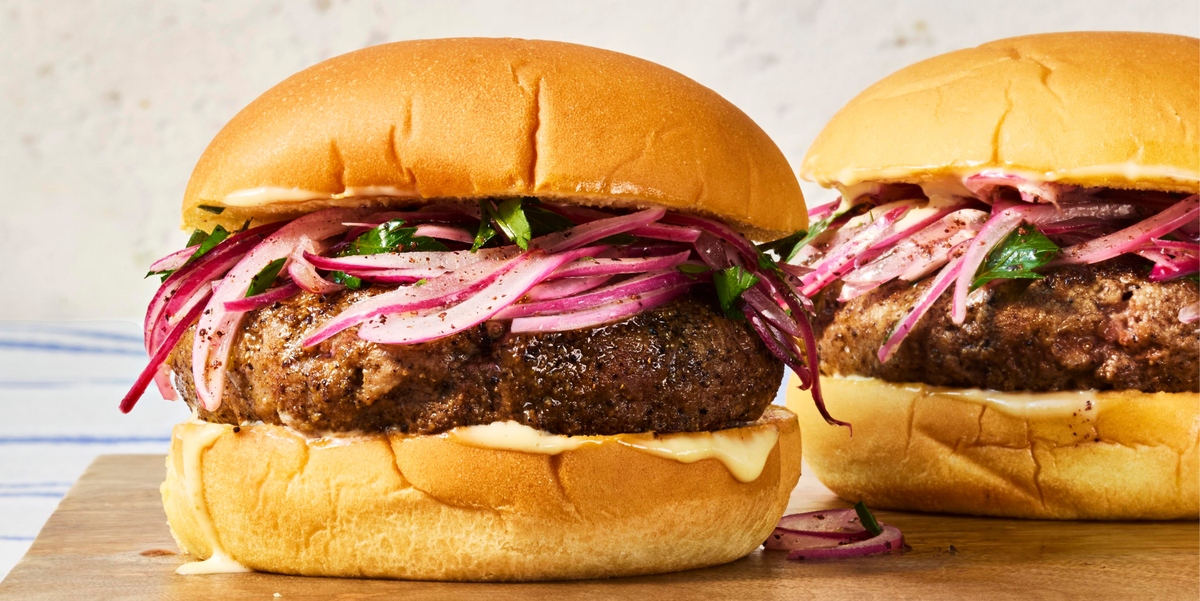

There are ordinary burgers, and then there are burgers that arrive wearing sumac, saffron, garlic yogurt, and enough aromatic swagger to make the ketchup bottle feel underdressed. These Persian kebab-spiced burgers belong proudly in the second category.
The recipe borrows its flavor direction from kabob koobideh, the beloved Persian preparation of seasoned ground beef, lamb, or a combination of both. Traditional versions commonly feature grated onion and are grilled over intense heat, then served with rice, flatbread, tomatoes, herbs, and sumac. This burger adaptation keeps those savory, onion-rich flavors but reshapes them into an easy American cookout format.
The result is a juicy beef-and-lamb patty tucked into a toasted bun with tart sumac onions, a crunchy tomato-cucumber salad, and a cool garlic yogurt sauce. It tastes familiar enough to satisfy a burger craving but exciting enough to rescue dinner from its Tuesday-night identity crisis.
Why You Will Love These Persian Kebab-Spiced Burgers
A good fusion recipe should not simply throw two foods into the same room and hope they become friends. It should identify what each tradition does especially well and create a dish in which those strengths cooperate.
American-style burgers bring a browned crust, a soft toasted bun, portability, and the joyful permission to eat dinner with both hands. Persian kebab traditions contribute fragrant onion, warm spices, tangy sumac, grilled tomato flavors, creamy yogurt, and generous fresh herbs.
- Deeply seasoned meat: Turmeric, cumin, coriander, black pepper, garlic, and onion flavor every bite.
- Juicy texture: An 80/20 beef blend and optional ground lamb provide enough fat to prevent dry, crumbly patties.
- Balanced toppings: Yogurt cools the spices, sumac adds acidity, and fresh vegetables bring crunch.
- Flexible cooking: The burgers work on an outdoor grill, grill pan, cast-iron skillet, or flat-top griddle.
- Fast preparation: Most components can be prepared while the shaped patties chill.
What Gives a Persian Burger Its Signature Flavor?
Grated Onion
Grated onion is one of the most important ingredients in koobideh-inspired burgers. It distributes flavor more evenly than chopped onion and contributes moisture without leaving large raw pieces inside the patties.
The important step is squeezing out the excess onion liquid. Wet onion pulp can make the mixture loose, encourage steaming instead of browning, and leave the burgers eager to fall apart at the least convenient moment. Nobody wants to scrape a Persian-spiced meat puzzle out of the grill grates.
Sumac
Ground sumac has a reddish-purple color and a tart, earthy, lemon-like flavor. It is commonly used with grilled meats, kebabs, salads, onions, dips, and vegetables throughout Middle Eastern cooking. Unlike lemon juice, it adds acidity without adding more liquid to the burger mixture.
In this recipe, sumac appears in three places: the spice blend, the quick-pickled onions, and the final garnish. That may sound enthusiastic, but sumac is not a spice that barges through the front door. It brightens the other ingredients and makes rich meat taste less heavy.
Turmeric, Cumin, and Coriander
Turmeric provides earthy depth and a warm golden color. Cumin adds smokiness, while coriander contributes a lightly citrusy, floral note. These spices are used carefully so that the burgers remain Persian kebab-inspired rather than tasting like an unidentified jar of “international seasoning.”
Saffron
Saffron is optional because it is expensive and can be overwhelmed by strongly browned beef. However, a small pinch bloomed in hot water gives the patties or yogurt sauce a delicate floral aroma associated with many celebrated Persian rice and kebab dishes. Saffron, fresh herbs, dried limes, nuts, yogurt, and fruit are among the ingredients frequently used to create the aromatic contrasts found in Persian cooking.
Persian Kebab-Spiced Burgers Recipe
Yield: 4 large burgers
Prep time: 30 minutes
Chilling time: 20 minutes
Cook time: 10 to 14 minutes
Total time: About 1 hour
Ingredients for the Burger Patties
- 1 pound 80/20 ground beef, preferably ground chuck
- 1/2 pound ground lamb, or additional ground beef
- 1 small yellow onion
- 2 garlic cloves, finely grated
- 1 teaspoon ground sumac
- 1 teaspoon ground turmeric
- 3/4 teaspoon ground cumin
- 1/2 teaspoon ground coriander
- 1/2 teaspoon freshly ground black pepper
- 1/8 teaspoon ground cinnamon, optional
- 1 1/4 teaspoons Diamond Crystal kosher salt or 3/4 teaspoon fine salt
- 2 tablespoons finely chopped flat-leaf parsley
- 1 tablespoon finely chopped fresh mint, optional
- 1 tablespoon neutral cooking oil, for the grill or skillet
- 4 sturdy sesame, potato, or brioche burger buns
Ingredients for the Sumac Onions
- 1/2 medium red onion, thinly sliced
- 1 tablespoon red wine vinegar or fresh lemon juice
- 1 teaspoon ground sumac
- 1/4 teaspoon kosher salt
- 1 teaspoon extra-virgin olive oil
- 1 tablespoon chopped parsley
Ingredients for the Garlic Yogurt Sauce
- 1/2 cup plain whole-milk Greek yogurt
- 2 tablespoons mayonnaise
- 1 small garlic clove, finely grated
- 2 teaspoons fresh lemon juice
- 1/2 teaspoon ground sumac
- 1 tablespoon chopped mint or dill
- 1/4 teaspoon kosher salt
- Freshly ground black pepper, to taste
Ingredients for the Tomato-Cucumber Topping
- 1 medium ripe tomato, seeded and finely diced
- 1 Persian cucumber or 1/2 English cucumber, finely diced
- 1 tablespoon chopped parsley
- 1 teaspoon fresh lemon juice
- 1 teaspoon extra-virgin olive oil
- Pinch of kosher salt
Optional Saffron Finish
- Large pinch of saffron threads
- 1 tablespoon hot water
- 1 tablespoon melted unsalted butter
How to Make Persian Kebab-Spiced Burgers
Step 1: Prepare the Grated Onion
Peel the yellow onion and grate it on the large holes of a box grater. Transfer the grated onion to a clean kitchen towel, several layers of cheesecloth, or a fine-mesh strainer.
Squeeze firmly until most of the liquid has been removed. You should have approximately 1/3 cup of damp onion pulp. Discard the liquid or save it for soup, rice, or a marinade.
Step 2: Mix the Kebab-Spiced Meat
Place the ground beef and lamb in a large chilled bowl. Add the squeezed onion, garlic, sumac, turmeric, cumin, coriander, black pepper, cinnamon, parsley, mint, and salt.
Use your fingers to gently distribute the ingredients until the mixture is evenly seasoned. Stop as soon as everything is combined. Excessive mixing can compress the meat and produce dense, springy burgers rather than tender ones.
An 80/20 beef blend is commonly recommended for flavorful, juicy burgers, while gentle handling helps preserve a looser texture. Keeping the meat cold also prevents the fat from softening before the patties reach the heat.
Step 3: Shape and Chill the Patties
Divide the mixture into four equal portions, approximately 6 ounces each. Gently shape each portion into a patty about 3/4 inch thick and slightly wider than the buns. Press a shallow indentation into the center of each patty with your thumb. This helps reduce excessive puffing during cooking.
Place the patties on a parchment-lined plate, cover, and refrigerate for 20 minutes. Chilling firms the fat and makes the burgers easier to move without breaking.
Step 4: Make the Sumac Onions
Combine the sliced red onion, vinegar, sumac, salt, olive oil, and parsley in a small bowl. Massage the mixture gently with clean fingers for about 20 seconds. Set aside for at least 15 minutes.
The onions will soften slightly while retaining enough crunch to stand up to the rich patties.
Step 5: Make the Garlic Yogurt Sauce
In a separate bowl, stir together the Greek yogurt, mayonnaise, garlic, lemon juice, sumac, herbs, salt, and black pepper. Refrigerate until needed.
Greek yogurt supplies tang and body, while the small amount of mayonnaise keeps the sauce creamy when it meets a hot burger. Yogurt, garlic, and sumac are a well-established combination for cooling, tart sauces served with grilled foods.
Step 6: Prepare the Tomato-Cucumber Topping
Combine the diced tomato, cucumber, parsley, lemon juice, olive oil, and salt. Let the mixture stand for five minutes, then drain off any excess liquid before assembling the burgers. Draining prevents the buns from becoming soggy.
Step 7: Bloom the Saffron, If Using
Crush the saffron threads between your fingers or with a mortar and pestle. Stir them into the hot water and allow the mixture to stand for 10 minutes. Combine the saffron water with the melted butter.
Step 8: Cook the Burgers on a Grill
Preheat a gas or charcoal grill for medium-high direct heat. Clean and lightly oil the grates.
Place the cold patties on the grill and cook without pressing them for approximately five minutes. Flip once and cook for another four to six minutes, or until the centers reach a safe temperature. During the final minute, lightly brush the patties with saffron butter.
Ground beef and ground lamb should reach an internal temperature of 160°F as measured with a food thermometer. Color alone is not a reliable indication of safety, so insert the thermometer sideways into the center of a patty for the most accurate reading.
Step 9: Cook the Burgers in a Skillet
For indoor cooking, heat a cast-iron skillet over medium-high heat until hot. Add a thin coating of neutral oil, followed by the patties. Cook for five to six minutes on the first side.
Flip the burgers and continue cooking for another five to six minutes, adjusting the heat if the spices begin to darken too quickly. Brush with saffron butter during the final minute and verify that the centers have reached 160°F.
Step 10: Toast and Assemble
Toast the cut sides of the buns on the grill or in the skillet until lightly golden.
Spread garlic yogurt sauce over both halves of each bun. Place a burger patty on the bottom half, followed by the drained tomato-cucumber mixture and a generous tangle of sumac onions. Add an extra dusting of sumac and close the burger.
Serve immediately, preferably with several napkins and absolutely no white shirt you feel emotionally attached to.
Tips for the Best Koobideh-Inspired Burgers
Squeeze the Onion Thoroughly
This is the recipe’s least glamorous but most important task. Excess onion water can prevent browning and weaken the structure of the patties. The onion pulp should remain moist, but it should no longer drip when squeezed.
Keep Everything Cold
Cold meat and cold fat are easier to shape and produce a juicier texture. If your kitchen is warm, chill the mixing bowl before beginning and return the patties to the refrigerator while preparing the toppings.
Do Not Flatten the Burgers While Cooking
Pressing a burger with a spatula releases fat and juices onto the fire or into the skillet. The dramatic sizzle sounds impressive, but it is essentially your dinner filing an escape plan.
Use a Thermometer
A compact instant-read thermometer is more dependable than cooking by color or timing. Patty thickness, grill temperature, wind, meat composition, and starting temperature can all change the required cooking time.
Add Sumac at the Table
Heating sumac mellows its tartness. Sprinkle a little fresh sumac over the finished burger for a brighter, more noticeable flavor.
Ingredient Substitutions and Variations
All-Beef Persian Burgers
Replace the lamb with additional 80/20 ground beef. The burgers will taste slightly milder but remain rich and juicy.
All-Lamb Burgers
Use 1 1/2 pounds of ground lamb for a more pronounced flavor. Lamb can be rich, so increase the sumac onions or add extra cucumber for balance.
Turkey or Chicken Version
Ground poultry can be substituted, although the texture will be leaner. Add two tablespoons of olive oil to the meat mixture and cook poultry patties to 165°F.
Spicy Persian-Inspired Burgers
Add 1/4 teaspoon cayenne pepper or one finely minced Fresno chile to the meat. Persian kebab flavors are not automatically hot, so treat chile as an optional variation rather than a requirement.
Low-Carb Serving Option
Skip the bun and serve the burger over chopped romaine, cucumber, tomato, fresh herbs, sumac onions, and yogurt sauce. A spoonful of saffron cauliflower rice also works well.
Flatbread Version
Shape the meat into thinner oval patties and serve them in warmed lavash or pita with yogurt sauce and vegetables. This presentation moves the meal closer to its kebab inspiration while remaining practical for home cooking.
What to Serve with Persian Kebab-Spiced Burgers
- Grilled tomatoes: Cook halved tomatoes until lightly charred and soft.
- Saffron basmati rice: A small portion transforms the burgers into a substantial dinner.
- Shirazi-style salad: Combine cucumber, tomato, onion, herbs, and citrus juice.
- Grilled vegetables: Eggplant, zucchini, sweet peppers, and mushrooms complement the spices.
- Herbed fries: Toss oven fries with parsley, sumac, and flaky salt.
- Fresh herb platter: Serve mint, basil, parsley, radishes, and scallions alongside the burgers.
For drinks, consider sparkling water with mint and lime, iced black tea, a tart pomegranate spritzer, or a cold lager. The goal is refreshment, not a beverage that tries to compete with the entire spice cabinet.
Storage and Reheating
Uncooked patties can be shaped, covered, and refrigerated for up to 24 hours. Place parchment between layers to prevent sticking.
Cooked burgers should be refrigerated within two hours and stored in an airtight container for three to four days. Keep the yogurt sauce and vegetable toppings in separate containers. USDA guidance recommends reheating leftovers to 165°F.
For the best texture, reheat the patties in a covered skillet over medium-low heat with a teaspoon of water. The trapped steam warms the center while the skillet restores some exterior browning. Avoid fully assembling burgers before storage because the sauce and vegetables will soften the buns.
Kitchen Experience: What Making These Burgers Is Really Like
The Aroma Arrives Before the Burgers Do
The first noticeable difference between this recipe and a standard burger appears while the patties are still raw. Grated onion, turmeric, cumin, coriander, mint, and sumac create a savory aroma that feels closer to a kebab restaurant than a backyard cookout. Once the patties hit hot metal, the onion begins to caramelize and the warm spices bloom in the rendered fat. The fragrance is especially noticeable indoors, where it tends to attract curious family members who suddenly develop urgent reasons to visit the kitchen.
Removing Onion Liquid Makes a Major Difference
Home cooks often underestimate how much water a small onion contains. The first attempt at a koobideh-inspired burger can become frustrating when the mixture feels loose or sticky. Squeezing the grated onion changes the entire experience. The meat remains moist, but the patties become easier to shape, flip, and remove from the grill. The improvement is not subtle. A properly drained mixture behaves like a burger, while an overly wet mixture behaves like it is considering a career as meatloaf batter.
The Spice Blend Tastes Stronger Raw Than Cooked
When the spices are first added, the turmeric and cumin may appear assertive. After grilling, however, the flavors settle into the beef and lamb. Cumin becomes toastier, coriander becomes softer, and turmeric contributes more earthy background flavor than obvious bitterness. Sumac remains the brightest note, especially when added after cooking. This transformation is a useful reminder not to judge a seasoned burger mixture entirely by its raw aroma. The grill edits the spice blend into a smoother final draft.
The Toppings Are Part of the Recipe, Not Decoration
The burger tastes good with only a bun, but it becomes complete once the yogurt sauce, vegetables, and sumac onions are added. The meat is rich and warmly spiced; therefore, it needs acidity and freshness. The yogurt cools the palate, cucumber adds crispness, tomato supplies juiciness, and the onions deliver a sharp, tart snap. Removing all three toppings makes the burger heavier and less distinctive. Adding excessive amounts, however, can hide the crust on the patty. A balanced layer of each component produces the best bite.
Grilling and Skillet Cooking Produce Different Personalities
An outdoor grill contributes smoke and lightly charred edges, making the burgers feel closer to kebabs cooked over coals. A cast-iron skillet creates a darker, more even crust because the entire surface of the meat touches the hot pan. Neither method is automatically superior. The grilled version feels summery and aromatic, while the skillet version is deeply browned and easier to control. The best method depends on whether the cook values smoke, crust, convenience, or freedom from discussing the weather with a temperamental grill.
The Leftovers Are Surprisingly Versatile
A leftover patty does not have to return as another burger. It can be crumbled over saffron rice, tucked into flatbread, added to a chopped salad, or served with a fried egg. Sliced cold burger also works in a lunch bowl with cucumber, tomatoes, pickled onions, herbs, and yogurt sauce. Because the seasoning is integrated into the meat, the leftovers retain more personality than a plain refrigerated hamburger. Preparing one or two extra patties can therefore create an easy second meal rather than a repetitive encore.
The Final Bite Explains the Whole Idea
The most satisfying bite includes toasted bread, browned meat, creamy sauce, crisp cucumber, ripe tomato, and a few sumac onions. Each part has a specific job. The bun contains the chaos, the patty provides richness, the yogurt softens the spices, and the vegetables reset the palate. This is what makes the recipe more than a novelty burger. It respects the flavor logic of a Persian kebab meal while translating that experience into a format that feels natural at an American table.
Frequently Asked Questions
Is this an authentic Persian burger recipe?
It is a modern fusion recipe inspired by Persian kabob koobideh, not a traditional Iranian dish. The grated onion, sumac, turmeric, yogurt, herbs, and grilled tomato flavors reference familiar Persian kebab accompaniments, while the bun and burger format are contemporary adaptations.
Can I make the patties without lamb?
Yes. Use 1 1/2 pounds of 80/20 ground beef. Avoid extra-lean beef because it is more likely to become dry at the safe cooking temperature.
What can I use instead of sumac?
For the meat mixture, use 1/2 teaspoon finely grated lemon zest and a small pinch of paprika. For the onions and garnish, lemon juice is the best substitute. The result will not have sumac’s exact earthy tartness, but it will retain the necessary acidity.
Why are my burgers falling apart?
The onion may not have been squeezed thoroughly, the meat may be too warm, or the patties may have been flipped before a crust formed. Chill the shaped patties and allow the first side to brown before moving them.
Can I prepare the sauce in advance?
Yes. The garlic yogurt sauce can be refrigerated for up to three days. Its garlic flavor will become stronger over time, so use a smaller clove when preparing it well in advance.


