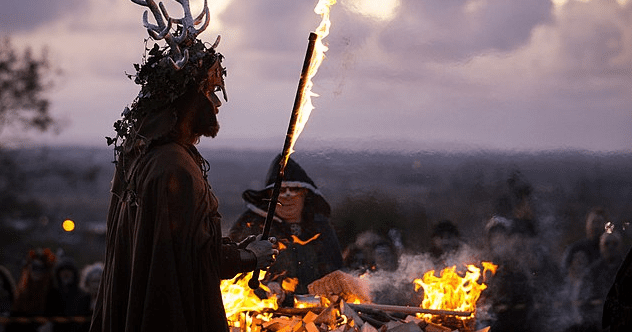

Long before inflatable yard ghosts began collapsing dramatically on suburban lawns, communities in Ireland and other Gaelic regions marked the arrival of winter with Samhain. This seasonal festival brought fire, feasting, storytelling, divination, disguises, and a healthy respect for supernatural visitorsespecially the sort who did not knock first.
Many familiar Halloween customs have possible parallels in Samhain and later Irish and Scottish folklore. However, Halloween is not simply ancient Samhain wearing a plastic vampire cape. The modern holiday also reflects medieval Christian observances, English mumming and souling, nineteenth-century immigration, American harvest parties, and a candy industry that clearly understood the assignment.
With that important historical wrinkle in mind, here are 10 Celtic Samhain traditions that may have helped shape Halloween as we know it.
What Was Samhain?
Samhain, generally pronounced “SAH-win” or “SOW-in,” is a Gaelic seasonal festival associated with the transition from summer into winter. It was one of four major seasonal markers in the traditional Irish calendar, alongside Imbolc, Beltane, and Lughnasadh.
Medieval Irish literature places Samhain around the beginning of November, when harvest work ended, animals returned from summer pastures, and households prepared for the darker months. Important assemblies, feasts, political meetings, and legendary supernatural encounters were also associated with the season.
Calling Samhain the universal “Celtic New Year” is tempting but overly tidy. “Celtic” describes numerous peoples whose customs varied by period and place. Most surviving written evidence comes from medieval Ireland, recorded centuries after Christianization. Historians can identify themes and later folk practices, but they cannot reconstruct every pre-Christian ritual with cinematic precision. Ancient communities were inconsiderate enough not to leave us an official party schedule.
10 Samhain Traditions Connected to Modern Halloween
1. Marking the End of the Harvest and the Beginning of Winter
Samhain represented a seasonal threshold. Crops had to be gathered, livestock evaluated, food preserved, and preparations made for cold weather. In an agricultural society, winter was not merely “sweater season.” It could determine whether a household entered spring healthy, hungry, or not at all.
This background survives in Halloween’s harvest imagery: apples, gourds, dried corn, straw, fallen leaves, and orange decorations. American Halloween displays often combine spooky symbols with farm-stand abundance because the holiday developed alongside autumn harvest celebrations.
The connection is thematic rather than a perfect historical handoff. Irish and Scottish customs mingled with European folklore and North American harvest gatherings, producing a holiday where plastic skeletons now sit cheerfully beside decorative hay bales.
2. Lighting Protective Bonfires
Fire is one of the strongest recurring symbols in accounts of Samhain and later Gaelic seasonal traditions. Community bonfires could mark the changing season, provide protection, and create a shared gathering place. Later folklore also describes households carrying fire home or using flames in seasonal rites.
The English word “bonfire” should not be treated as automatic proof of a single ancient ritual, and detailed claims about Druids conducting standardized ceremonies often outrun the surviving evidence. What is clear is that autumn fires remained important in Irish and Scottish festive culture.
Halloween bonfires, candles, lanterns, and glowing porch decorations echo that attraction to protective light during the dark half of the year. Today, the fire may be a battery-operated tea light from the craft aisle, but at least it is unlikely to ignite the neighbor’s fence.
3. Expecting Visitors From the Otherworld
Samhain occupies a supernatural position in medieval Irish stories. Heroes encounter mysterious beings, passages to the Otherworld become accessible, and ordinary rules seem temporarily less reliable. The popular phrase “the veil between worlds was thin” is modern wording, but it summarizes a genuine pattern in the surviving legends.
These visitors were not always the gentle ghosts of beloved grandparents. Irish tradition included the aos sí, powerful otherworldly beings who might bless, mislead, reward, or trouble humans. Treating them respectfully was generally wiser than testing whether they had a sense of humor.
Halloween’s ghosts, haunted houses, séances, and stories about the dead walking among the living resemble this fascination with supernatural contact. Medieval Christian ideas about souls and the dead later added another major layer to the tradition.
4. Leaving Food for Spirits and Ancestors
Food played both social and symbolic roles during the Samhain season. Communities held feasts, while later Irish and Scottish folklore describes portions of food being left for returning souls, wandering beings, or unseen visitors. Hospitality could extend beyond the guests visible at the table.
Offerings were not simply fear payments to monsters. They could express remembrance, respect, reciprocity, or the hope that supernatural powers would leave the household and its animals unharmed. Similar themes later overlapped with Christian customs of remembering the faithful dead during Allhallowtide.
Modern bowls of Halloween candy are not direct replicas of ancient offerings, but both customs turn food into a method of negotiating with nighttime callers. The old visitor might have been a fairy. The modern visitor is six years old, dressed as a dinosaur, and prepared to judge your candy selection publicly.
5. Wearing Disguises and Performing as Supernatural Beings
Costuming is frequently linked to Samhain, although claims that every ancient Celt wore animal skins to confuse ghosts should be treated cautiously. Better documentation survives for later Irish and Scottish customs such as mumming and guising, in which participants wore disguises, visited homes, performed, and received refreshments.
A disguise could entertain, create anonymity, represent an otherworldly figure, or permit someone to behave outside everyday social rules. Festivals often allow temporary role reversals: the quiet neighbor becomes a demon, the respected adult becomes a fool, and someone inevitably discovers that face paint does not wash off as easily as promised.
Halloween costumes preserve this temporary transformation. Ghosts and monsters remain popular, but the category now includes superheroes, celebrities, video-game characters, and at least one exhausted parent wearing cat ears because the party began 20 minutes ago.
6. Guising From House to House for Rewards
In later Gaelic guising traditions, disguised visitors traveled between homes and offered songs, jokes, blessings, recitations, or small performances in exchange for food, coins, or drink. Medieval Christian soulingin which poor people or children requested food in return for prayersalso contributed to European door-to-door customs.
These practices helped create the cultural ingredients for trick-or-treating, but no single custom can claim sole parentage. Modern trick-or-treating developed gradually, especially in North America during the early twentieth century, as communities attempted to channel Halloween mischief into a more organized children’s activity.
One difference is worth noting: guisers were traditionally expected to earn their reward with some sort of performance. Today’s trick-or-treater can simply hold out a bucket and whisper “treat” while dressed as a traffic cone. Standards have slipped, but efficiency has improved.
7. Carving Frightening Faces Into Root Vegetables
Before pumpkins became Halloween celebrities, people in Ireland and Scotland carved faces into turnips, rutabagas, beets, and other root vegetables. A candle or ember placed inside created an unsettling lantern that could accompany guisers, illuminate a path, or represent a supernatural presence.
Later folklore connected these lights with wandering spirits and the tale of Stingy Jack, a trickster condemned to roam with a coal carried inside a hollowed turnip. The name “jack-o’-lantern” was also associated with mysterious lights seen over marshy ground.
Irish and Scottish immigrants encountered North American pumpkins, which were larger, softer, and vastly less hostile to carving tools. The pumpkin soon replaced the turnip. Anyone who has attempted to hollow out a dense rutabaga will understand why this was not a difficult marketing decision.
8. Predicting Love, Marriage, and the Future
Because Samhain marked a turning point in the year, it became strongly associated with divination in later folklore. Young people used nuts, apples, mirrors, ashes, egg whites, and other household objects to search for clues about marriage, luck, health, or events in the coming year.
Nuts might be placed near a fire and named for potential romantic partners. Their behaviorburning steadily, jumping apart, or exploding with impeccable dramatic timingwas interpreted as a forecast for the relationship. Apple peels could be thrown over the shoulder in the hope that they would land in the shape of a future spouse’s initial.
Fortune-telling remained popular at American Halloween parties in the nineteenth and early twentieth centuries. Before horror movies dominated the holiday, many Halloween cards and games focused less on zombies and more on discovering whom someone would marry.
9. Playing Seasonal Games With Apples and Nuts
Apples and nuts were plentiful autumn foods, so they naturally became part of seasonal entertainment. Apple bobbing, trying to bite a hanging apple, roasting nuts, and interpreting food-based “omens” appeared in Irish, Scottish, English, and later American Halloween celebrations.
Not every apple game can be traced directly to pre-Christian Samhain. Roman customs, medieval festivals, harvest celebrations, and courtship games all influenced the mixture. Cultural traditions rarely travel in a straight line; they behave more like a bowl of spaghetti wearing a historical costume.
Still, these games preserved the harvest character of the season. They also allowed young people to socialize, compete, flirt, and become soaking wet in front of everyone they hoped to impressa surprisingly durable form of entertainment.
10. Allowing Mischief and Temporary Rule-Breaking
Stories surrounding Samhain often involve disorder, dangerous journeys, supernatural tricks, and normal boundaries becoming unstable. Later Halloween traditions made that instability social as well as spiritual. Guisers concealed their identities, young people played pranks, and communities tolerated behavior that would have been unacceptable on an ordinary night.
In nineteenth- and early twentieth-century America, Halloween mischief could involve removing gates, tipping outhouses, damaging property, or relocating farm equipment to baffling locations. Organized parties and trick-or-treating partly developed as ways to replace destructive pranks with games, costumes, and candy.
The “trick” in trick-or-treating preserves a polite little threat: provide a reward or face consequences. Most modern children do not follow through, which is fortunate, because a preschooler dressed as a ladybug should not have that much authority.
How Samhain Became Part of Halloween’s Larger Story
Samhain supplied important seasonal and supernatural themes, particularly through Irish and Scottish traditions. Yet the word “Halloween” comes from All Hallows’ Eve, the evening before the Christian feast of All Saints. All Souls’ Day, prayers for the dead, medieval processions, souling, English mumming, and later folk customs also influenced the holiday.
During the nineteenth century, Irish and Scottish immigrants carried familiar autumn traditions to North America. Those customs blended with local harvest parties and other immigrant practices. By the twentieth century, American communities, schools, retailers, filmmakers, and candy companies had transformed Halloween into a broadly secular celebration.
It is therefore more accurate to describe Halloween as a cultural patchwork than as Samhain under a new name. Its history includes pagan seasonal festivals, Christian remembrance, folk performance, immigration, community rule-making, and modern popular culture.
Conclusion: The Old Season Behind the New Celebration
The strongest connection between Samhain and Halloween is not one specific prop or ritual. It is the atmosphere of transition: harvest giving way to winter, light meeting darkness, the ordinary world brushing against the supernatural, and communities gathering to face uncertainty together.
Bonfires became glowing decorations, root lanterns became pumpkins, guisers became trick-or-treaters, and divination games gave way to party entertainment. The forms changed, but the seasonal fascination endured. Every October, people still light the darkness, tell stories about the unknown, put on borrowed identities, and share food with unexpected visitors. Admittedly, the unexpected visitors now want individually wrapped chocolate.
A Modern Samhain-Inspired Experience
A meaningful way to experience the ideas behind Samhain is to organize an autumn evening centered on seasonal change rather than trying to reenact an undocumented ancient ceremony. Begin near sunset, when the shift from daylight to darkness becomes physically noticeable. A backyard, garden, safe public firepit, or candlelit indoor table can provide the setting.
Start with a simple harvest meal. Serve foods connected to late autumn, such as roasted root vegetables, apples, nuts, oat bread, soup, or a hearty stew. The goal is not to produce a supposedly “authentic Celtic menu”a phrase that tends to make historians reach nervously for the red pen. Instead, use seasonal ingredients to recognize the practical meaning of harvest completion.
Before eating, invite each guest to name something the past year provided and something they are ready to leave behind. This creates a modern version of the threshold theme without pretending to reproduce a lost ritual. Write the things being released on small pieces of untreated paper. If local rules and conditions allow, place them safely in a fire. Indoors, tear or recycle them instead; the symbolism still works, and the smoke alarm remains emotionally uninvolved.
Set an extra place at the table or display photographs of relatives and friends who have died. Guests may share a short memory, favorite saying, or amusing family story. This should feel like remembrance rather than a forced paranormal experiment. No one needs to summon Great-Uncle Patrick and ask where he hid the good silverware.
After dinner, try a few historical-style seasonal games. Hang apples from strings instead of bobbing in shared water, or peel an apple in one long strip and toss the peel over a shoulder to see which letter it resembles. Roast two nuts near a safe heat source and assign them playful names, while making it clear that exploding hazelnuts do not constitute legally binding relationship advice.
A costume element can add another layer. Ask guests to wear a simple mask, cloak, or outfit representing a personal quality they want to explore during the coming season. Someone might choose courage, patience, humor, or resilience. Unlike a commercial costume contest, the purpose is temporary transformation and storytelling.
Finish outside with lanterns or candles. A carved turnip provides a challenging but memorable connection to Irish and Scottish Halloween folklore. Its smaller face often looks genuinely furious, possibly because it knows pumpkins replaced it. If carving one sounds like punishment, use a pumpkin and explain why North American immigrants favored the softer vegetable.
The most powerful part of the evening is usually its pace. Phones disappear into pockets, the room grows darker, stories become more personal, and ordinary foods gain symbolic weight. Participants experience how a seasonal festival can combine practicality, memory, uncertainty, and humor. That combinationnot a fantasy of perfectly preserved ancient ritesoffers the clearest glimpse of why Samhain-related customs remained culturally compelling and why their echoes still feel at home on Halloween.
SEO Metadata


